Theme

Connectivity

Stories related to telecommunications and transport links. 

Editor's choice
Opinion
Opinion: The European Union must recognise that the C5 have now become the C6

Opinion: The European Union must recognise that the C5 have now become the C6

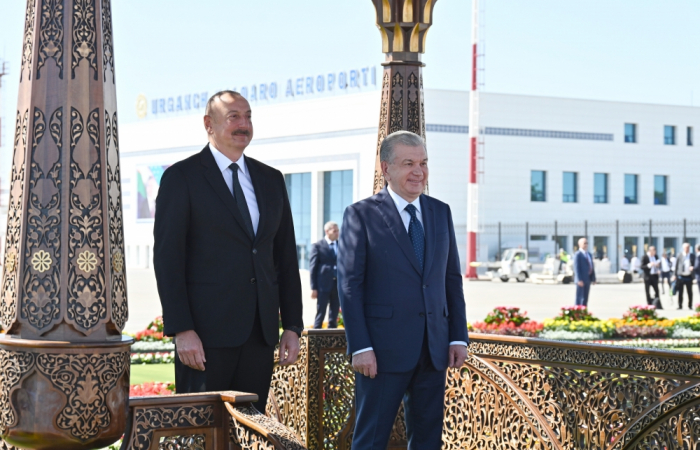
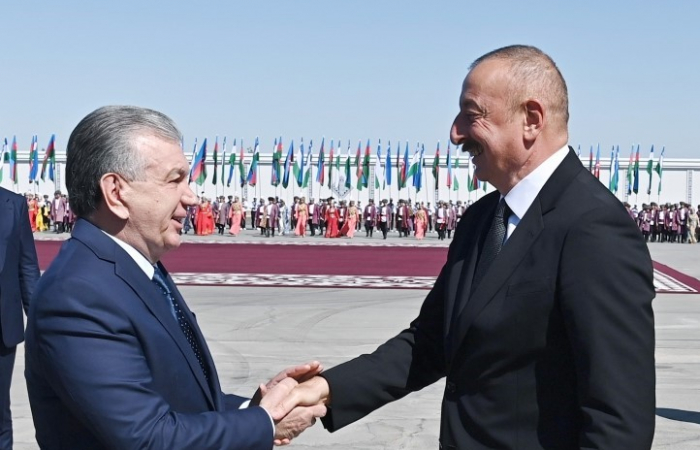
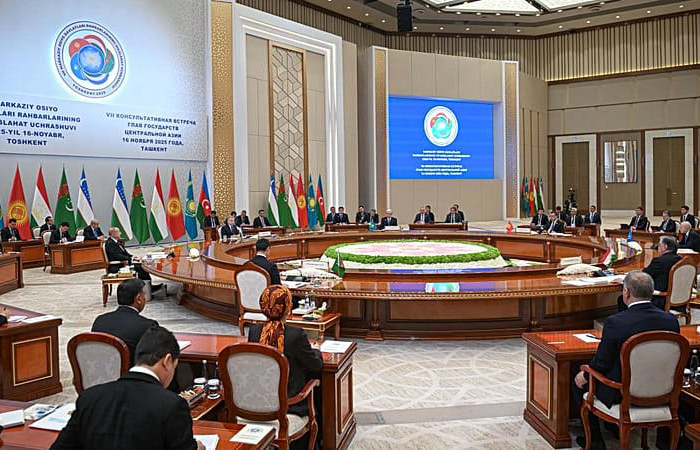
In recent years, Eurasia has undergone a structural transformation in how regions connect, trade, and cooperate. The combination of geopolitical shocks, disrupted supply chains, and the search for secure east–west routes has elevated the importance of the Trans-Caspian space. The states of Central Asia, once constrained by geography, have taken unprecedented steps to strengthen regional coordination, modernize infrastructure, and integrate more closely with Europe. Meanwhile, Azerbaijan has rapidly emerged as an indispensable connector linking Central Asia with the South Caucasus, Türkiye, and European markets. This new reality was formally acknowledged in November 2025 when Azerbaijan was unanimously welcomed as a full participant in the Consultative Meeting of Central Asian Heads of State in Tashkent. What had long been a C5 grouping transformed into a C6, marking a historic moment: the Caspian was no longer a frontier separating two regions but the center of a unified geopolitical and geo-economic space. President Ilham Aliyev described this alignment as the emergence of “a single geopolitical and geo-economic region,” while President Shavkat Mirziyoyev called Azerbaijan’s inclusion “historic” and proposed transforming the consultative platform into a structured regional institution capable of shaping security, economic, environmental, and digital policy. The Caspian is no longer a boundary; it is the heart of an integrated region. The transformation of the EU and U.S. C5+1 formats into C6+1 is the logical next step to ensure that both sides of the Caspian advance together – coherently, strategically, and with shared purpose. (click the image to read the full op-ed).
Editor's choice
Commentary
Central Asia on the march, but challenges ahead

Central Asia on the march, but challenges ahead

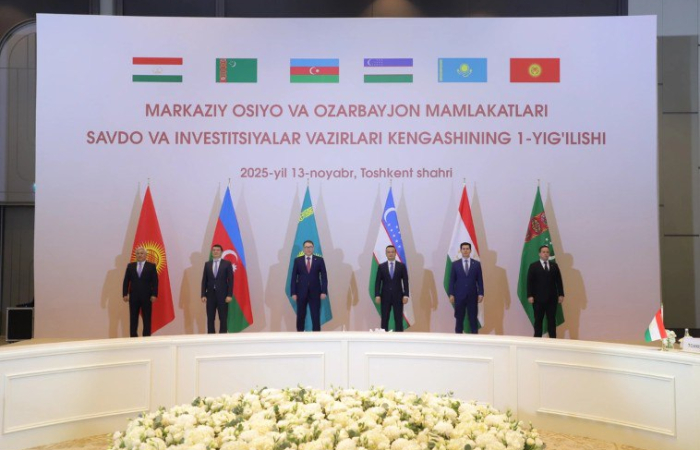
Central Asian leaders have been busy the last month, forging new ties in a changing geopolitical landscape. The presidents of Kazakhstan, Kyrgyzstan, Tajikistan, Turkmenistan, and Uzbekistan travelled to the White House to meet with U.S. President Donald Trump in the C5+1 format. The format, established in 2015, aims to deepen U.S. collaboration with Central Asia, emphasising security and economic cooperation. The U.S. is not the only power looking to maintain its influence in the region. The European Union, Russia, China, and increasingly, India, have all shown their interest in securing economic cooperation and inking energy and trade deals, recognising Central Asia’s strategic position as a key energy and transfer hub situated between East and West. Central Asian states are keenly aware of their leverage and have not only engaged in multi-lateral diplomacy with all of the aforementioned external actors but also adopted a pragmatic regional approach to increase cooperation amongst themselves and taken concrete steps to foster a more unified ‘Central Asian Community’. This was evident by last weekend’s Seventh Consultative Meeting of Heads of State, also known as the C5, where Central Asian leaders officially admitted Azerbaijan as a full member, effectively transforming it into the C6. However, although Central Asia has the unique opportunity to multilaterally engage with all of the world’s biggest economic and security powers, while continuing to shape regional politics and cooperation on its own terms, new security and economic issues are arising that may well reshape Central Asian states’ connections to external actors and potentially strain intra-regional relations. (Read the full commentary by clicking on the picture).

Filter archive

Publication date
Editor's choice
News
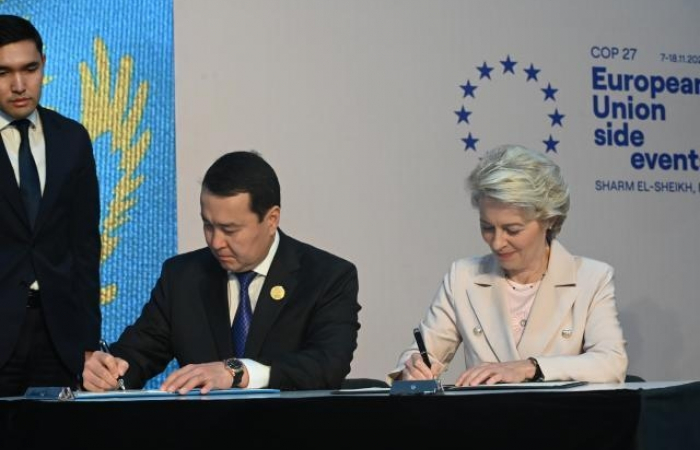
EU and Kazakhstan strengthen their strategic partnership with the signing of agreement on raw materials

EU and Kazakhstan strengthen their strategic partnership with the signing of agreement on raw materials

The European Union (EU) and Kazakhstan have strengthen their strategic partnership by signing an agreement on raw materials, batteries and renewable hydrogen on Monday (7 November) at a ceremony on the margins of the 27th UN Climate Change Conference of the Parties (COP27), which kicked off in Sharm El-Sheikh, Egypt. The agreement focuses on the development of a secure and sustainable supply of raw materials and refined materials, renewable hydrogen and battery value chains, and contributes to the green and digital transformation, reported the press service of the European Commission.  Prime Minister Alikhan Smailov, who is representing Kazakhstan at the COP27, said that the document will create conditions for the establishment of financial and technological cooperation between Kazakhstan and EU industrial alliances. EU Commission President Ursula von der Leyen noted the partnership will build a cleaner foundation for both economies.
Editor's choice
Monday Commentary
Monday Commentary: Why Central Asia matters

Monday Commentary: Why Central Asia matters

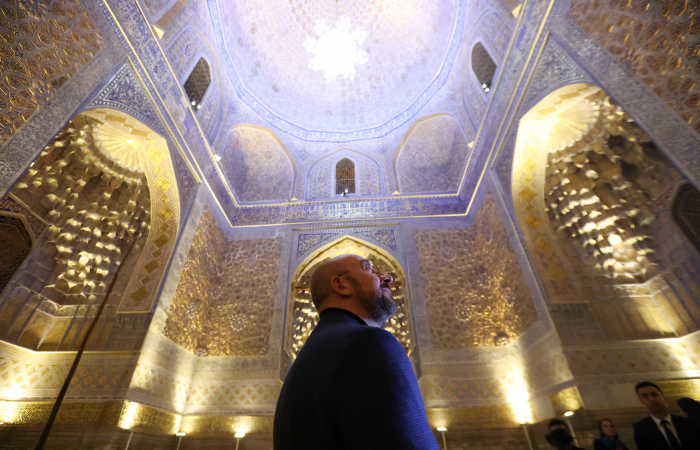
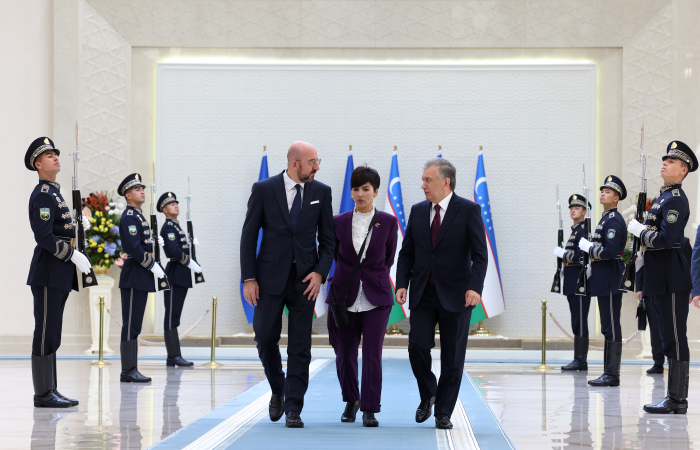
Very often, Central Asia is referred to as Russia’s back yard, even though today the region feels more like China’s front garden. But whilst the two “inseparable” friends, compete for influence and resources, the five Central Asian countries have set on a course to integrate themselves in global processes, break out of their geographic - and more importantly their geo-political constraints - and deliver better for their people. In this week's Monday Commentary on commonspace.eu, Dennis Sammut says that the Central Asian states have been reaching out to the EU and the US, whilst domestically some of them have embarked on deep reforms considered all but unimaginable until recently. The visit of European Council president Charles Michel to the region on 27-28 October marked a high point in a new phase in the relationship between the EU and Central Asia. In Kazakhstan, Michel not only met the Kazakh leadership, but also held a summit with the five Central Asian leaders in Astana, before travelling to Uzbekistan. For both the Central Asians and for the EU this is a watershed moment, and the beginning of a long journey. Europe’s approach to Central Asia needs to be respectful, both to the five countries themselves, and to their existing partners. Arrogance, even of the intellectual kind will simply backfire. But respect does not mean meekness. As a heavyweight in international relations, even if for the moment its economic weight dwarfs its political weight, the EU needs to approach Central Asia neither as a supplicant, nor as a benefactor, but simply as a reliable partner. Furthermore, this partnership needs to be diverse, multi-tiered and nuanced. It must take in relations with citizens, where Europe has much to offer both in terms of being a model, but also in terms of what it can share in areas such as education, innovation, youth welfare, women’s rights and diversity.
Editor's choice
Opinion
Opinion: Azerbaijan boosts ties with Central Asia as region adjusts to Ukraine crisis

Opinion: Azerbaijan boosts ties with Central Asia as region adjusts to Ukraine crisis

The fall-out from the Russian invasion of Ukraine has impacted all countries across the region. Azerbaijan and the Central Asian republics have stepped up their co-operation using multiple formats. "Amid the present security challenges in the region it is high time for Azerbaijan and the Central Asian countries to deepen bonds and ensure their security and prosperity, writes Vasif Huseynov in this op-ed for commonspace.eu
Editor's choice
Opinion
Opinion: Safe passage for Ukrainian grain exports through the Black Sea is a humanitarian necessity

Opinion: Safe passage for Ukrainian grain exports through the Black Sea is a humanitarian necessity

Disruption of Ukrainian grain exports is causing a global humanitarian food crisis. Measures need to be taken to create a humanitarian task force to ensure safe passage for export of Ukrainian grain to the rest of the world through the Black Sea and the Turkish Straits, argues Maximiliaan van Lange in this op-ed for commonspace.eu. Russia's blackmailing of the world with global hunger and food shortages among the world's poorest people must also be severely condemned by the international community. The current circumstances, in many ways, resemble the Holodomor, the Stalin-created famine in Ukraine in 1932-1933, that killed millions. The fact that Moscow is using grain as a weapon again in the twenty-first century is despicable and abhorrent. Global cooperation is therefore necessary to resolve this crisis, beginning with an internationally agreed humanitarian escort mission in the Black Sea, otherwise the consequences will be unforeseen.