Theme

Conflict and Peace

Stories related to violent conflicts, diplomatic tensions, and conflict prevention, mediation and resolution.

Editor's choice
Young voices
Opinion: The children of Sudan that the world forgot to see

Opinion: The children of Sudan that the world forgot to see

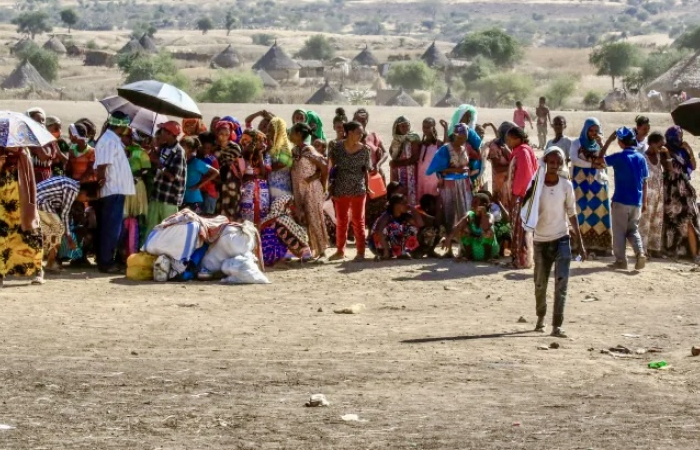
Sudan’s latest war began in April 2023, though the seeds of its violence were planted long before. The Sudanese Armed Forces and the Rapid Support Forces did not collide out of nowhere; they emerged from decades of political rot, unaddressed grievances, ethnic persecution, and military rule that carved deep fractures into the country’s social fabric. When fighting exploded across Khartoum and later consumed Darfur, Kordofan, and the east, it unleashed one of the worst humanitarian catastrophes of the 21st century. In this op-ed, Ioana-Maria Ungureanu, Junior Research Assistant at LINKS Europe, takes a heartfelt look at the plight of Sudan, and its children. When the latest war started, whole cities emptied. Markets burned. Families fled on foot. And a famine began tightening its grip, slow and suffocating. And yet, the world remained mostly silent. Sudanese death is too often framed as an unfortunate feature of the region, a tragedy that feels expected rather than outrageous. Even when evidence of atrocity is abundant, it fails to command the same emotional weight. Sudan should not have to beg for visibility. It deserves it. Because its people deserve to live. And their lives deserve the same respect, safety, and hope that we demand for our own. (read the op-ed in full by clicking the image above)
Editor's choice
News
Egypt rejects Israeli "offer" for an exit only Rafah checkpoint in Gaza

Egypt rejects Israeli "offer" for an exit only Rafah checkpoint in Gaza

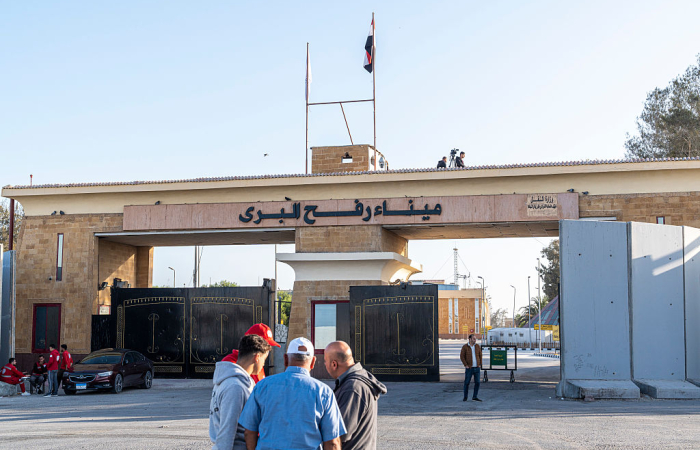
Egypt has rejected an Israeli "offer" for opening for exit only the Rafah checkpoint in Gaza. According to the Egyptian State Information Service, Egyptian authorities refuted on Wednesday afternoon reports that Israel claims it will open the Rafah crossing, the only lifeline for Gaza to the outside world, but only for those wishing to leave the besieged coastal enclave.  Citing an Egyptian official, the service stated that ''any agreement to open the crossing will cover both entry and exit, in line with US President Donald Trump's plan for humanitarian and political arrangements following the ceasefire.'' Cairo reaffirmed its adherence to the plan and UN Security Council Resolution 2803, including the right of return for Palestinians and maintaining two-way operations at the crossing. Earlier in the day, Israel's Coordinator of Government Activities in the Territories (COGAT) announced that the Rafah crossing would reopen ''within the next few days,'' marking the first such move since February 2025. According to the statement, departures would require prior Israeli security approval and would follow mechanisms previously implemented under EU supervision. Notably, the statement made no mention of the entry of humanitarian aid, which continues to flow through the Kerem Shalom crossing. A Palestinian official also echoed the Egyptian denial of Israel's claim. The announced agreements stress that no Palestinians will be forced to leave Gaza. Those who choose to travel will have the right to return, while humanitarian aid will continue through UN agencies, the International Red Cross and Crescent, and other independent organisations. A European Union official, who requested anonymity and is familiar with the matter, told TNA that the EU has received no official notification from Israel regarding new arrangements, stressing that "no changes exist beyond the January agreements, and we await Israel's formal approval for crossing operations under the Trump plan. "Reopening the crossing will follow mechanisms jointly supervised by the EU and the Palestinian Authority to ensure oversight and transparency, according to the EU official.

Filter archive

Publication date
Editor's choice
Opinion
Opinion: Armenia's Constitutional Conundrum

Opinion: Armenia's Constitutional Conundrum

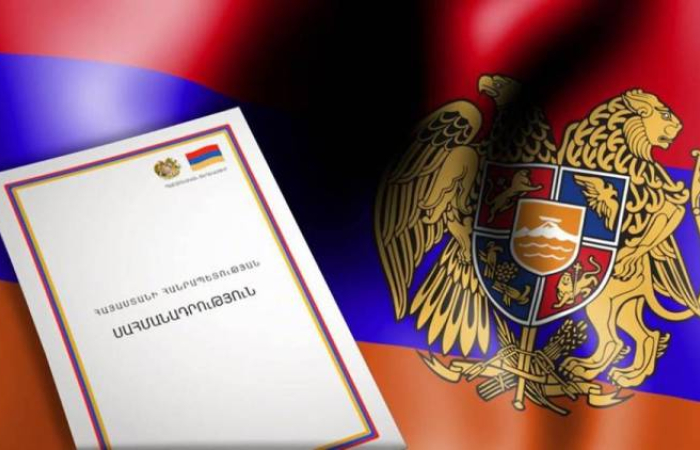
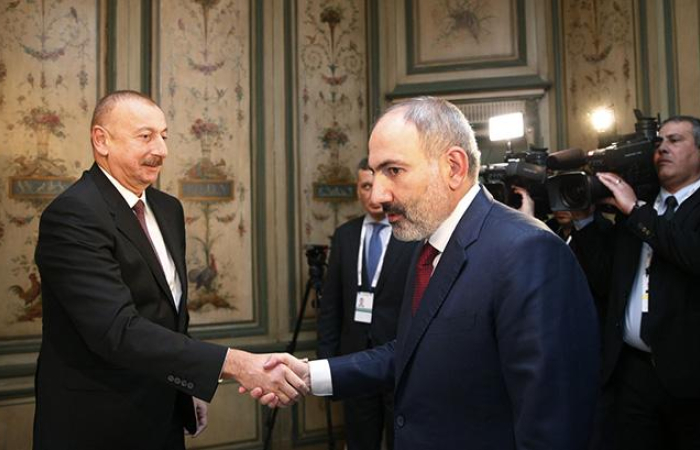
Despite progress between Armenia and Azerbaijan over border delimitation and demarcation, another issue threatens to hinder the signing of a long-awaited agreement to normalise relations. Baku now demands that Yerevan first removes from its constitution a controversial preamble referencing the 1990 Declaration of Independence. Based on the 1989 decision on the Reunification of the Armenian SSR and the Mountainous Region of Karabakh, the Armenian government has signalled that the preamble might be removed, but that it does not appreciate being publicly lectured from abroad to do so.
Editor's choice
News
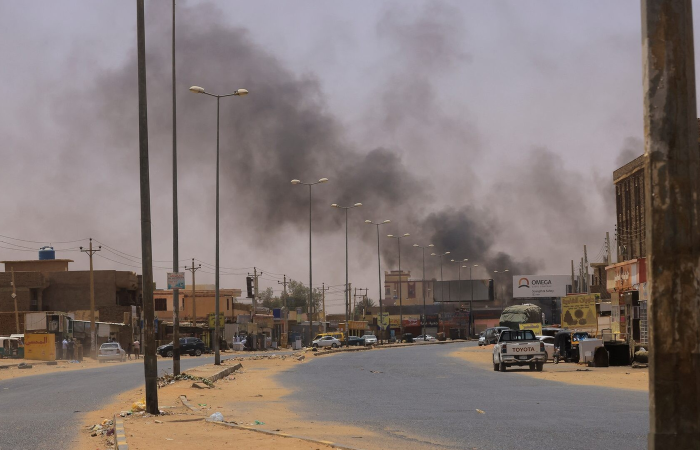
UN Security Council calls for an end to the siege of el-Fasher in Sudan's North Darfur province; Russia does not vote

UN Security Council calls for an end to the siege of el-Fasher in Sudan's North Darfur province; Russia does not vote

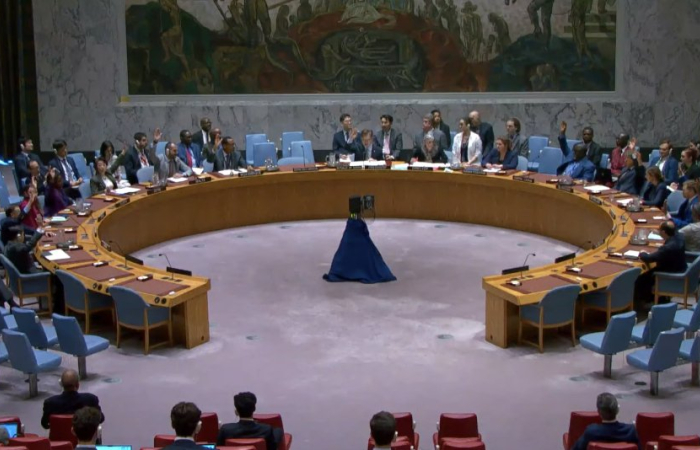
The UN Security Council, at the initiative of the United Kingdom, recently adopted a resolution on Thursday (13 June) calling for an immediate end to the siege of Al Fasher, the capital of Sudan's North Darfur state. The city, some 800 kilometres west of Khartoum, remains a key conflict zone as it is the last major western city not yet in the hands of the Rapid Support Forces (RSF). The RSF, a former elite unit made up of ethnic Arab militias and once part of the regime of dictator Omar Hassan al Bashir, is now led by General Mohamed Hamdan “Hemedti” Dagalo. Daglo, a military leader and wealthy businessman from Darfur, plays a central role in the current power struggle in Sudan. The violence has killed at least 14,000 people and displaced more than 10 million others, according to UN estimates.
Editor's choice
News
New report reveals climate impact of Russia's war in Ukraine: $32 billion damage over two years

New report reveals climate impact of Russia's war in Ukraine: $32 billion damage over two years

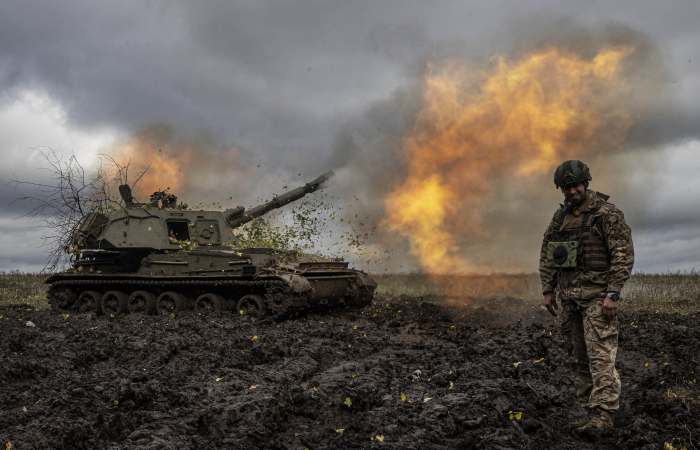
Russia's ongoing full-scale war in Ukraine, initiated on 24 February 2022, has caused significant environmental and climate damage, severely impacting global efforts to combat climate change. This is highlighted in the latest report from the Initiative on Greenhouse Gas Accounting of War (IGGAW), which analyses the environmental costs over the past two years. The report was published Thursday (13 June) by the Ministry for Environmental Protection and Natural Resources of Ukraine in collaboration with climate advocacy groups. The IGGAW report estimates climate-related damages at $32 billion, attributed to activities such as the extensive use of military fuels and the destruction of landscapes and infrastructure. Over 24 months, the conflict resulted in the emission of 175 million tonnes of carbon dioxide - more than the annual emissions of a developed country like the Netherlands.
Editor's choice
News
European countries accused of complicity after 11 bodies were recovered from the Mediterranean off Libya

European countries accused of complicity after 11 bodies were recovered from the Mediterranean off Libya

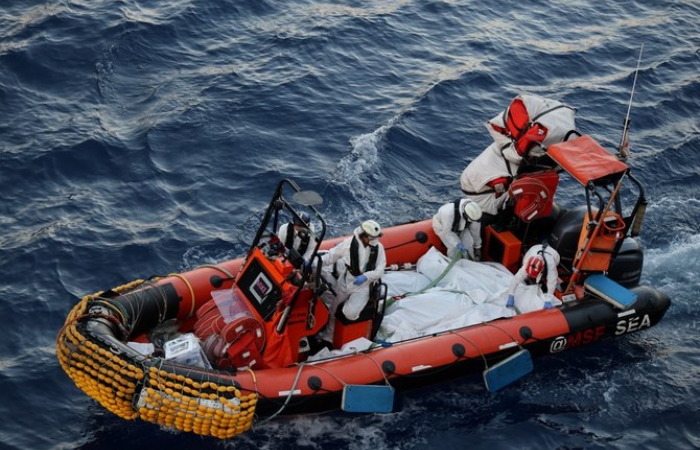
Doctors Without Borders, known by its French initials MSF, has reported the recovery of 11 bodies and the rescue of dozens of people off the coast of Libya. The organisation criticised the migration policies of Libya and European countries. In a statement on Friday (7 June), MSF said its Geo Barents rescue ship had recovered the bodies after a search lasting more than nine hours. The operation was launched after an alert from the German NGO Sea-Watch, which also assists refugees and migrants. "Although the cause of this tragedy remains unknown, it is clear that people will continue to undertake dangerous journeys in their desperate search for safety. Europe must create safe and legal routes for them," MSF said in a post on X. "This catastrophe must end!" 
Editor's choice
News
UN agency UNRWA urgently suspends aid to Rafah

UN agency UNRWA urgently suspends aid to Rafah

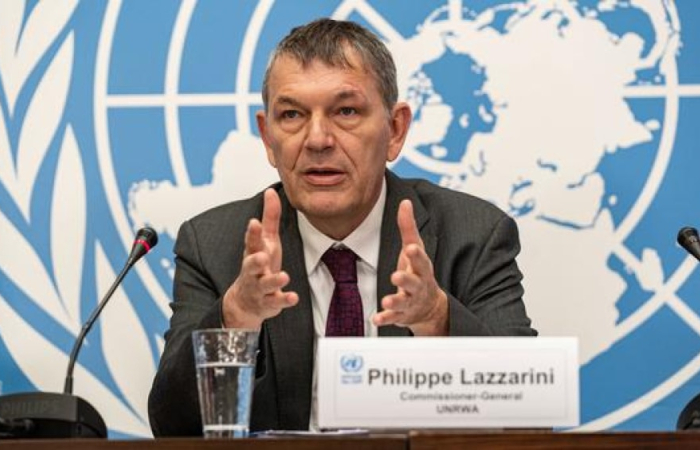
The United Nations Relief and Works Agency for Palestine Refugees in the Near East (UNRWA) has suspended its operations in Rafah. Philippe Lazzarini, the head of the organisation that provides aid to Palestinian refugees, conveyed this information on Saturday evening (1 June) via X. 
Editor's choice
Editorial
Approaching the end game for Armenia-Azerbaijan peace

Approaching the end game for Armenia-Azerbaijan peace

Nikol Pashinyan has taken Armenia on a long journey, and brought it close to peace with Azerbaijan. Few if any believed that he could achieve what has been done so far. It is true that Azerbaijani military superiority, the victory in 2020, and the puzzling events of September 2023, which saw the overnight collapse of the Armenian political project in Nagorno-Karabakh and the subsequent exodus of the entire Armenian population from the territory, in many ways pre-determined what is about to follow. But given the entrenched nationalist positions and hard-line narratives that have traditionally characterised Armenia’s political thinking, even these developments were not enough to guarantee peace. The last part of the journey had to be done in the minds of Armenians, and Pashinyan set about doing this with conviction and determination, challenging the narrative of a historical Armenia, that is only the imagination of the nationalist elites and advocating instead, "a real" Armenia with fixed border.