


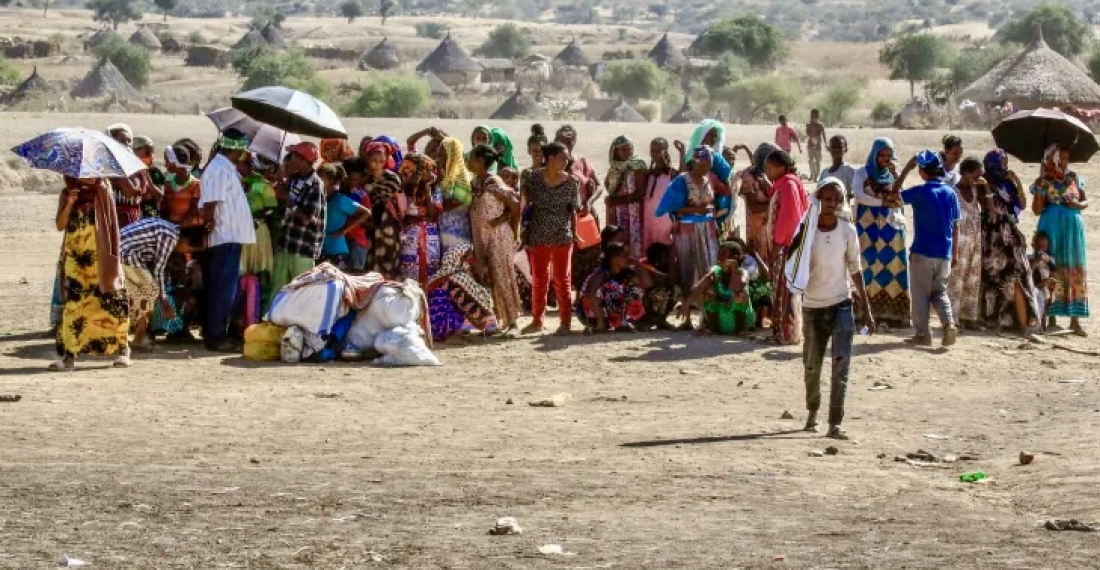
A new report finds strong evidence that Ethiopia committed genocide in Tigray war

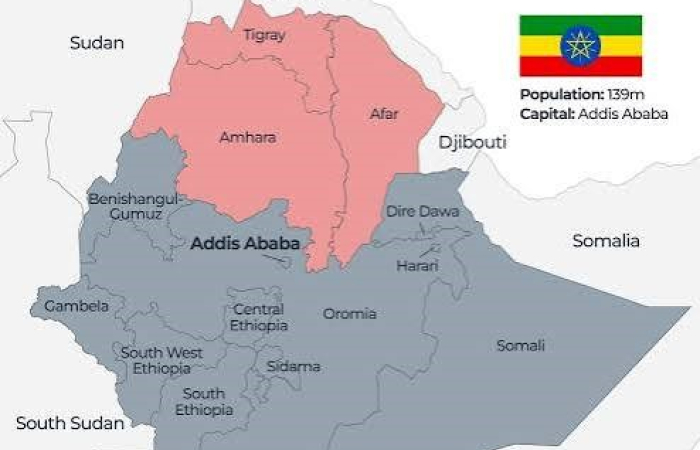
A new report has concluded that Ethiopian forces committed genocidal acts during the Tigray war, providing compelling evidence of such crimes. Released on Tuesday (4 June) by the United States-based New Lines Institute, the 120-page draft cites numerous credible and independent sources indicating that Ethiopian forces and their allies engaged in “acts constituting the crime of genocide” during the conflict, which lasted from 2020 to 2022. The report calls for Ethiopia to be brought before the International Court of Justice. The Tigray war began in November 2020 when the regional government’s bid for autonomy prompted the Ethiopian military to move into the northern region.

Thousands perished in the two-year conflict, which officially ended in November 2022. Both sides have accused each other of atrocities, including massacres, rape, and arbitrary detentions, but both deny responsibility for these abuses. A report from the United Nations last September stated that war crimes and crimes against humanity were still being committed nearly a year after the government and Tigrayan regional forces agreed to cease fighting.

The New Lines Institute report now asserts that there is evidence to show Ethiopia violated the Genocide Convention by targeting civilians with mass killings and starvation tactics. It claims the Ethiopian National Defense Force (ENDF), along with the allied Eritrean Defence Forces (EDF) and various regional militias, “possessed the intent to destroy Tigrayans as an ethnic group.” The report identifies at least four acts of genocide: killing Tigrayans, causing serious bodily or mental harm, deliberately inflicting conditions of life intended to destroy Tigrayans, and imposing measures designed to prevent births among Tigrayans. Additionally, the report highlights social media posts by “certain individuals” that amount to public incitement to genocide.
Source: commonspace.eu with Aljazeera and other agencies

Related articles

Editor's choice
News
German Chancellor holds talks with Saudi Crown Prince

German Chancellor holds talks with Saudi Crown Prince

Saudi Crown Prince Mohammed bin Salman received German Chancellor Friedrich Merz at Al-Yamamah Palace in Riyadh on Wednesday, Saudi Press Agency reported. The two leaders held an official session of talks. During the meeting, Merz and the crown prince "reviewed aspects of Saudi-German relations, areas of cooperation, and opportunities for their development in various sectors". The two leaders also discussed the latest regional and international developments and  efforts being made regarding them.  Merz arrived in Riyadh earlier on Wednesday on an official visit to Saudi Arabia, accompanied by a senior delegation.

Popular

Editor's choice
Interview
Thursday Interview: Murad Muradov

Thursday Interview: Murad Muradov

Today, commonspace.eu starts a new regular weekly series. THURSDAY INTERVIEW, conducted by Lauri Nikulainen, will host  persons who are thinkers, opinion shapers, and implementors in their countries and spheres. We start the series with an interview with Murad Muradov, a leading person in Azerbaijan's think tank community. He is also the first co-chair of the Action Committee for a new Armenian-Azerbaijani Dialogue. Last September he made history by being the first Azerbaijani civil society activist to visit Armenia after the 44 day war, and the start of the peace process. Speaking about this visit Murad Muradov said: "My experience was largely positive. My negative expectations luckily didn’t play out. The discussions were respectful, the panel format bringing together experts from Armenia, Azerbaijan, and Turkey was particularly valuable during the NATO Rose-Roth Seminar in Yerevan, and media coverage, while varied in tone, remained largely constructive. Some media outlets though attempted to represent me as more of a government mouthpiece than an independent expert, which was totally misleading.  Overall, I see these initiatives as important steps in rebuilding trust and normalising professional engagement. The fact that soon a larger Azerbaijani civil society visits to Armenia followed, reinforces the sense that this process is moving in the right direction." (click the image to read the interview in full)

