Theme

Conflict and Peace

Stories related to violent conflicts, diplomatic tensions, and conflict prevention, mediation and resolution.

Editor's choice
Young voices
Opinion: The children of Sudan that the world forgot to see

Opinion: The children of Sudan that the world forgot to see

Sudan’s latest war began in April 2023, though the seeds of its violence were planted long before. The Sudanese Armed Forces and the Rapid Support Forces did not collide out of nowhere; they emerged from decades of political rot, unaddressed grievances, ethnic persecution, and military rule that carved deep fractures into the country’s social fabric. When fighting exploded across Khartoum and later consumed Darfur, Kordofan, and the east, it unleashed one of the worst humanitarian catastrophes of the 21st century. In this op-ed, Ioana-Maria Ungureanu, Junior Research Assistant at LINKS Europe, takes a heartfelt look at the plight of Sudan, and its children. When the latest war started, whole cities emptied. Markets burned. Families fled on foot. And a famine began tightening its grip, slow and suffocating. And yet, the world remained mostly silent. Sudanese death is too often framed as an unfortunate feature of the region, a tragedy that feels expected rather than outrageous. Even when evidence of atrocity is abundant, it fails to command the same emotional weight. Sudan should not have to beg for visibility. It deserves it. Because its people deserve to live. And their lives deserve the same respect, safety, and hope that we demand for our own. (read the op-ed in full by clicking the image above)
Editor's choice
News
Egypt rejects Israeli "offer" for an exit only Rafah checkpoint in Gaza

Egypt rejects Israeli "offer" for an exit only Rafah checkpoint in Gaza

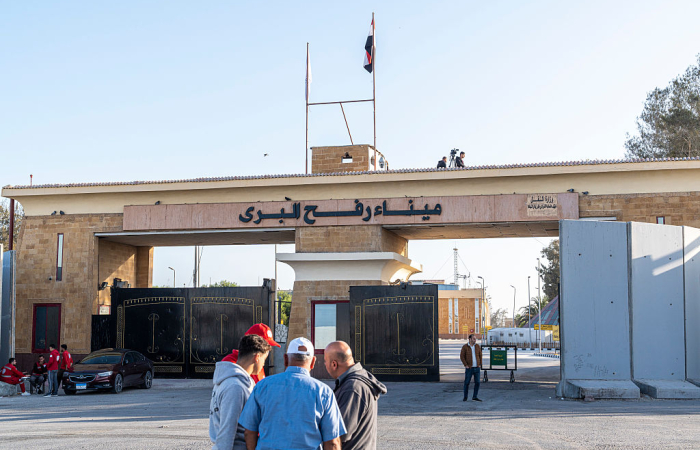
Egypt has rejected an Israeli "offer" for opening for exit only the Rafah checkpoint in Gaza. According to the Egyptian State Information Service, Egyptian authorities refuted on Wednesday afternoon reports that Israel claims it will open the Rafah crossing, the only lifeline for Gaza to the outside world, but only for those wishing to leave the besieged coastal enclave.  Citing an Egyptian official, the service stated that ''any agreement to open the crossing will cover both entry and exit, in line with US President Donald Trump's plan for humanitarian and political arrangements following the ceasefire.'' Cairo reaffirmed its adherence to the plan and UN Security Council Resolution 2803, including the right of return for Palestinians and maintaining two-way operations at the crossing. Earlier in the day, Israel's Coordinator of Government Activities in the Territories (COGAT) announced that the Rafah crossing would reopen ''within the next few days,'' marking the first such move since February 2025. According to the statement, departures would require prior Israeli security approval and would follow mechanisms previously implemented under EU supervision. Notably, the statement made no mention of the entry of humanitarian aid, which continues to flow through the Kerem Shalom crossing. A Palestinian official also echoed the Egyptian denial of Israel's claim. The announced agreements stress that no Palestinians will be forced to leave Gaza. Those who choose to travel will have the right to return, while humanitarian aid will continue through UN agencies, the International Red Cross and Crescent, and other independent organisations. A European Union official, who requested anonymity and is familiar with the matter, told TNA that the EU has received no official notification from Israel regarding new arrangements, stressing that "no changes exist beyond the January agreements, and we await Israel's formal approval for crossing operations under the Trump plan. "Reopening the crossing will follow mechanisms jointly supervised by the EU and the Palestinian Authority to ensure oversight and transparency, according to the EU official.

Filter archive

Publication date
Editor's choice
Analysis
G7 summit turning out not was expected with Israel-Iran conflict on everyone's mind

G7 summit turning out not was expected with Israel-Iran conflict on everyone's mind

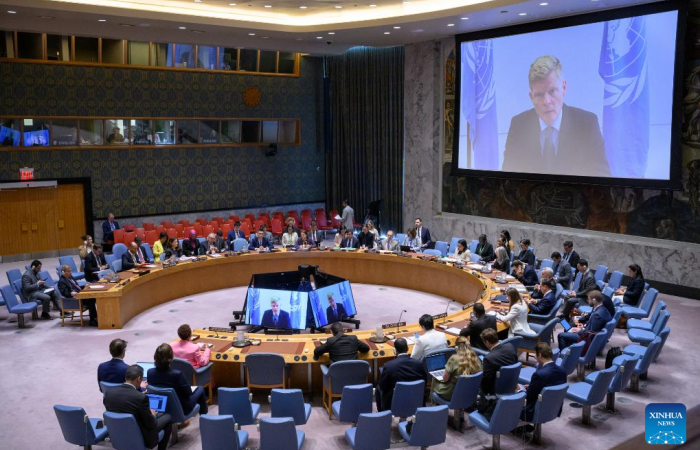
Leaders of the G7  countries meet in Canada this week, for a summit that is not quite what they had expected, with the Israel-Iran conflict being on everyone’s mind. The leaders of Britain, France, Germany, Italy, Canada and Japan and the European Union will be there, and of course, the president of the United States Donald Trump. Mark Carney, the new Canadian Prime Minister, had planned fo talks in the wilderness retreat of Kananaskis, that avoided rows with Mr Trump. Much of the agenda was non-controversial, about energy security, protecting mineral supply chains, accelerating the digital transition and tackling forest fires. However, Israel's decision to attack Iran will force the Group of Seven western powers to spend less time on other issues and instead discuss ways of managing the conflict. Canadian officials, still bruised by the experience of the last G7 summit that they hosted in 2018, even decided not to have a summit communique to avoid textual disputes dominating the gathering. On that occasion, Mr Trump in his first stint in office stormed out early and, on the plane home, withdrew his support for the summit communique. Instead, world leaders will agree a number of "short, action-oriented statements" that maintain consensus and ignore divisive issues. That now seems also to be overambitious. The G7 leaders, due to arrive in Canada on Sunday, know the global security and economic risks if this conflict escalates, dragging in other countries, sending oil prices soaring. Other leaders are also attending the summit as guests, including from Mexico, India, Australia, South Africa, South Korea, Ukraine and Brazil. Many of them have their own problems with Mr Trump.
Editor's choice
News
Clouds of war gather in the Middle East

Clouds of war gather in the Middle East

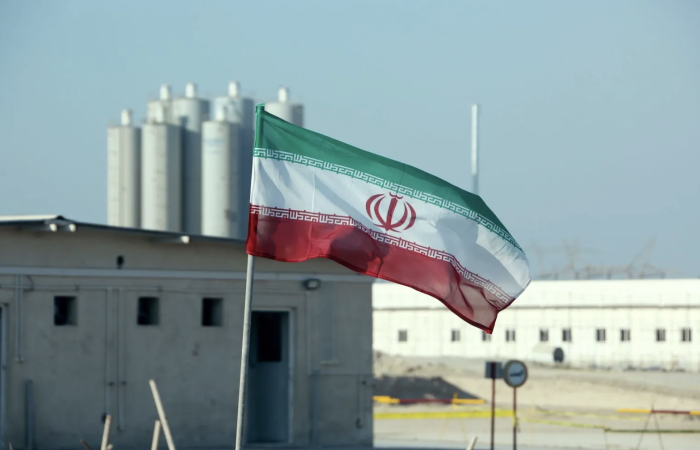
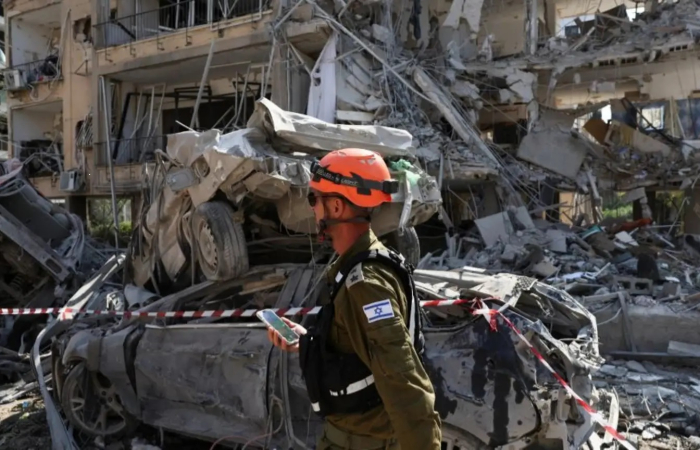
Iran  has responded to Israeli attacks on Thursday night, firing missiles at targets in Israel, including in Tel Aviv and Jerusalem, Both side say that civilians got killed in the attacks. Clouds of war are now gathering across the Middle East  and there is fear that this conflict may expand to other players. The Iranian FARS News agency quoted the new commander of the Islamic Revolution Guards Corps (IRGC) as saying that Iran would would take Israel to the gates of hell over the latter’s deadly onslaught against Tehran which led to the death of senior military commanders, including the IRGC own commander, Major General Hossein Salami.