


G7 summit turning out not was expected with Israel-Iran conflict on everyone's mind

Leaders of the G7  countries meet in Canada this week, for a summit that is not quite what they had expected, with the Israel-Iran conflict being on everyone’s mind. The leaders of Britain, France, Germany, Italy, Canada and Japan and the European Union will be there, and of course, the president of the United States Donald Trump.

Mark Carney, the new Canadian Prime Minister, had planned fo talks in the wilderness retreat of Kananaskis, that avoided rows with Mr Trump. Much of the agenda was non-controversial, about energy security, protecting mineral supply chains, accelerating the digital transition and tackling forest fires.

However, Israel's decision to attack Iran will force the Group of Seven western powers to spend less time on other issues and instead discuss ways of managing the conflict. Canadian officials, still bruised by the experience of the last G7 summit that they hosted in 2018, even decided not to have a summit communique to avoid textual disputes dominating the gathering. On that occasion, Mr Trump in his first stint in office stormed out early and, on the plane home, withdrew his support for the summit communique.

Instead, world leaders will agree a number of "short, action-oriented statements" that maintain consensus and ignore divisive issues. That now seems also to be overambitious.

The G7 leaders, due to arrive in Canada on Sunday, know the global security and economic risks if this conflict escalates, dragging in other countries, sending oil prices soaring. Other leaders are also attending the summit as guests, including from Mexico, India, Australia, South Africa, South Korea, Ukraine and Brazil. Many of them have their own problems with Mr Trump.

The most obvious test of the G7's existential tensions will be Mr Trump's trade war.

This club of some of the world's richest industrial nations was set up in the 1970s to discuss global economic crises. And yet now the G7 finds itself dealing with damaging tariffs imposed by one of its members.

One issue that was always to feature in the discussions is Ukraine, and how to put pressure on Russia. Ukrainian President Zelensky will join the discussions on Tuesday. His aim, along with other leaders, will be to assess the current state of President Trump's thinking towards Russia. Ukraine's allies want to put more pressure on President Putin to come to the negotiating table. To do that, they want to hit his economy harder.

 According to the BBC, it used to be said the G7 was a kind of "steering committee" for the free world. This week may reveal whether the club's driving days are over.

Source: commonspace.eu, with BBC (London) and agencies

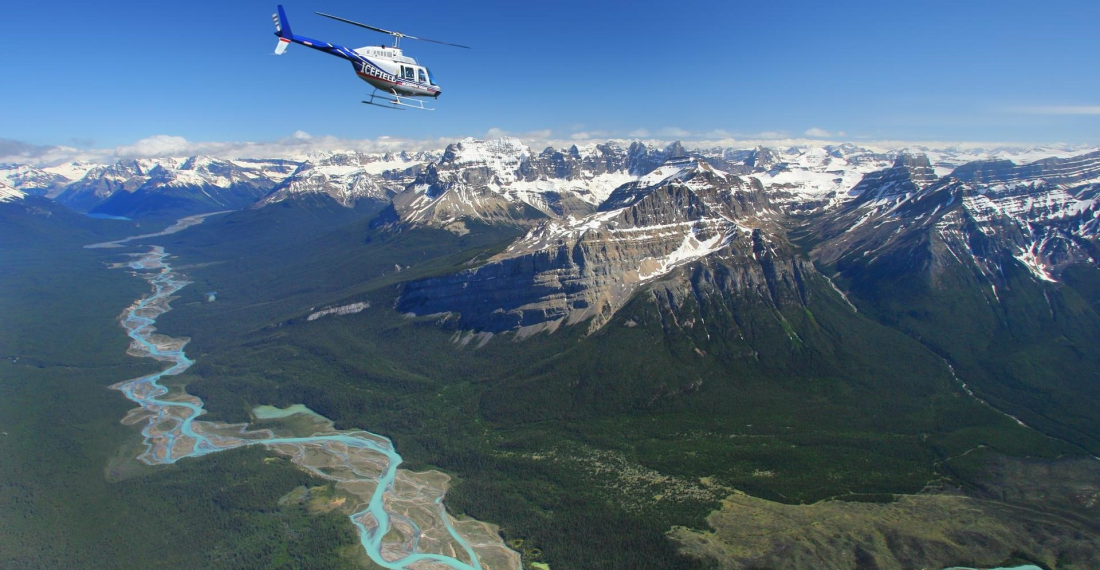
photo: Alberta (archive picture)

Related articles

Editor's choice
News
Israel recognises Somaliland, opening a pandora's box in Africa

Israel recognises Somaliland, opening a pandora's box in Africa

Israel ‍has recognized Somaliland as an "independent and sovereign state," Israeli Prime Minister Benjamin Netanyahu said on Friday. "Together with Foreign Minister Sa'ar and the President of the Republic of Somaliland, we signed a joint and mutual declaration," Netanyahu posted to X. "This declaration is in the spirit of the Abraham Accords signed at the initiative of President Trump," he said. In doing so, Israel became the first country to recognize the breakaway region. Somalia's Foreign Ministry denounced Israel's "deliberate attack" on its sovereignty and warned that recognizing Somaliland as an independent state would "undermine regional peace." "Illegitimate actions of this nature seriously undermine regional peace and stability, exacerbate political and security tensions," the ministry said in a statement. Egyptian Foreign Minister Badr Abdelatty said he held phone calls with his counterparts from Somalia, Turkey and Djibouti to discuss what they described as dangerous developments in the Horn of Africa, following Israel's announcement The ministers condemned Israel’s recognition of Somaliland, reaffirmed their full support for Somalia’s unity and territorial integrity, and warned that recognizing breakaway regions poses a threat to international peace and security, Egypt's Foreign Ministry said. "This initiative by Israel, which aligns with its expansionist policy and its efforts to do everything to prevent the recognition of a Palestinian state, constitutes overt interference in Somalia's domestic affairs," the Turkish Foreign Ministry said in a statement.  The African Union (AU) joined the condemnations of Israel's recognition of Somaliland.  "Any attempt to undermine the unity, sovereignty, and territorial integrity of Somalia... risks setting a dangerous precedent with far-reaching implications for peace and stability across the continent," an AU statement read. Israel said that it has now established diplomatic relations with Somaliland, and the two will soon set up embassies. commonspace.eu political editor said in a comment that by recognising Somaliland Israel has opened Africa's pandora's box. "The borders of most African countries were drawn in colonial times, and in the post-colonial period of the last seventy years, these borders have been considered sacrosanct. The two exceptions are also to be found in the Horn of Africa, where Eritrea broke away from Ethiopia and South Sudan broke away from Sudan." (click the image to read the full article).

Popular

Editor's choice
News
Israel recognises Somaliland, opening a pandora's box in Africa

Israel recognises Somaliland, opening a pandora's box in Africa

Israel ‍has recognized Somaliland as an "independent and sovereign state," Israeli Prime Minister Benjamin Netanyahu said on Friday. "Together with Foreign Minister Sa'ar and the President of the Republic of Somaliland, we signed a joint and mutual declaration," Netanyahu posted to X. "This declaration is in the spirit of the Abraham Accords signed at the initiative of President Trump," he said. In doing so, Israel became the first country to recognize the breakaway region. Somalia's Foreign Ministry denounced Israel's "deliberate attack" on its sovereignty and warned that recognizing Somaliland as an independent state would "undermine regional peace." "Illegitimate actions of this nature seriously undermine regional peace and stability, exacerbate political and security tensions," the ministry said in a statement. Egyptian Foreign Minister Badr Abdelatty said he held phone calls with his counterparts from Somalia, Turkey and Djibouti to discuss what they described as dangerous developments in the Horn of Africa, following Israel's announcement The ministers condemned Israel’s recognition of Somaliland, reaffirmed their full support for Somalia’s unity and territorial integrity, and warned that recognizing breakaway regions poses a threat to international peace and security, Egypt's Foreign Ministry said. "This initiative by Israel, which aligns with its expansionist policy and its efforts to do everything to prevent the recognition of a Palestinian state, constitutes overt interference in Somalia's domestic affairs," the Turkish Foreign Ministry said in a statement.  The African Union (AU) joined the condemnations of Israel's recognition of Somaliland.  "Any attempt to undermine the unity, sovereignty, and territorial integrity of Somalia... risks setting a dangerous precedent with far-reaching implications for peace and stability across the continent," an AU statement read. Israel said that it has now established diplomatic relations with Somaliland, and the two will soon set up embassies. commonspace.eu political editor said in a comment that by recognising Somaliland Israel has opened Africa's pandora's box. "The borders of most African countries were drawn in colonial times, and in the post-colonial period of the last seventy years, these borders have been considered sacrosanct. The two exceptions are also to be found in the Horn of Africa, where Eritrea broke away from Ethiopia and South Sudan broke away from Sudan." (click the image to read the full article).


