


The rights of all prisoners must be respected.

This commentary was prepared by the editorial team of commonspace.eu

The death in custody in Azerbaijan of Karen Petrosyan, of Armenian nationality, shortly after he was captured on Azerbaijani territory, is a matter of great concern. So is the refusal of the Armenian authorities to grant to two Azerbaijani civilians, captured in territory under their control, the appropriate status under the Geneva Conventions.

The two cases have some similarities in that those captured were not wearing military uniform. The sides have referred to them as terrorists. There may be some fine points of law on which both sides can argue their cases. One is that in the two cases those captured cannot be regarded as prisoners of war, since they were not wearing uniforms or rank insignias. Yet even if, for the sake of argument, one accepts this, it does not change the fact that both Armenia and Azerbaijan are also signatories to the European Convention on Human Rights and many other international instruments that put on them clear responsibilities with regards to all prisoners. In these cases these responsibilities become even more significant.

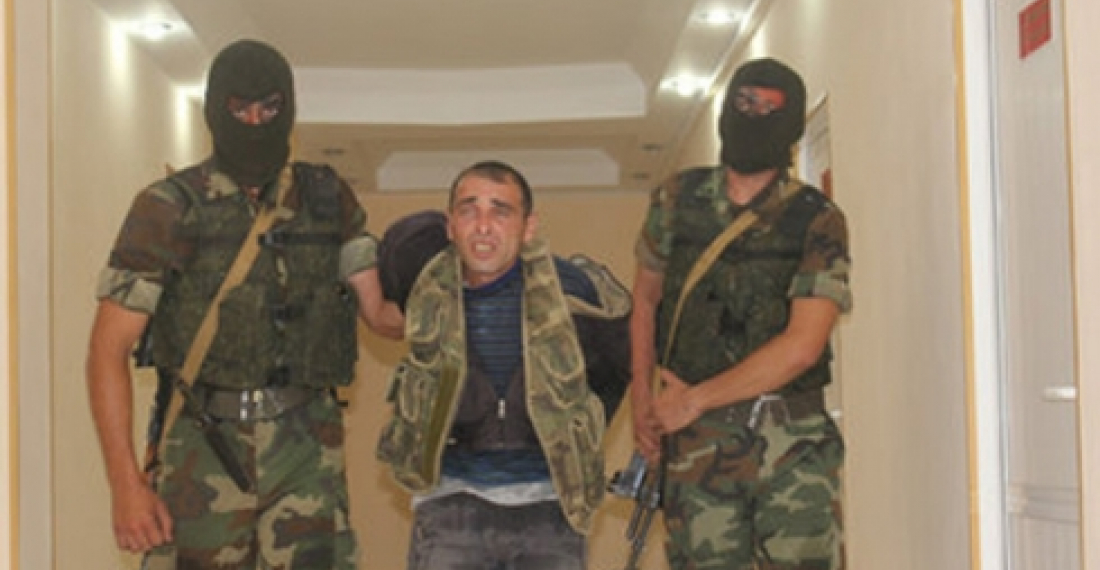
The sides should desist from public humiliation of captured prisoners, military or otherwise. They should give the ICRC immediate and unimpeded access to all captured nationals from the opposing side. They must also treat all captured with dignity.

The US government earlier this week reminded the governments of Azerbaijan and Armenia of their obligations under international humanitarian law, especially their obligation to treat humanely all those taken into custody. It also called on both Armenia and Azerbaijan to grant the International Committee of the Red Cross (ICRC) access to all detainees and internees held for conflict-related reason.

The death of Karen Petrosyan in Azerbaijani captivity is a serious issue and should be the subject of an independent and credible investigation to ascertain the cause of death. If Petrosyan was abused whilst in captivity, those responsible need to be brought to justice. This case is however not the only one that raises questions.

The three persons involved in the incident in Kalbajar, Dilgam Ahmadov, Shahbaz Guliyev and Hasan Hasanov (who was killed in the process of being captured) are reportedly indigenous of the region, opening the issue of Armenia's responsibilities as an occupying power under international law.

Furthermore, a recent incident in which a vehicle of the International Committee of the Red Cross was fired on in the Nagorno-Karabakh conflict zone, is also a matter of concern, as are unnecessary and unprofessional criticisms of the ICRC expressed on at least two occasions by a senior Azerbaijani official in recent weeks.

All these incidents together start forming a pattern. The situation around the Nagorno-Karabakh conflict has long been deteriorating. The spat of violence at the end of July and beginning of August constituted the most serious cease fire violations in nearly two decades. A proper peace process has so far eluded the sides and the international community. But even if Armenia and Azerbaijan have not yet had the courage and the vision to find a true path to peace, they must at least conduct warfare within the realms of civilised bounds.

Both Armenia and Azerbaijan are now trying to use the recent incidents for propaganda purposes. There must be a sharp and categorical refusal by the international community to accept distorted narratives. Instead, as the US State Department did a few days ago, the sides must be constantly reminded of their obligations in front of the world.

This commentary was prepared by the editorial team of commonspace.eu.

Photo: Armenian prisoner Karen Petrosyan, in Azerbaijani captivity shortly before he was found dead.


 

Related articles

Editor's choice
News
Borrell tells the European Parliament that the situation in Afghanistan was critical, but the EU will remain engaged

Borrell tells the European Parliament that the situation in Afghanistan was critical, but the EU will remain engaged

Borrell underlined that the European Union will make every effort to support the peace process and to remain a committed partner to the Afghan people. "Of course, we will have to take into account the evolving situation, but disengagement is not an option.  We are clear on that: there is no alternative to a negotiated political settlement, through inclusive peace talks.
Editor's choice
News
Thai-Cambodia border clashes enter fourth day

Thai-Cambodia border clashes enter fourth day

Renewed fighting between Thailand and Cambodia has entered its fourth day, with both sides accusing one another of violating international law, as they await a promised phone call from United States President Donald Trump. Cambodia’s Ministry of Defence accused Thailand’s military of carrying out numerous attacks within the country in the early hours of Thursday morning, including deploying tanks and artillery to strike targets in the country’s Pursat, Banteay Meanchey, and Oddar Meanchey provinces. In one such attack, Cambodia accused Thai soldiers of violating international humanitarian law by firing on civilians in Prey Chan village in Banteay Meanchey province. In another, it accused Thai forces of shelling “into Khnar Temple area”, and said Thai forces had also “fired artillery and support fire into the O’Smach area”. “Cambodia urges that Thailand immediately stop all hostile activities and withdraw its forces from Cambodia’s territorial integrity, and avoid acts of aggression that threaten peace and stability in the region,” the Defence Ministry said. Clashes took place on Wednesday at more than a dozen locations along the contested colonial-era demarcated 817-kilometre (508-mile) Thai-Cambodian border, with some of the most intense fighting being reported since a five-day battle in July, which saw dozens killed on both sides. Cambodia’s Ministry of the Interior said homes, schools, roads, Buddhist pagodas and ancient temples had been damaged by “Thailand’s intensified shelling and F-16 air strikes targeting villages and civilian population centres up to 30km [18.6 miles] inside Cambodian territory”. (click the image to read the full story).

Popular

Editor's choice
News
Thai-Cambodia border clashes enter fourth day

Thai-Cambodia border clashes enter fourth day

Renewed fighting between Thailand and Cambodia has entered its fourth day, with both sides accusing one another of violating international law, as they await a promised phone call from United States President Donald Trump. Cambodia’s Ministry of Defence accused Thailand’s military of carrying out numerous attacks within the country in the early hours of Thursday morning, including deploying tanks and artillery to strike targets in the country’s Pursat, Banteay Meanchey, and Oddar Meanchey provinces. In one such attack, Cambodia accused Thai soldiers of violating international humanitarian law by firing on civilians in Prey Chan village in Banteay Meanchey province. In another, it accused Thai forces of shelling “into Khnar Temple area”, and said Thai forces had also “fired artillery and support fire into the O’Smach area”. “Cambodia urges that Thailand immediately stop all hostile activities and withdraw its forces from Cambodia’s territorial integrity, and avoid acts of aggression that threaten peace and stability in the region,” the Defence Ministry said. Clashes took place on Wednesday at more than a dozen locations along the contested colonial-era demarcated 817-kilometre (508-mile) Thai-Cambodian border, with some of the most intense fighting being reported since a five-day battle in July, which saw dozens killed on both sides. Cambodia’s Ministry of the Interior said homes, schools, roads, Buddhist pagodas and ancient temples had been damaged by “Thailand’s intensified shelling and F-16 air strikes targeting villages and civilian population centres up to 30km [18.6 miles] inside Cambodian territory”. (click the image to read the full story).

