Region

Ukraine and Eastern Europe

Stories under this heading cover Ukraine and Eastern Europe. 

Editor's choice
News
UN General Assembly demands that Russia returns Ukrainian children

UN General Assembly demands that Russia returns Ukrainian children

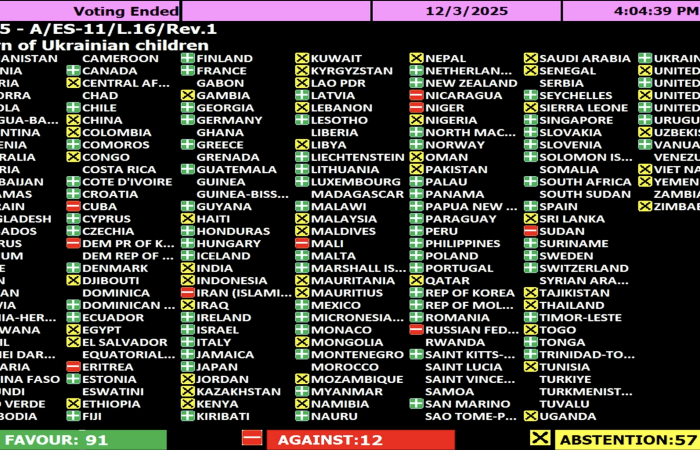
The UN General Assembly, in a vote on Wednesday (3 December) overwhelmingly voted in favour of a resolution demanding that Russia returns Ukrainian children kidnapped since the start of the Russian invasion in February 2022. 91 countries voted in favour of the resolution, 12 voted against, and 57 countries abstained or were not present. Russia and Belarus were joined by ten countries in voting against the resolution, namely, Iran, Cuba, Nicaragua, Burundi, Burkina Faso, Niger, Mali, Democratic Republic of Congo, Sudan, and Eritrea. From the South Caucasus, Georgia voted in favour of the resolution, but Armenia and Azerbaijan abstained, as did Turkiye and the five Central Asian republics. Also abstaining were the six Gulf monarchies and most Arab countries. The resolution calls for the immediate return of Ukrainian children who were deported to Russia. The Ukrainian government says more than 19,000 children have been taken away from Russian-occupied areas and elsewhere since Moscow's invasion began in February of 2022. The draft resolution submitted on Wednesday demands that Russia "ensure the immediate, safe and unconditional return" of the children. (Read more by clicking the image)
Editor's choice
Monday Commentary
Monday Commentary: Europe needs to continue supporting Ukraine fully in the crucial coming year

Monday Commentary: Europe needs to continue supporting Ukraine fully in the crucial coming year

Talks were held in Geneva on Sunday (23 November) between the United States and Ukraine. Also present in Geneva were representatives of the key European countries, France, Germany and UK, and the EU. The talks are expected to continue today. The future if Ukraine is at stake, and so is the future of Europe. There should be no doubt that Putin’s ambitions do not stop in Kiev. The talks are expected to continue today (24 November), and Ukraine’s de facto capitulation is not an option for Europe. The scandalous draft of the plan called “the US plan”, but probably written by the Russians, appears to have been put aside. Officially it is still called the “US plan”, that is what the ego of US president, Donald Trump, requires. But it started to look increasingly like the plan put forward by the Europeans, which is much closer to the Ukrainian position. The Europeans were not represented in Geneva by Ministers and politicians, but by their national security advisors, somber men who are cool and calculating. They have a difficult task: on the one hand they understand very well that Ukraine’s war is Europe’s war, and they know better than anyone else how big the threat of Putin’s Russia is to European peace and security. The risks of the “original US plan” are obvious to them. But they also understand that Ukraine, and up to now Europe, depend on the US for their security. So, they cannot alienate the American president too much. US Secretary of State, Marco Rubio, well understands the European dilemma. He finds himself in the unenviable position of needing to reconcile his president’s views, with the Ukrainian and European one. At stake is Ukraine’s future as a state. Ukrainian president Vlodomyr Zelenkiy quaintly calls it “Ukraine’s dignity”. But it is much more than that. Russia does not want Ukraine to exist as a state in any meaningful way. It should either have a puppet government, as it wanted to impose on Kiev when it launched the invasion in February 2022; or be so weak and dismembered that it will be in all but name a vassal of Russia. Whatever is finally agreed in Geneva, and whatever Donald Trump finally decides, 2026 is going to be a crucial year for Ukraine. European support has so far been steady, but must become steadier, regardless of Trumpian shenanigans. 2026 must be the year of European Ukraine. For this to happen their must be more resolve in Europe, and a stronger determination to support Ukraine fully. (read the full commentary by clicking on the image).


Filter archive

Publication date
Editor's choice
News
A busy week for western leaders as they prepare the next steps in response to Russian aggression in Ukraine

A busy week for western leaders as they prepare the next steps in response to Russian aggression in Ukraine

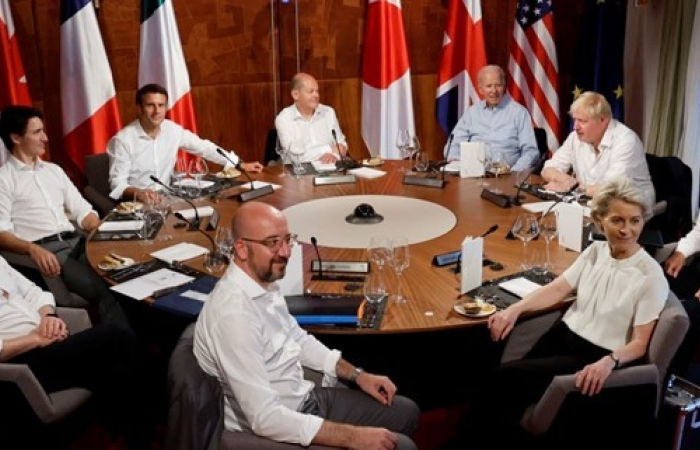
It is a busy week for Western leaders, as they prepare the next steps in response to Russian aggression in Ukraine. The leaders of the G7 - Canada, France, Germany, Italy, Japan, the United States and the Untied Kingdom, together with the European Union - started a summit meeting in Germany on Sunday. Later this week they will travel to Madrid for a summit meeting of NATO countries. The G7 meeting is taking place at a Castle in Germany’s Bavarian Alps were leaders went out of their way on Sunday (26 June), to show that they are united against Russian President Vladimir Putin’s invasion of Ukraine while discussing ways to minimize the war’s effect on rising global food and energy costs. U.S. President Joe Biden and German Chancellor Olaf Scholz met ahead of formal talks that also included the leaders of Britain, France, Canada, Italy, Japan and the European Union. Scholz said, "Germany and the U.S. will always act together when it comes to questions of Ukraine's security, and we made that clear once more." In a pre-summit show of force, Russia launched new missile attacks Sunday on Ukraine’s two biggest cities, the capital of Kyiv and Kharkiv, even as the G-7 leaders held talks to determine new ways to isolate Moscow. Biden announced the G-7 nations would ban new imports of Russian gold, the latest in an array of sanctions Western nations have imposed on Russia in an attempt punish it for Putin’s invasion of Ukraine, now in its fifth month.
Editor's choice
Commentary
Commentary: A historic decision leaves Ukrainians delighted, Moldovans ecstatic and Georgians grumpy

Commentary: A historic decision leaves Ukrainians delighted, Moldovans ecstatic and Georgians grumpy

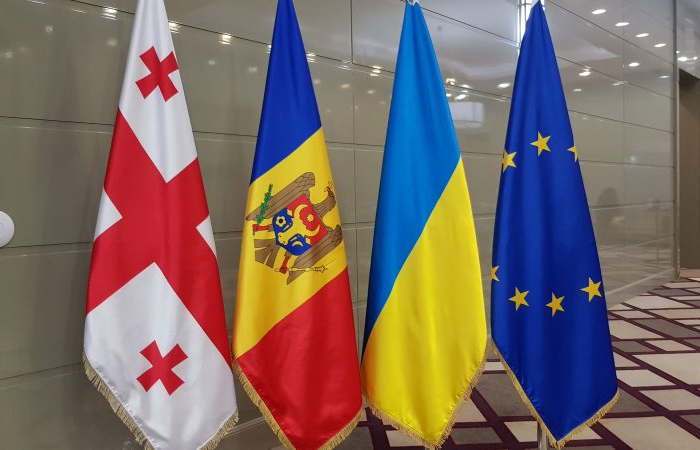
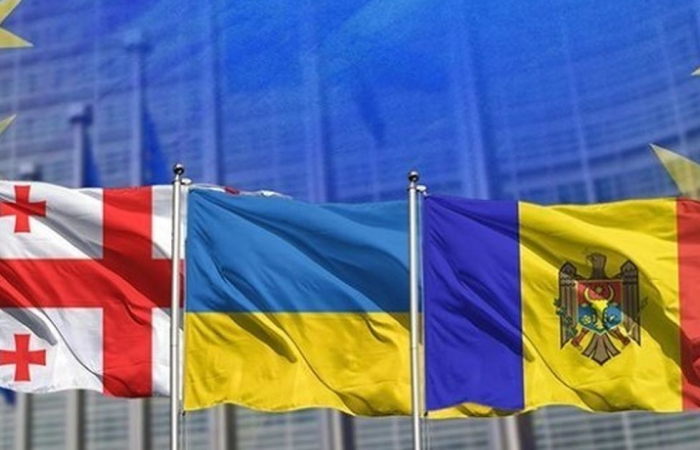
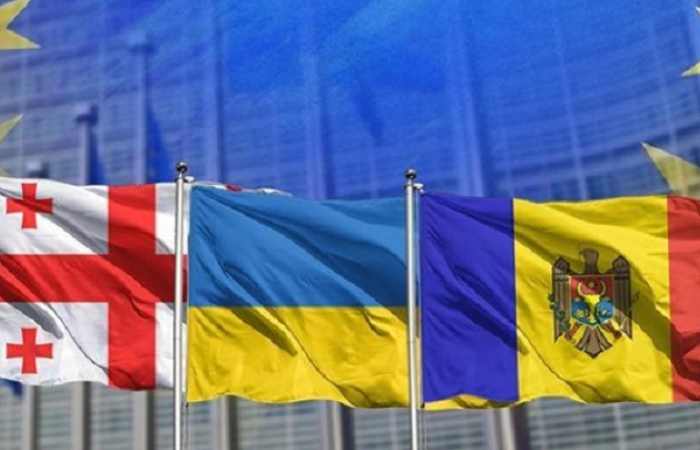
the European Council which gathers the 27 EU member states and the institutions, agreed to give Ukraine and Moldova candidate status with immediate effect. It gave Georgia "a membership perspective", with candidate status in the future if they can get their act together quickly. The Ukrainians were delighted. President Zelensky described it as a victory and promised not to rest until Russia’s defeat and full membership had been secured. In Moldova, the pro European government was ecstatic. Things had moved much faster than they had anticipated. In Georgia the situation is different, and the country is somewhat grumpy. Georgians do not  like to be last, and in a sense in this process at which they were until last year at the centre, they find themselves lagging behind the other two trio countries. The government has tried to put on a brave face saying that being given a membership perspective was a victory for Georgia too. The opposition accuses the government of squandering a historic opportunity which will have long lasting impact. In many ways both are right. An EU membership perspective is important for Georgia, even if it is largely an abstract term. It consolidates the relationship. But it would have been much better for Georgia if they had been given candidate status with the others. The ball is now in the court of the Georgian politicians, and the world will be watching.
Editor's choice
News
European Commission recommends to give candidate status to Ukraine and Moldova, and a membership perspective to Georgia

European Commission recommends to give candidate status to Ukraine and Moldova, and a membership perspective to Georgia

The EU should grant candidate status to Ukraine and Moldova, bringing them a step closer to bloc membership, while Georgia still has some work to do, but is given a membership perspective, the European Commission said on Friday (17 June). Ursula von der Leyen, President of the European Commission, said: “Ukraine, Moldova and Georgia share the strong and legitimate aspiration of joining the European Union. Today, we are sending them a clear signal of support in their aspirations, even as they face challenging circumstances. And we do so standing firm on our European values and standards, setting out the path they need to follow in order to join the EU. The Commission's opinions mark an inflection point in our relations. Indeed, this is a historic day for the people of Ukraine, Moldova and Georgia. We are confirming that they belong, in due time, in the European Union. The next steps are now in the hands of our Member States.”
Editor's choice
News
Brussels sources say European Commission will recommend candidate status for Ukraine, but final decision is with the EU member states

Brussels sources say European Commission will recommend candidate status for Ukraine, but final decision is with the EU member states

The European Commission will recommend granting Ukraine official status as an EU candidate country, according to several officials familiar with deliberations that took place during a debate among commissioners on Monday. This was reported by the authoritative website Politico on Tuesday (14 June) The debate in the College of Commissioners followed a surprise visit Saturday by Commission President Ursula von der Leyen to Kyiv, where she discussed Ukraine’s membership bid with President Volodymyr Zelenskyy. It was von der Leyen’s second trip to the Ukrainian capital since Russia’s full-scale invasion began in late February. Moldova and Georgia have also applied for candidate status, and officials said that commissioners were generally supportive of Moldova, where a staunchly pro-EU government is now in place, but that they were less confident about Georgia, which has suffered from pervasive political turmoil and notable democratic backsliding in recent years.
Editor's choice
Editorial
Editorial: Give Georgia, Moldova and Ukraine EU candidate status now!

Editorial: Give Georgia, Moldova and Ukraine EU candidate status now!

In the next few days the European Commission will announce its opinion on the request of Georgia, Moldova and Ukraine for European Union candidate status. A decision will then be taken by the 27 member states in the European Council at the end of this month. “Candidate Status” is the beginning of a journey for any country that wants to join the European Union. In the case of many successful candidates in the past, the process has often taken a decade or more. In the case of others, such as Turkey, the process does not appear to have an end in sight. In short candidate status is not an automatic ticket to EU membership, simply a political expression of the will of the applicant and of the EU to embark on the journey. This notwithstanding the EU has been increasingly hesitant to give a membership perspective to the trio. This is partly due to the so called “enlargement fatigue”, partly because there are those within the member states and the institutions who do not think Georgia, Moldova and Ukraine should be in the EU, period! These sceptics have been caught on the wrong foot by the war in Ukraine, the heroism of the Ukrainian resistance to the Russian invasion, and the decision of the trio to bring forward their request for candidate status and to ask that it be dealt with urgently. Clearly, Georgia, Moldova and Ukraine are not ready for EU membership today, but that is not what is on the agenda now. The many challenges facing the three countries should not be hidden under the carpet, and the political elites in Tbilisi, Chisinau and Kyiv must assume their responsibility to ensure political, economic and judicial reforms are implemented more comprehensively and more speedily. But for now, candidate status, especially in the present context, is primarily a political decision and a political statement, and it should be extended to the three countries now!
Editor's choice
Opinion
Opinion: Safe passage for Ukrainian grain exports through the Black Sea is a humanitarian necessity

Opinion: Safe passage for Ukrainian grain exports through the Black Sea is a humanitarian necessity

Disruption of Ukrainian grain exports is causing a global humanitarian food crisis. Measures need to be taken to create a humanitarian task force to ensure safe passage for export of Ukrainian grain to the rest of the world through the Black Sea and the Turkish Straits, argues Maximiliaan van Lange in this op-ed for commonspace.eu. Russia's blackmailing of the world with global hunger and food shortages among the world's poorest people must also be severely condemned by the international community. The current circumstances, in many ways, resemble the Holodomor, the Stalin-created famine in Ukraine in 1932-1933, that killed millions. The fact that Moscow is using grain as a weapon again in the twenty-first century is despicable and abhorrent. Global cooperation is therefore necessary to resolve this crisis, beginning with an internationally agreed humanitarian escort mission in the Black Sea, otherwise the consequences will be unforeseen.
Editor's choice
Interview
Interview with Ukrainian politician and activist Hanna Hopko: "Russia will not break us"

Interview with Ukrainian politician and activist Hanna Hopko: "Russia will not break us"

One hundred days ago, on 24 February, Russia invaded Ukraine in an attempt to overthrow the country's democratic government and install a puppet regime. This objective failed, but the war goes on, especially in the Donbass region where heavy fighting is taking place. Commonspace.eu interviewed Hanna Hopko, a Ukrainian politician and activist, who previously served as Chairman of the Foreign Affairs Committee of the Ukrainian Parliament and is today at the forefront of several important humanitarian initiatives. Hopko  speaks about Ukraine's frustration with Europe's long standing failure to appreciate Ukraine properly. She speaks about the heroism of young Ukrainians who are fighting off current Russian aggression, and recalls the loss of some of her own friends who have died in battle or have been imprisoned. Hopko however remains optimistic about the future, referring to the Ukraine Recovery Plan that is already being prepared. She speaks about the country's hopes to be granted EU candidate status later this month: "Ukraine will not except any plan B. Only candidate status.  Our aspiration to apply to EU membership is a result of the long fight of Ukrainians for the right to be part of a free European family. It is based on our achievements in transformations of the country despite Russian continues efforts to break us." Read the interview in full.