Region

South Caucasus

The South Caucasus – a region encompassing Armenia, Azerbaijan and Georgia - is one of strategic importance, not only for adjacent countries, such as Turkiye, Russia, Iran and the Central Asian states, but also for neighbours such as the European Union and the GCC states, and globally for the United States, India, China, Pakistan and Japan.

commonspace.eu team brings decades of experience of working in the South Caucasus and we are pleased to share our insights with our loyal readers through the website, and the sister newsletter, Caucasus Concise.

Editor's choice
Monday Commentary
Monday Commentary: 2025 was a momentous year for the South Caucasus

Monday Commentary: 2025 was a momentous year for the South Caucasus

The year 2025 has ended up being a momentous year for the South Caucasus, writes Dennis Sammut in his Monday Commentary. Armenia-Azerbaijan relations have been redefined, with consequences for the whole region and beyond. That huge development overshadowed key moments in the domestic trajectory of the two countries, which however have deep consequences for the two countries, and even beyond. It has also been a tumultuous year for Georgia too. The country has been gripped in a political crisis throughout 2025, with no obvious end in sight. Whatever the domestic arguments, on the international stage Georgia is today a shadow of what it used to be until recently. It not only has lost the chance of joining the European Union any time soon, but it has also lost its position as the leading South Caucasus country. Today, in the new reality of the region, it lags as a tired third. Important as 2025 was, it ended with a lot of unfinished business. So 2026 will also be crucial for the three countries. Since regaining its statehood in 1991 after the dissolution of the Soviet Union, Armenia-Azerbaijan relations have been defined by war. The two fought open wars, wars of attrition, and propaganda wars, incessantly. Tens of thousands of people lost their lives, and hundreds of thousands were displaced. Many had lost hope that the two could try the alternative – i.e. peaceful co-existence. Yet in 2025 they were proven wrong.
Editor's choice
Opinion
Opinion: A sustainable peace requires consistent long-term European involvement

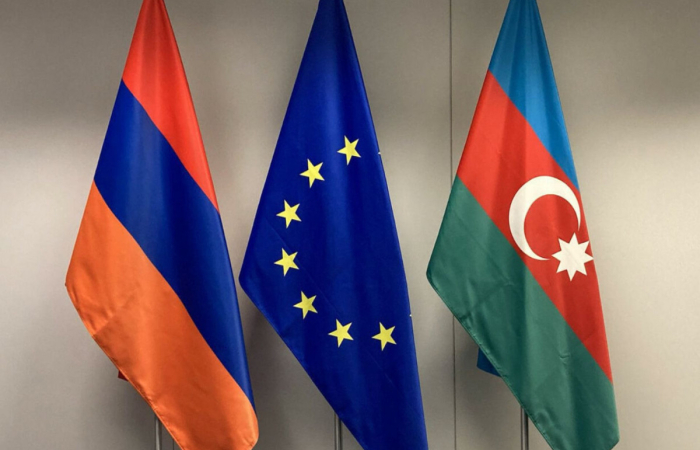
Opinion: A sustainable peace requires consistent long-term European involvement

There is no denying that the EU, especially key member states acting in support, helped bring Baku and Yerevan closer to the Washington Declaration of August 8, 2025. But a declaration is not a treaty. Turning principles into a peace deal and eventually to a sustainable peace requires consistent long-term European involvement, writes Yalchin Mammadov in this-op-ed for commonspace.eu Before facilitating trust between Armenia and Azerbaijan, the EU is first expected to address its own credibility gap with Baku. A more balanced approach—such as including Azerbaijan, alongside Armenia, in the European Peace Facility—could be a useful first step. Diplomats can negotiate peace; societies must build peace. In this context, the EU can do what it does the best: long-term societal engagement. By expanding youth and academic exchange programmes, investing in cross-border civil society initiatives, and fostering people-to-people cooperation, Brussels can help shape a new generation equipped to sustain peace beyond political cycles. Such tools are slow and unglamorous, but if ignored, even the strongest treaty risks collapse. And obviously, these aspects require two-way engagement and genuine willingness by both governments to facilitate contact. If Brussels wants to remain influential, it needs to replace outdated one-size-fits-all policies with ambitious, interest-driven and differentiated approaches. Without a clear regional strategy, which appears to be the current situation, the South Caucasus will continue to sit at the margins of Europe’s security architecture—leaving space for other powers to take the lead. (You can read the op-ed in full by clicking the image.)

Filter archive

Publication date
Editor's choice
News
Georgian police arrest anti-government protesters at pro-EU demonstration

Georgian police arrest anti-government protesters at pro-EU demonstration

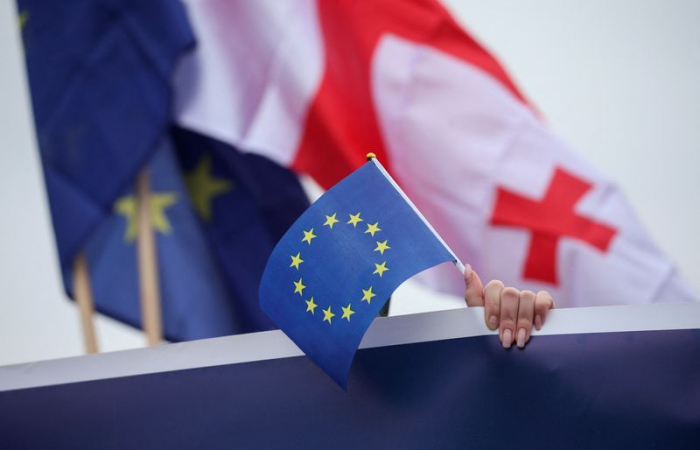
Police in Georgia arrested several anti-government protesters on Sunday as thousands of demonstrators demanding new parliamentary elections briefly blocked a motorway on the edge of the capital Tbilisi. Nika Melia, a leader of the country's largest opposition party, the Coalition for Change was among those arrested. He was later released on bail after detention for an administrative offence. Former Tbilisi mayor Gigi Ugulava, another prominent opposition figure was also arrested. Around thirty persons are reportedly still in detention.
Editor's choice
News
Georgian police arrest anti-government protesters at pro-EU protest

Georgian police arrest anti-government protesters at pro-EU protest

Police in Georgia arrested several anti-government protesters on Sunday as thousands of demonstrators demanding new parliamentary elections briefly blocked a motorway on the edge of the capital Tbilisi. Nika Melia, a leader of the country's largest opposition party, the Coalition for Change was among those arrested. He was later released on bail after detention for an administrative offence. Former Tbilisi mayor Gigi Ugulava, another prominent opposition figure was also arrested. Around thirty persons are reportedly still in detention.
Editor's choice
News
Prime Ministers of Georgia and Armenia meet in Yerevan

Prime Ministers of Georgia and Armenia meet in Yerevan

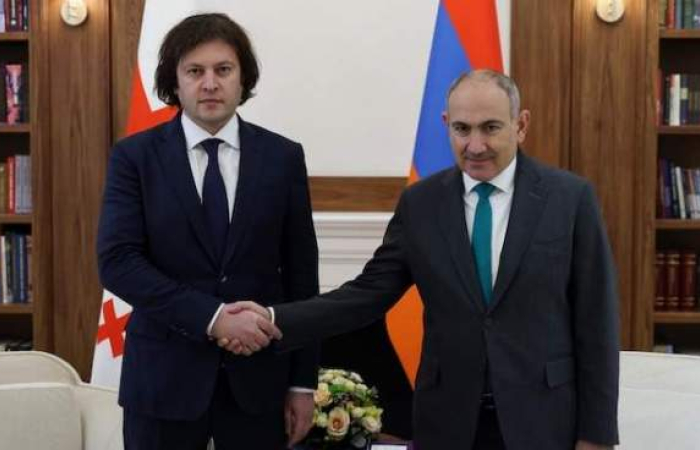
Georgian Prime Minister Irakli Kobakhidze met with his Armenian counterpart Nikol Pashinyan in Yerevan on Thursday. According to media reports,  they discussed the importance of the strategic partnership between the two countries as well as the issues to be discussed at the 14th Meeting of the Intergovernmental Commission for Economic Cooperation. They also gave attention to the situation in the region including progress in the peace process.
Editor's choice
News
 Armenians and Azerbaijanis discuss how to shape a dialogue best suited for today's realities as LINKS Europe kicks off new initiative

Armenians and Azerbaijanis discuss how to shape a dialogue best suited for today's realities as LINKS Europe kicks off new initiative

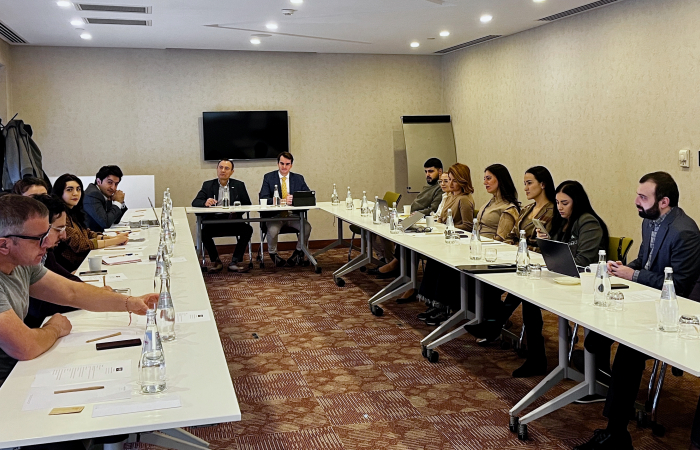
LINKS Europe held its first event within the recently launched EU4Peace III programme in Tbilisi on Thursday 30 January. Armenian and Azerbaijani participants engaged in an open and constructive discussion on how to shape a dialogue best suited to today's realities. As part of the initiative, LINKS Europe will shortly launch five thematic groups: The thematic groups, with Armenian and Azerbaijani participants will discuss the following topics: (1) Climate Change & the Green Economy; (2) Peace & Security; (3) Governance; (4) Regional Connectivity; (5) Gender and Diversity . On 2nd April, at a meeting in The Hague, LINKS Europe will launch the Armenia-Azerbaijan Expert Political Dialogue Platform. The platform is a parallel, mutually reenforcing initiative bringing together experienced Armenian and Azerbaijani experts and stakeholders. It is expected that one of the main tasks of the platform in 2025 will be to support the thematic groups, particularly in the phase of preparation of their reports. The EU4Peace III action, supported and funded by the European Union, aims to contribute to the sustainable normalisation of relations between Armenia and Azerbaijan. By broadening the engagement of social groups, the initiative aims to link political processes to wider societal transformation.
Editor's choice
News
Georgia suspends participation in the Council of Europe Parliamentary Assembly

Georgia suspends participation in the Council of Europe Parliamentary Assembly

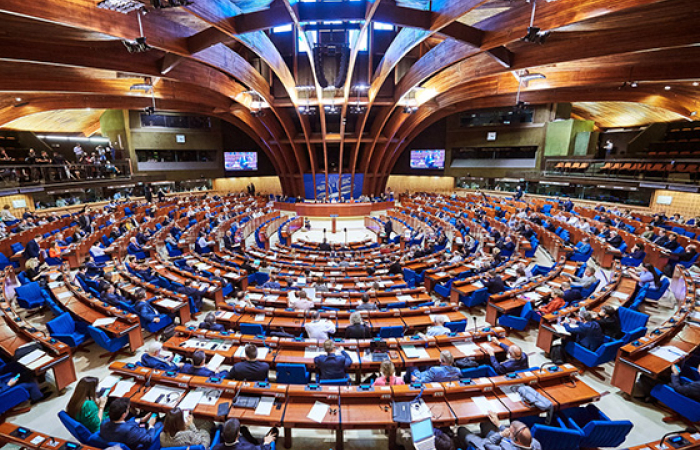
Georgia’s delegation to the Parliamentary Assembly of the Council of Europe (PACE) has announced that it will immediately halt its participation in the assembly after the plenary voted to impose strict conditions for ratifying the delegation’s credentials. Among the conditions is a rerun of the contested October 2024 parliamentary elections, which Georgia’s governing party, Georgian Dream, is accused of rigging, and the release of all political prisoners detained at ongoing pro-EU protests in the country. According to the resolution, which was passed on January 29 by 114 votes to 13 with seven abstaining, should the conditions be met, the assembly would revisit the ratification of the Georgian delegation’s credentials in April.
Editor's choice
News
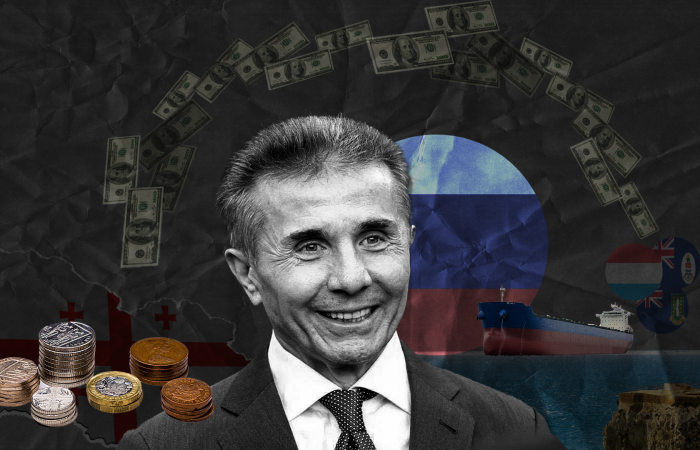
Ivanishvili Transfers Assets to Georgia Following U.S. Sanctions

Ivanishvili Transfers Assets to Georgia Following U.S. Sanctions

The influential chairman of the Georgian Dream Party Bidzina Ivanishvili and his family members have been transferring their business assets from offshore entities to companies registered in Georgia, according to Transparency International. This follows the financial sanctions imposed on Ivanishvili by the U.S. Treasury Department on the 27th December of last year due to Ivanishvili's alleged efforts to undermine democratic processes in Georgia in favor of the Russia. A few days later, on December 31, 2024, Ivanishvili began transferring his companies from offshore zones to Georgia, Transparency International reported on Wednesday.
Editor's choice
News
Russia threatens economic consequences for Armenia if it pursues membership of the European Union

Russia threatens economic consequences for Armenia if it pursues membership of the European Union

Russia has warned the Armenian government of severe economic consequences if it pursued plans to move towards membership of the European Union. Russian Deputy Prime Minister Alexei Overchuk insisted on Wednesday that the EU accession process will mark the beginning of Armenia’s withdrawal from the Eurasian Economic (EEU), a Russian-led trade bloc that gives Armenia tariff-free access to Russia’s vast market. “The outcome here is obvious: opening markets with the European Union will mean closing markets with the Eurasian Economic Union,” Russian news agencies quoted him as telling journalists.
Editor's choice
Opinion
Opinion: Trump’s new era and Azerbaijan - strategy and expectations

Opinion: Trump’s new era and Azerbaijan - strategy and expectations

In his interview to Azerbaijani media on January 7 this year, President Aliyev touched upon the issue of the upcoming Trump administration, notably speaking about his positive expectations, up to the prospects of establishing strategic partnership relations. This statement was rather unexpected, given many recent tensions between Baku and Washington, including the spat with the U.S. Embassy and the Azerbaijani side’s refusal to hold a US-mediated meeting of foreign ministers with Armenia during the OSCE Summit in Malta. Back then, Azerbaijani MFA issued a statement saying that the four years of the Biden administration were “lost years” for the Azerbaijan-US relations.
Editor's choice
News
EU suspends visa-free travel for Georgian diplomats and officials

EU suspends visa-free travel for Georgian diplomats and officials

The Council of the European Union has decided to suspend parts of the EU-Georgia visa facilitation agreement leading to Georgian diplomats and officials having to apply for visa when travelling to the EU. "For travels to a member state which has reintroduced visa requirements, Georgian diplomats and officials will also no longer benefit from shorter application times, lower visa fees, and the possibility to submit fewer supporting documents," a Council statement announced on Monday.