Region

South Caucasus

The South Caucasus – a region encompassing Armenia, Azerbaijan and Georgia - is one of strategic importance, not only for adjacent countries, such as Turkiye, Russia, Iran and the Central Asian states, but also for neighbours such as the European Union and the GCC states, and globally for the United States, India, China, Pakistan and Japan.

commonspace.eu team brings decades of experience of working in the South Caucasus and we are pleased to share our insights with our loyal readers through the website, and the sister newsletter, Caucasus Concise.

Filter archive

Publication date
Editor's choice
Commentary
It took an earthquake to jolt Armenia-Turkey relations out of decades of animosity

It took an earthquake to jolt Armenia-Turkey relations out of decades of animosity

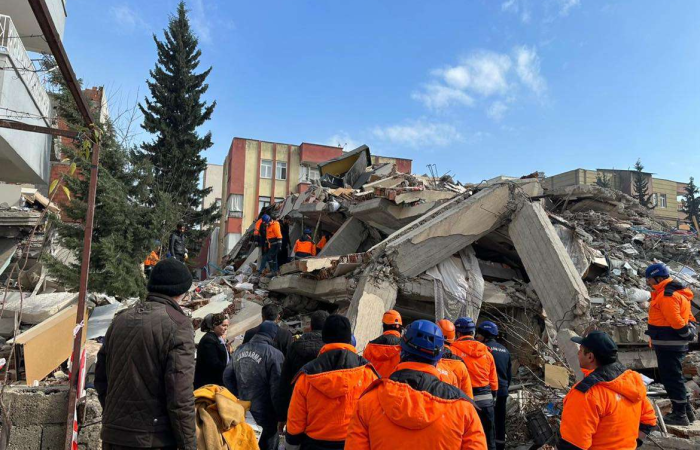
The earthquake that hit Turkey and parts of Syria on 6 February was a massive tragedy. As of Thursday (16 February) it has left nearly fifty thousand people dead, many tens of thousands injured and millions affected directly or indirectly. The world rallied around the beleaguered communities, putting aside political differences and diplomatic obstacles. The impact of the earthquake on Turkey was enormous. Ten out of eighty one Turkish provinces were affected, and some Turkish towns were wiped away almost completely. Humanitarian aid started pouring into Turkey from every part of the world. The contribution of one small neighbouring country was particularly significant, not only as part of the humanitarian effort, but also for its political and diplomatic symbolism. Armenia and Turkey have had a difficult relationship for decades. The two neighbouring countries do not have diplomatic relations. Their borders are closed. Recent attempts to normalise relations appeared to be moving at very slow speed – both sides having to manoeuvre around many sensitive issues, and a heavy baggage of history. It took an earthquake to jolt relations out of decades of animosity.
Editor's choice
News
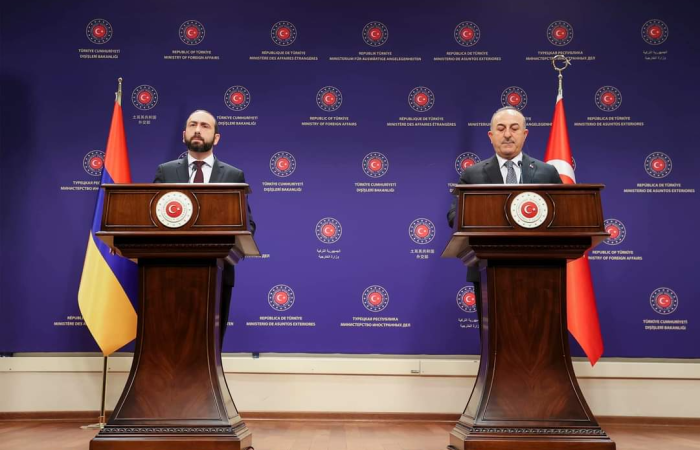
Turkish and Armenian foreign ministers meet in Ankara, agree to expedite work to open border

Turkish and Armenian foreign ministers meet in Ankara, agree to expedite work to open border

The Turkish and Armenian foreign ministers Mevlut Cavusoglu and Ararat Mirzoyan have met in the Turkish capital of Ankara on Wednesday (15 February). The meeting followed an announcement from Armenian officials that a second Armenian aid convoy crossed the land border into Turkey late on Tuesday after the devastating 6 February earthquake which has killed over 40,000 people across Turkey and Syria. The meeting is being seen as a major development in the normalisation of ties between the two countries who do not enjoy any formal diplomatic relations and who remain divided over a number of issues. Mirzoyan expressed his "condolences to the families of the many thousands of victims of the devastating earthquake, the people and government of Turkey, and I wish swift recovery to all those injured." Recalling the 1988 Spitak earthquake in Armenia that killed over 20,000 people, Mirzoyan said, "I believe that the international community must not remain indifferent towards any humanitarian crisis happening anywhere around the globe. And it was by this very principle that immediately after the devastating earthquake the government of Armenia made a decision to send rescuers and humanitarian aid to Turkey."
Editor's choice
News
Armenia "ready" to open border with Turkey, more aid passes through, FMs meet in Ankara

Armenia "ready" to open border with Turkey, more aid passes through, FMs meet in Ankara

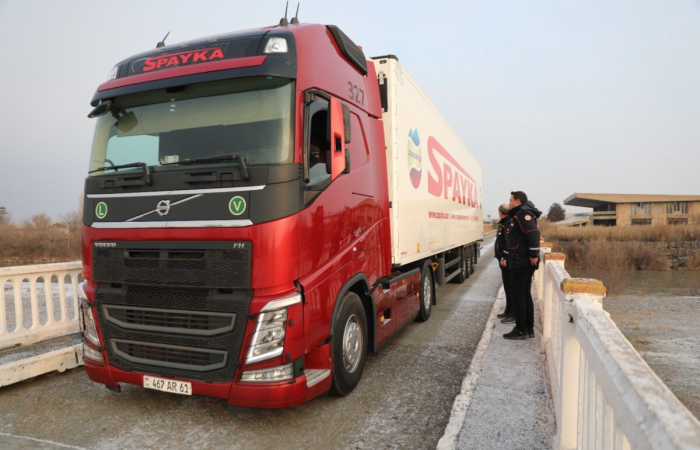
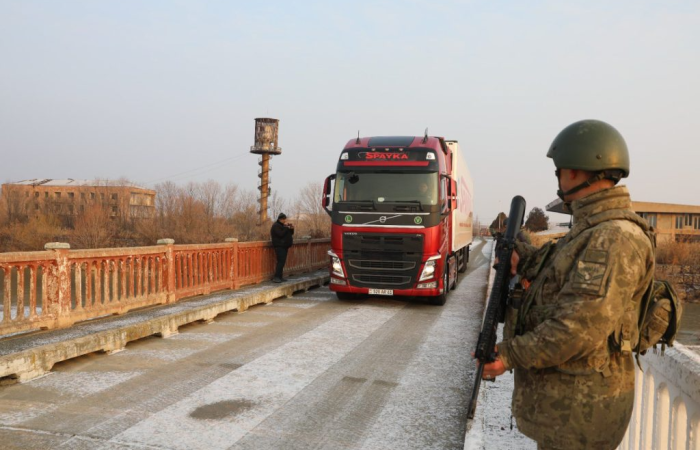
The Secretary of Armenia’s Security Council Armen Grigoryan has told journalists at a briefing on Tuesday (14 February) that Armenia is "ready"  for opening of the shared border with Turkey and normalisation of relations any time. "The Armenian and Turkish sides are holding discussions on the issue and will continue the discussions, hoping that it will take place as soon as possible," Grigoryan said. He added that an agreement on opening the border for nationals of third countries had indeed been reached last year between Armenia and Turkey, but said that no timeframe was discussed. The agreement was struck in July 2022, but changes on the ground have not yet materialised. Tweeting early in the morning on Wednesday, the Spokesperson for the Armenian Ministry of Foreign Affairs Vahan Hunanyan announced, "Armenia continues sending humanitarian aid to earthquake-affected regions. Late last night, trucks loaded with the second batch of humanitarian aid crossed the Armenian-Turkish border through the Margara bridge."
Editor's choice
News
Turkey-Armenia border opens for the first time in 30 years for earthquake aid

Turkey-Armenia border opens for the first time in 30 years for earthquake aid

The Margara-Alican border bridge connecting Armenia and Turkey has been opened to allow five Armenian aid trucks to pass to the Turkish regions affected by the magnitude 7.8 earthquake on Monday (6 February). It is the first time the Turkey-Armenia border has been opened in 30 years. "Trucks with humanitarian aid have crossed the Margara bridge on the border and are on their way to the earthquake-stricken region," Vahan Hunanyan, a spokesperson for Armenia’s Foreign Ministry, wrote on Twitter. Serdar Kılıç, Ankara’s special envoy to Yerevan, hailed the arrival of the aid trucks, writing on Twitter that he "will always remember the generous aid sent by the people of Armenia to help alleviate the sufferings of our people in the earthquake-striken region in Türkiye." The bridge, which connects the village of Margara in Armenia with the village of Alican in Turkey, had been closed since 1993, when Turkey closed its borders with Armenia in protest at the First Karabakh War.
Editor's choice
Opinion
Opinion: Tensions between Iran and Azerbaijan threaten regional stability

Opinion: Tensions between Iran and Azerbaijan threaten regional stability

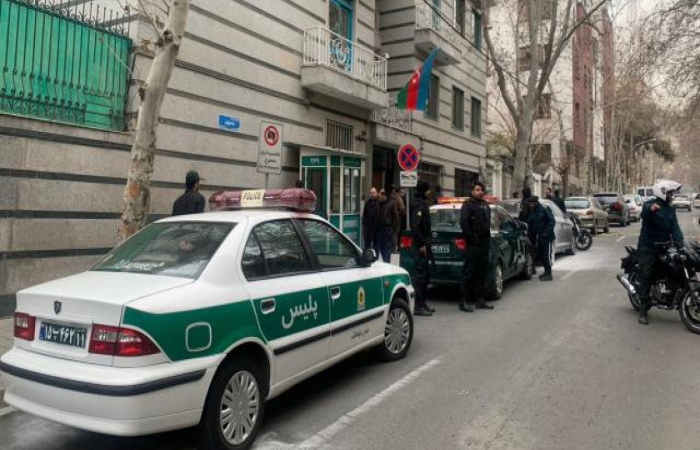
The violent attack against the Azerbaijani embassy in Tehran on 27 January has strained tensions between Azerbaijan and Iran, sparking fears of further deterioration in relations between the two countries, writers Vasif Huseynov in this op-ed for commonspace.eu. Azerbaijan rejected Iran’s assertions that the attack was driven by personal motives and accuses Tehran of whipping up anti Azerbaijani hysteria. All this has brought the bilateral relations between the two countries to a new low. It cannot be excluded that things will deteriorate even further, given that Tehran does not seem ready to renounce its claims against Azerbaijan. This constitutes an alarming threat to regional peace and security for a variety of reasons. Above all, the current state of bilateral relations, and the propagation of anti-Azerbaijani sentiments by the Iranian media, create a precarious situation that could easily spiral into escalation with the slightest incident or provocation. All this has brought the bilateral relations between the two countries to a new low. It cannot be excluded that things will deteriorate even further, given that Tehran does not seem ready to renounce its claims against Azerbaijan. This constitutes an alarming threat to regional peace and security for a variety of reasons. Above all, the current state of bilateral relations, and the propagation of anti-Azerbaijani sentiments by the Iranian media, create a precarious situation that could easily spiral into escalation with the slightest incident or provocation.
Editor's choice
Opinion
Opinion: The closure of the Lachin Corridor is in no one's interest

Opinion: The closure of the Lachin Corridor is in no one's interest

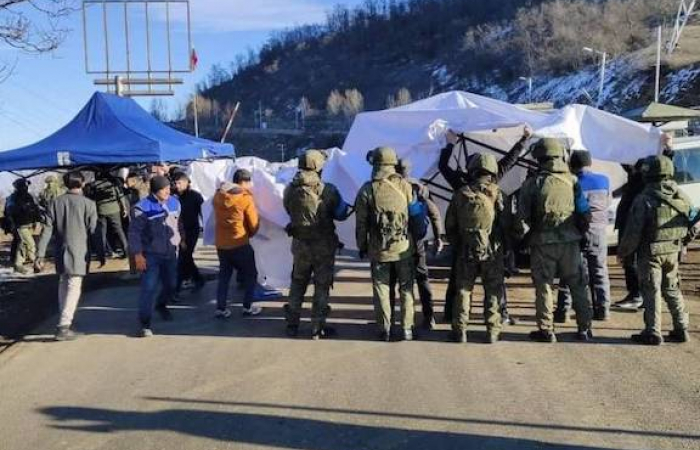
Azerbaijan has closed the Lachin corridor since December 12, 2022. There are different interpretations of why Azerbaijan did it, and why Baku continues the blockade despite calls from the international community to change its course writes Benyamin Poghosyan in this op-ed for commonspace.eu. Azerbaijan, Armenia, Russia, and the West, in one way or another, all suffer from the blockade. Ultimately, it is up to the Azerbaijani leadership to decide to re-open the road. "There can be other factors influencing Baku's decision however, one thing is clear – continuing the Nagorno Karabakh blockade harms everyone, and all interested parties should take steps to end it", he argues