Opinion: Tensions between Iran and Azerbaijan threaten regional stability

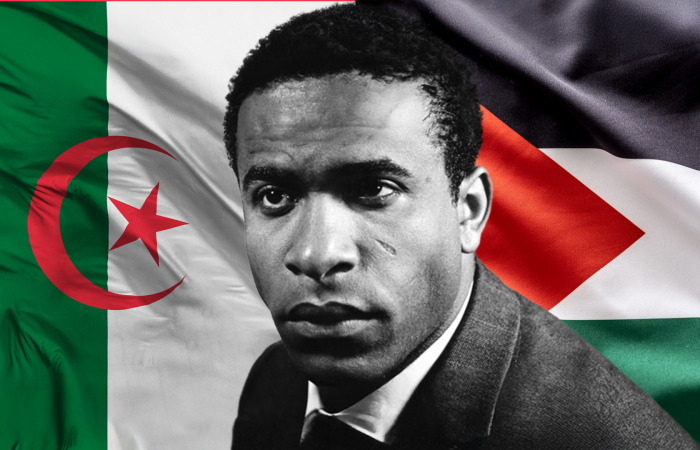
On February 7th, Azerbaijan disclosed some more details on the violent terrorist attack that occurred on January 27th on the Azerbaijani embassy in the Iranian capital. The recently released footage depicts a distressing situation in which the attacker is observed making gestures to both the Iranian diplomatic police, and someone else, prior to and during the attack.

Shockingly, the police officers who arrived at the embassy in a car fled the area after a short conversation with the Iranian police officer “guarding” the embassy. They, thus, left the Azerbaijani security officer, who was unarmed, to confront the attacker who was armed with multiple weapons that could potentially claim the lives of not only embassy personnel, but also their families residing in the same building.

The indifferent response of the Iranian police to the violence, their passive stance towards the attacker, and the mysterious communication between the attacker and others in the area bring into question the validity of the Iranian government’s assertion that the assailant acted solely on personal motives. It is worth recalling that incidents of similar assaults have occurred in the recent past against diplomatic missions in Tehran, such as the British embassy in 2011 and the Saudi Arabian embassy in 2016, during periods of strained international relations between Iran and the respective countries. All this has strained tensions between Azerbaijan and Iran, sparking fears of further deterioration in relations between the two countries that have already faced series challenges since the 2020 Second Karabakh War.

Iran has threatened Azerbaijan over concerns and interests in the South Caucasus

The root of this crisis is inextricably linked to the results of the 2020 war, which caught Iran off-guard. A number of developments since the end of this war, particularly the strengthening security alliance between Azerbaijan and Turkey, the expanding relationship between Azerbaijan and Israel, and the plans concerning the Zangazur corridor project, have caused alarm among Iranian officials. Tehran demonstrated a multifaceted reaction to the situation. This included military exercises along the border with Azerbaijan, military supplies to Armenia and the Armenian separatist forces in the Karabakh region of Azerbaijan, and an intensification in anti-Azerbaijani propaganda in the Iranian media and in the narratives of some Iranian officials.

The fact that the military exercises of the Iranian army employed pontoon bridges to practice crossing the river that forms the natural border between Azerbaijan and Iran in most sections of the interstate border raised eyebrows in Baku. Iranian experts and representatives of the security establishment have openly threatened that Iran might take over Azerbaijan if its government disregards Iran’s concerns and interests in the South Caucasus. They question Azerbaijan’s independence and its ethnic identity, claiming that Azerbaijan was a historical part of Iran and should return to Iranian control.

In December, the Azerbaijani media reported that Iran was providing military aid to Armenia free of charge in an effort to join forces against Azerbaijan. According to these reports, the Islamic Revolutionary Guard Corps (IRGC) supplied Armenia with 500 Dehlavieh anti-tank missiles and 100 Almas systems in October. This transfer of arms occurred against the backdrop of military exercises conducted by Iran along its border with Azerbaijan, for the second time since the conclusion of the 2020 War. Additionally, Azerbaijani media presented evidence that Iran was also sending military personnel to support Armenian separatist forces in the Karabakh region of Azerbaijan, abusing the Lachin road that is supposed to be used by Armenians only for humanitarian purposes under the trilateral statement of November 2020.

Iranian-Azerbaijani bilateral relations are at an all-time low

Concurrently, the Iranian media and many high-ranking officials openly describe Azerbaijan as a vassal state of Israel. One such article appeared in a media outlet close to the government of Iran which called Azerbaijan “Yahudistan” (a Jewish State) and voiced a list of threats and warnings against Baku. Certainly, this propaganda creates widespread anti-Azerbaijani sentiments amongst the Iranian public, which may lead them to violent protests against the representatives of the Azerbaijani government.

Baku is therefore right to link the attack against the embassy with all these threats and propaganda against Azerbaijan. Due to the risks of more attacks and violence, Azerbaijan evacuated its embassy in Tehran immediately after the attack, and rejected Iran’s assertions that the attack was driven by personal motives.

All this has brought the bilateral relations between the two countries to a new low. It cannot be excluded that things will deteriorate even further, given that Tehran does not seem ready to renounce its claims against Azerbaijan. This constitutes an alarming threat to regional peace and security for a variety of reasons. Above all, the current state of bilateral relations, and the propagation of anti-Azerbaijani sentiments by the Iranian media, create a precarious situation that could easily spiral into escalation with the slightest incident or provocation.
source: This op-ed was prepared for commonspace.eu by Dr Vasif Huseynov, Head of Department at the Centre of Analysis of International Relations (AIR Centre) and Adjunct Lecturer at Khazar University in Baku, Azerbaijan. 
 
photo:  The Azerbaijani Embassy in Tehran
The views expressed in opinion pieces and commentaries do not necessarily reflect the position of commonspace.eu or its partners

Related articles

Editor's choice
News
Council of Europe launches new International Claims Commission for Ukraine

Council of Europe launches new International Claims Commission for Ukraine

Thirty-four countries and the European Union have signed a new convention establishing an International Claims Commission for Ukraine at a diplomatic conference co-hosted by the 46-nation Council of Europe and the Netherlands in the Hague. The diplomatic conference was attended by leaders and high-level representatives from over 50 states, including the President of Ukraine, Volodymyr Zelenskyy, the President of the Republic of Moldova, Maia Sandu, and the Prime Minister of the Netherlands, Dick Schoof.  “Today marks a major step forward in ensuring accountability for Ukraine. The International Claims Commission represents justice and hope for tens of thousands of victims—our determination that those who have suffered will not be forgotten. I call for quick ratifications so we can get the commission rapidly up and running for the people of Ukraine,” said Council of Europe Secretary General Alain Berset. Ukrainian President Volodymyr Zelenskyy said: “We expect that every mechanism for compensation from the Register of Damage and Claims Commission to the actual payments – will start working and receive strong and sufficient international support, so that people can truly feel that any kind of damage caused by the war can be compensated. This war, and Russia’s responsibility for it, MUST become a clear example – so that others learn not to choose aggression.” “Accountability is about creating the conditions for peace that endures. And therefore, accountability is a condition of security – today and for the future. But accountability is not only about Ukraine. And it is not only about one aggressor and one victim. Accountability is about Europe. About every country in Europe. It is about whether Europe, as a whole, is willing to defend its peace,” said Maia Sandu, President of the Republic of Moldova, which currently holds the Presidency of the Council of Europe’s Committee of Ministers. The Prime Minister of the Netherlands, Dick Schoof, said: “Every day Russia is deliberately bombarding homes, destroying businesses and damaging infrastructure in Ukraine. Russia must compensate Ukraine for the damage caused. That is why we have launched the International Claims Commission for Ukraine and we are honoured to host it.” The International Claims Commission will be the second part of a comprehensive compensation mechanism related to Russia’s war of aggression, building on the existing Register of Damage for Ukraine. The claims commission will be established within the framework of the Council of Europe and will also be open to other countries. The Register of Damage for Ukraine, created in 2023, collects and records compensation claims submitted by individuals, organisations and public bodies in Ukraine. Forty-four states and the European Union have so far joined the Register, which has already received 86,000 claims. The International Claims Commission will review, assess and decide upon claims submitted to the Register of Damage for Ukraine and determine the amount of compensation, if any, which is due in each case. The convention establishing the commission will enter into force once it has been ratified by 25 signatories, as long as sufficient funds have been secured to support its initial work.

Popular

Editor's choice
News
Council of Europe launches new International Claims Commission for Ukraine

Council of Europe launches new International Claims Commission for Ukraine

Thirty-four countries and the European Union have signed a new convention establishing an International Claims Commission for Ukraine at a diplomatic conference co-hosted by the 46-nation Council of Europe and the Netherlands in the Hague. The diplomatic conference was attended by leaders and high-level representatives from over 50 states, including the President of Ukraine, Volodymyr Zelenskyy, the President of the Republic of Moldova, Maia Sandu, and the Prime Minister of the Netherlands, Dick Schoof.  “Today marks a major step forward in ensuring accountability for Ukraine. The International Claims Commission represents justice and hope for tens of thousands of victims—our determination that those who have suffered will not be forgotten. I call for quick ratifications so we can get the commission rapidly up and running for the people of Ukraine,” said Council of Europe Secretary General Alain Berset. Ukrainian President Volodymyr Zelenskyy said: “We expect that every mechanism for compensation from the Register of Damage and Claims Commission to the actual payments – will start working and receive strong and sufficient international support, so that people can truly feel that any kind of damage caused by the war can be compensated. This war, and Russia’s responsibility for it, MUST become a clear example – so that others learn not to choose aggression.” “Accountability is about creating the conditions for peace that endures. And therefore, accountability is a condition of security – today and for the future. But accountability is not only about Ukraine. And it is not only about one aggressor and one victim. Accountability is about Europe. About every country in Europe. It is about whether Europe, as a whole, is willing to defend its peace,” said Maia Sandu, President of the Republic of Moldova, which currently holds the Presidency of the Council of Europe’s Committee of Ministers. The Prime Minister of the Netherlands, Dick Schoof, said: “Every day Russia is deliberately bombarding homes, destroying businesses and damaging infrastructure in Ukraine. Russia must compensate Ukraine for the damage caused. That is why we have launched the International Claims Commission for Ukraine and we are honoured to host it.” The International Claims Commission will be the second part of a comprehensive compensation mechanism related to Russia’s war of aggression, building on the existing Register of Damage for Ukraine. The claims commission will be established within the framework of the Council of Europe and will also be open to other countries. The Register of Damage for Ukraine, created in 2023, collects and records compensation claims submitted by individuals, organisations and public bodies in Ukraine. Forty-four states and the European Union have so far joined the Register, which has already received 86,000 claims. The International Claims Commission will review, assess and decide upon claims submitted to the Register of Damage for Ukraine and determine the amount of compensation, if any, which is due in each case. The convention establishing the commission will enter into force once it has been ratified by 25 signatories, as long as sufficient funds have been secured to support its initial work.