Region

EU plus

Stories in this section cover the EU-27 countries plus the UK, Norway, Switzerland, Iceland, Liechtenstein, Monaco, Andorra and the Balkan Countries (Albania, Serbia, Montenegro, Bosnia-Herzegovina, Kosovo, North Macedonia).

Editor's choice
Opinion
Opinion: The European Union must recognise that the C5 have now become the C6

Opinion: The European Union must recognise that the C5 have now become the C6

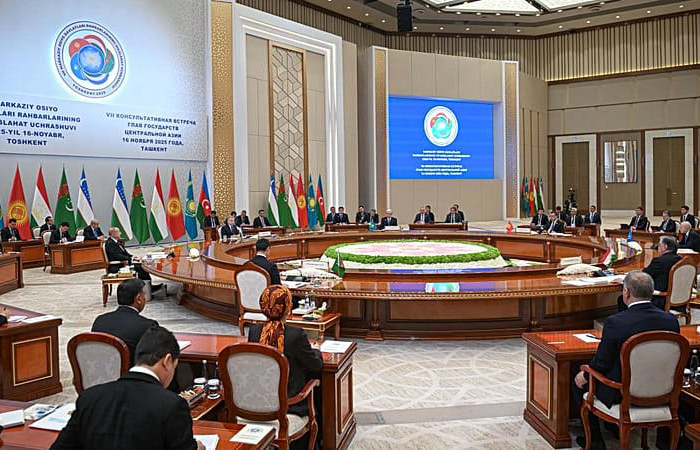
In recent years, Eurasia has undergone a structural transformation in how regions connect, trade, and cooperate. The combination of geopolitical shocks, disrupted supply chains, and the search for secure east–west routes has elevated the importance of the Trans-Caspian space. The states of Central Asia, once constrained by geography, have taken unprecedented steps to strengthen regional coordination, modernize infrastructure, and integrate more closely with Europe. Meanwhile, Azerbaijan has rapidly emerged as an indispensable connector linking Central Asia with the South Caucasus, Türkiye, and European markets. This new reality was formally acknowledged in November 2025 when Azerbaijan was unanimously welcomed as a full participant in the Consultative Meeting of Central Asian Heads of State in Tashkent. What had long been a C5 grouping transformed into a C6, marking a historic moment: the Caspian was no longer a frontier separating two regions but the center of a unified geopolitical and geo-economic space. President Ilham Aliyev described this alignment as the emergence of “a single geopolitical and geo-economic region,” while President Shavkat Mirziyoyev called Azerbaijan’s inclusion “historic” and proposed transforming the consultative platform into a structured regional institution capable of shaping security, economic, environmental, and digital policy. The Caspian is no longer a boundary; it is the heart of an integrated region. The transformation of the EU and U.S. C5+1 formats into C6+1 is the logical next step to ensure that both sides of the Caspian advance together – coherently, strategically, and with shared purpose. (click the image to read the full op-ed).
Filter archive

Publication date
Editor's choice
News
From the Kremlin to Rustavi 2, hysterical reactions pose a threat to Georgia

From the Kremlin to Rustavi 2, hysterical reactions pose a threat to Georgia

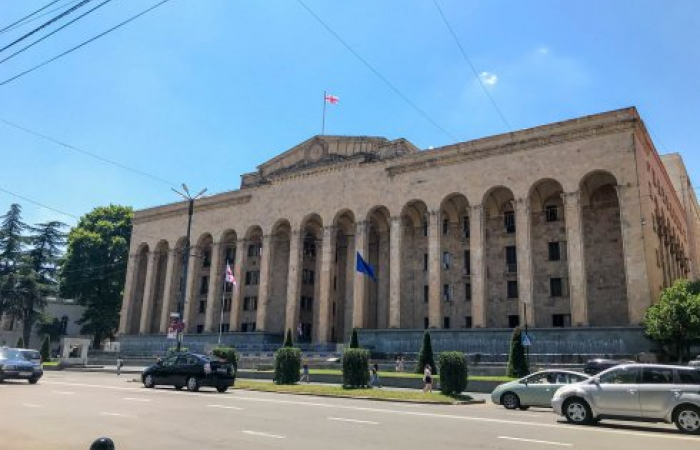
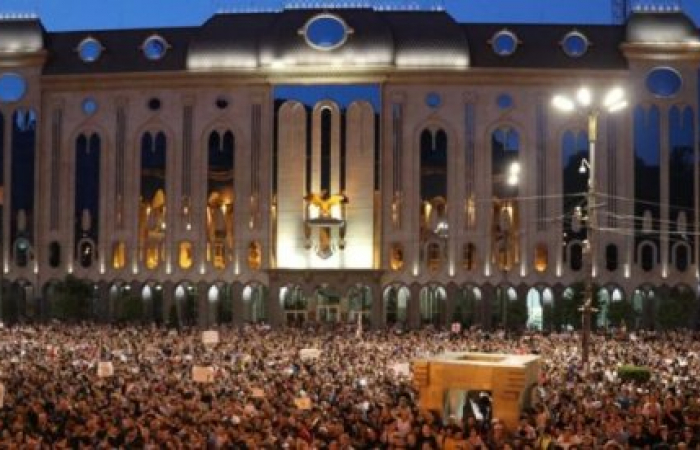
Georgian politicians of all persuasions, who constantly wrap themselves up in EU and NATO flags, have been acting in a way which makes Georgia look like an unstable banana republic not an aspirant for EU or NATO membership. There seems to be no one in Georgia who is able to exercise restraint on a political class that has got used to shooting from the hip, creating a highly polorised, divided and disillusioned society. The international community now needs to step in and step up.
Editor's choice
Opinion
Opinion: 'Game of Thrones moment' for Azerbaijan in Nagorno-Karabakh

Opinion: 'Game of Thrones moment' for Azerbaijan in Nagorno-Karabakh

In this op-ed, Ahmad Alili considers the implications if Azerbaijan decides to use force to resolve the Karabakh conflict. "Any further military action in the region will further increase the enmity between Azerbaijanis and Armenians; regaining control militarily over Nagorno-Karabakh may, in fact, end up prolonging the conflict itself", he says.
Editor's choice
News
Russia continues to put pressure on Georgia

Russia continues to put pressure on Georgia

David Bakradze, of the opposition European Georgia Party, has in the meantime raised the issue of Russia's return to full participation in the Parliamentary Assembly of the Council of Europe (PACE), which is going to be discussed at a meeting in Strasbourg this week. Bakradze said that it was not acceptable that Russia be allowed to return to PACE given its recent actions.