Region

EU plus

Stories in this section cover the EU-27 countries plus the UK, Norway, Switzerland, Iceland, Liechtenstein, Monaco, Andorra and the Balkan Countries (Albania, Serbia, Montenegro, Bosnia-Herzegovina, Kosovo, North Macedonia).

Editor's choice
News
Germany accuses Russia of cyberattacks and disinformation campaign

Germany accuses Russia of cyberattacks and disinformation campaign

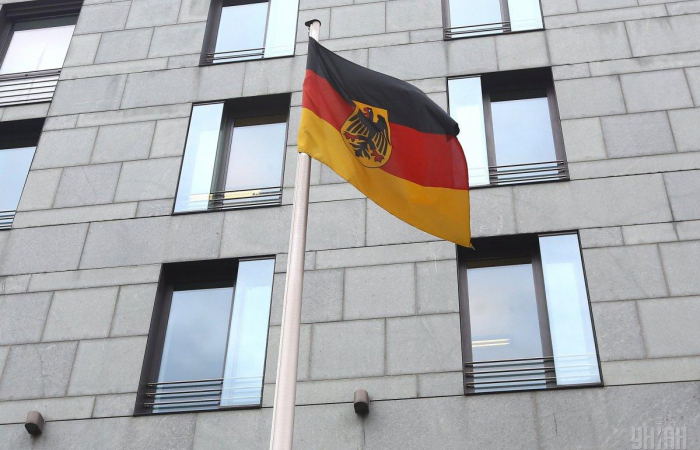
The German government holds Russia responsible for a cyberattack on German air traffic control, and for targeted disinformation campaigns before the last federal election. According to the German Foreign Office in Berlin, the incidents could be clearly attributed to the Russian military intelligence service, the GRU. In response, the Russian ambassador to Berlin was summoned to the Foreign Ministry. "We have been observing a massive increase in threatening hybrid activities by Russia for some time now," a spokesperson for the Foreign Ministry stated. These range from disinformation campaigns and espionage to cyberattacks and sabotage attempts. The aim is to divide society, sow distrust, and undermine confidence in democratic institutions. The spokesperson added that with these actions, Russia is "very concretely threatening our security, not only through its war of aggression against Ukraine, but also here in Germany."  The Foreign Ministry spokesperson explained that the cyberattack on air traffic control in August 2024 was clearly attributed to the hacker collective "APT28," known as "Fancy Bear," and to the responsibility of the Russian military intelligence service, the GRU. Furthermore, it could now be "conclusively stated" that Russia had attempted "to influence and destabilize both the last Federal election and the ongoing internal affairs of the Federal Republic of Germany." There was "absolutely irrefutable evidence" for this". The so-called "Storm 1516" campaign, which has been running since 2024, is allegedly backed by "reliable information" that the Moscow-based think tank "Center for Geopolitical Expertise" is behind it. The Center is also said to be supported by Russian military intelligence. Its primary aim is to influence democratic elections in the West. (Click the image to read more).
Editor's choice
News
NATO Chief says war is on Europe's doorstep, and warns against complacency

NATO Chief says war is on Europe's doorstep, and warns against complacency

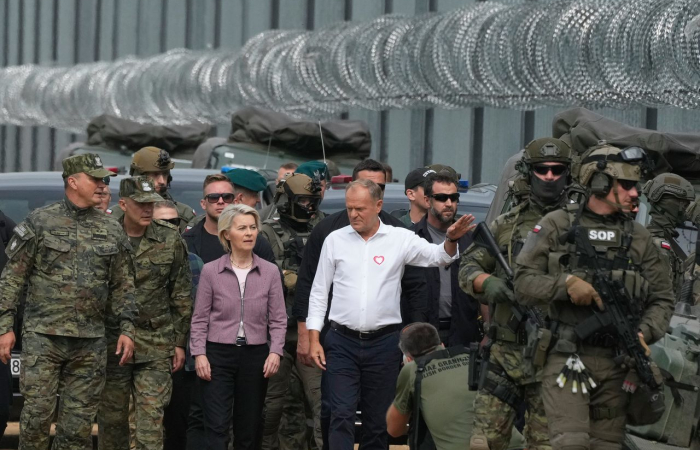
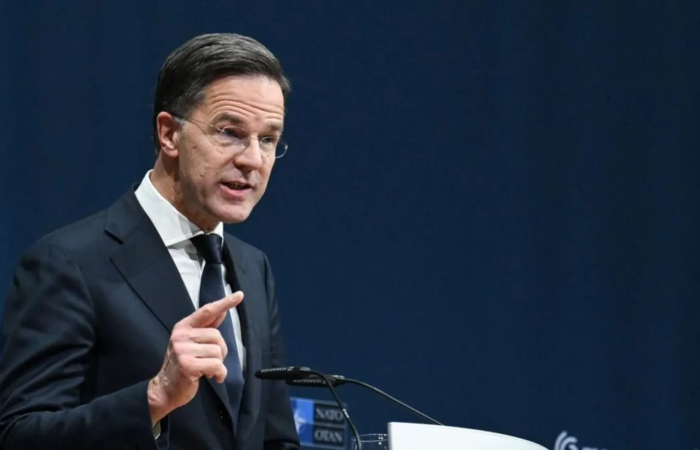
Russia could attack a NATO country within the next five years, the Secretary General of NATO, Mark Rutte, said in a stark new warning. "NATO's own defences can hold for now," Rutte warned in Berlin, but conflict was "next door" to Europe, and he feared "too many are quietly complacent, and too many don't feel the urgency, too many believe that time is on our side. "Russia is already escalating its covert campaign against our societies," Rutte said in a speech in Germany. "We must be prepared for the scale of war our grandparents or great-grandparents endured." Earlier this month, Russia's President Vladimir Putin said his country was not planning to go to war with Europe, but it was ready "right now" if Europe wanted to - or started a war. But similar reassurances were given by Moscow in 2022, just before 200,000 Russian troops crossed the border and invaded Ukraine. Putin has accused European countries of hindering US efforts to bring peace in Ukraine - a reference to the role Ukraine's European allies have recently played in trying to change a US peace plan to end the war, whose initial draft was seen as favouring Russia. But Putin was not sincere, Nato's secretary-general said in the German capital, Berlin. Supporting Ukraine, he added, was a guarantee for European security. "Just imagine if Putin got his way; Ukraine under the boot of Russian occupation, his forces pressing against a longer border with Nato, and the significantly increased risk of an armed attack against us." Russia's economy has been on a war footing for more than three years now - its factories churn out ever more supplies of drones, missiles and artillery shells. According to a recent report by the Kiel Institute for the World Economy, Russia has been producing each month around 150 tanks, 550 infantry fighting vehicles, 120 Lancet drones and more than 50 artillery pieces. The UK, and most of its Western allies, are simply not anywhere near this point. Analysts say it would take years for Western Europe's factories to come close to matching Russia's mass-production of weapons. "Allied defence spending and production must rise rapidly, our armed forces must have what they need to keep us safe," the Nato chief said.

Filter archive

Publication date
Editor's choice
News
The Gap between East and West Germany

The Gap between East and West Germany

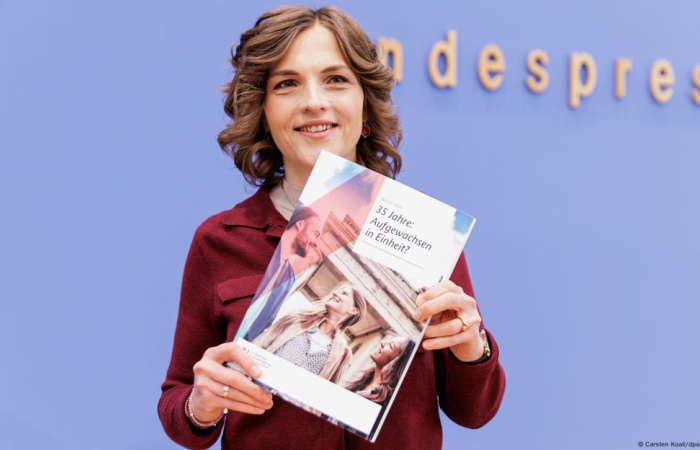
There is still a wide gap between East and West Germany, writes Marcel Furstenau on the website of the German broadcaster, Deutsche Welle. There is still a wide gap, even amongst young people who have only ever lived in a unified country. The new commissioner for eastern Germany, Elisabeth Kaiser, attempts to explain why. Elisabeth Kaiser is from Gera, in the eastern state of Thuringia. When the federal commissioner for eastern Germany was born in 1987, Germany was still divided. Two years later, the  Berlin Wall fell, and on October 3, 1990, the communist GDR  became history. "I did not consciously experience the period of reunification, but the stories of my parents and grandparents have shaped me," Kaiser wrote in an annual report presented in Berlin just in time for the 35th anniversary of German Unity Day. For the 38-year-old member of the centre-left Social Democratic Party (SPD) this is a first, as she has only been in office since May 2025, when the new federal government was formed.
Editor's choice
News
Denmark to invest in long-range weapons for first time citing Russia threat

Denmark to invest in long-range weapons for first time citing Russia threat

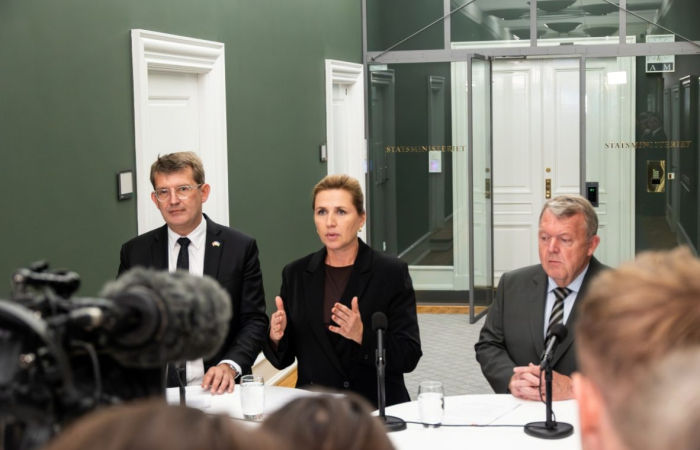
Denmark said on Wednesday that it would for the first time acquire "long-range precision weapons", citing the need to deter Russia, as Moscow's ambassador to Copenhagen called the move "pure madness". Prime Minister Mette Frederiksen told a press conference that the move was "a paradigm shift in Danish defence policy". "For the first time, Denmark is to build up military capacity in the form of long-range precision weapons," she told reporters.Frederiksen added that Russia would constitute a threat to Denmark and Europe "for years to come" and a decision was made to create a "credible deterrence".
Editor's choice
News
EU to push for sanctions on Israel ministers and suspend bilateral support

EU to push for sanctions on Israel ministers and suspend bilateral support

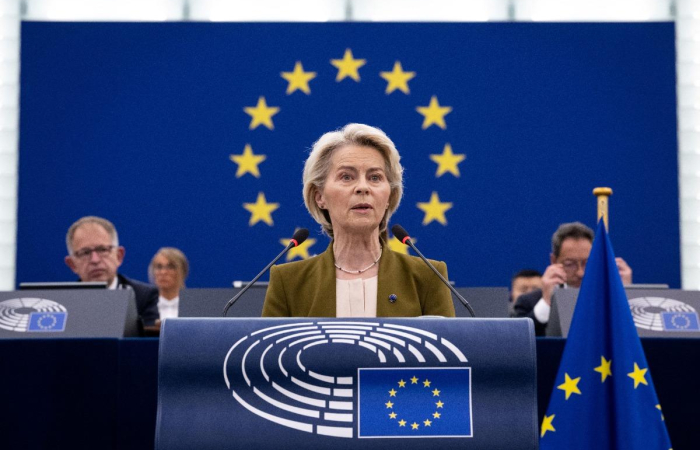
The President of the European Commission Ursula von der Leyen stated she would push to sanction "extremist" Israeli ministers and curb trade ties over Gaza, as she warned famine should not be used as a "weapon of war". Addressing the European Parliament on 10 September in the annual State of the Union, von der Leyen lamented that divisions among member states were holding back a European response but insisted the European Commission "will do all that it can on its own". "What is happening in Gaza has shaken the conscience of the world. People killed while begging for food. Mothers holding lifeless babies. These images are simply catastrophic," von der Leyen said. The German politician said the Commission would put its bilateral support to Israel on hold, stopping all payments, but without affecting work with civil society groups and Israel's Yad Vashem Holocaust memorial.
Editor's choice
Opinion
What role for the EU in the post-Washington South Caucasus?

What role for the EU in the post-Washington South Caucasus?

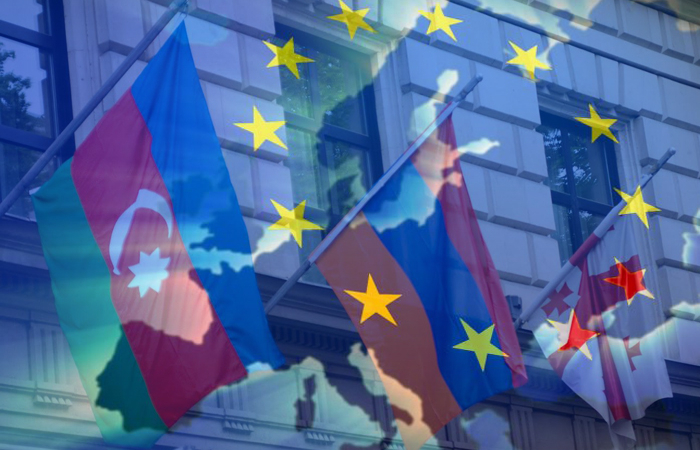
The agreements reached in the US-mediated summit of the Armenian and Azerbaijani leaders in Washington on August 8 are poised to fundamentally reshape the region's future. Particularly, the deal concerning the Zangezur corridor – rebranded as the “Trump Route for Peace and Prosperity” (TRIPP) – holds significant geopolitical importance. If implemented, the TRIPP agreement would deal a severe blow to the regional standing of Russia and Iran. More importantly, it would pave the way for a strategic U.S. presence in this critical geography. This outcome represents a success that few would have predicted for the United States, especially for the Trump administration, given the region's notoriously complex and volatile geopolitics.
Editor's choice
News
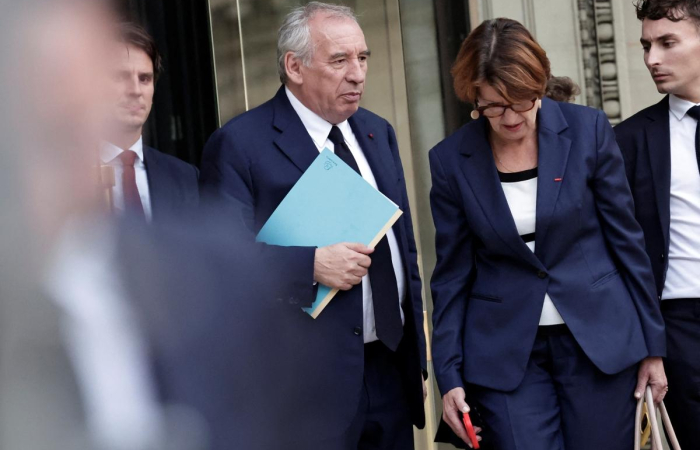
French Prime Minister Francois Bayrou ousted after just nine months in office

French Prime Minister Francois Bayrou ousted after just nine months in office

Legislators toppled France’s government in a confidence vote on Monday 8 September, a new crisis for Europe’s second-largest economy that obliges President Emmanuel Macron to search for a fourth prime minister in 12 months. Prime Minister Francois Bayrou was ousted overwhelmingly in a 364-194 vote against him. Bayrou paid the price for what appeared to be a staggering political miscalculation, gambling that lawmakers would back his view that France must slash public spending to rein in its debts. Instead, they seized on the vote that Bayrou called to gang up against the 74-year-old centrist who was appointed by Macron last December.
Editor's choice
News
UN Security Council meets in an emergency session to discuss Ukraine

UN Security Council meets in an emergency session to discuss Ukraine

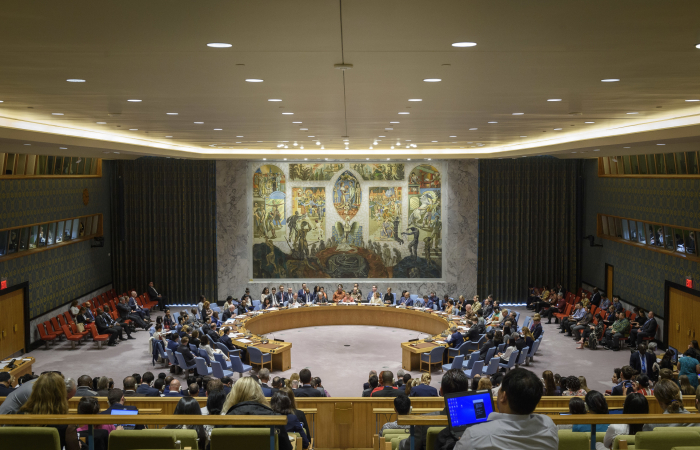
On Friday afternoon (29 August), the United Nations Security Council held an emergency open briefing on Ukraine   The meeting was requested by Ukraine in a letter it sent on Thursday (28 August) following large-scale Russian aerial attacks conducted overnight on Kyiv and other cities across Ukraine. Council members Denmark, France, Greece, the Republic of Korea (ROK), Slovenia, and the UK supported the meeting request. Assistant Secretary-General for Europe, Central Asia and the Americas Miroslav Jenča briefed the Council at the start of the two-hour meeting. Among the participants and speakers was the Ukrainian prime minister, Yulia Svyrydenko. Addressing the session, the Head of the EU Delegation to the UN, Ambassador Ambassador Stavros Lambrinidis, said that the EU objective remains clear: the EU supports an immediate, full and unconditional ceasefire. We also welcome the efforts by the US to seek an end to Russia’s war of aggression and to stop the killing. As EU, we contribute to these efforts in order to achieve a just and lasting peace and long-term security for Ukraine and our continent. I urge all members of this Council to use their influence and maximize pressure on Russia to accept an immediate ceasefire and work towards a just and lasting peace in Ukraine.” He said that the EU will remain united in providing political, financial, economic, humanitarian, military and diplomatic support to Ukraine, as it exercises its inherent right of self-defence. We will continue to stand shoulder to shoulder with Ukraine and in defence of the UN Charter and international law. I respectfully submit that this Council, without any wavering or any hesitation, do the same, at a time when Russia intensifies its killings and continues to pursue its illegal objectives, instead of peace.”
Editor's choice
Opinion
Russia-Azerbaijan Relations in Freefall with No End in Sight

Russia-Azerbaijan Relations in Freefall with No End in Sight

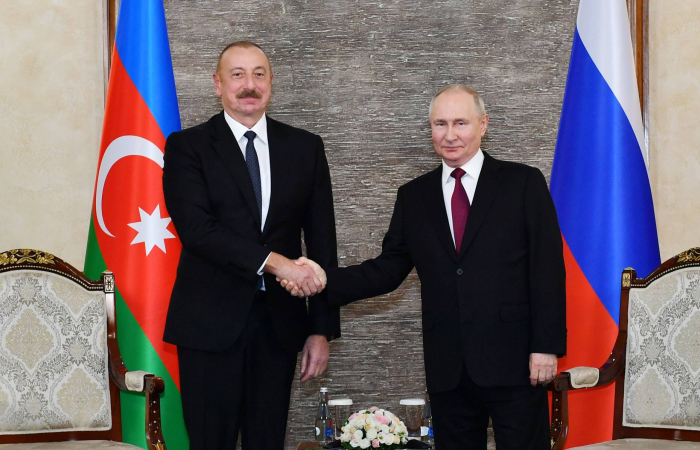
Tensions between Azerbaijan and Russia have been on an escalatory track since the crash of the Azerbaijani Airlines commercial airplane in December 2024. In the past, similar disputes were usually resolved quickly, leaving little lasting impact. This time, however, the crisis is far more complex and shows no signs of de-escalation. On the contrary, almost every month since the crash has marked new record lows in Baku–Moscow relations and appears likely to have a lasting impact on future bilateral ties. The situation has become so intricate and unpredictable that further deterioration cannot be ruled out.
Editor's choice
News
Ukrainian suspect in the Nord Stream pipeline blasts arrested in Italy

Ukrainian suspect in the Nord Stream pipeline blasts arrested in Italy

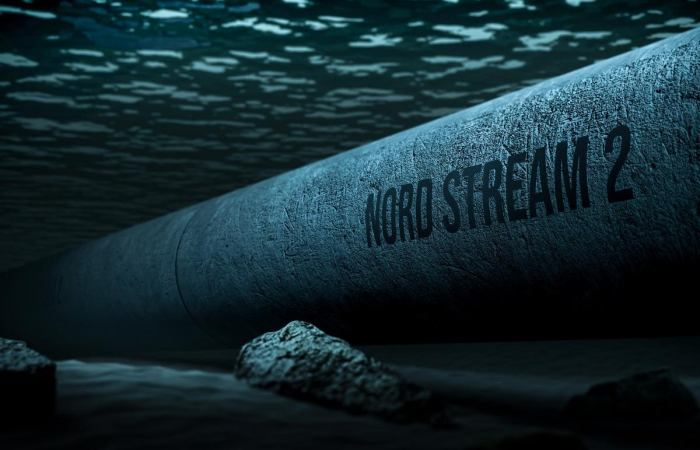
A Ukrainian citizen suspected of participating in the undersea explosions in 2022 that damaged the Nord Stream gas pipelines between Russia and Germany has been arrested, German prosecutors said on Thursday 21 August. The suspect, identified only as Serhii K. in line with German privacy rules, was arrested overnight in Italy’s Rimini province, federal prosecutors said. According to an AP report, they added that he is believed to be one of the coordinators of the operation.