Region

Central Asia

Stories under this heading cover Central Asia – a region of Asia, stretching from the Caspian Sea in the west to Mongolia in the east, from Afghanistan in the south to Russia in the north.

Editor's choice
Opinion
Opinion: The European Union must recognise that the C5 have now become the C6

Opinion: The European Union must recognise that the C5 have now become the C6

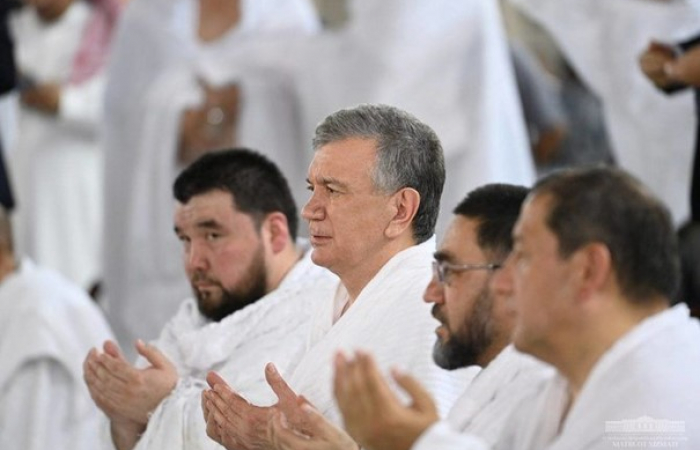
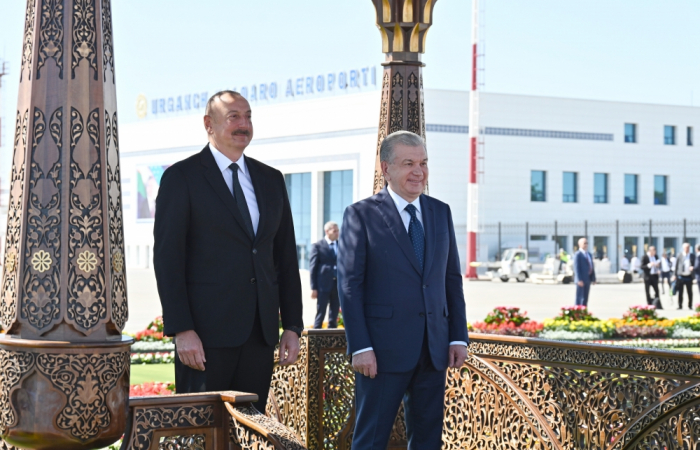
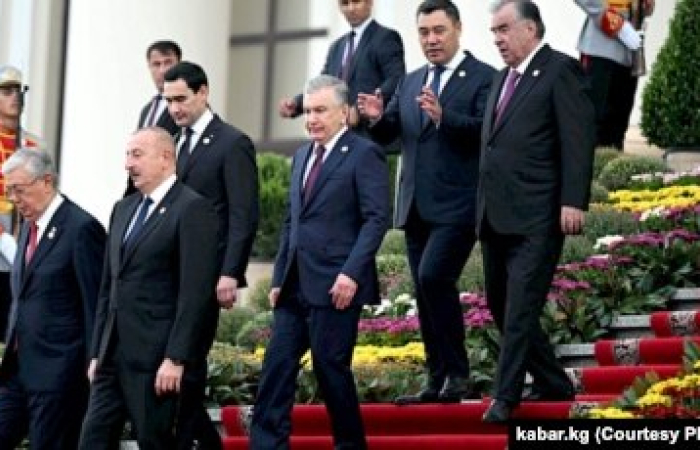
In recent years, Eurasia has undergone a structural transformation in how regions connect, trade, and cooperate. The combination of geopolitical shocks, disrupted supply chains, and the search for secure east–west routes has elevated the importance of the Trans-Caspian space. The states of Central Asia, once constrained by geography, have taken unprecedented steps to strengthen regional coordination, modernize infrastructure, and integrate more closely with Europe. Meanwhile, Azerbaijan has rapidly emerged as an indispensable connector linking Central Asia with the South Caucasus, Türkiye, and European markets. This new reality was formally acknowledged in November 2025 when Azerbaijan was unanimously welcomed as a full participant in the Consultative Meeting of Central Asian Heads of State in Tashkent. What had long been a C5 grouping transformed into a C6, marking a historic moment: the Caspian was no longer a frontier separating two regions but the center of a unified geopolitical and geo-economic space. President Ilham Aliyev described this alignment as the emergence of “a single geopolitical and geo-economic region,” while President Shavkat Mirziyoyev called Azerbaijan’s inclusion “historic” and proposed transforming the consultative platform into a structured regional institution capable of shaping security, economic, environmental, and digital policy. The Caspian is no longer a boundary; it is the heart of an integrated region. The transformation of the EU and U.S. C5+1 formats into C6+1 is the logical next step to ensure that both sides of the Caspian advance together – coherently, strategically, and with shared purpose. (click the image to read the full op-ed).
Editor's choice
News
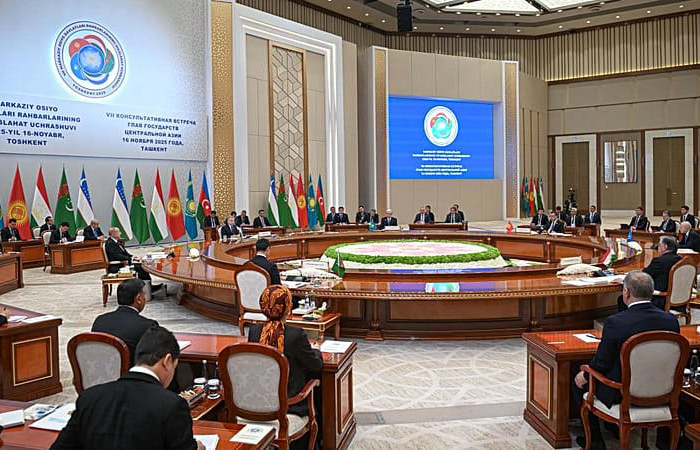
Central Asian leaders meet in Tashkent this weekend for their 7th Consultative  Meeting. Azerbaijan participates for the third year as guest

Central Asian leaders meet in Tashkent this weekend for their 7th Consultative Meeting. Azerbaijan participates for the third year as guest

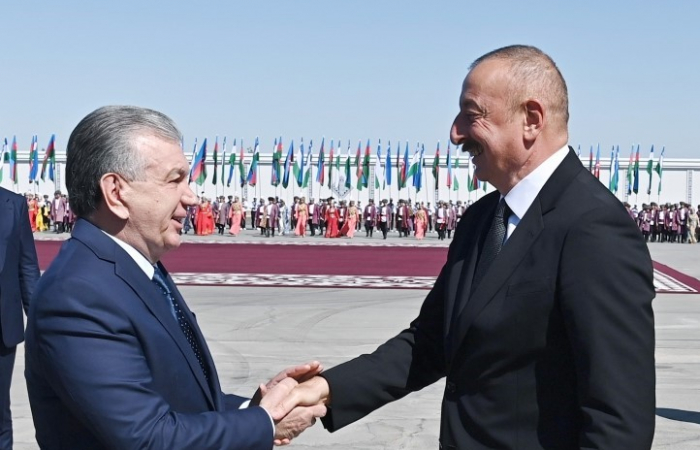
Central Asian leaders will gather in Tashkent this weekend for the Seventh Consultative Meeting of Heads of State, with plans to adopt a package of multilateral agreements to deepen regional cooperation. The summit brings together the leaders of Uzbekistan, Kazakhstan, Kyrgyzstan, Tajikistan and Turkmenistan, with Azerbaijan participating as a guest of honour for the third consecutive year. The leaders will discuss ways to advance joint projects in priority sectors and exchange views on key regional and international issues, as outlined in the agenda. The consultative meeting format originated from Mirziyoyev's initiative announced at the UN General Assembly in 2017, proposing regular high-level consultations among Central Asian states. The inaugural meeting took place in Astana in 2018. Azerbaijan's President Ilham Aliyev told the Uzbekistan press agency the meeting will be "a significant stage in fostering the centuries-old friendship between our brotherly peoples and expanding multi-level cooperation in the political, economic, transport, investment, energy, cultural and humanitarian spheres, and in the field of digital transformation." He noted that over the past three years, Central Asian heads of state have made nearly 30 visits to Azerbaijan, while he has visited the countries 13 times. Azerbaijan's engagement strengthens regional connectivity, particularly through the Middle Corridor linking Central Asia with Europe.

Filter archive

Publication date
Editor's choice
News
Opinion: The role of the Shanghai Cooperation Organisation goes beyond managing Russia-China relations in Central Asia

Opinion: The role of the Shanghai Cooperation Organisation goes beyond managing Russia-China relations in Central Asia

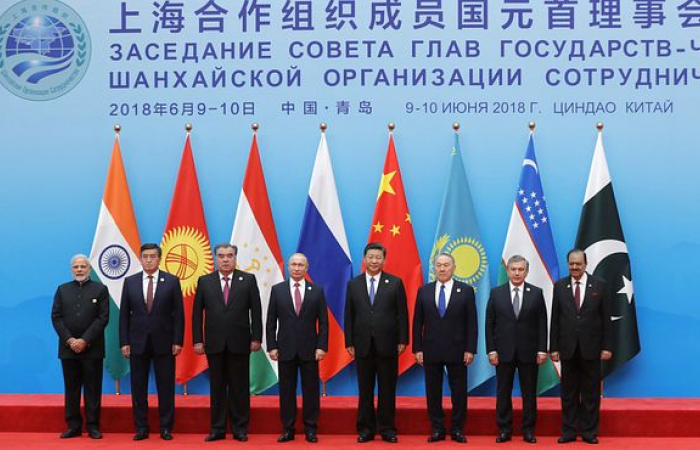
"As the world comes closer to multi-polarity, the role of such organizations as SCO will grow further. Russia and China will seek to use them as a counterbalance to western dominated international political and economic organizations, such as G7, the EU, the World Bank and IMF", writes Benyamin Poghosyan in this op-ed. He argues that in the present context of emerging great power competition, the SCO started to be viewed less as a tool to manage Russia – China relations in Central Asia, or counter terrorist threats from Afghanistan, and more as a significant grouping of non-western powers in the emerging multipolar world.
Editor's choice
News
Kazakhstan works to expand co-operation with Gulf countries during Tokayev's visit to Saudi Arabia

Kazakhstan works to expand co-operation with Gulf countries during Tokayev's visit to Saudi Arabia

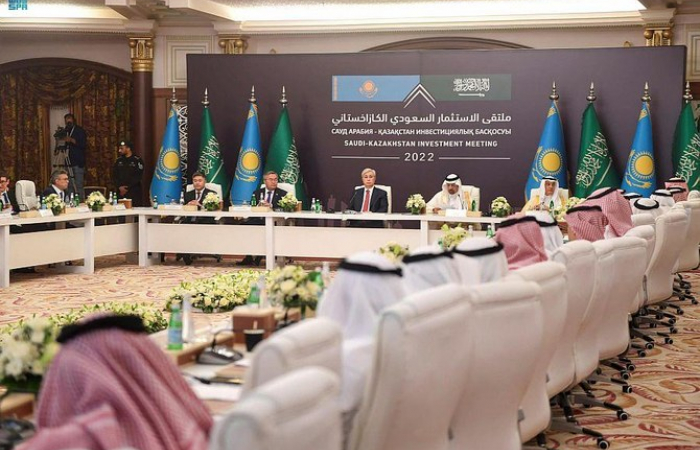
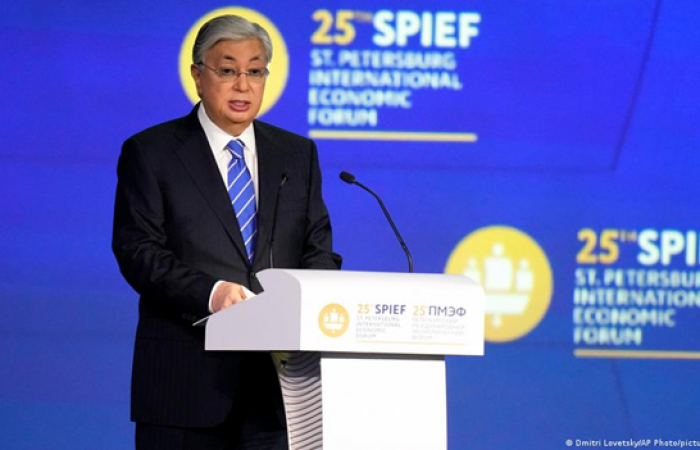
Kazakh president, Kassym Jomart Tokayev, on Sunday (24 July) concluded an official visit to Saudi Arabia during which he sought to strengthen relations with the Kingdom and other Gulf countries Saudi Arabia and Kazakhstan will enhance mutual trade and investment in several sectors, according to a joint statement carried by the Saudi Press Agency at the end of the visit. This cooperation includes areas related to petrochemicals, renewable energy, mining, agriculture, tourism, transport and logistics. Other agreements cover information technology, digital transformation, financial services and space, SPA reported. During his visit President Kassym-Jomart Tokayev held wide-ranging talks with Saudi Crown Prince Mohammed bin Salman. The two countries signed several agreements and memoranda of cooperation in sports, media, medicine and finance. The also agreed to enhance cooperation in higher education, research and innovation.
Editor's choice
Opinion
Opinion: Azerbaijan boosts ties with Central Asia as region adjusts to Ukraine crisis

Opinion: Azerbaijan boosts ties with Central Asia as region adjusts to Ukraine crisis

The fall-out from the Russian invasion of Ukraine has impacted all countries across the region. Azerbaijan and the Central Asian republics have stepped up their co-operation using multiple formats. "Amid the present security challenges in the region it is high time for Azerbaijan and the Central Asian countries to deepen bonds and ensure their security and prosperity, writes Vasif Huseynov in this op-ed for commonspace.eu
Editor's choice
News
Kazakh oil to continue flowing from Novorossiysk but the damage to Russian-Kazakh relations has been done

Kazakh oil to continue flowing from Novorossiysk but the damage to Russian-Kazakh relations has been done

On July 12, a Russian court in Southern Krasnodar upheld an appeal by the Caspian Pipeline Consortium (CPC) after a previous ruling made last week by a district court ordered the oil transporter to cease operations due to ecological concerns. The initial decision led Kazakhstan’s President Kassym-Jomart Tokayev to look toward new routes for Kazakh energy exports. While the decision will suit Kazakhstan’s energy sector in the short-term, the persistent instability since Russia’s invasion of Ukraine is likely to result in Kazakhstan seeking to free itself from Russian dependence for the export of its energy resources in the medium to long term. For the Kremlin, Nur-Sultan’s willingness to engage with Western countries is a cause for concern and could signal the weakening of Russian hegemony in Central Asia. Kazakh oil may be flowing again from Novorossiysk but the damage to Russian-Kazakh relations has been done.
Editor's choice
Analysis
Questions remain as to who was behind deadly protests in Uzbekistan’s Karakalpakstan region

Questions remain as to who was behind deadly protests in Uzbekistan’s Karakalpakstan region

Two weeks after violent protests rocked Uzbekistan’s Karakalpakstan region, speculation continues about who was behind the turmoil that appeared to take officials in the capital, Tashkent, completely by surprise. This despite the fact that the reasons that triggered the unrest appear to be clear, namely proposed constitutional changes that promised to weaken the autonomy of the region, which occupies a territory, of 166,590 sq kms, and has a population of 1.9 million. Official reports say that 18 civilians were killed during the protests, 94 hospitalised, and hundreds more injured. The Uzbek Government has blamed unspecified foreign forces for being behind the unrest. Uzbekistan is a tightly managed country, where such unrest is by and large unheard of, and where the only country that has the potential to provoke such wide-spread disturbances is Russia, given its longstanding and deep rooted influence in Central Asia. Some Uzbek diplomats in Europe have been briefing that the disturbances were part of a planned “colour revolution”, although they did not quite explain what they meant by that. Uzbekistan is known to have been under considerable pressure from  Moscow in recent years to join Russia-led regional structures, such as the Eurasian Economic Union and the CSTO military alliance, but president Shavkat Mirziyoyev has so far resisted the pressure.
Editor's choice
News
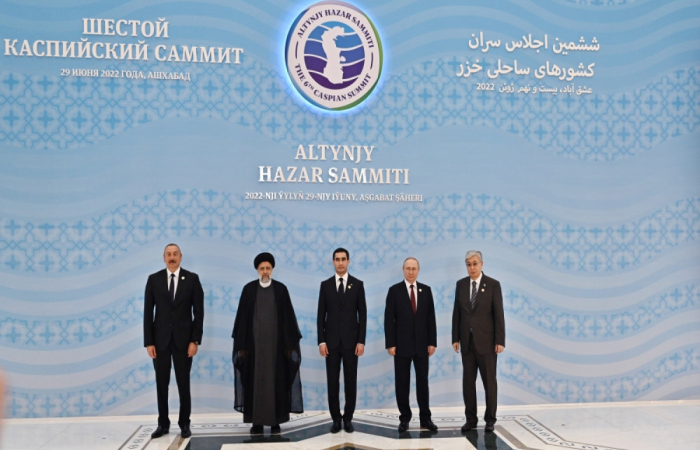
Leaders of “Caspian Five” hold their sixth summit in Ashgabat

Leaders of “Caspian Five” hold their sixth summit in Ashgabat

The leaders of the five Caspian littoral states, participated in a summit meeting in the capital of Turkmenistan, Ashgabat on Wednesday (29 June). The Caspian “five” are Azerbaijan, Iran, Kazakhstan, Russia and Turkmenistan. Addressing the gathering, Russian president Vladimir Putin said: “Russia unfailingly supports expanding partnerships within the Caspian “five” – in politics, security, the economy and nature conservation, as well as many other items on the humanitarian agenda.” Putin quickly reminded his four colleagues of Russia’s first priority when it comes to the Caspian, namely the exclusion of anyone else apart from the littoral states: “At the same time, we believe that prosperity in our shared region can only be guaranteed by an unfailing commitment to the principles enshrined in the Convention on the Legal Status of the Caspian Sea. The Convention stipulates the crucial provision, which is that the countries of the Caspian “five” are responsible for the Caspian region’s preservation and its sustainable development for current and future generations.”