With the conclusion of the United Nations Climate Change Conference COP29 in Azerbaijan, discussions with Armenia on normalising relations are expected to resume in December. However, it remains uncertain whether an agreement will be reached anytime soon, as past attempts to finalise talks have consistently fallen short. That said, there may now be some clarity regarding the three key issues believed to be preventing a breakthrough. In early November, Farid Shafiyev, Chair of the Centre for Analysis of International Relations (AIR) in Azerbaijan, shared on X what he claims are the specific points left unresolved.
While none of the issues were entirely new, only the first had been officially confirmed as a major obstacle. Armenia would need to amend its constitution to affirm "the will of the Armenian people to renounce any territorial claims against Azerbaijan," thereby ruling out any attempts to revert to the pre-2020 situation when Armenian and Karabakh forces controlled seven Azerbaijani regions adjacent to the former Soviet-era Nagorno-Karabakh Autonomous Oblast (NKAO). The second point, according to Shafiyev, centres on preventing Armenia from making legal claims against Azerbaijan through third-party channels.
The third issue, however, was more unexpected. While Baku has consistently criticised the deployment of the European Union Mission in Armenia (EUMA), a small civilian monitoring force stationed on the Armenian side of the border with Azerbaijan since February 2023, the mission's role had been limited to two years.
However, looking at the European Union Monitoring Mission (EUMM) in Georgia, it was clear that Yerevan might push for a longer-term presence. The EUMM has been monitoring the two Administrative Boundary Lines (ABL) in Georgia for 16 years since the Russia-Georgia war in 2008. Baku, however, wants EUMA out when its first deployment ends early next year. It is concerned that a continued presence could allow Armenia to delay finalising a peace agreement.
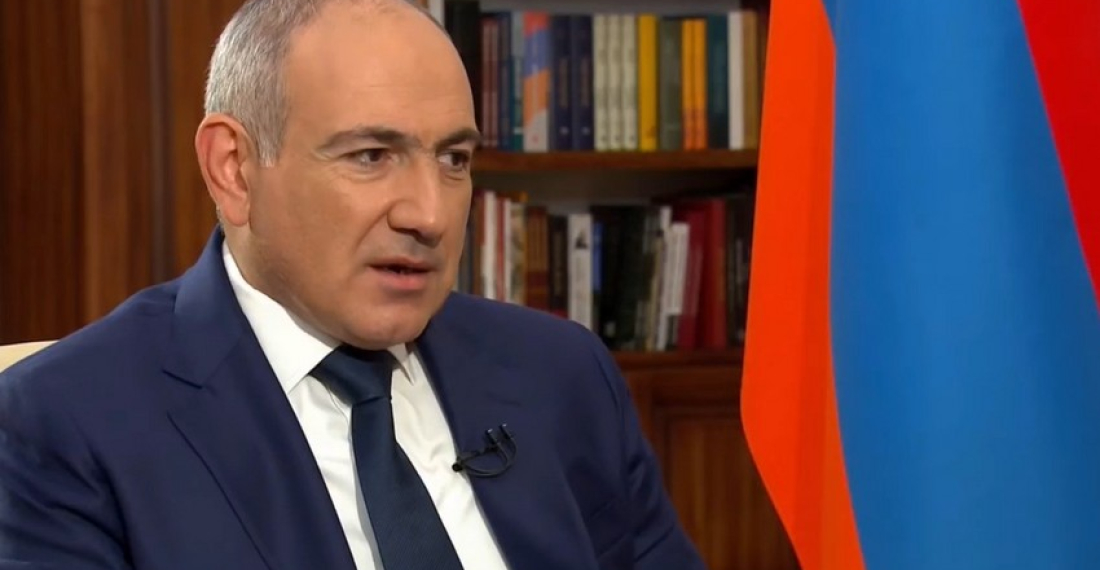
But for Armenians, EUMA offers a sense of security along the border until a lasting peace is achieved. This is why some were concerned by remarks made by Armenian Prime Minister Nikol Pashinyan in a press interview on 22 November where he suggested that EUMA could be withdrawn from the recently demarcated part of the Armenia-Azerbaijan border finalised earlier this year. In the same interview, Pashinyan also responded to other points raised by Shafiyev. As is now usual, Pashinyan dismissed Baku's claims that Armenia’s constitution asserts territorial rights over Azerbaijani land, despite having implied similar himself.
Pashinyan did however confirm that Yerevan was prepared to agree to a mutual withdrawal of all legal claims filed by both sides. At nearly the same time, former Ambassador-at-Large Edmon Marukyan claimed that an unnamed "representative" from Azerbaijan had told him that Baku intended to seek $1 trillion in damages for the destruction caused by three decades of Armenian control over seven Azerbaijani regions. These areas were razed to the ground after they were taken in the 1990s and their Azerbaijani population forced to flee. Baku has also stated its intention to demand compensation for the exploitation of energy resources in these regions by Armenia.
Previous claims in 2013 ran into hundreds of billions of dollars.
It remains unclear how Baku will respond to Pashinyan's comments, but similar proposals in the past have been dismissed. Nonetheless, some Azerbaijani analysts, including Shafiyev, have suggested that a solution to the constitutional issue could involve allowing a specified period of time for changes to be made, rather than requiring immediate action. The situation with EUMA is more complicated, however, given that the entire length of the border between Azerbaijan and Armenia spans 1,000 km – far more than the 12.7 km section Pashinyan is offering. To further complicate matters, during the Antalya Diplomacy Forum in March, Toivo Klaar, then EU Special Representative for the South Caucasus, stated that EUMA would no longer be needed once a peace agreement was reached.
Nonetheless, an agreement to remove "foreign forces" from only the demarcated sections of the border is, at least in theory, a positive development. EUMA, for its part, offers residents along the border a degree of security and could provide Pashinyan with a way to deflect further accusations of endangering their safety. On the demarcated stretch of the Armenia-Azerbaijan border, the military was also withdrawn, with border guards taking over their responsibilities. Following the departure of Russian border guards from Yerevan's Zvartnots Airport at the end of August, and with Armenian border guards scheduled to join the Russian contingent along the Iranian and Turkish borders next year, it remains uncertain whether Armenia has enough border personnel to monitor anything more.
A gradual withdrawal by EUMA might be a more manageable approach so that this issue can be resolved. One Baku-based analyst suggest it could be in the form of a reduction in military size with personnel being transferred to the Border Guard Service. But in addition to Azerbaijan's concerns, Iran and Russia also continue to express unease about EUMA's presence in what most consider vying for geopolitical influence in the region since the February 2022 Russia-Ukraine war.
That will remain true whether or not an agreement is reached between Armenia and Azerbaijan. Nonetheless, EUMA can still be withdrawn from the demarcated sections of the border, regardless of the broader political context. The primary goal of EUMA's deployment was to build confidence in the border demarcation process. Unlike EUMM in Georgia, EUMA does not engage in Incident Prevention and Response Mechanisms (IPRM) or facilitate interactions between journalists from Armenia and Azerbaijan in third countries, as EUMM does with Georgia and its breakaway regions of Abkhazia and South Ossetia.
It is also perhaps telling that Pashinyan suggested the partial withdrawal of EUMA to Baku, rather than to Brussels, where final decisions on such matters are made upon Yerevan's own request. That clearly indicates the scope for extending EUMA exists but not at the cost of increasing mistrust between Armenia and Azerbaijan. In the absence of a peace agreement, Yerevan surely wants it to remain. However, to appease Azerbaijan, EUMA should also clearly articulate an exit strategy, especially if its continued presence is to be contingent on a phased demarcation process. With the clock ticking down, however, a decision will have to be made soon.