Opinion: 6 February earthquake gives OTS an opportunity for greater disaster resilience

The extraordinary summit of the Organization of Turkic States in Ankara on 16 March 2023 will be remembered for increased institutionalization and integration, writes Ibrahim Mammadov in this op-ed for commonspace.euThe earthquake that struck Turkey and Syria on 6 February has spurred the implementation of strengthened cooperation and integration in areas beyond emergency response, he writes.

The first summit of the Organization of Turkic States (OTS) under the current chairmanship of Uzbekistan was held on 11 November 2022, in Samarkand, setting the agenda and expanding the geographical scope of the OTS. However, the extraordinary summit of the OTS, held a few months later in Ankara, on 16 March 2023, will be remembered for increased institutionalization and integration.

The extraordinary summit was initiated by the President of the Republic of Azerbaijan, Ilham Aliyev, with the theme of "Disaster-Emergency Management and Humanitarian Assistance". This came off the back of the 8th OTS Summit in Istanbul, where the member and observer states adopted the "Turkic World Vision - 2040", which encouraged cooperation in disaster prevention and the formation of mechanisms for reducing disaster risks. The catastrophic 6 February earthquake in Turkey and Syria has underscored the critical need for integrating disaster-management measures among OTS member states.

The major initiatives

In response to the earthquake, the leaders of member and observer states outlined their respective states' contributions to the restoration of Turkish cities, and how to proceed in the future.

The President of Uzbekistan, Shavkat Mirziyoyev, has proposed declaring 6 February as the Day of Remembrance for Victims and Solidarity within the Organization of Turkic States, as well as mentioning that Uzbekistan intends to assist in the recuperation for elderly people from the earthquake-affected areas of Turkey. He also said that youth from Hatay, one of the heavily damaged cities, will be invited to Uzbekistan.

To prevent future disasters and increase preparedness, President Mirziyoyev also proposed establishing a Center for Monitoring and Analysis of Natural Disasters under the Organization of Turkic States in Tashkent. Uzbekistan only joined the OTS in 2021 and does not currently host any OTS institution. As one of the key countries in the Central Asian region, Uzbekistan's interest in hosting such an institution for disaster management will further strengthen institutional integration between member and observer states.

Given the new leadership's objective to open up to the international arena, Uzbekistan has taken several initiatives to participate more actively in international organizations. The country's interest in hosting an institution for disaster management also aligns with its strategic position in Central Asia and its goal of playing a more prominent role internationally.

Meanwhile, Kassym-Jomart Tokayev, the President of Kazakhstan, emphasized the importance of exchanging information and expertise to prevent emergencies and mitigate their consequences. He announced that Kazakhstan will host the international training camp "Kazkutkaru" this fall, and invited rescue services from OTS member and observer countries to participate in the event. The Kazkutkaru training camp in Kazakhstan is an annual integrated tactical exercise held among the regional rescue teams of the country, aimed at improving search and rescue skills, exchanging experience, enhancing professional training, and testing physical fitness. 

In his closing remarks, the President of Turkey, Recep Tayyip Erdogan, thanked all members and observers of the organization for their help to Turkey and stated that Turkic states were among the quickest to respond with assistance during the disaster.

Revision of Turkmen neutrality

The Chairman of Turkmenistan's People's Council, Gurbanguly Berdimuhamedov, represented his country at the summit and expressed its desire to become a member state of the OTS, but acknowledged that achieving this goal would require modernizing Turkmenistan's legislation. Although Turkmenistan was granted observer status in 2021, its policy of neutrality in Article 2 of the Constitution has been a significant obstacle to full membership in the OTS. However, with the necessary constitutional changes, Turkmenistan can move forward with its desire to join as a member state.

Berdimuhamedov emphasized that this step is crucial for Turkmenistan's development and participation in regional cooperation. By becoming a member of the OTS, Turkmenistan would have the opportunity to benefit from the organization's initiatives in a better capacity and contribute to the collective efforts of member states in promoting economic, cultural, and social cooperation.

The major results of the summit

The summit was a significant event, marked by several accomplishments that are worth highlighting. Firstly, the Ankara Declaration was signed, reflecting the urgent need for greater cooperation between disaster management institutions within the OTS member and observer states. This declaration serves as a testament to the importance of collaboration and coordination in preventing and managing disasters.

Another noteworthy achievement was the decision to establish a civil protection mechanism for the OTS. This mechanism will facilitate greater integration among member and observer states and provide more opportunities for collaboration. The common civil protection mechanism will undoubtedly contribute to the collective efforts of the organization in preventing and managing disasters.

A very significant accomplishment of the summit was the signing of the Agreement Establishing the Turkic Investment Fund (TIF). This initiative will not only assist member and observer states in funding current disaster-prevention measures but also create opportunities for common funding of future projects. The establishment of the TIF is a major step in the institutionalization of financing measures among the OTS members and observers.

Implications

The earthquake that struck Turkey and Syria on 6 February has spurred the implementation of "Turkic World Vision - 2040" by member and observer states of the OTS. As a result, the expected finalization of the Agreement on the Establishment of the Civil Protection Mechanism at the upcoming OTS summit in Kazakhstan, proposals for greater institutionalization and the establishment of the Turkic Investment Fund, indicate the potential for strengthened cooperation and integration in areas beyond emergency response.

Azerbaijan and Turkey, while passing through Georgia, provide the most secure and convenient route for trade between Central Asia and the EU. However, the Central Asian market is yet to be further discovered by the European and Turkish economies. This situation underscores the inevitable rise in the importance of the OTS as a more convenient platform for economic cooperation. The fact that even consistently neutral Turkmenistan has expressed the willingness to join the organization as a member state demonstrates trust in this platform.

The extraordinary summit has shown that the cooperation among the member and observer states is yet to be further institutionalized and integrated with spheres within and beyond emergency response.
source: Ibrahim Mammadov is a Research Fellow at the Caucasian Center for International Relations and Strategic Studies (QAFSAM) and a Young Scholar at the Institute for Development and Diplomacy (IDD). Currently, he is pursuing a Masters of Arts degree in Diplomacy and International Affairs at ADA University, where he also obtained his Bachelor's degree. His research articles have been published in various platforms, including CABAR.asia, which operates under the Institute for War & Peace Reporting (IWPR) Central Asia Office, the Politicon platform of the Topchubashov Center, the Institute for Development and Diplomacy Publications, and the Young European Ambassadors Magazine. His main areas of expertise include Post-Soviet Affairs, with a focus on the Central Asian and Southern Caucasus regions, as well as Conflict Resolution and Conflict Studies.
photo: Organization of Turkic States
The views expressed in opinion pieces and commentaries do not necessarily reflect the position of commonspace.eu or its partners

Related articles

Editor's choice
News
Key European countries back Denmark in the face of Trump's continuing insistence on taking over Greenland

Key European countries back Denmark in the face of Trump's continuing insistence on taking over Greenland

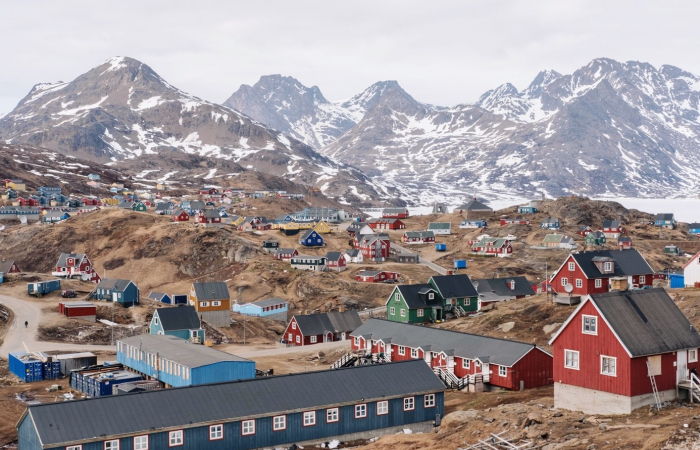
 Six major European countries have declared their support to Denmark following renewed insistence by the US that it must have control over Greenland. "Greenland belongs to its people, and only Denmark and Greenland can decide on matters concerning their relations," said the leaders of the UK, France, Germany, Italy, Poland, and Spain, in a joint statement, issued on Tuesday (6 January), together with Denmark. On Sunday, Donald Trump said the US "needed" Greenland - a semi-autonomous region of fellow Nato member Denmark - for security reasons. He has refused to rule out the use of force to take control of the territory, and Danish Prime Minister Mette Frederiksen warned on Monday that an attack by the US would spell the end of Nato. The issue of Greenland's future resurfaced in the wake of the US military intervention in Venezuela, during which elite troops went in to seize the country's President Nicolás Maduro and take him to face drugs and weapons charges in New York. Following the raid, Trump said the US would "run" Venezuela for an unspecified period of time. He also said the US was returning to an 1823 policy of US supremacy in its sphere of influence in the Western hemisphere - and he warned a number of countries the US could turn its attention to them. The US military raid in Venezuela has reignited fears that the US may consider using force to secure control of Greenland. A day after the raid, Katie Miller - the wife of one of Trump's senior aides - posted on social media a map of Greenland in the colours of the American flag, alongside the word "SOON". On Monday, her husband Stephen Miller said it was "the formal position of the US government that Greenland should be part of the US". In an interview with CNN, he also said the US "is the power of Nato. For the US to secure the Arctic region, to protect and defend Nato and Nato interests, obviously Greenland should be part of the US." Asked repeatedly whether the US would rule out using force to annex it, Miller responded: "Nobody's going to fight the US over the future of Greenland." Stressing they were as keen as the US in Arctic security, the seven European signatories of Tuesday's joint statement said this must be achieved by Nato allies, including the US "collectively" - whilst "upholding the principles of the UN Charter, including sovereignty, territorial integrity and the inviolability of borders". Greenland's Prime Minister Jens-Frederik Nielsen welcomed the statement and called for "respectful dialogue". "The dialogue must take place with respect for the fact that Greenland's status is rooted in international law and the principle of territorial integrity," Nielsen said. Trump has claimed that making Greenland part of the US would serve American security interests due to its strategic location and its abundance of minerals critical to high-tech sectors. Greenland, which has a population of 57,000 people, has had extensive self-government since 1979, though defence and foreign policy remain in Danish hands. While most Greenlanders favour eventual independence from Denmark, opinion polls show overwhelming opposition to becoming part of the US.
Editor's choice
News
Donald Tusk: "One for all, and all for one! Otherwise we are finished."

Donald Tusk: "One for all, and all for one! Otherwise we are finished."

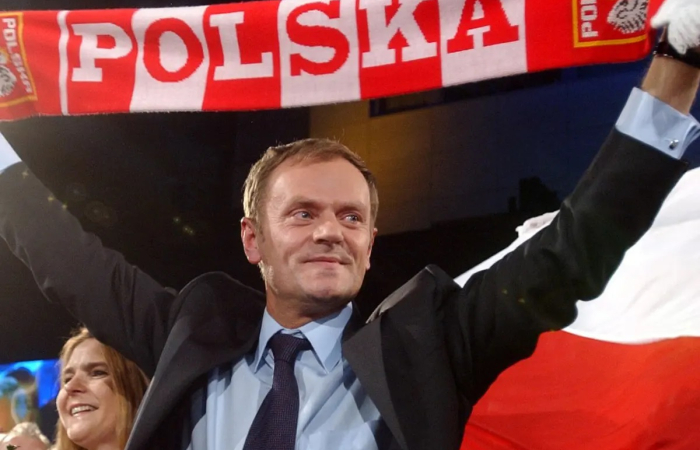
Europe is rattled by events in Venezuela, and there are serious concerns that US disregard for international law may have consequences close to home.  The BBC diplomatic correspondent, James Landale, said, the question is how Europe may respond in the longer term to America's military operation in Venezuela. Will it provide a catalyst for the continent to take greater responsibility for its own security in the face of so much instability from what many see as an unreliable ally? Polish prime minister, Donald Tusk, appears to have answered the question, saying on social media: "No-one will take seriously a weak and divided Europe: neither enemy nor ally. It is already clear now. "We must finally believe in our own strength, we must continue to arm ourselves, we must stay united like never before. One for all, and all for one. Otherwise, we are finished." The US seizing of Venezuela's leader has faced strong criticism from both America's friends and foes at an emergency meeting of the United Nations Security Council, held on Monday, 5 January. Many member states agreed with the US that Nicolás Maduro had been an illegitimate and repressive leader. But many also condemned the US military action as a breach of international law and the UN Charter, and they demanded a democratic transition that reflected the will of the Venezuelan people. (click the image to read the full article).

Popular

Editor's choice
News
Key European countries back Denmark in the face of Trump's continuing insistence on taking over Greenland

Key European countries back Denmark in the face of Trump's continuing insistence on taking over Greenland

 Six major European countries have declared their support to Denmark following renewed insistence by the US that it must have control over Greenland. "Greenland belongs to its people, and only Denmark and Greenland can decide on matters concerning their relations," said the leaders of the UK, France, Germany, Italy, Poland, and Spain, in a joint statement, issued on Tuesday (6 January), together with Denmark. On Sunday, Donald Trump said the US "needed" Greenland - a semi-autonomous region of fellow Nato member Denmark - for security reasons. He has refused to rule out the use of force to take control of the territory, and Danish Prime Minister Mette Frederiksen warned on Monday that an attack by the US would spell the end of Nato. The issue of Greenland's future resurfaced in the wake of the US military intervention in Venezuela, during which elite troops went in to seize the country's President Nicolás Maduro and take him to face drugs and weapons charges in New York. Following the raid, Trump said the US would "run" Venezuela for an unspecified period of time. He also said the US was returning to an 1823 policy of US supremacy in its sphere of influence in the Western hemisphere - and he warned a number of countries the US could turn its attention to them. The US military raid in Venezuela has reignited fears that the US may consider using force to secure control of Greenland. A day after the raid, Katie Miller - the wife of one of Trump's senior aides - posted on social media a map of Greenland in the colours of the American flag, alongside the word "SOON". On Monday, her husband Stephen Miller said it was "the formal position of the US government that Greenland should be part of the US". In an interview with CNN, he also said the US "is the power of Nato. For the US to secure the Arctic region, to protect and defend Nato and Nato interests, obviously Greenland should be part of the US." Asked repeatedly whether the US would rule out using force to annex it, Miller responded: "Nobody's going to fight the US over the future of Greenland." Stressing they were as keen as the US in Arctic security, the seven European signatories of Tuesday's joint statement said this must be achieved by Nato allies, including the US "collectively" - whilst "upholding the principles of the UN Charter, including sovereignty, territorial integrity and the inviolability of borders". Greenland's Prime Minister Jens-Frederik Nielsen welcomed the statement and called for "respectful dialogue". "The dialogue must take place with respect for the fact that Greenland's status is rooted in international law and the principle of territorial integrity," Nielsen said. Trump has claimed that making Greenland part of the US would serve American security interests due to its strategic location and its abundance of minerals critical to high-tech sectors. Greenland, which has a population of 57,000 people, has had extensive self-government since 1979, though defence and foreign policy remain in Danish hands. While most Greenlanders favour eventual independence from Denmark, opinion polls show overwhelming opposition to becoming part of the US.