


Editor's choice
Opinion
Opinion: The future of the China-US-Russia triangle after Pelosi's visit to Taiwan

Opinion: The future of the China-US-Russia triangle after Pelosi's visit to Taiwan

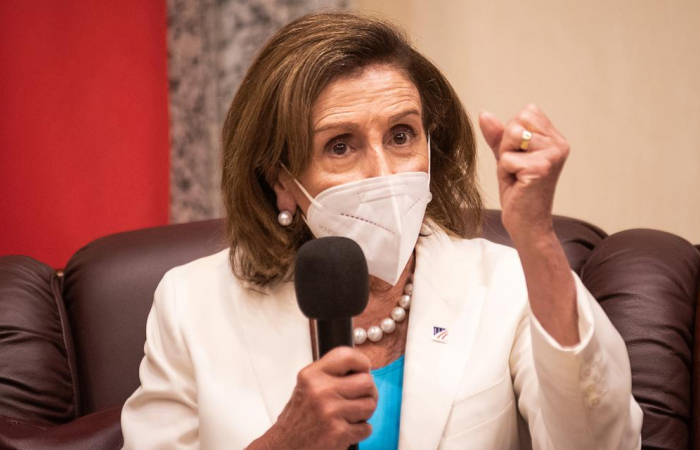
Since February 24, 2022, the international community's focus was concentrated entirely on the war in Ukraine and the growing Russia – West confrontation. It seemed that nothing could change the situation until the end of hostilities in Ukraine. However, on August 2 and 3, almost everyone’s attention shifted from Ukraine to Taiwan. As the Speaker of the US House of Representatives, Nancy Pelosi, stated her intention to visit Taiwan, up to half a million people were watching the trajectory of her plane on air flight tracking sites. The negative reaction of China, including the warning of President Xi during his conversation with President Biden that those who played with fire would be perished by it, created hype around this visit. Many were discussing the possibility of Chinese military jets closing the airspace over Taiwan and preventing Pelosi’s plane from landing in Taiwan, while some enthusiasts were even contemplating the possibility of a US-China direct military clash. As Pelosi landed in Taiwan and met with the Taiwanese President, the global social media was full of amateur assessments about the strategic victory of the US and the confirmation of the US global hegemony. However, as the dust settles down, and information noise and manipulation eventually decreases, a more serious assessment is needed to understand the real consequences of this visit.
Editor's choice
Monday Commentary
Monday Commentary: The European Political Community has the potential to respond to Europe’s changing needs in defence and security

Monday Commentary: The European Political Community has the potential to respond to Europe’s changing needs in defence and security

They say that a week is a long time in politics, and the time since the European Political Community (EPC) was established in October 2022, may now seem like an eternity. The war in Ukraine, that triggered the establishment of the EPC, drags on, and continues to define Europe. Everything else has changed. When the EPC was established, many yawned, and saw it as yet another useless talking shop. But the idea of creating a framework that brings the 27 EU member states with other European countries – 20 at the last meeting – has increasing value. The attendance of the leaders of these 20 countries: Turkiye’s Erdogan, Ukraine’s Zelensky, UK’s Starmer, and others, has made its twice yearly meetings an important occasion. It is in one area: defence and security, where the biggest need of Europe currently is, and where the biggest potential of the EPC lays. The war in Ukraine, Russia’s malign intentions, and Trump’s reset of US foreign and security policy, focused minds. Europe had been sleeping! When it woke up it did what the EU does whenever it is faced with a problem, it threw money at it, and started a defence spending spree, that was overdue, but is not by itself enough. The EU27 may be a global economic force, but on their own they lack strategic clout. But if you add with them the other European countries such as Turkiye, UK, Ukraine, and even smaller ones such as Norway and Switzerland, it becomes a completely different preposition. Under the surface, these discussions are going on even more intensively. But the European Political Community offers a space for conversations – public and private between the leaders of wider Europe. The value of the Community is therefore significant. The next EPC summit will be in Armenia on 4 May 2026. It will be important for a number of reasons: It will be a summit that should contribute to Armenia-Azerbaijan peace; it is not clear at what level will Azerbaijan participate, but for sure this will be a high level delegation. It will be the first EPC summit in Russia’s back yard – Armenia is still a member of the EAEU, and even if only on paper, of CSTO. The summit will take place on the eve of crucial parliamentary elections in Armenia that will determine the fate of the country and the region. But in the background will be the issue of how wider Europe can work together on defence and security. This will take time – probably not less than a decade – but the work has started, and the EPC summit in Armenia will contribute to it. (click the image above to read the full Monday Commentary).