Filter archive

Publication date
Editor's choice
Commentary
Armenia’s 2026 vote: A referendum on peace and sovereignty?

Armenia’s 2026 vote: A referendum on peace and sovereignty?

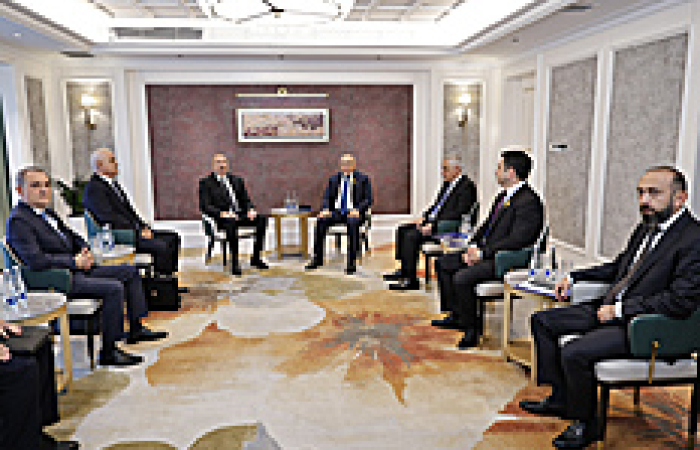
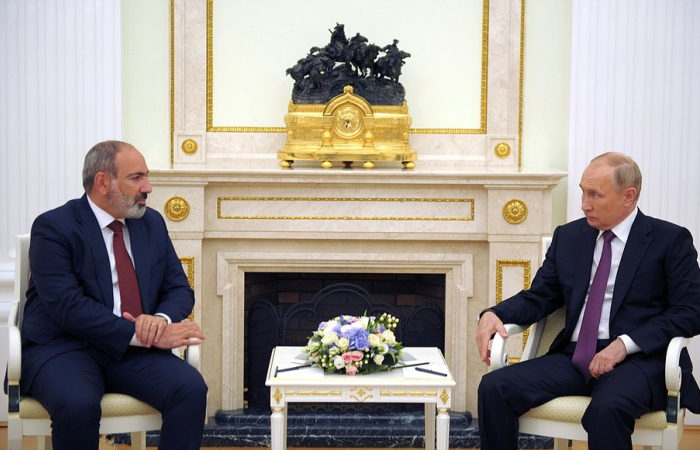
On 7 June 2026, Armenians will go to the polls in parliamentary elections that are formally domestic, but politically much larger than that. Nineteen political forces – seventeen parties and two alliances – are competing in the race. Yet the real contest is not only between parties. The 2026 elections are not only a domestic contest over power, but a referendum-like moment on Armenia’s geopolitical orientation, peace agenda, and democratic resilience. At the heart of this election are three larger questions: whether a post-war society can resist the political instrumentalization of fear; whether a small state can reclaim agency after years of strategic dependence; and whether, after repeated rupture and loss, Armenia can still define its future beyond trauma. In this sense, the election is not only about who governs Armenia next. It is about the political direction through which Armenia will try to govern itself after war, displacement, and the collapse of old security assumptions. These are Armenia’s third parliamentary elections since the 2018 Velvet Revolution, following the early elections of 2018 and 2021. That matters. For the first time in years, Armenia is not going to elections only because of the immediate crisis – revolution in 2018, post-war political breakdown in 2021 – but in a moment when the country is trying to define a new strategic direction. The vote is therefore less about routine government change and more about whether Armenia’s post-2018 democratic project can survive the pressures placed on it: defeat, displacement, polarization, foreign interference, and the daily political temptation to turn fear into votes. (To read the full commentary, click on the image above.)
Editor's choice
Live blog
LIVE BLOG: PASHINYAN'S CIVIL CONTRACT PARTY WIN ARMENIAN ELECTIONS

LIVE BLOG: PASHINYAN'S CIVIL CONTRACT PARTY WIN ARMENIAN ELECTIONS

Monday, 8 June 2026 =================================================== AND THEN THERE WERE THREE Revised figures from the Armenian CEC has shown that the Prosperous Armenia party, has fallen short of the 4% threshold, and will therefore not be in the new Parliament. According to newly updates, Prosperous Armenia got 3.996 percent and is not passing the threshold. Thus Civil Contract will have 64 MPs, Strong Armenia alliance 29 MPs, and Armenia alliance 12 MPs FOUR PARTIES PASS THE THRESHOLD AND WILL BE REPRESENTED IN ARMENIAN  PARLIAMENT The Armenian Central Elections Commission has completed the counting of ballots for the parliamentary elections. The results of all 2005 polling stations have been calculated. The votes were distributed as follows: In the lead is the Civil Contract party, which received 727,160 votes or 49.81 percent. In second place is the "Strong Armenia" alliance of parties, which received exactly 23.29% (340,062 votes). The third place is occupied by the "Armenia" alliance of parties, which has 9.94% (145,097 votes). The Prosperous Armenia Party is in fourth place, garnering 4.00% (58,368 votes). The "Wings of Unity" party, which occupies fifth place, currently has 2.30% (33,618 votes). Accordingly, the minimum threshold is overcome by 4 political forces: the "Civil Agreement", the "Strong Armenia" alliance, the "Armenia" alliance, and the Prosperous Armenia Party. =================================================== Nikol Pashinyan, and his Civil Contract Party, have won the parliamentary elections held in Armenia on 7 June. Preliminary results from the Armenian Central Elections Commission show Civic Contract with 50.83% of the votes. As of now, (0500 am local time) the results of 1,354 polling stations have been summarized, with 864,643 voters. The votes so far are as follows: "Reformist Party" - 847 votes, 0.1 percent "I am against everyone" Democratic Party - 11,382 votes, 1.33 percent "Strong Armenia" alliance – 201,006 votes, 23.51 percent "Shonorable Party of Armenia" – 15,986 votes, 1.87 percent "New Force" reformist party – 13,109 votes, 1.53 percent "Wings of Unity" Party – 19,270 votes, 2.25 percent Prosperous Armenia Party – 35,074 votes, 4.10 percent "National Democratic Pole" Pan-Armenian Party – 2,997 votes, 0.35 percent "Kocharian National Revival and National Awakening Party" – 1,093 votes, 0.13 percent "Armenian National Congress" party – 1,759 votes, 0.21 percent "Republic" Party – 8 thousand 666 votes, 1.01 percent "Christian Democratic Party" – 1,484 votes, 0.17 percent Democratic Unity Party – 2,951 votes, 0.35 percent "Democracy, Law, Discipline" Party – 15,483 votes, 1.81 percent "Civil Contract" Party – 434,562 votes, 50.83 percent "Armenia" bloc – 80 thousand 937 votes, 9.47 percent "Alliance for the Defense of Democracy for the Republic" party – 3,973 votes, 0.46 percent "Bright Armenia" Party – 4,060 votes, 0.47 percent. =================================================== To read the blog, click the image above
Editor's choice
Interview
Thursday Interview: Nigel Ellway

Thursday Interview: Nigel Ellway

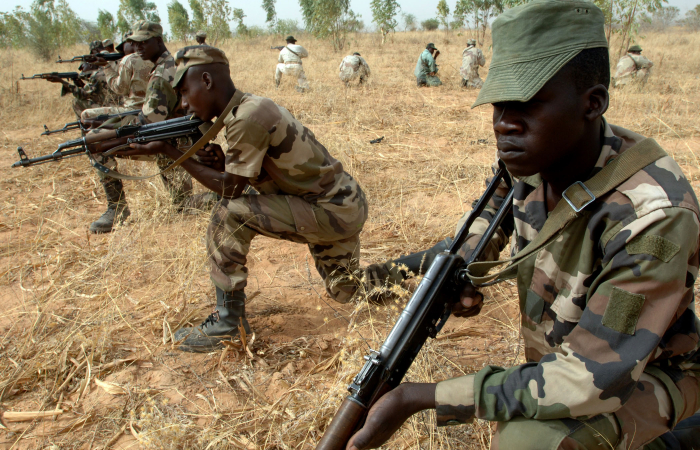
This week, commonspace.eu spoke to Nigel Ellway about his work on landmines, explosive weapons and victim assistance, and his mission to make conflict-affected communities safer and more humane places to live.  Nigel Ellway is a former international journalist and Whitehall media adviser who has dedicated more than a decade to raise political awareness of landmines, explosive weapons and victim assistance. In 2011, he created an All-Party Parliamentary Group on Landmines, and in 2018 founded the REVIVE Campaign, a humanitarian NGO focused on research and advocacy. We spoke to Mr. Ellway about the long-term impact of landmines and explosive weapons, why victim assistance is too often politically neglected, and why mine action should be measured not only by land cleared or devices removed, but by lives rebuilt, livelihoods restored and communities made safe again. “When I founded REVIVE, we adopted the phrase: “Reduce explosive violence, increase victim empowerment.” That is actually where the organisation’s name comes from. But over time, I became increasingly realistic about what NGOs can and cannot achieve. Conflict will always exist, and human beings are endlessly inventive in the ways they wage war. Historically, landmines were seen as effective weapons of deterrence because they were cheap to deploy but expensive to remove. Today, however, warfare is evolving rapidly. Drone warfare is transforming the battlefield.” (To read the full interview, click on the image above.)