UN expert reports ‘systematic use of torture against Palestinians’ in Israeli custody

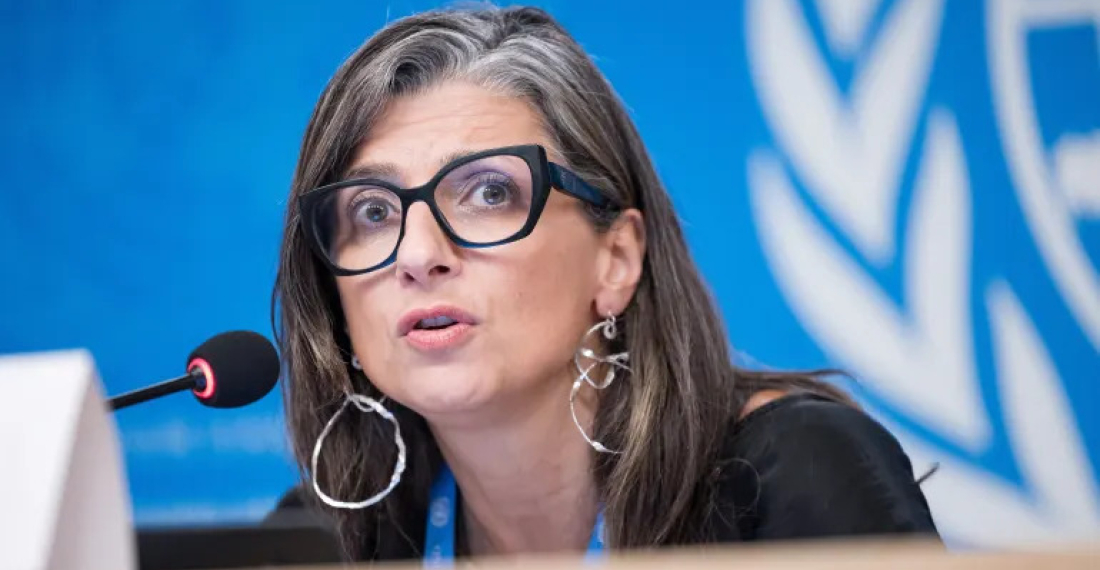
In a report released on Friday (20 March), United Nations Special Rapporteur Francesca Albanese said that Palestinians in Israeli custody “have been subjected to exceptionally ruthless physical and psychological abuse” since the war in Gaza began in October 2023.

Albanese, the Special Rapporteur on the Occupied Palestinian Territories, is an independent expert appointed by the UN Human Rights Council and does not speak on behalf of the United Nations. She has previously faced criticism for her reporting on Israel and Palestine, including her characterisation of the situation in Gaza as genocide.

The report, titled “Torture and Genocide”, draws on more than 300 testimonies and examines what it describes as the “systematic use of torture against Palestinians from the occupied Palestinian territory since 7 October 2023”. Albanese added that she “unequivocally condemns torture and other forms of ill-treatment committed by all actors”, including Palestinian armed groups.

“Brutal beatings, sexual violence, rape, lethal mistreatment, starvation and the deprivation of basic human conditions have inflicted profound and lasting scars on the bodies and minds of tens of thousands of Palestinians and their loved ones,” the report stated.

It also points to a sharp rise in arrests since October 2023, describing Israel’s detention system as a “regime of widespread humiliation, coercion, and terror”. According to the report, more than 18,500 Palestinians have been arrested, including around 1,500 children, with approximately 9,000 still in detention and “more than 4,000” subjected to enforced disappearance.

Albanese called on Israel to “cease all acts of torture and ill-treatment” and urged countries to act to prevent further destruction in Palestine. She also urged the Prosecutor of the International Criminal Court (ICC) to seek arrest warrants for several senior Israeli ministers.

Albanese is expected to present the report to the UN Human Rights Council on Monday (23 March).

Source: commonspace.eu with Al Jazeera and Le Monde
Related articles

Editor's choice
News
European leaders arrive in Armenia for Monday's summit of the European Political Community

European leaders arrive in Armenia for Monday's summit of the European Political Community

European leaders are arriving in Armenia on Sunday, for the 8th summit of the European Political Community (EPC), which is expected to take place in Yerevan on Monday 4 April. Among those arriving will be French President, Emanuel Macron, European Commission president, Ursula von der Leyen and European Council president, Antonio Costa. Ukrainian president Volodmyr Zelenski is also expected to attend and he is already in the Armenian capital. Turkish Vice president, Turkish Vice President Cevdet Yilmaz will represent his country in the summit. Also present will be Canadian prime minister, Mark Carney. The European Political Community (EPC) is an intergovernmental forum for political and strategic discussions about the future of Europe established in 2022 after the Russian invasion of Ukraine The group first met in October 2022 in Prague, with participants The 47 EPC participating states are home to 689.5 million people, constitute 8.7 percent of the world's population and represent about 23.5 percent of the global GDP.

Popular

Editor's choice
Interview
Thursday Interview: Murad Muradov

Thursday Interview: Murad Muradov

Today, commonspace.eu starts a new regular weekly series. THURSDAY INTERVIEW, conducted by Lauri Nikulainen, will host  persons who are thinkers, opinion shapers, and implementors in their countries and spheres. We start the series with an interview with Murad Muradov, a leading person in Azerbaijan's think tank community. He is also the first co-chair of the Action Committee for a new Armenian-Azerbaijani Dialogue. Last September he made history by being the first Azerbaijani civil society activist to visit Armenia after the 44 day war, and the start of the peace process. Speaking about this visit Murad Muradov said: "My experience was largely positive. My negative expectations luckily didn’t play out. The discussions were respectful, the panel format bringing together experts from Armenia, Azerbaijan, and Turkey was particularly valuable during the NATO Rose-Roth Seminar in Yerevan, and media coverage, while varied in tone, remained largely constructive. Some media outlets though attempted to represent me as more of a government mouthpiece than an independent expert, which was totally misleading.  Overall, I see these initiatives as important steps in rebuilding trust and normalising professional engagement. The fact that soon a larger Azerbaijani civil society visits to Armenia followed, reinforces the sense that this process is moving in the right direction." (click the image to read the interview in full)