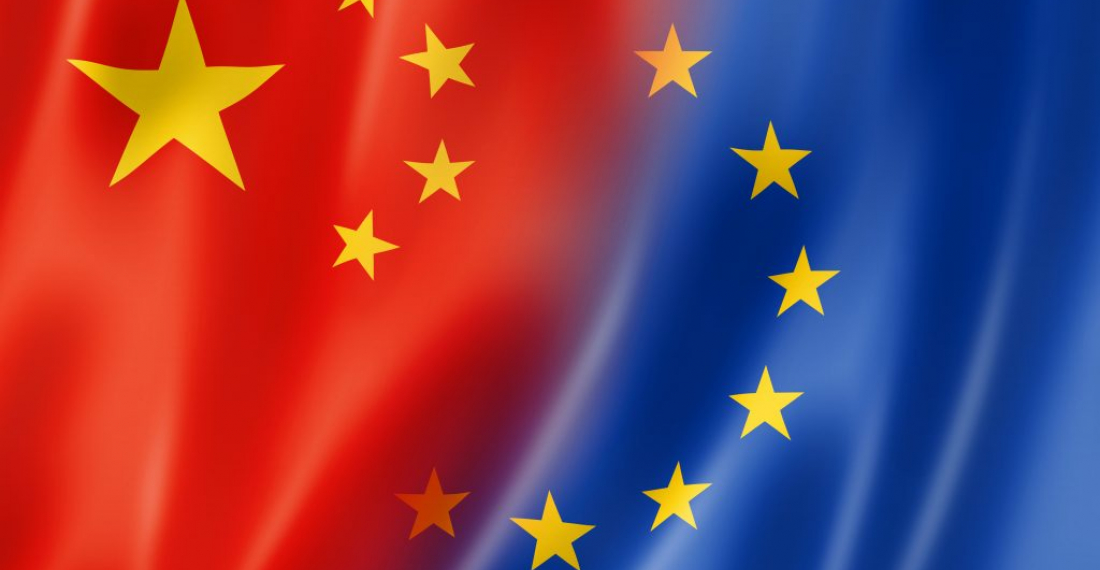
A shortened EU-China summit on Thursday will be a test for both sides

European Council President, Antonio Costa, Commission President, Ursula von der Leyen, and EU High Representative for Foreign and Security Policy, Kaya Kallas, will travel to Beijing next week to participate in the EU-China summit on Thursday (24 July). The summit has already been cut from two days to one, reflecting an increasing realisation on both sides that the chance of making progress on many issues in the bilateral agenda is small.

The summit on 24 July, coincides with the 50th anniversary of relations between China and the EU, and no doubt China will want to throw a party. Chinese President, Xi Jinping, and prime minister, Li Qiange, are expected to participate in the summit. But the feeling in Brussels is that in the fifty years China had failed to create a level playing field. Whilst Chinese companies, academics and individuals had a free hand in the open European system across the continent, European companies struggled to exist, let alone compete, in  China. In a key speech in 2023, von der Leyen spoke about the need of the EU to “de risk” its ties with China.

But the issue that has really marred relations is Ukraine. China has failed to understand the significance of the situation in Ukraine for Europe. Chinese support for the Russian position diplomatically, as well as more tangibly, has cast a serious cloud over relations. This was seen clearly a few days ago in a four hour meeting in Brussels, between Kallas and Chinese foreign minister, Wang Yi, described as being “respectful, but tense”.

The summit will also be the last event for the EU’s chief architect of relations with China over the last two years, Niclas Kvarnstrom. Kvarnstrom, a fluent Chinese speaker, is expected to leave his position as Managing  Director for the Asia-Pacific Region at the European External Action Service, to return to his native Sweden, leaving a big hole in the EU expertise on China.

The EU-China summit will be a difficult affair, that will test both sides diplomatic skills. Europe in the meantime is preparing for the worst. In an interview with the German publication “BILD” the new Supreme Allied Commander, Europe, General Alexus Grinkevich, warned that Europe has only a year and half to prepare for a possible full scale conflict with Russia and China. 2027 could become a year of crises, the US General warned.

source: commonspace.eu
Related articles

Editor's choice
News
Borrell tells the European Parliament that the situation in Afghanistan was critical, but the EU will remain engaged

Borrell tells the European Parliament that the situation in Afghanistan was critical, but the EU will remain engaged

Borrell underlined that the European Union will make every effort to support the peace process and to remain a committed partner to the Afghan people. "Of course, we will have to take into account the evolving situation, but disengagement is not an option.  We are clear on that: there is no alternative to a negotiated political settlement, through inclusive peace talks.
Editor's choice
News
Thai-Cambodia border clashes enter fourth day

Thai-Cambodia border clashes enter fourth day

Renewed fighting between Thailand and Cambodia has entered its fourth day, with both sides accusing one another of violating international law, as they await a promised phone call from United States President Donald Trump. Cambodia’s Ministry of Defence accused Thailand’s military of carrying out numerous attacks within the country in the early hours of Thursday morning, including deploying tanks and artillery to strike targets in the country’s Pursat, Banteay Meanchey, and Oddar Meanchey provinces. In one such attack, Cambodia accused Thai soldiers of violating international humanitarian law by firing on civilians in Prey Chan village in Banteay Meanchey province. In another, it accused Thai forces of shelling “into Khnar Temple area”, and said Thai forces had also “fired artillery and support fire into the O’Smach area”. “Cambodia urges that Thailand immediately stop all hostile activities and withdraw its forces from Cambodia’s territorial integrity, and avoid acts of aggression that threaten peace and stability in the region,” the Defence Ministry said. Clashes took place on Wednesday at more than a dozen locations along the contested colonial-era demarcated 817-kilometre (508-mile) Thai-Cambodian border, with some of the most intense fighting being reported since a five-day battle in July, which saw dozens killed on both sides. Cambodia’s Ministry of the Interior said homes, schools, roads, Buddhist pagodas and ancient temples had been damaged by “Thailand’s intensified shelling and F-16 air strikes targeting villages and civilian population centres up to 30km [18.6 miles] inside Cambodian territory”. (click the image to read the full story).

Popular

Editor's choice
News
Thai-Cambodia border clashes enter fourth day

Thai-Cambodia border clashes enter fourth day

Renewed fighting between Thailand and Cambodia has entered its fourth day, with both sides accusing one another of violating international law, as they await a promised phone call from United States President Donald Trump. Cambodia’s Ministry of Defence accused Thailand’s military of carrying out numerous attacks within the country in the early hours of Thursday morning, including deploying tanks and artillery to strike targets in the country’s Pursat, Banteay Meanchey, and Oddar Meanchey provinces. In one such attack, Cambodia accused Thai soldiers of violating international humanitarian law by firing on civilians in Prey Chan village in Banteay Meanchey province. In another, it accused Thai forces of shelling “into Khnar Temple area”, and said Thai forces had also “fired artillery and support fire into the O’Smach area”. “Cambodia urges that Thailand immediately stop all hostile activities and withdraw its forces from Cambodia’s territorial integrity, and avoid acts of aggression that threaten peace and stability in the region,” the Defence Ministry said. Clashes took place on Wednesday at more than a dozen locations along the contested colonial-era demarcated 817-kilometre (508-mile) Thai-Cambodian border, with some of the most intense fighting being reported since a five-day battle in July, which saw dozens killed on both sides. Cambodia’s Ministry of the Interior said homes, schools, roads, Buddhist pagodas and ancient temples had been damaged by “Thailand’s intensified shelling and F-16 air strikes targeting villages and civilian population centres up to 30km [18.6 miles] inside Cambodian territory”. (click the image to read the full story).