Pope speaks about situation in the Lachin Corridor after Angelus prayer at Vatican City

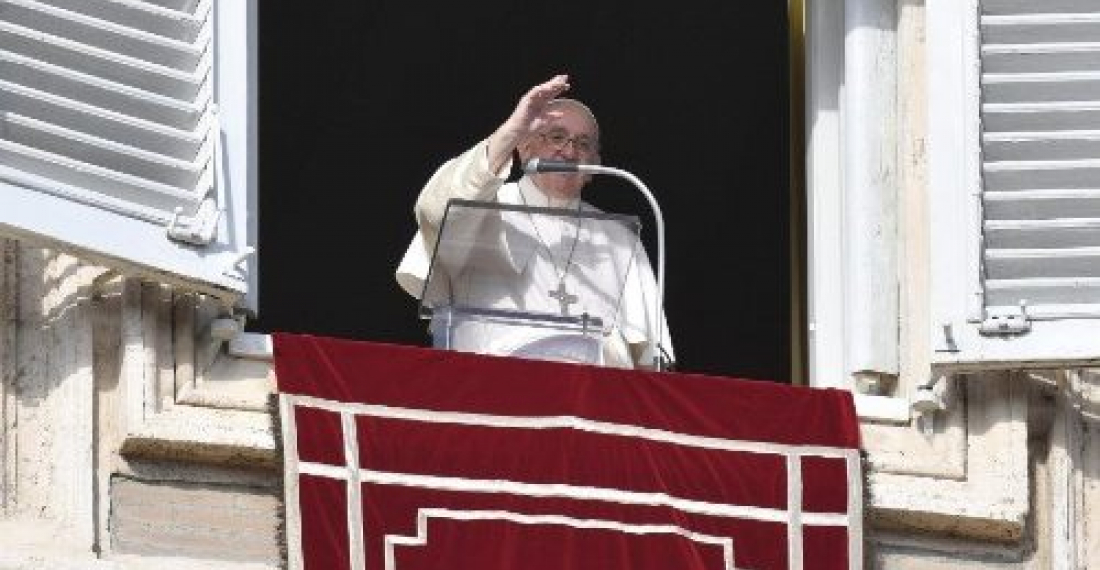
Pope Francis addressed the humanitarian issues arising from the ongoing situation on the Lachin corridor while speaking after the Angelus prayer at St Peter Square in Vatican City.

The Pope, speaking in Italian said

"I am concerned about the situation in the Lachin Corridor in the South Caucasus. In particular, I am concerned about the precarious humanitarian conditions of the populations, which risk further deterioration during the winter season. I ask everyone involved to commit themselves to finding peaceful solutions for the good of the people."

source: commonspace.eu with Bollettino della Stampa della Santa Sede (Vatican City).
photo: Pope Francis speaking furing the Angelus Pray at Vatican City on 18 December 2022 (picture courtesy of Vatican Radio)

Related articles

Editor's choice
News
Azerbaijan and the European Union find a common language

Azerbaijan and the European Union find a common language

After years of bickering, during which relations reached  "diplomatic lows", Azerbaijan and the European Union appear to have found a common language on how to build relations between them. The president of the European Commission on Wednesday (1 July) visited Baku for meetings with president Ilham Aliyev.. In a key speech, addressing president Aliyev, president Van der Leyen outlined the position of the European Union on various asspects of EU-Azerbaijan relations. "I am here today to deepen a partnership that matters greatly to the European Union. And one that has real momentum, as the President just described. But first, let me turn to the most important development in this region in decades. Peace. Let me congratulate you on initiating an historic peace agreement with Armenia. You showed personal leadership in promoting peace and cooperation across the region. And it is creating new opportunities for stability, trust and shared prosperity. The EU strongly supports this process. And we will continue to do so. Together, we can turn peace on paper into peace in practice. That is why we are working here today together." President Aliyev replied in kind: This is unprecedented dynamism in our relationship, which reflects the mutual will of both sides to intensify our cooperation and to strengthen our partnership. We highly value the relationship with the European Commission, and today, with Madame President and the delegations, we broadly discussed a very impressive agenda. The European Union is Azerbaijan's main trading partner. More than 40% of our trade is with the member states, and for the European Union, Azerbaijan is the main trading partner in the South Caucasus. Almost 70% of trade in the South Caucasus is trade with Azerbaijan." From what Aliyev and Van der Leyen said on 1 July, relations between the two is entering a new, positive, phase. (click picture to read a full report).

Popular

Editor's choice
Interview
Thursday Interview: Murad Muradov

Thursday Interview: Murad Muradov

Today, commonspace.eu starts a new regular weekly series. THURSDAY INTERVIEW, conducted by Lauri Nikulainen, will host  persons who are thinkers, opinion shapers, and implementors in their countries and spheres. We start the series with an interview with Murad Muradov, a leading person in Azerbaijan's think tank community. He is also the first co-chair of the Action Committee for a new Armenian-Azerbaijani Dialogue. Last September he made history by being the first Azerbaijani civil society activist to visit Armenia after the 44 day war, and the start of the peace process. Speaking about this visit Murad Muradov said: "My experience was largely positive. My negative expectations luckily didn’t play out. The discussions were respectful, the panel format bringing together experts from Armenia, Azerbaijan, and Turkey was particularly valuable during the NATO Rose-Roth Seminar in Yerevan, and media coverage, while varied in tone, remained largely constructive. Some media outlets though attempted to represent me as more of a government mouthpiece than an independent expert, which was totally misleading.  Overall, I see these initiatives as important steps in rebuilding trust and normalising professional engagement. The fact that soon a larger Azerbaijani civil society visits to Armenia followed, reinforces the sense that this process is moving in the right direction." (click the image to read the interview in full)