For about one month, since July, the confrontion between the United States and Iran has largely been limited to verbal abuse and threats. This strange lull in military hostilities has now been broken.
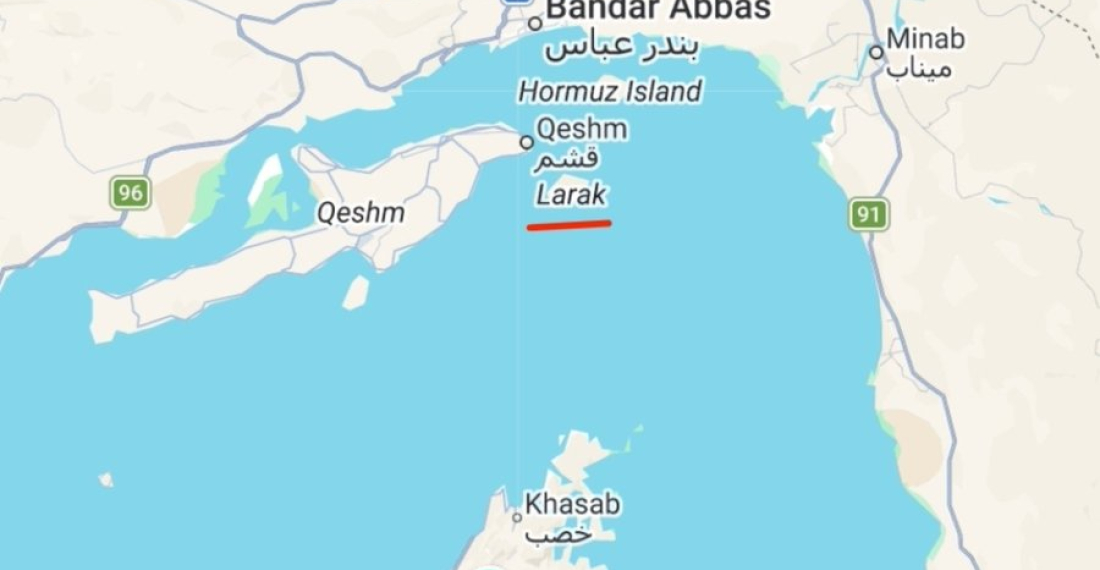
Iran says it launched missiles at two US bases in Jordan following a US attack on Larak Island in southern Iran earlier on Sunday.
US forces struck two Iranian launchers on Larak Island on Sunday, marking the first known American attack on Iran since late July and triggering a fresh escalation between Washington and Tehran.
Iran said the strike killed and wounded soldiers and civilians, while the Revolutionary Guards vowed a response and later claimed attacks on US military positions in Jordan and a UAE air base.
A US official confirmed that American forces targeted two Iranian launchers on Larak Island after Islamic Revolutionary Guard Corps (IRGC) forces were observed preparing to launch rockets carrying sea mines into the Strait of Hormuz.
US Central Command spokesman Cdr Tim Hawkins said the operation was a “limited, precise action” against minelaying forces that posed an imminent threat to the strategic waterway.
The US military did not identify the target in its social media post, but a US official confirmed to Reuters that the strike took place on Larak Island.
In a statement reported by Iranian news agencies on Sunday, the Islamic Revolutionary Guard Corps (IRGC) said the combined missile and drone operation, which it called “Punishment of the Aggressor”, hit the King Hussein and Al Azraq bases in Jordan.
The exchange of attacks is the first flare-up in violence between the two sides since late July.
The IRGC said the strikes “destroyed the technical and repair infrastructure, as well as the enemy fighter deployment sites”, inflicting significant damage.
Jordan reported intercepting eight missiles soon after the IRGC announced the attack.
“Air defence systems intercepted eight missiles that breached the Kingdom’s airspace at dawn today, Monday,” the Jordanian military said in a statement.
No injuries were reported at either base.
In a further development on Monday, the IRGC said it shot down a US MQ-9 Reaper drone over the Strait of Hormuz.
Iran’s Fars and Mehr news agencies cited a statement from the IRGC that said that its air defences had intercepted “a long-range American MQ9 drone” over the Strait of Hormuz, which then fell into the Gulf.
In his first comments since the US attack on Iran’s Larak Island, President Masoud Pezeshkian said that Tehran was “not looking for war”, but would “never sit still in the face of any aggression” either.
Pezeshkian made the comments as he was leaving for Bishkek, the capital of Kyrgyzstan, to attend the summit of the heads of state of the Shanghai Cooperation Organisation countries.
source: commonspace.eu with Al Jazeera (Doha) and agencies