


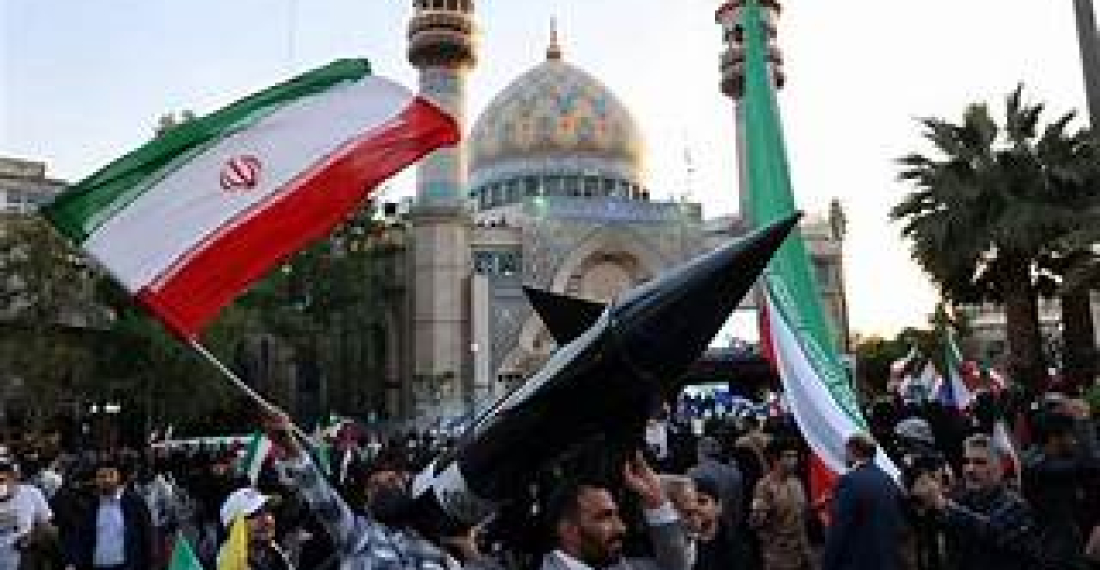
Monday Commentary: As war in the Middle East rages on, it is necessary to keep sight of the big picture, and seek bold and ambitious solutions


The war in the Middle East goes on. Most countries, governments and people think it was unnecessary and unjustified. The person who started it, and who has the power to stop it quickly, Donald Trump, has as much as admitted he had not thought the whole thing through properly.

This war has already deformed the Middle East in ways we are just starting to understand. Its negative impact on the world, even if it stops tomorrow are going to be deep and long lasting.

Some will despair. But governments, international organisations, and more broadly civil society, do not have this luxury. It is time to rethink, regroup, and develop a future strategy. For that it is necessary to look at the big picture. This is far from easy while the senseless war continues but it is necessary, and all those who can, in their different ways, need to contribute.

The European Union, the United Nations and multilateralism

On 19 March the EU had a summit of the leaders of the 27 member states in Brussels. It was a serious, somber affair, overshadowed by the war in the Middle East, and the political and economic fallout from it. Big decisions were taken. The European leaders also met with the UN Secretary General, Antonio Gutteres. Both the EU and the UN are large organisations, that often look dysfunctional. But for the future if the world, post the Trump war in the Middle East, both are vital  The commitment of both to multilateralism at this precise moment, when the concept appears broken, is welcome.

Iran

How to deal with a heavily injured, but not defeated Iran after the war is already emerging as a key issue. Here several factors are important: (1) The international community must maintain its lines of communication with Iran open; (2) The nuclear issue must be closed; Iran should not have a nuclear weapon; (3)The international community must engage with Iran’s healing and reconstruction process in good faith; (4) change in Iran will not come from aerial bombardments, nor from supporting fringe elements within Iranian society; it has to be a transition process that will take time and patience. How to engage with Iranian society will have to be a priority going forward.

In short, the way forward is not more isolation, but more engagement.

Lebanon will also require special attention going forward. It needs to be rehabilitated and reconstructed if it is to survive as a state.

Radicalisation

The world must also be prepared for a new wave of radicalization: Gaza, Lebanon, Iran, and all the mess and collapse in the Middle East is breeding a new generation of people who see violence as the only means of confronting the west. Its not a question of if, but rather when and where they will strike. Efforts to understand radicalization, and ways to address it, must remain high on the agenda.

Other wars continue

The crisis in the Middle East has overshadowed the sixty or so other on-going unresolved conflicts in the world. Their toll in terms of human suffering is high, and they are a source of instability and come at huge economic costs. Yesterday, after the Angelus prayer on St Peter Square in Rome, Pope Leo XIV, leader of the Catholic Church expressed his deep concern for the ongoing situation in the Middle East, as well as other areas of the world “torn apart by war and violence.” He stressed that “we cannot remain silent in the face of the suffering of so many people, innocent victims of these conflicts.”

This continuous violence wounds everyone—“what harms them, harms all of humanity”, the Pope said. Pope Leo warned that the pain, death, and suffering brought about by these wars “are a scandal to the entire human family and a cry before God.” 

The war in Ukraine has entered its fifth year, and talk of an end in fighting appear premature. The resilience of the Ukrainian people in standing firm in the face of Russian aggression, humbles all Europeans. The crises in the Middle East must not become an opportunity for Russia. Whether it will be is still too early to say.

Further afield, the war in Sudan is ravaging this huge country, and the conflict between Pakistan and Afghanistan has already taken a toll on innocent civilians, and has the potential to do much worse.

Multilateralism

In their meeting last week EU leaders reaffirmed the EU's steadfast commitment to the rules-based international order with the UN at its core. “The European Union will remain a predictable, reliable and credible partner, and reiterates its commitment to working together with all its partners to promote multilateral solutions to common challenges”, they said.

The Secretary-General of the United Nations, Antonio Gutteres was a special guest at the EU leaders meeting on 19 March. EU Council President, Antonio Costa laid out the EU position:

“The United Nations is a key institution in the international order. And now, in these very troubled moments that we are living, more than ever, it is decisive to uphold the international rules-based order, to support multilateralism, and to support United Nations' action”.

He added, “I would like to commend especially the determination of the Secretary-General António Guterres to lead the United Nations in such a difficult moment. A lot of international actors are challenging the international order. But what we are experiencing is that, in fact, there is no alternative for the international rules-based order, because the alternative is chaos, the alternative is the war in Ukraine, the alternative is the war in the Middle East, the alternative is the dramatic humanitarian situation in Gaza, the alternative is war in several countries in Africa. 

We need to uphold the international rules-based order, to support the multilateral system, and to support especially the United Nations. And I want to assure the Secretary-General that the European Union will continue to b e the great supporter of your work and the work of the United Nations. “

Solutions need to be bold and ambitious

The world must recognize that the present crisis, is the biggest challenge since WWII. The solutions must be equal to the challenge. They must also be bold and ambitious. The EU working with the UN is one of the few, maybe only, actor that can make a difference. But this will require political will and determination. The Brussels EU meeting on 19 March gave a hint of that. But we are not there yet.

Monday Commentary will take a two-week Easter break, and will next be published on 13 April 2026. In the meantime however, commonspace.eu will continue to be updated daily.

Source: Monday Commentary is written for commonspace.eu by Dr Dennis Sammut, Director of LINKS Europe, and Managing Editor of commonspace.eu.

Related articles

Editor's choice
News
COP 17 in Armenia

COP 17 in Armenia

Armenia is currently hosting the COP17 conference of the Convention on Biological Diversity, which began earlier this week (19 October) and will run until 30 October, bringing around 15,000 participants from 196 different countries to Yerevan. At a leaders' summit held as part of COP17, Prime Minister Nikol Pashinyan expressed realistic ambitions: “We are halfway towards achieving these goals (Kunming-Montreal Global Biodiversity Framework), and we must honestly acknowledge that we are not yet moving in the right direction. Our task now is not to make new promises, but to fulfil the commitments we have already made.” Pashinyan pointed towards Armenia's own records, noting that the whitefish stock in Lake Sevan has increased substantially in the last ten years. Iranian President Masoud Pezeshkian and Georgian Prime Minister Irakli Kobakhidze also addressed the summit, with Turkiye sending its agriculture minister. However, there were no reports of Azerbaijani representatives attending. The conference has given Yerevan a valuable international platform, yet the absence of Azerbaijan is likely to be read as a sign that the peace process in the South Caucasus has not yet been translated into wider regional cooperation. The leaders' summit was opened by Armenian Prime Minister Nikol Pashinyan, who stressed that hosting the conference was a great honour for Armenia. He expressed hope that it would 'be productive and contribute to protecting our planet's biodiversity'. 'We – the citizens of Armenia, the government, state authorities and local governments – owe a debt to our nature,' the prime minister said. He noted that the international community had already developed the concept of 'living in harmony with nature’ and adopted the Kunming-Montreal Global Biodiversity Framework in 2022, setting out goals and specific targets to be achieved by 2030. 'We are halfway towards achieving these goals, and we must honestly acknowledge that we are not yet moving in the right direction. Our task now is not to make new promises, but to fulfil the commitments we have already made,' Nikol Pashinyan said. The COP17 conference is expected to adopt a declaration at leaders' level. More than 30 documents are scheduled for discussion. If approved, the commitments set out in them will become legally binding on countries that are parties to the Convention on Biological Diversity.”
Editor's choice
News
Landmines present to the European Union both a contradiction and a dilemma

Landmines present to the European Union both a contradiction and a dilemma

Finland’s decision to buy one million landmines creates a serious contradiction in the policy of the European Union, and is symbolic of a bigger dilemma facing European countries as they get used to the need to acquire “hard” power to face an increasing threat from Russia. Finland is seeking to acquire one million anti-personnel mines at a cost of 100 million euros. Finland, together with Poland, Latvia, Lithuania and Estonia last year abandoned the Ottawa agreement, the international framework that bans the use of anti-personnel mines, which the EU had been instrumental in establishing and supporting. All five countries cite the threat from Moscow as the reason. Colonel Riku Mikkonen of the Army Command told Finland’s national news agency STT that officials are now gathering information from suppliers regarding the deal, the AFP news agency reports. Helsinki would like domestic manufacturers to supply the mines, with contracts signed by the end of 2027 and production up and running by 2028. “It would be useful in many ways if Finnish companies produced the anti-personnel mines in Finland,” Mikkonen said. About half a dozen Finnish firms qualify, he told STT. “However, at this stage, buying the mines from abroad is not totally ruled out,” he added. LANDMINES PROVIDE THE EU WITH BOTH A CONTRADICTION, AND A DILEMMA Eliminating landmine contamination worldwide is one of the EU’s main soft power postures, and it basks in its record as the biggest funder of anti-landmine action in the world. But the fact that 5 of its 27 member states  have now left the Ottawa Treaty dents the EU moral high ground. It is a contradiction that is too big and important to be ignored. It also presents the European Union with a deeper dilemma. The threat from Russia is changing what the EU has stood for decades, namely a force for good able to mobilise its considerable soft power for the greater good of humanity. How the Union will implement this change will define its future. In the meantime landmines have not become any less lethal, benign, or unimportant. They remain in many parts of the world a major threat to life, an impediment to prosperity, and a potential trigger to further conflict. The 22 EU members states that still adhere to the Ottawa treaty must regroup, and be more assertive in their quest against anti-personnel land mines. All the reasons why they supported the Ottawa treaty in the first place still exist. The message must be clear: NO TO LANDMINES!

Popular

Editor's choice
Interview
Thursday Interview: Murad Muradov

Thursday Interview: Murad Muradov

Today, commonspace.eu starts a new regular weekly series. THURSDAY INTERVIEW, conducted by Lauri Nikulainen, will host  persons who are thinkers, opinion shapers, and implementors in their countries and spheres. We start the series with an interview with Murad Muradov, a leading person in Azerbaijan's think tank community. He is also the first co-chair of the Action Committee for a new Armenian-Azerbaijani Dialogue. Last September he made history by being the first Azerbaijani civil society activist to visit Armenia after the 44 day war, and the start of the peace process. Speaking about this visit Murad Muradov said: "My experience was largely positive. My negative expectations luckily didn’t play out. The discussions were respectful, the panel format bringing together experts from Armenia, Azerbaijan, and Turkey was particularly valuable during the NATO Rose-Roth Seminar in Yerevan, and media coverage, while varied in tone, remained largely constructive. Some media outlets though attempted to represent me as more of a government mouthpiece than an independent expert, which was totally misleading.  Overall, I see these initiatives as important steps in rebuilding trust and normalising professional engagement. The fact that soon a larger Azerbaijani civil society visits to Armenia followed, reinforces the sense that this process is moving in the right direction." (click the image to read the interview in full)

