


Karabakh talks to resume in New York.

Negotiations on the possible settlement of the Nagorno-Karabakh conflict are expected to resume in New York later this month on the margins of the United Nations General Assembly. The meetings are expected to take place on 24 and 25 September. The Foreign Ministers of Armenia and Azerbaijan, Edward Nalbandian and Elmar Mammadyarov will first meet separately with the co-Chair of the OSCE Minsk Process, and afterwards they are expected to have a joint meeting.

The Azerbaijani Foreign Minister spoke about the meeting in a press briefing together with his Turkish counterpart, Feridun Sinirlioglu. Sinirlioglu said the main topic of his discussions in Baku was the Nagorno-Karabakh conflict. The Turkish Foreign Minister said that the Nagorno-Karabakh conflict is the biggest problem hindering regional security and development. He said that the conflict should be settled within the territorial integrity of Azerbaijan.

"Turkey intends to step up its efforts for this. It is clear that such a solution will normalize the situation in the region and will benefit all the countries. What we expect is that other countries and the international community comprehend this, and step up their efforts without delay. We are following the activities of the Minsk Group, and when necessary we criticize and urge them forward. Any steps that may deepen the problem must be avoided. The recent illegal elections held in Nagorno-Karabakh is a wrong and provocative step, and we condemn it. It's more than clear that this step is not going to yield a positive result," he said. The Turkish Foreign Minister later also held a meeting with the Azerbaijani President Ilham Aliev.

The visit of the Turkish Foreign Minister to Baku comes two weeks after the Russian Foreign Minister, Sergei Lavrov, also visited Azerbaijan to discuss the Karabakh issue. Referring to that visit, the Azerbaijani Foreign Minister said that Russia has stepped up its diplomacy on the Karabakh issue. Mammadyarov however emphasised that Azerbaijan wanted a results based approach but it was not yet possible to say if the Russian efforts will yield results.

source: commonspace.eu with agencies.

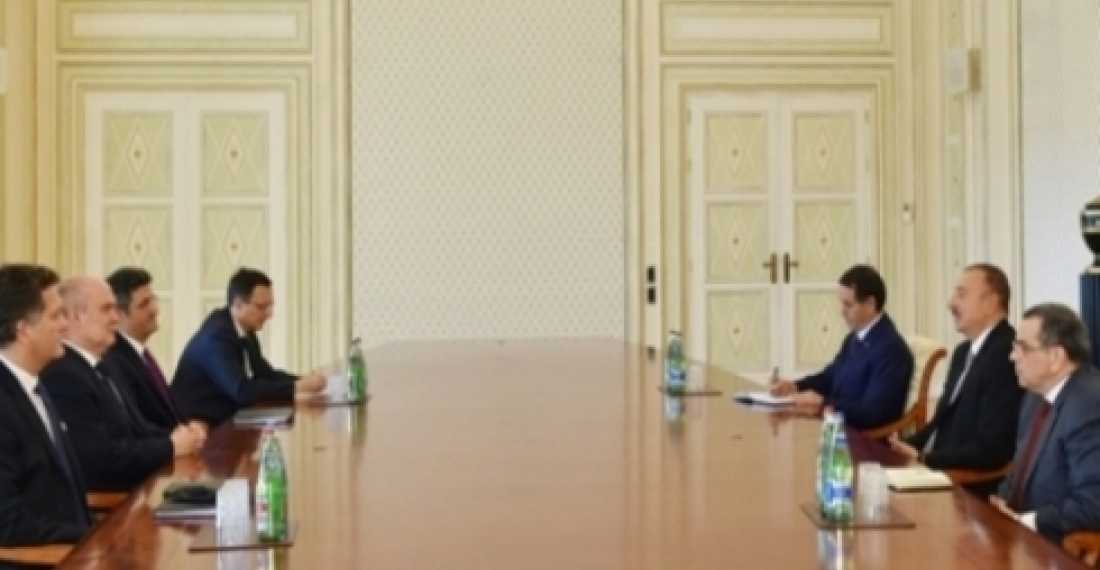
photo: Turkish Foreign Minister Feirdun  Sinirlioglu and his delegation met Azerbaijani President Ilham Aliev in Baku on 16 September 2015. (picture copurtesy of the press servicve of the Preesident of Azerbaijan.)


 

Related articles

Editor's choice
News
Borrell tells the European Parliament that the situation in Afghanistan was critical, but the EU will remain engaged

Borrell tells the European Parliament that the situation in Afghanistan was critical, but the EU will remain engaged

Borrell underlined that the European Union will make every effort to support the peace process and to remain a committed partner to the Afghan people. "Of course, we will have to take into account the evolving situation, but disengagement is not an option.  We are clear on that: there is no alternative to a negotiated political settlement, through inclusive peace talks.
Editor's choice
News
Germany accuses Russia of cyberattacks and disinformation campaign

Germany accuses Russia of cyberattacks and disinformation campaign

The German government holds Russia responsible for a cyberattack on German air traffic control, and for targeted disinformation campaigns before the last federal election. According to the German Foreign Office in Berlin, the incidents could be clearly attributed to the Russian military intelligence service, the GRU. In response, the Russian ambassador to Berlin was summoned to the Foreign Ministry. "We have been observing a massive increase in threatening hybrid activities by Russia for some time now," a spokesperson for the Foreign Ministry stated. These range from disinformation campaigns and espionage to cyberattacks and sabotage attempts. The aim is to divide society, sow distrust, and undermine confidence in democratic institutions. The spokesperson added that with these actions, Russia is "very concretely threatening our security, not only through its war of aggression against Ukraine, but also here in Germany."  The Foreign Ministry spokesperson explained that the cyberattack on air traffic control in August 2024 was clearly attributed to the hacker collective "APT28," known as "Fancy Bear," and to the responsibility of the Russian military intelligence service, the GRU. Furthermore, it could now be "conclusively stated" that Russia had attempted "to influence and destabilize both the last Federal election and the ongoing internal affairs of the Federal Republic of Germany." There was "absolutely irrefutable evidence" for this". The so-called "Storm 1516" campaign, which has been running since 2024, is allegedly backed by "reliable information" that the Moscow-based think tank "Center for Geopolitical Expertise" is behind it. The Center is also said to be supported by Russian military intelligence. Its primary aim is to influence democratic elections in the West. (Click the image to read more).

Popular

Editor's choice
News
Germany accuses Russia of cyberattacks and disinformation campaign

Germany accuses Russia of cyberattacks and disinformation campaign

The German government holds Russia responsible for a cyberattack on German air traffic control, and for targeted disinformation campaigns before the last federal election. According to the German Foreign Office in Berlin, the incidents could be clearly attributed to the Russian military intelligence service, the GRU. In response, the Russian ambassador to Berlin was summoned to the Foreign Ministry. "We have been observing a massive increase in threatening hybrid activities by Russia for some time now," a spokesperson for the Foreign Ministry stated. These range from disinformation campaigns and espionage to cyberattacks and sabotage attempts. The aim is to divide society, sow distrust, and undermine confidence in democratic institutions. The spokesperson added that with these actions, Russia is "very concretely threatening our security, not only through its war of aggression against Ukraine, but also here in Germany."  The Foreign Ministry spokesperson explained that the cyberattack on air traffic control in August 2024 was clearly attributed to the hacker collective "APT28," known as "Fancy Bear," and to the responsibility of the Russian military intelligence service, the GRU. Furthermore, it could now be "conclusively stated" that Russia had attempted "to influence and destabilize both the last Federal election and the ongoing internal affairs of the Federal Republic of Germany." There was "absolutely irrefutable evidence" for this". The so-called "Storm 1516" campaign, which has been running since 2024, is allegedly backed by "reliable information" that the Moscow-based think tank "Center for Geopolitical Expertise" is behind it. The Center is also said to be supported by Russian military intelligence. Its primary aim is to influence democratic elections in the West. (Click the image to read more).

