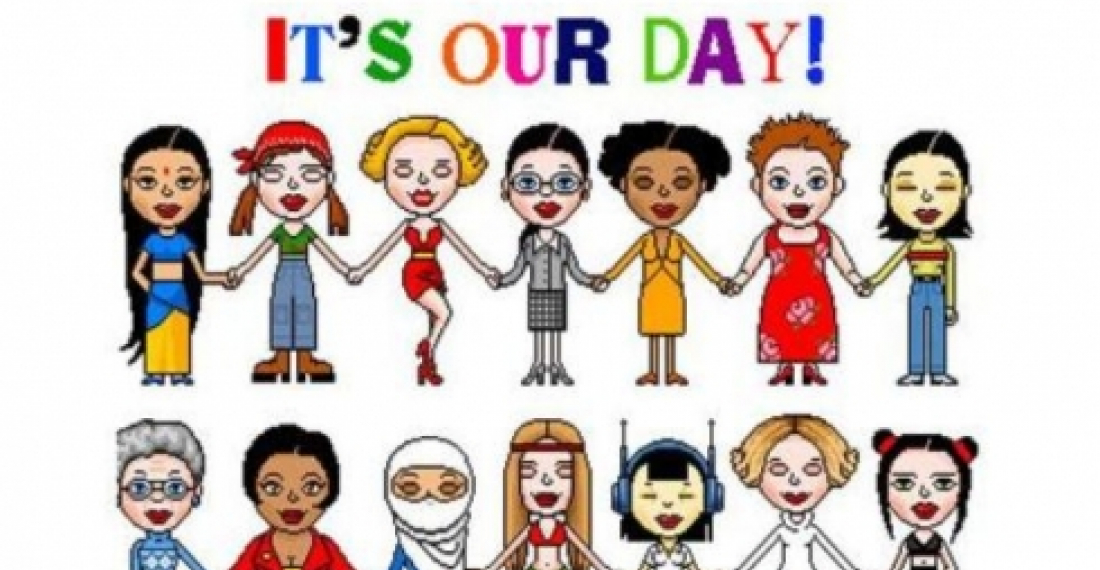
We salute the women peace-builders of the Caucasus

On International International Women's Day we salute the brave women of the Caucasus who over the last decades have defied critics to promote peace and reconciliation. Joseph Alexander Smith has been talking to some of them.

International Women's Day on 8th March was typically observed with great pomp in the Soviet Union as a celebration of women's liberation from domestic slavery through healthcare, education and labour. Over the last quarter century, however, women's lives in the South Caucasus have been transformed by bitter conflict and massive social upheaval. So, what does this holiday mean for women in the region today?

A Soviet poster from 1932 celebrating International Women's Day depicts an emancipated Socialist woman brandishing a red banner in one hand, and with the other dragging another woman from under a pile of dirty cooking pots and dusty carpets. The message is clear: "March 8th is the day of rebellion of the working woman against kitchen slavery." In the background, workers march triumphantly past glowing factories.

As the last century progressed, however, and working women became the rule rather than the exception, International Women's Day morphed into a more generalized celebration - something between Mothers' Day and Valentine's Day - with flowers, gifts and other tokens of appreciation given by men to the women they love.

"March 8th reminds me of my childhood" says Manana Gogokhia, a journalist living and working in the Gali region of Abkhazia "when everyone was happy and joyful ... women would dress themselves up and there was a smell of flowers everywhere which sticks in my mind to this day.Nowadays, I usually meet with my best friends for dinner; we give each other presents, forget our problems and enjoy ourselves."

However, International Women's Day is also an opportunity to commemorate the achievements made by women as peace-builders in a region riven by conflict. The women's "White Scarf Movement" was active in protesting the conflict between Georgians and Abkhaz in the early 1990s, and to this day organisations such as the Swedish group Kvinna till Kvinna actively promote the activities of women as peace-builders. Manana herself worked on producing the Gali-based magazine Woman and Peace and continues to touch on this theme in her journalism.

"Women make good diplomats" she says, "and they ought to be involved in any peace-process. They're very humanitarian and they can create solid conditions for peace and find ways to avoid conflict in the first place."

"Women's participation [in peace-building] can provide a more comprehensive understanding of the causes of these conflicts and alternative solutions" says Tbilisi-based feminist activist EleneTamazovna, "especially if we consider that many Georgian, Abkhazian and Ossetian women share the same cultural background, customs and [to some extent] the same language ... They share the loss and turbulence of being at war or being in constant danger of war. Hence, direct interaction of these women may lead to a better conflict prevention and help ensure that peace agreements are not narrow, elite pacts, and are supported and sustained by nations as a whole."

It seems certain that - however they may chose to celebrate it this year for the 107th time- International Women's Day still means a great deal to women in the South Caucasus. What's less clear is whether the monumental efforts that women continue to make as peace-builders across conflict divides can bring about a fundamental transformation in the conflicts of the South Caucasus at the political level. Given the astounding transformations in women's lives over the last 107 years, however, there still seems to be room for optimism. 

source Joseph Alexander Smith filed this report from Tbilisi for commonspace.eu
 

Related articles

Editor's choice
News
Borrell tells the European Parliament that the situation in Afghanistan was critical, but the EU will remain engaged

Borrell tells the European Parliament that the situation in Afghanistan was critical, but the EU will remain engaged

Borrell underlined that the European Union will make every effort to support the peace process and to remain a committed partner to the Afghan people. "Of course, we will have to take into account the evolving situation, but disengagement is not an option.  We are clear on that: there is no alternative to a negotiated political settlement, through inclusive peace talks.
Editor's choice
News
NATO Chief says war is on Europe's doorstep, and warns against complacency

NATO Chief says war is on Europe's doorstep, and warns against complacency

Russia could attack a Nato country within the next five years, the Secretary General of NATO, Mark Rutte, said in a stark new warning. "Nato's own defences can hold for now," Rutte warned in Berlin, but conflict was "next door" to Europe and he feared "too many are quietly complacent, and too many don't feel the urgency, too many believe that time is on our side. "Russia is already escalating its covert campaign against our societies," Rutte said in a speech in Germany. "We must be prepared for the scale of war our grandparents or great-grandparents endured." Earlier this month, Russia's President Vladimir Putin said his country was not planning to go to war with Europe, but it was ready "right now" if Europe wanted to - or started a war. But similar reassurances were given by Moscow in 2022, just before 200,000 Russian troops crossed the border and invaded Ukraine. Putin has accused European countries of hindering US efforts to bring peace in Ukraine - a reference to the role Ukraine's European allies have recently played in trying to change a US peace plan to end the war, whose initial draft was seen as favouring Russia. But Putin was not sincere, Nato's secretary-general said in the German capital, Berlin. Supporting Ukraine, he added, was a guarantee for European security. "Just imagine if Putin got his way; Ukraine under the boot of Russian occupation, his forces pressing against a longer border with Nato, and the significantly increased risk of an armed attack against us." Russia's economy has been on a war footing for more than three years now - its factories churn out ever more supplies of drones, missiles and artillery shells. According to a recent report by the Kiel Institute for the World Economy, Russia has been producing each month around 150 tanks, 550 infantry fighting vehicles, 120 Lancet drones and more than 50 artillery pieces. The UK, and most of its Western allies, are simply not anywhere near this point. Analysts say it would take years for Western Europe's factories to come close to matching Russia's mass-production of weapons. "Allied defence spending and production must rise rapidly, our armed forces must have what they need to keep us safe," the Nato chief said.

Popular

Editor's choice
News
NATO Chief says war is on Europe's doorstep, and warns against complacency

NATO Chief says war is on Europe's doorstep, and warns against complacency

Russia could attack a Nato country within the next five years, the Secretary General of NATO, Mark Rutte, said in a stark new warning. "Nato's own defences can hold for now," Rutte warned in Berlin, but conflict was "next door" to Europe and he feared "too many are quietly complacent, and too many don't feel the urgency, too many believe that time is on our side. "Russia is already escalating its covert campaign against our societies," Rutte said in a speech in Germany. "We must be prepared for the scale of war our grandparents or great-grandparents endured." Earlier this month, Russia's President Vladimir Putin said his country was not planning to go to war with Europe, but it was ready "right now" if Europe wanted to - or started a war. But similar reassurances were given by Moscow in 2022, just before 200,000 Russian troops crossed the border and invaded Ukraine. Putin has accused European countries of hindering US efforts to bring peace in Ukraine - a reference to the role Ukraine's European allies have recently played in trying to change a US peace plan to end the war, whose initial draft was seen as favouring Russia. But Putin was not sincere, Nato's secretary-general said in the German capital, Berlin. Supporting Ukraine, he added, was a guarantee for European security. "Just imagine if Putin got his way; Ukraine under the boot of Russian occupation, his forces pressing against a longer border with Nato, and the significantly increased risk of an armed attack against us." Russia's economy has been on a war footing for more than three years now - its factories churn out ever more supplies of drones, missiles and artillery shells. According to a recent report by the Kiel Institute for the World Economy, Russia has been producing each month around 150 tanks, 550 infantry fighting vehicles, 120 Lancet drones and more than 50 artillery pieces. The UK, and most of its Western allies, are simply not anywhere near this point. Analysts say it would take years for Western Europe's factories to come close to matching Russia's mass-production of weapons. "Allied defence spending and production must rise rapidly, our armed forces must have what they need to keep us safe," the Nato chief said.