Theme

Geostrategic Europe

Stories related to European foreign policy and Europe as a global power.

Editor's choice
Opinion
Opinion: A sustainable peace requires consistent long-term European involvement

Opinion: A sustainable peace requires consistent long-term European involvement

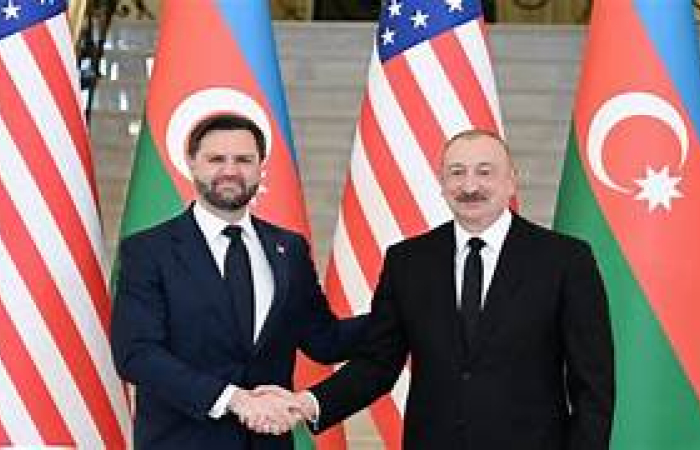
There is no denying that the EU, especially key member states acting in support, helped bring Baku and Yerevan closer to the Washington Declaration of August 8, 2025. But a declaration is not a treaty. Turning principles into a peace deal and eventually to a sustainable peace requires consistent long-term European involvement, writes Yalchin Mammadov in this-op-ed for commonspace.eu Before facilitating trust between Armenia and Azerbaijan, the EU is first expected to address its own credibility gap with Baku. A more balanced approach—such as including Azerbaijan, alongside Armenia, in the European Peace Facility—could be a useful first step. Diplomats can negotiate peace; societies must build peace. In this context, the EU can do what it does the best: long-term societal engagement. By expanding youth and academic exchange programmes, investing in cross-border civil society initiatives, and fostering people-to-people cooperation, Brussels can help shape a new generation equipped to sustain peace beyond political cycles. Such tools are slow and unglamorous, but if ignored, even the strongest treaty risks collapse. And obviously, these aspects require two-way engagement and genuine willingness by both governments to facilitate contact. If Brussels wants to remain influential, it needs to replace outdated one-size-fits-all policies with ambitious, interest-driven and differentiated approaches. Without a clear regional strategy, which appears to be the current situation, the South Caucasus will continue to sit at the margins of Europe’s security architecture—leaving space for other powers to take the lead. (You can read the op-ed in full by clicking the image.)
Editor's choice
Opinion
From Baku to Yerevan: A New Chapter for Multitrack Diplomacy

From Baku to Yerevan: A New Chapter for Multitrack Diplomacy

Towards the end of October, a lone Azerbaijani Airlines Gulfstream G650 landed in Yerevan, Armenia. It wasn’t the first to do so in over three decades of conflict but it could well change the future of multitrack diplomacy. Although mutual visits by Azerbaijanis to Armenia and Armenians to Azerbaijan are also not new, before October's flight they always occurred under the auspices of an international organisation or intergovernmental body including countries outside the region. Last month’s visit not only flew direct between the capitals but was bilaterally agreed.

Filter archive

Publication date
Editor's choice
News
Sweden leads EU effort to harden position against Israel

Sweden leads EU effort to harden position against Israel

The European Union should harden its stance against Israel and follow in the footsteps of the United Kingdom and other Western allies by issuing sanctions against far-right members of Israeli Prime Minister Benjamin Netanyahu’s Cabinet, Sweden’s foreign minister told Politico. Maria Malmer Stenergard said after meeting in Brussels with Kaja Kallas, the EU’s top diplomat, that the EU now needs to take a stronger position and increase pressure on the Israeli government.
Editor's choice
Opinion
Armenia and Azerbaijan Dialogue in the context of the European Political Community

Armenia and Azerbaijan Dialogue in the context of the European Political Community

The latest European Political Community summit held in Tirana in May this year, featured Azerbaijan’s President Aliyev at a time when Baku’s period of bad blood with Brussels seems to be over and Europe once again is viewed as a constructive partner. It is not a coincidence that Aliyev briefly met Pashinyan in Tirana for the first time in months and even had a seemingly friendly conversation with French President Macron despite the two countries’ intense feud.
Editor's choice
News
EU Council Delegation holds Partnership talks in Kazakhstan

EU Council Delegation holds Partnership talks in Kazakhstan

A delegation from the Council of the European Union’s Working Party on Eastern Europe and Central Asia (COEST) visited Kazakhstan on June 8-10 to hold talks with government officials in Kazakhstan. The visit, which included the cities of Aktau and Astana, was part of the practical implementation of the Enhanced Partnership and Cooperation Agreement (EPCA) between Kazakhstan and the European Union and its member states. According to the Astana Times quoting the Kazakh Foreign Ministry, the discussions demonstrated a high level of dialogue and mutual commitment aiming to strengthen the Kazakhstan-EU partnership.
Editor's choice
Opinion
The Organization of Turkic States Is Emerging as a Key Geopolitical Actor in Eurasia

The Organization of Turkic States Is Emerging as a Key Geopolitical Actor in Eurasia

The Informal Summit of the Organization of Turkic States (OTS), held on May 20-21, 2025, in Budapest, Hungary, marked a significant milestone in the organisation’s growing geopolitical influence. Hosted by Hungarian Prime Minister Viktor Orbán, the summit brought together leaders from Azerbaijan, Kazakhstan, Kyrgyzstan, Türkiye, and Uzbekistan, alongside observer states Hungary, Turkmenistan, and the Turkish Republic of Northern Cyprus. This gathering, the first OTS summit hosted by an observer state, underscored Hungary’s role as a bridge between the Turkic world and Europe, reflecting the theme “Meeting Point of East and West.”
Editor's choice
News
Russia expanding military footprint in Africa while skirting sanctions

Russia expanding military footprint in Africa while skirting sanctions

Russia is expanding its military footprint in Africa, delivering sophisticated weaponry to sub-Saharan conflict zones where a Kremlin-controlled armed force is on the rise. Skirting sanctions imposed by Western nations, Moscow is using cargo ships to send tanks, armoured vehicles, artillery and other high-value equipment to West Africa, according to the Associated Press.
Editor's choice
Opinion
Russia Aims to Strengthen Armenia Ties Amid Stagnating Relations with Azerbaijan

Russia Aims to Strengthen Armenia Ties Amid Stagnating Relations with Azerbaijan

On May 20–21, 2025, Russian Foreign Minister Sergei Lavrov’s visit to Yerevan marked a significant moment in the evolving dynamics of Armenia–Russia relations, signaling Moscow’s intent to stabilize and reinforce ties with its long-standing ally in the South Caucasus. Set against the backdrop of deteriorating Russia–Azerbaijan relations following the tragic crash of an Azerbaijani airliner plane on December 25, 2024, the visit highlighted Russia’s delicate balancing act in a region where its influence is increasingly contested. Lavrov’s talks with Armenian leaders focused on reaffirming bilateral commitments within the frameworks of the Collective Security Treaty Organization (CSTO) and the Eurasian Economic Union (EAEU).
Editor's choice
News
Fears of extended rule as Erdogan appoints legal experts to draft new Constitution

Fears of extended rule as Erdogan appoints legal experts to draft new Constitution

Turkish President Recep Tayyip Erdogan has appointed a team of legal experts to start working on a new constitution with critics saying it could allow him to remain in power beyond 2028, when his current term ends. Erdogan, who has led Türkiye as president since 2014 and was prime minister for more than a decade before that, has advocated for a new constitution arguing that the current one, which was drafted following a military coup in 1980, is outdated and retains elements of military influence even though it was amended several times.
Editor's choice
News
US intelligence report highlights Russian influence over Georgia

US intelligence report highlights Russian influence over Georgia

Following the parliamentary elections of October 2024, the ruling Georgian Dream party created favourable conditions for the growth of Russian influence in the region according to the annual report of the US Defense Intelligence Agency (DIA) that has just been presented to the US Congress. The report says Moscow is almost certainly seeking to bring Georgia back into its sphere of influence and has already made progress through internal political developments in the country.
Editor's choice
News
Pashinyan tells Yerevan Dialogue lasting peace between Armenia and Azerbaijan is within reach

Pashinyan tells Yerevan Dialogue lasting peace between Armenia and Azerbaijan is within reach

Armenian Prime Minister Nikol Pashinyan told the Yerevan Dialogue that “sustainable and lasting peace between Armenia and Azerbaijan is not only possible, but within reach” as he delivered an update on the current status of peace talks to participants of the 2nd annual forum on Monday. Negotiations over a draft agreement were completed in March, and Armenia and Azerbaijan indicated their willingness to sign it.