Theme

Diplomacy

Editor's choice
News
Germany accuses Russia of cyberattacks and disinformation campaign

Germany accuses Russia of cyberattacks and disinformation campaign

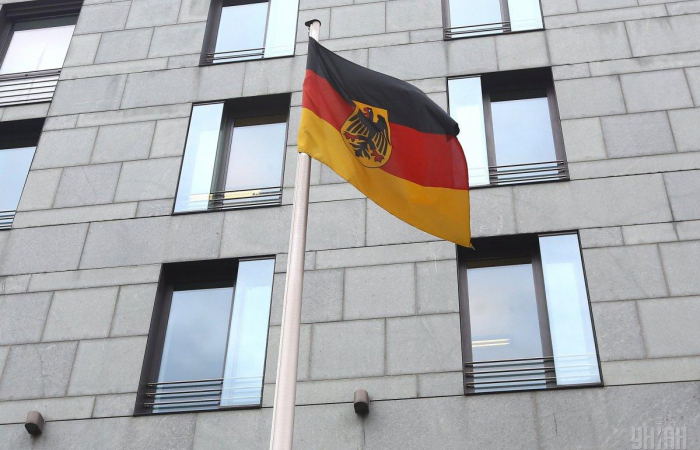
The German government holds Russia responsible for a cyberattack on German air traffic control, and for targeted disinformation campaigns before the last federal election. According to the German Foreign Office in Berlin, the incidents could be clearly attributed to the Russian military intelligence service, the GRU. In response, the Russian ambassador to Berlin was summoned to the Foreign Ministry. "We have been observing a massive increase in threatening hybrid activities by Russia for some time now," a spokesperson for the Foreign Ministry stated. These range from disinformation campaigns and espionage to cyberattacks and sabotage attempts. The aim is to divide society, sow distrust, and undermine confidence in democratic institutions. The spokesperson added that with these actions, Russia is "very concretely threatening our security, not only through its war of aggression against Ukraine, but also here in Germany."  The Foreign Ministry spokesperson explained that the cyberattack on air traffic control in August 2024 was clearly attributed to the hacker collective "APT28," known as "Fancy Bear," and to the responsibility of the Russian military intelligence service, the GRU. Furthermore, it could now be "conclusively stated" that Russia had attempted "to influence and destabilize both the last Federal election and the ongoing internal affairs of the Federal Republic of Germany." There was "absolutely irrefutable evidence" for this". The so-called "Storm 1516" campaign, which has been running since 2024, is allegedly backed by "reliable information" that the Moscow-based think tank "Center for Geopolitical Expertise" is behind it. The Center is also said to be supported by Russian military intelligence. Its primary aim is to influence democratic elections in the West. (Click the image to read more).
Editor's choice
Opinion
Opinion: A sustainable peace requires consistent long-term European involvement

Opinion: A sustainable peace requires consistent long-term European involvement

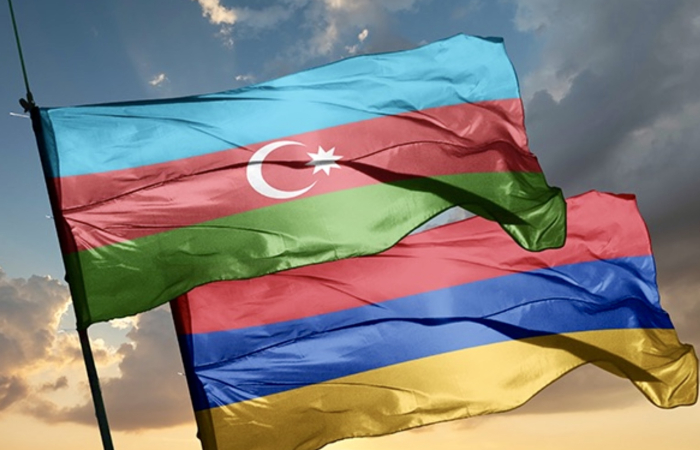
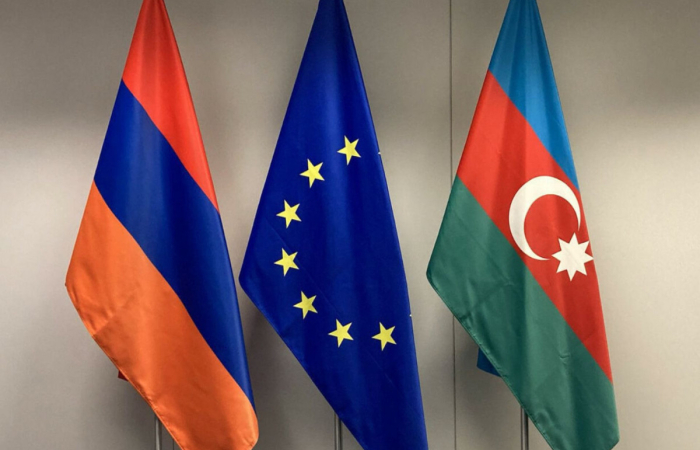
There is no denying that the EU, especially key member states acting in support, helped bring Baku and Yerevan closer to the Washington Declaration of August 8, 2025. But a declaration is not a treaty. Turning principles into a peace deal and eventually to a sustainable peace requires consistent long-term European involvement, writes Yalchin Mammadov in this-op-ed for commonspace.eu Before facilitating trust between Armenia and Azerbaijan, the EU is first expected to address its own credibility gap with Baku. A more balanced approach—such as including Azerbaijan, alongside Armenia, in the European Peace Facility—could be a useful first step. Diplomats can negotiate peace; societies must build peace. In this context, the EU can do what it does the best: long-term societal engagement. By expanding youth and academic exchange programmes, investing in cross-border civil society initiatives, and fostering people-to-people cooperation, Brussels can help shape a new generation equipped to sustain peace beyond political cycles. Such tools are slow and unglamorous, but if ignored, even the strongest treaty risks collapse. And obviously, these aspects require two-way engagement and genuine willingness by both governments to facilitate contact. If Brussels wants to remain influential, it needs to replace outdated one-size-fits-all policies with ambitious, interest-driven and differentiated approaches. Without a clear regional strategy, which appears to be the current situation, the South Caucasus will continue to sit at the margins of Europe’s security architecture—leaving space for other powers to take the lead. (You can read the op-ed in full by clicking the image.)

Filter archive

Publication date
Editor's choice
Opinion
Opinion: The Armenia-Azerbaijan Conflict Has Changed. So Must Civil Society

Opinion: The Armenia-Azerbaijan Conflict Has Changed. So Must Civil Society

Four years after the Second Karabakh War, civil society initiatives between Armenian and Azerbaijan remain arguably less impactful than ever before. On the surface, they appear few and far between, but many are often held in secret. The reason given is often security but that argument is no longer as credible as it was before. Indeed, nearly all projects that do exist remain largely untouched and unhindered. Instead, mirroring the situation before 2020, many Armenian practitioners refused to meet with their Azerbaijani counterparts, especially while Baku still held prisoners and other detainees from the war. That number is significantly less now. Time has passed and there may finally be the realisation that dialogue is the only way forward.
Editor's choice
Opinion
Opinion: An incomplete treaty between Baku and Yerevan will not bring peace

Opinion: An incomplete treaty between Baku and Yerevan will not bring peace

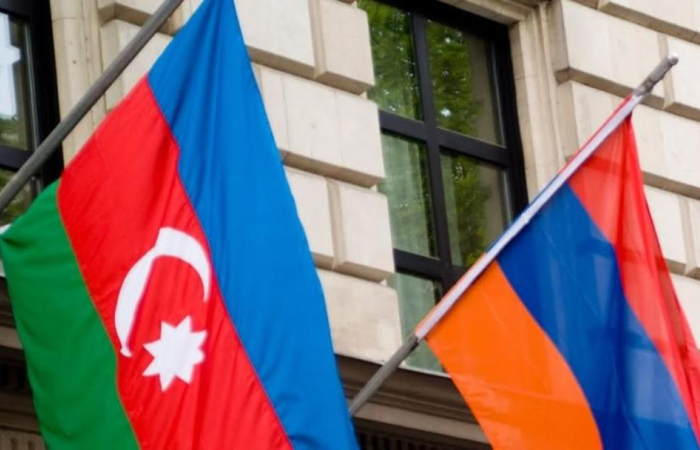
Over the past two years, numerous unofficial deadlines have been set for signing the Armenia-Azerbaijan peace treaty. Until the end of last year, the people of both countries held their breath in anticipation of a breakthrough, encouraged by officials on both sides who deemed an agreement possible. Later, there was significant optimism that the two former adversaries might reach a deal during the United Nations Climate Conference (COP29) which was held on November 11-24 in Baku.
Editor's choice
Opinion
Opinion: Uncertain times for Azerbaijan and Armenia relations

Opinion: Uncertain times for Azerbaijan and Armenia relations

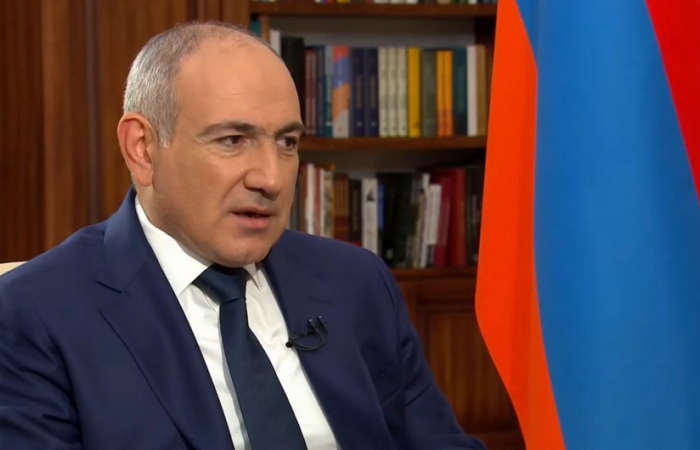
The recent BRICS summit held on 22-24 October in the Russian city of Kazan, featured the first talks in the last few months between the Azerbaijani and Armenian leadership. The countries were represented by President Aliyev and Prime Minister Pashinyan as well as the foreign ministers, Bayramov and Mirzoyan. Pashinyan declared that at the moment “all the matters of principles have been addressed and resolved” by the draft treaty, although Armenia’s chief diplomat Mirzoyan toned his statement a bit down, claiming that the document “is at least 80-90% agreed upon”.
Editor's choice
Opinion
Opinion: Pashinyan proposes partial withdrawal of EUMA from Armenia-Azerbaijan border

Opinion: Pashinyan proposes partial withdrawal of EUMA from Armenia-Azerbaijan border

With the conclusion of the United Nations Climate Change Conference COP29 in Azerbaijan, discussions with Armenia on normalising relations are expected to resume in December. However, it remains uncertain whether an agreement will be reached anytime soon, as past attempts to finalise talks have consistently fallen short. That said, there may now be some clarity regarding the three key issues believed to be preventing a breakthrough. In early November, Farid Shafiyev, Chair of the Centre for Analysis of International Relations (AIR) in Azerbaijan, shared on X what he claims are the specific points left unresolved.
Editor's choice
Analysis
Analysis: China and the South Caucasus

Analysis: China and the South Caucasus

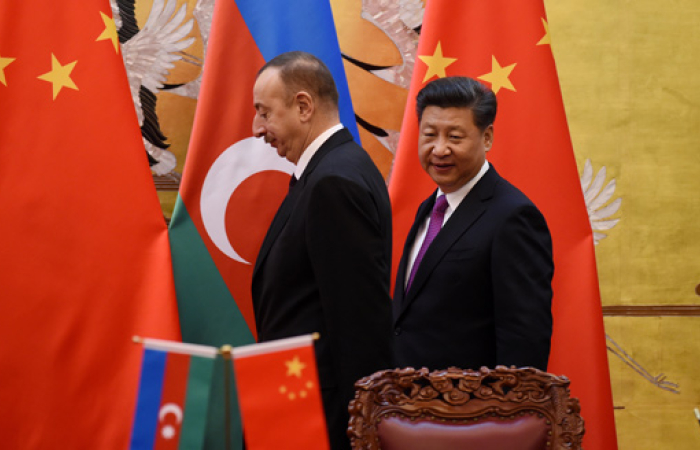
China is a relatively new player in the South Caucasus but has growing interests, particularly in the economic domain. While Beijing established diplomatic ties with Armenia, Azerbaijan, and Georgia in the early 1990s, it largely stayed out of the region’s geopolitics. Armenia acquired Chinese-made WM-80 multiple-launch systems in 1999, but they had little impact on the military balance with Azerbaijan. Chinese economic ties with the South Caucasus began to grow in the early 2000s, driven by the rapid expansion of its economy. Interest in the region deepened after President Xi Jinping announced the Belt and Road Initiative in 2013, with the South Caucasus envisioned as a potential land route connecting China to Europe.
Editor's choice
Opinion
Opinion: Armenia and Azerbaijan again at crossroads as informal COP29 deadline passes

Opinion: Armenia and Azerbaijan again at crossroads as informal COP29 deadline passes

November marks the fourth anniversary of the end of the 2020 Karabakh war. It was also the month considered as an informal deadline for initialling or signing some kind of document ending the conflict between Yerevan and Baku or at least a joint statement cementing points agreed in peace talks to date. Instead, having failed to do so by the time of this month's United Nations Climate Change Conference COP29 in Baku, and with Yerevan effectively shunning the event, Azerbaijan says that negotiations will now resume in December. As usual, Azerbaijan says Armenia must change its constitution. Armenia refuses to do so – or at least not until other constitutional changes are put to referendum still most likely in 2027. 
Editor's choice
Opinion
Opinion: Baku's appointment with destiny on climate action

Opinion: Baku's appointment with destiny on climate action

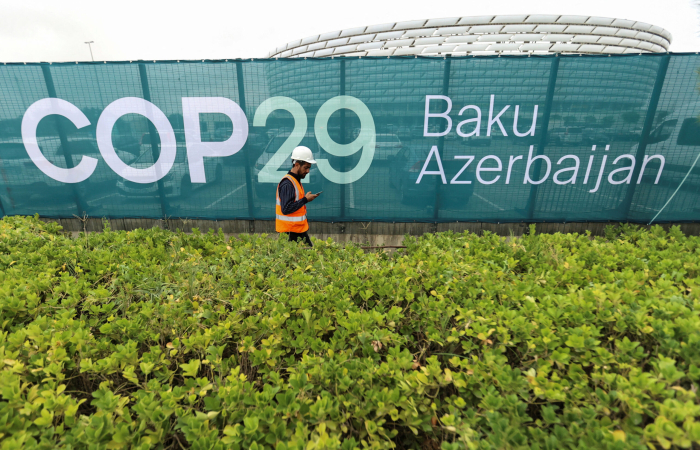
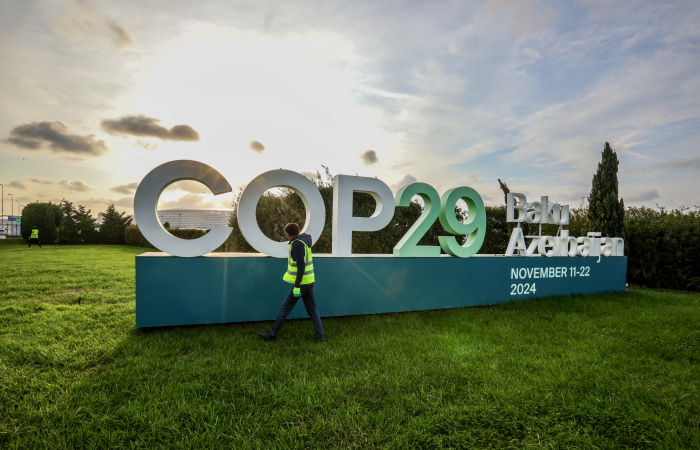
As the sun sets over the Caspian Sea, the world turns its gaze to the Azerbaijani capital for the United Nations (UN) Framework Convention on Climate Change (COP29). This year, Baku isn't just a geographical meeting point; it's a symbolic crossroads where nations must decide our planet's future. At the same time, Azerbaijan finds itself at the intersection of traditional energy systems and climate imperatives. While slow progress in the transition away from fossil fuels is due to increased energy demand from a growing economy and population, the importance of COP29 cannot be overstated - it is a destiny date for climate action.
Editor's choice
News
Paris and Berlin seek 'a more united Europe'

Paris and Berlin seek 'a more united Europe'

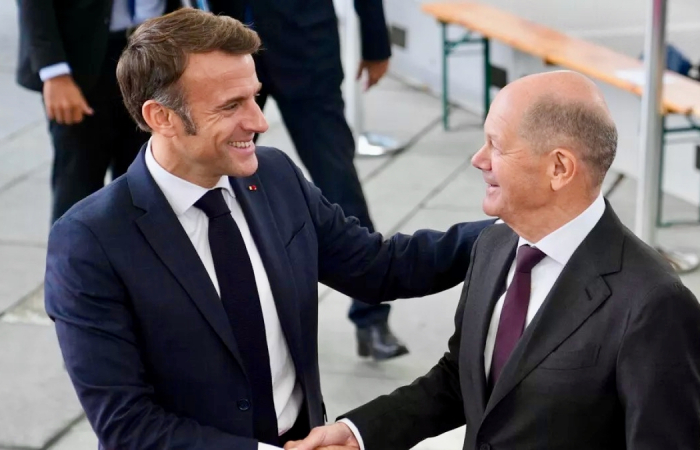
French President Emmanuel Macron and German Chancellor Olaf Scholz met in Berlin today to discuss their vision for the future of Europe in light of the recent US presidential election, which Donald Trump claimed victory in. The meeting underlined their commitment to steer Europe towards greater unity, resilience and sovereignty amid evolving global dynamics.
Editor's choice
News
Azerbaijan-NATO event focused on energy security and climate change challenges

Azerbaijan-NATO event focused on energy security and climate change challenges

On Monday (28 October), Azerbaijan held a meeting in Baku with NATO's Climate and Energy Security Sector representatives from the Innovation, Hybrid Issues and Cybersecurity Division and representatives from NATO member and partner countries to discuss energy security and climate change.