


Opinion: Armenia and Azerbaijan again at crossroads as informal COP29 deadline passes

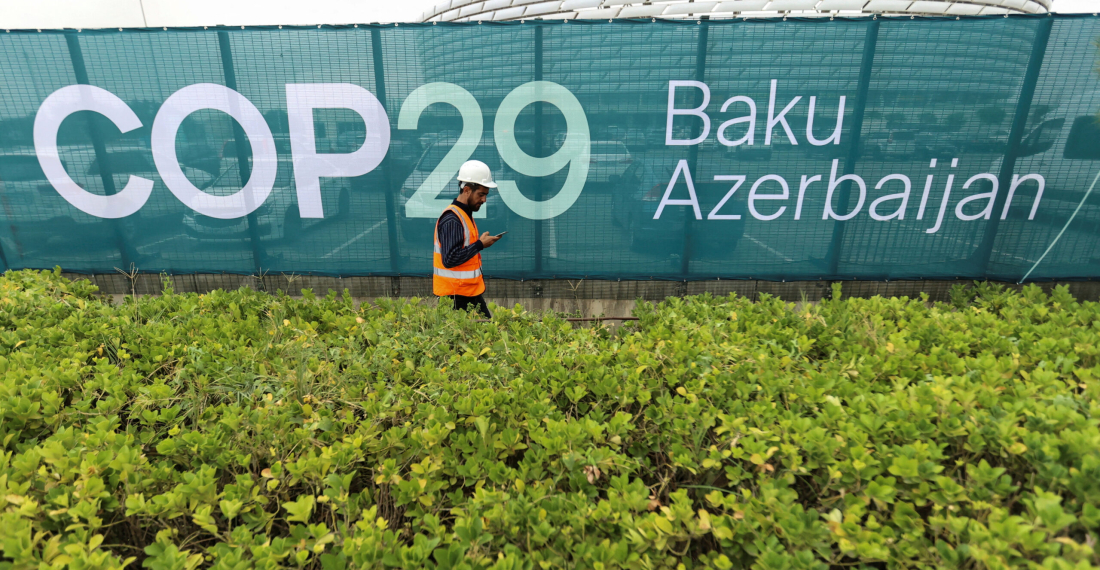
November marks the fourth anniversary of the end of the 2020 Karabakh war. It was also the month considered as an informal deadline for initialling or signing some kind of document ending the conflict between Yerevan and Baku or at least a joint statement cementing points agreed in peace talks to date. Instead, having failed to do so by the time of this month's United Nations Climate Change Conference COP29 in Baku, and with Yerevan effectively shunning the event, Azerbaijan says that negotiations will now resume in December. As usual, Azerbaijan says Armenia must change its constitution. Armenia refuses to do so – or at least not until other constitutional changes are put to referendum still most likely in 2027. 

That is unfortunate and a far cry from December last year when Armenia and Azerbaijan issued a unique joint statement supportive of Baku’s bid to host COP29, fuelling speculation of an agreement within a year. Almost three dozen Armenian detainees imprisoned in Baku were repatriated then as were two Azerbaijanis held by Yerevan.

It is worth noting, incidentally, that many pro-opposition commentators in Armenia and its Diaspora were reluctantly supportive of Yerevan attending the event in Baku if the remaining detainees, likely with the exception of Karabakh’s de facto ethnic Armenian leadership, were set free too. Though it was unclear whether such a deal was even possible let alone considered, the government only voiced such a requirement last week when National Assembly Speaker Alen Simonyan articulated it. Otherwise, ever since Baku invited Yerevan in the summer, officials instead avoided any questions about attendance.

Indeed, when COP29 started in Baku on 11 November, Deputy Foreign Minister Vahan Kostanyan still refused to clarify the situation despite Simonyan’s remarks. Foreign Minister Ararat Mirzoyan had already departed for Sweden on a two-day visit as well, though this would not have prevented a low-level delegation from participating at the high-profile event. Moreover, the signal it would send out at this stage of peace talks would have been unprecedented. Nobody was really expecting Armenian Prime Minister Nikol Pashinyan to attend COP29, though other Armenians have visited Azerbaijan mainly for international conferences in the past. At any rate, Azerbaijani President Ilham Aliyev’s response was nonchalant. It was up to Armenia to decide.

Ironically, on the second day of COP29, the Armenian government blocked an opposition resolution calling for the release of those same prisoners. It is uncertain whether Simonyan’s comments were simply a negotiation tactic or not. So far, it is mainly among nationalist segments in the diaspora, especially those opposed to normalised relations, that launched a campaign against COP29 instead. That might have even spread to neighbouring Georgia where Swedish environmental activist Greta Thunberg unexpectedly materialised. Boycotting COP29 in Baku, Thunberg seemed as much concerned with echoing maximalist and nationalist narratives regarding Karabakh. Presumably on an overland journey to Georgia, she also met ethnic Armenian activists in Türkiye. In Georgia, she instead focused on a tiny group of left-wing dissident and feminist activists in Tbilisi.

There was no talk of a peace agreement, regional environmental protection, or cross-border cooperation to tackle the huge problem of climate change. A small event held in Yerevan days later, ostensibly organised by Armenian environmental NGOs likely also opposed to current negotiations likely staged to also provide Thunberg with a platform, focused almost entirely on environmental damage caused by Azerbaijan in Karabakh while ignoring the almost complete devastation of the eco-system as well as entire rural and urban centres in the seven regions formerly occupied by Armenia and Karabakh over almost three decades. Meanwhile, nobody in Tbilisi seemed to care given last month’s controversial elections in Georgia. Even local activists were critical of Thunberg, who some accused of attempting to ‘hijack’ their own political protests for her own sake, criticising her pro-Palestinian and anti-capitalist positions. Some even demanded she immediately leave the country.

Not that any of this mattered. November also saw the re-election of former U.S. President Donald Trump. Along with the issue of climate change, it was this that many consider to cast the darkest shadow over any positive developments emerging from COP 29. Not that there aren’t major problems in Azerbaijan, but the issue at hand was an event to somehow agree on an effective global response to climate change. Trump could frustrate that.

Nonetheless, even with Armenia’s absence, there was at least some good news when U.S. Ambassador to Baku Mark Libby announced that hydrologists and engineers from Armenia and Azerbaijan were working together on integrated water management for transboundary rivers. No further details are known but if a peace treaty does not surface again this year, and along with border delimitation and demarcation, it does at least demonstrate that some cooperation can still occur. Pashinyan has also since said that an informal chat with Aliyev at the recent BRICS Summit in Kazan on unblocking regional communications was positive. Such developments will be crucial if he is to demonstrate that there have been some successes from his “peace agenda” even if in lieu of an actual treaty.

Regardless, make no mistake, it is high time for Armenia and Azerbaijan to sign that already long overdue agreement, but even fewer now expect such a breakthrough by the end of the year. After hearing the same promises for the past three years, the danger is that the process could again become an imitation of talks just as it had prior to the last war. That must not happen. The lives of future generations in the entire region depend on it.


 

source: Onnik James Krikorian is a journalist, photojournalist, and consultant from the U.K. who has covered the Armenia-Azerbaijan conflict since 1994.

The views expressed in opinion pieces and commentaries do not necessarily reflect the position of commonspace.eu or its partners

Related articles

Editor's choice
News
Germany accuses Russia of cyberattacks and disinformation campaign

Germany accuses Russia of cyberattacks and disinformation campaign

The German government holds Russia responsible for a cyberattack on German air traffic control, and for targeted disinformation campaigns before the last federal election. According to the German Foreign Office in Berlin, the incidents could be clearly attributed to the Russian military intelligence service, the GRU. In response, the Russian ambassador to Berlin was summoned to the Foreign Ministry. "We have been observing a massive increase in threatening hybrid activities by Russia for some time now," a spokesperson for the Foreign Ministry stated. These range from disinformation campaigns and espionage to cyberattacks and sabotage attempts. The aim is to divide society, sow distrust, and undermine confidence in democratic institutions. The spokesperson added that with these actions, Russia is "very concretely threatening our security, not only through its war of aggression against Ukraine, but also here in Germany."  The Foreign Ministry spokesperson explained that the cyberattack on air traffic control in August 2024 was clearly attributed to the hacker collective "APT28," known as "Fancy Bear," and to the responsibility of the Russian military intelligence service, the GRU. Furthermore, it could now be "conclusively stated" that Russia had attempted "to influence and destabilize both the last Federal election and the ongoing internal affairs of the Federal Republic of Germany." There was "absolutely irrefutable evidence" for this". The so-called "Storm 1516" campaign, which has been running since 2024, is allegedly backed by "reliable information" that the Moscow-based think tank "Center for Geopolitical Expertise" is behind it. The Center is also said to be supported by Russian military intelligence. Its primary aim is to influence democratic elections in the West. (Click the image to read more).
Editor's choice
News
NATO Chief says war is on Europe's doorstep, and warns against complacency

NATO Chief says war is on Europe's doorstep, and warns against complacency

Russia could attack a NATO country within the next five years, the Secretary General of NATO, Mark Rutte, said in a stark new warning. "NATO's own defences can hold for now," Rutte warned in Berlin, but conflict was "next door" to Europe, and he feared "too many are quietly complacent, and too many don't feel the urgency, too many believe that time is on our side. "Russia is already escalating its covert campaign against our societies," Rutte said in a speech in Germany. "We must be prepared for the scale of war our grandparents or great-grandparents endured." Earlier this month, Russia's President Vladimir Putin said his country was not planning to go to war with Europe, but it was ready "right now" if Europe wanted to - or started a war. But similar reassurances were given by Moscow in 2022, just before 200,000 Russian troops crossed the border and invaded Ukraine. Putin has accused European countries of hindering US efforts to bring peace in Ukraine - a reference to the role Ukraine's European allies have recently played in trying to change a US peace plan to end the war, whose initial draft was seen as favouring Russia. But Putin was not sincere, Nato's secretary-general said in the German capital, Berlin. Supporting Ukraine, he added, was a guarantee for European security. "Just imagine if Putin got his way; Ukraine under the boot of Russian occupation, his forces pressing against a longer border with Nato, and the significantly increased risk of an armed attack against us." Russia's economy has been on a war footing for more than three years now - its factories churn out ever more supplies of drones, missiles and artillery shells. According to a recent report by the Kiel Institute for the World Economy, Russia has been producing each month around 150 tanks, 550 infantry fighting vehicles, 120 Lancet drones and more than 50 artillery pieces. The UK, and most of its Western allies, are simply not anywhere near this point. Analysts say it would take years for Western Europe's factories to come close to matching Russia's mass-production of weapons. "Allied defence spending and production must rise rapidly, our armed forces must have what they need to keep us safe," the Nato chief said.

Popular

Editor's choice
News
Germany accuses Russia of cyberattacks and disinformation campaign

Germany accuses Russia of cyberattacks and disinformation campaign

The German government holds Russia responsible for a cyberattack on German air traffic control, and for targeted disinformation campaigns before the last federal election. According to the German Foreign Office in Berlin, the incidents could be clearly attributed to the Russian military intelligence service, the GRU. In response, the Russian ambassador to Berlin was summoned to the Foreign Ministry. "We have been observing a massive increase in threatening hybrid activities by Russia for some time now," a spokesperson for the Foreign Ministry stated. These range from disinformation campaigns and espionage to cyberattacks and sabotage attempts. The aim is to divide society, sow distrust, and undermine confidence in democratic institutions. The spokesperson added that with these actions, Russia is "very concretely threatening our security, not only through its war of aggression against Ukraine, but also here in Germany."  The Foreign Ministry spokesperson explained that the cyberattack on air traffic control in August 2024 was clearly attributed to the hacker collective "APT28," known as "Fancy Bear," and to the responsibility of the Russian military intelligence service, the GRU. Furthermore, it could now be "conclusively stated" that Russia had attempted "to influence and destabilize both the last Federal election and the ongoing internal affairs of the Federal Republic of Germany." There was "absolutely irrefutable evidence" for this". The so-called "Storm 1516" campaign, which has been running since 2024, is allegedly backed by "reliable information" that the Moscow-based think tank "Center for Geopolitical Expertise" is behind it. The Center is also said to be supported by Russian military intelligence. Its primary aim is to influence democratic elections in the West. (Click the image to read more).

