


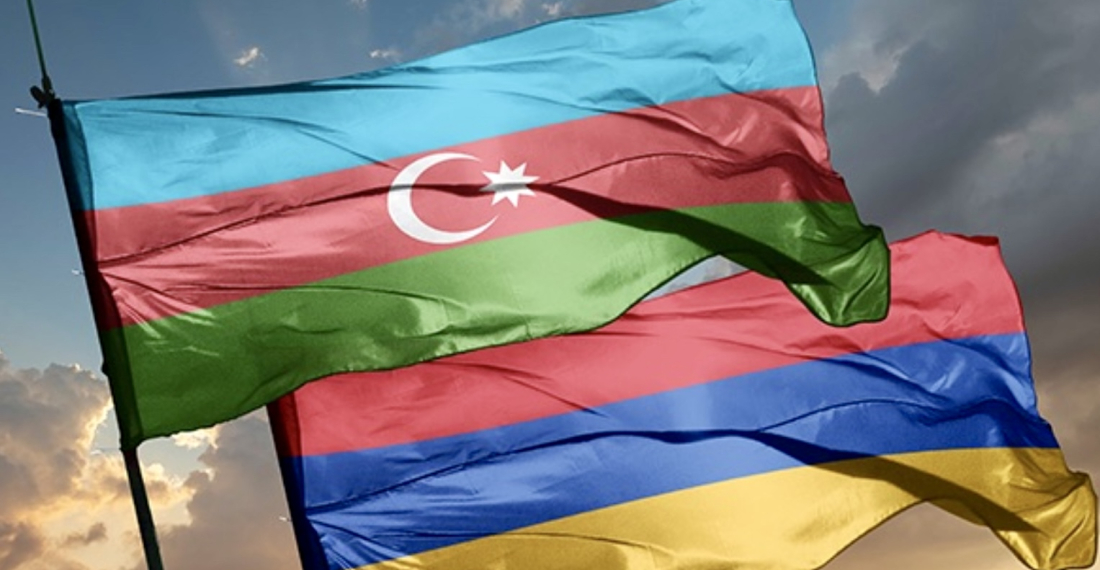
Over the past two years, numerous unofficial deadlines have been set for signing the Armenia-Azerbaijan peace treaty. Until the end of last year, the people of both countries held their breath in anticipation of a breakthrough, encouraged by officials on both sides who deemed an agreement possible. Later, there was significant optimism that the two former adversaries might reach a deal during the United Nations Climate Conference (COP29) which was held on November 11-24 in Baku.
This optimism was not unfounded. Azerbaijan’s COP story began on a positive note with a prisoner exchange agreement with Armenia and Armenia’s support for Azerbaijan’s bid to host the summit. This was followed by another significant development in April of this year, when the two countries resolved a territorial dispute as Armenia agreed to return four occupied border villages to Azerbaijan. The peaceful resolution of this issue was unprecedented in their entire post-Soviet history. This progress culminated in the signing of the first bilateral agreement between the two countries, which focused on the delimitation of their interstate borders. The ratification of this agreement was completed just a couple of weeks before the COP29 summit in Baku.
Therefore, many observers had optimistic expectations about the potential contribution of this summit to the Armenia-Azerbaijan talks. However, in a development detrimental to regional peace and stability, yet another unofficial deadline passed without a meaningful breakthrough. Armenia’s decision to forgo sending a delegation to the summit was a missed opportunity that could have sent a constructive signal to the societies of both countries and the international community.
This has reaffirmed that Baku and Yerevan remain far from achieving tangible progress in the peace process, even though the likelihood of another military escalation seems low in the near term. Nonetheless, the need for a peace treaty – and subsequently, the normalization of relations and reconciliation between their peoples – is paramount. Only such a treaty can bring an ultimate resolution to their disputes and eliminate the prospect of future violence and hostility.
The newly disclosed details about the unresolved principles of the peace treaty highlight Azerbaijan’s insistence on a comprehensive agreement. Baku remains unwilling to hastily sign an incomplete accord that, while symbolic, would lack the substance needed to foster genuine peace and reconciliation between the two nations.
In early November, Farid Shafiyev, Chairman of the Baku-based Center of Analysis of International Relations, suggested that there are three sticking points in the peace treaty negotiations: Armenia’s constitution, the expansion of ‘diplomatic and legal warfare’, and the presence of the EU Monitoring Mission in Armenia.
Azerbaijan’s position on the removal of territorial claims to the Karabakh region of Azerbaijan from Armenia’s constitution remains unchanged. In a meeting with a U.S. House of Representatives delegation on November 17, amidst the COP29 negotiations, President Ilham Aliyev reiterated that “to sign a peace agreement, it is crucial to end the territorial claims against Azerbaijan enshrined in Armenia's Constitution”.
In addition, Azerbaijan seeks to include a provision in the peace treaty requiring both countries to terminate all legal disputes between them in international courts. Contrary to claims by some Armenian experts, Baku’s motivation for this is not a sense of vulnerability to these lawsuits. On the contrary, even Armenian officials have acknowledged that Azerbaijan’s actions in Karabakh and its use of military force to liberate the occupied territories were consistent with the 1993 United Nations Security Council resolutions.
The legal warfare could indeed cause more troubles for Armenia, as the former resolutions of the international courts, including the 2015 ruling of the European Court of Human Rights, have confirmed that the Republic of Armenia had occupied Azerbaijan’s territories. The officials of Armenia have publicly admitted that Armenia had military troops on the Azerbaijani soil well beyond the Second Karabakh War. Armenia would be also forced to pay reparations for the destruction it committed in the formerly occupied territories of Azerbaijan. It is a prospect well-recognized by Armenia’s legal specialists. For instance, Gevork Kostanyan, a former prosecutor general of Armenia and Yerevan’s former representative at the European Court of Human Rights, criticized the government’s failure in the 2020 Second Karabakh War, noting that Armenia could be forced to compensate Azerbaijan for the damage, estimated at over $50 billion.
Despite these prospects, Azerbaijan invites Armenia to stop all these legal battles and enshrine it in the peace treaty for the sake of lasting peace and stability. Towards this purpose, it is also extremely important to put an end to the deployment of third-party forces to the Armenia-Azerbaijan border. In the existing situation, this concerns the monitoring mission of the European Union in Armenia, which the Azerbaijani side thinks that can be transformed into a military mission in the future.
Azerbaijan’s insistence on this condition is related to two major reasons. Above all, Baku feels disillusioned with the role of the European Union in this conflict. “The EU turned a blind eye to the Armenian occupation of the Azerbaijani territories for 30 years and was in a rush to deploy the mission [to Armenia] without the Azerbaijani consent [after the liberation of the Azerbaijani territories]. It is clear that Azerbaijan cannot trust the EU, which is now on the side of the former aggressor state, which pillaged and destroyed the Azerbaijani territories”, said Farid Shafiyev in his comments about the non-agreed principles of the peace treaty.
Secondly, France’s negative role in the Armenia-Azerbaijan conflict, its intervention into the peace process mediated by European Council President Charles Michel, and consistent military supplies to Armenia have increased Baku’s distrust in the EU’s mission. Azerbaijan wants the Armenia-Azerbaijan border to be under the exclusive control of the two respective countries. The guarantee on the non-deployment of third-party military and other forces to this border is important to prevent its instrumentalization for the geopolitical designs of external actors, be it the EU, Russia, or Iran.
That said, the unfolding dynamics of the Armenia-Azerbaijan peace negotiations underscore the critical importance of a comprehensive and balanced peace treaty. Azerbaijan’s refusal to settle for an incomplete agreement is rooted in its commitment to establishing lasting peace and addressing the underlying issues that have perpetuated decades of hostility. From unresolved territorial claims in Armenia’s constitution to the cessation of legal and diplomatic battles, and the removal of third-party interference, Baku’s stance reflects a strategic effort to create a sustainable foundation for regional stability.
The stakes are high. An incomplete or hastily drafted treaty risks becoming yet another point of contention, further deepening mistrust and potentially delaying normalization. Azerbaijan’s insistence on addressing these key points is aimed at ensuring that the treaty is not merely symbolic but a substantive document capable of delivering durable peace. Without such assurances, the spectre of unresolved disputes will continue to loom over both nations, leaving the door open for future conflicts.



