Theme

Diplomacy

Editor's choice
News
Germany accuses Russia of cyberattacks and disinformation campaign

Germany accuses Russia of cyberattacks and disinformation campaign

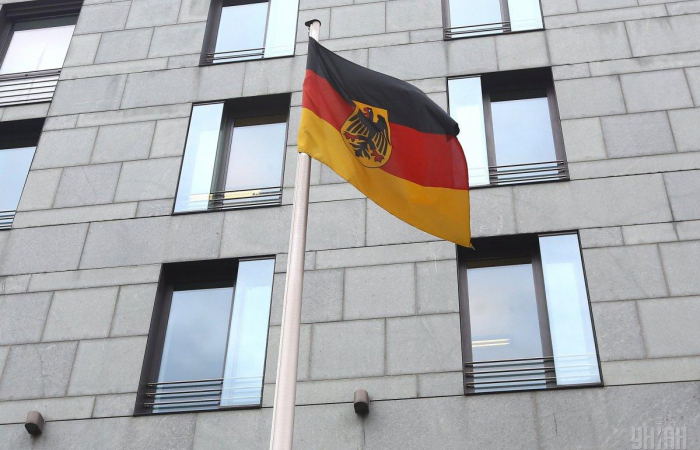
The German government holds Russia responsible for a cyberattack on German air traffic control, and for targeted disinformation campaigns before the last federal election. According to the German Foreign Office in Berlin, the incidents could be clearly attributed to the Russian military intelligence service, the GRU. In response, the Russian ambassador to Berlin was summoned to the Foreign Ministry. "We have been observing a massive increase in threatening hybrid activities by Russia for some time now," a spokesperson for the Foreign Ministry stated. These range from disinformation campaigns and espionage to cyberattacks and sabotage attempts. The aim is to divide society, sow distrust, and undermine confidence in democratic institutions. The spokesperson added that with these actions, Russia is "very concretely threatening our security, not only through its war of aggression against Ukraine, but also here in Germany."  The Foreign Ministry spokesperson explained that the cyberattack on air traffic control in August 2024 was clearly attributed to the hacker collective "APT28," known as "Fancy Bear," and to the responsibility of the Russian military intelligence service, the GRU. Furthermore, it could now be "conclusively stated" that Russia had attempted "to influence and destabilize both the last Federal election and the ongoing internal affairs of the Federal Republic of Germany." There was "absolutely irrefutable evidence" for this". The so-called "Storm 1516" campaign, which has been running since 2024, is allegedly backed by "reliable information" that the Moscow-based think tank "Center for Geopolitical Expertise" is behind it. The Center is also said to be supported by Russian military intelligence. Its primary aim is to influence democratic elections in the West. (Click the image to read more).
Editor's choice
Opinion
Opinion: A sustainable peace requires consistent long-term European involvement

Opinion: A sustainable peace requires consistent long-term European involvement

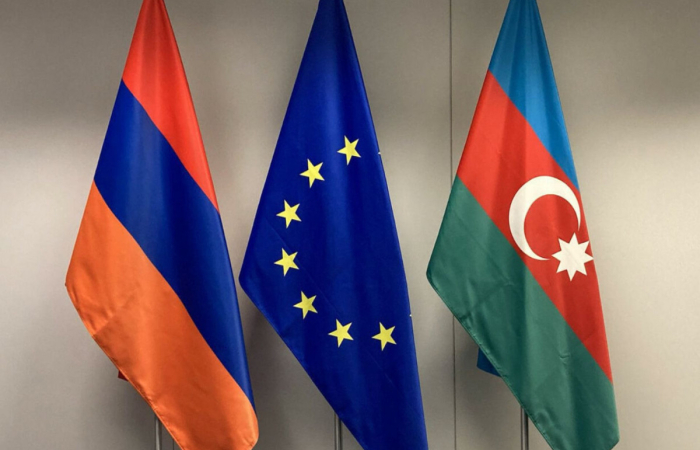
There is no denying that the EU, especially key member states acting in support, helped bring Baku and Yerevan closer to the Washington Declaration of August 8, 2025. But a declaration is not a treaty. Turning principles into a peace deal and eventually to a sustainable peace requires consistent long-term European involvement, writes Yalchin Mammadov in this-op-ed for commonspace.eu Before facilitating trust between Armenia and Azerbaijan, the EU is first expected to address its own credibility gap with Baku. A more balanced approach—such as including Azerbaijan, alongside Armenia, in the European Peace Facility—could be a useful first step. Diplomats can negotiate peace; societies must build peace. In this context, the EU can do what it does the best: long-term societal engagement. By expanding youth and academic exchange programmes, investing in cross-border civil society initiatives, and fostering people-to-people cooperation, Brussels can help shape a new generation equipped to sustain peace beyond political cycles. Such tools are slow and unglamorous, but if ignored, even the strongest treaty risks collapse. And obviously, these aspects require two-way engagement and genuine willingness by both governments to facilitate contact. If Brussels wants to remain influential, it needs to replace outdated one-size-fits-all policies with ambitious, interest-driven and differentiated approaches. Without a clear regional strategy, which appears to be the current situation, the South Caucasus will continue to sit at the margins of Europe’s security architecture—leaving space for other powers to take the lead. (You can read the op-ed in full by clicking the image.)

Filter archive

Publication date
Editor's choice
News
Statement of the Armenia-Azerbaijan Political Dialogue Platform

Statement of the Armenia-Azerbaijan Political Dialogue Platform

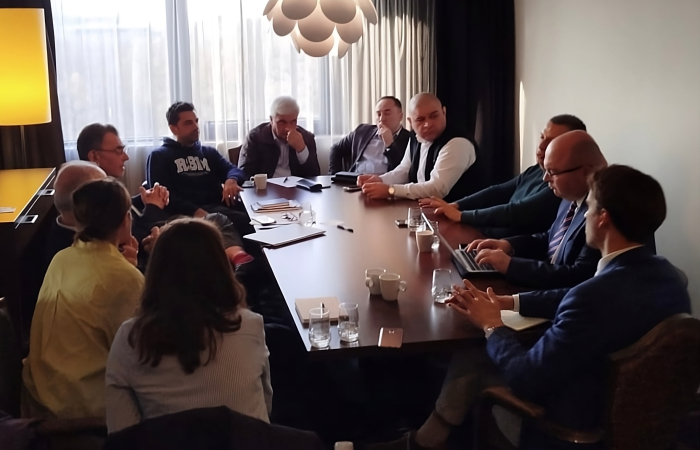
ARMENIA-AZERBAIJAN EXPERT POLITICAL DIALOGUE PLATFORM STATEMENT – 3 April 2025 The first meeting of the new Armenia-Azerbaijan Political Dialogue Platform was held in The Hague, The Netherlands on 2–3 April on the margins of the Conference organised by LINKS Europe entitled “The South Caucasus: Again in Transition”. The meeting was attended by the following members of the platform: Stepan Grigoryan (Armenia), Johnny Melikyan (Armenia), Benyamin Poghosyan (Armenia); Ahmad Alili (Azerbaijan); Mehman Aliyev (Azerbaijan) and Ramazan Samadov (Azerbaijan). LINKS Europe is facilitating and chairing the Platform. The members of the platform noted with pleasure that Armenia and Azerbaijan had in the last eighteen months, in direct negotiations, discussed and reached agreements on a number of issues, including on issues related to border delimitation and the text of a peace agreement between them. The members of the Platform welcomed these developments and stated their readiness to work together to strengthen and build on these achievements. The members of the platform stated that they remain vigilant to the risk of a deterioration of the situation and will do their utmost to prevent any such deterioration. The members of the platform welcomed the focus on the European Union and Turkey, as key external partners of the region, in the conference “The South Caucasus, again in transition”. On the European Union, the members of the platform noted recent developments and efforts by the EU to play an increased positive role as a global player. The members of the platform welcomed the continued interest and engagement of the EU with the South Caucasus. The members of the Platform called on the EU to develop a unified and clear strategy on the South Caucasus and called for discussions on this strategy to start. The members of the platform discussed a number of practical steps that they will take in the future, including in the development of Armenia-Azerbaijan media contacts. The members of the Platform called for a dialogue between the three countries of the South Caucasus and Turkey. They expressed their readiness to work in this direction through work and contact with Turkish Partners. The members of the platform thanked LINKS Europe for its work. They noted that the LINKS Europe segment of the EU4Peace III initiative includes new and innovative work that aims to involve a new generation in the process of regional peace. The members of the platform stand ready to support LINKS Europe in its endeavours.
Editor's choice
News
US Senate Committee approves Bipartisan Act supporting sanctions on Georgian Dream officials

US Senate Committee approves Bipartisan Act supporting sanctions on Georgian Dream officials

The US Senate Foreign Relations Committee approved the bipartisan Megobari Act, which supports the aspirations of the people of Georgia for integration into Euro-Atlantic structures and imposes sanctions on officials of the governing party Georgian Dream and its allies undermining this path. Following this approval, the bill has been sent to other committees in the US Senate for review.
Editor's choice
News
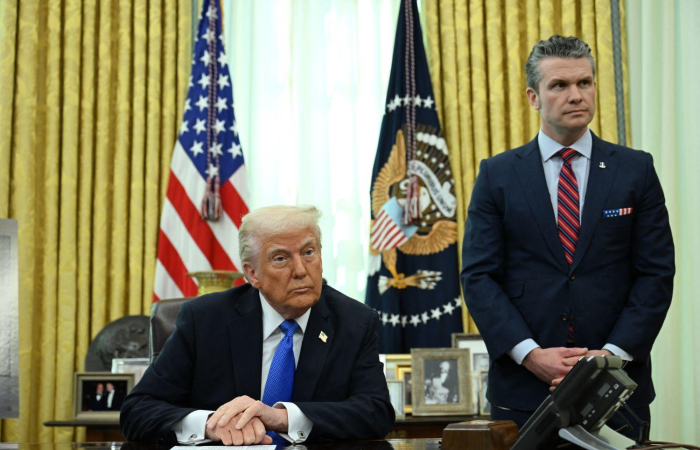
Trump lashes out at both Zelensky and Putin over ceasefire talks

Trump lashes out at both Zelensky and Putin over ceasefire talks

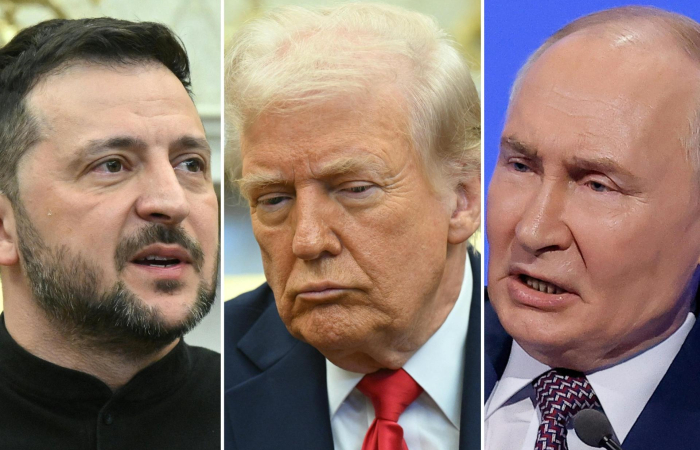
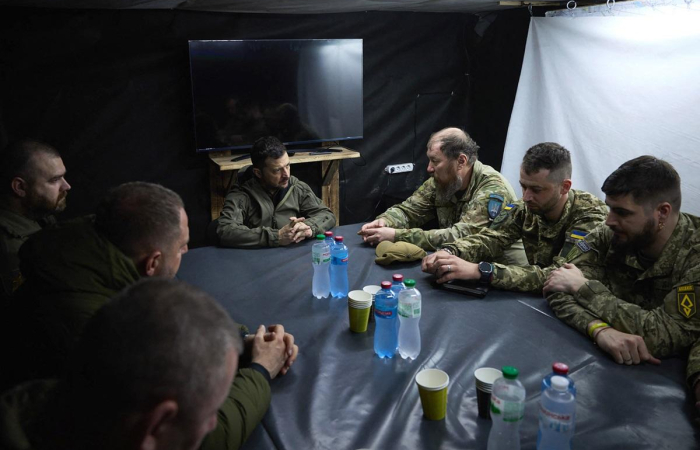
US President Donald Trump lashed out at the leaders of both warring parties in Russia's invasion of Ukraine, expressing frustration as efforts to kick-start ceasefire talks remain deadlocked. Trump is trying to broker a ceasefire between Ukraine and its Russian invader, and has been pushing Zelensky to sign an agreement to give US firms exclusive access to Ukrainian rare earth minerals.
Editor's choice
News
Russia warns Armenia of high economic price if it pursues EU membership

Russia warns Armenia of high economic price if it pursues EU membership

Accession to the EU is incompatible with Armenia’s continued membership in the Eurasian Economic Union, a Russian-led trade bloc that gives it tariff-free access to Russia’s vast market, according to Russian Deputy Prime Minister Aleksei Overchuk. Armenia would also have to pay much more for Russian energy resources and food, Overchuk said. Last week, the Armenian Parliament adopted a bill calling for the government to seek accession to the EU, representing a significant shift in Armenia’s foreign policy perspective away from its long-time ally Russia.
Editor's choice
Monday Commentary
Yemen – the forgotten conflict

Yemen – the forgotten conflict

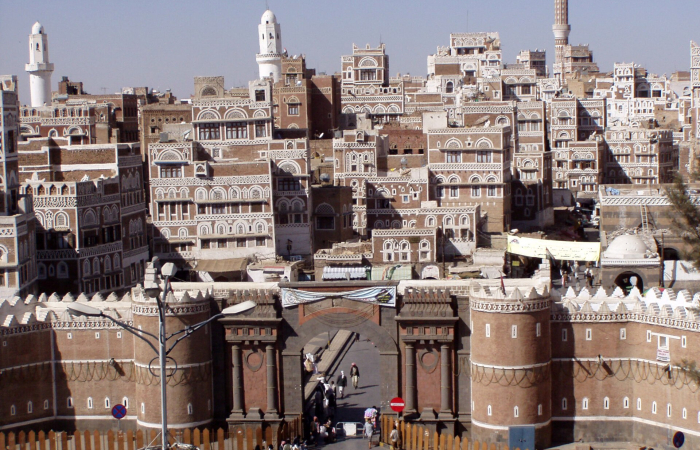
The civil war in Yemen has been going on for ten years, and the world has pretended not to notice. It is only when the conflict spills over to neighbouring countries and regions that we see a flurry of activity, usually of the wrong kind. This was the case when targets in UAE and Saudi Arabia came under attack, or more recently when shipping in the Red Sea was targeted by Yemen’s current ruling group, the Houthis.
Editor's choice
News
Ministers meet in Ashgabat ahead of next week’s EU-Central Asia Summit

Ministers meet in Ashgabat ahead of next week’s EU-Central Asia Summit

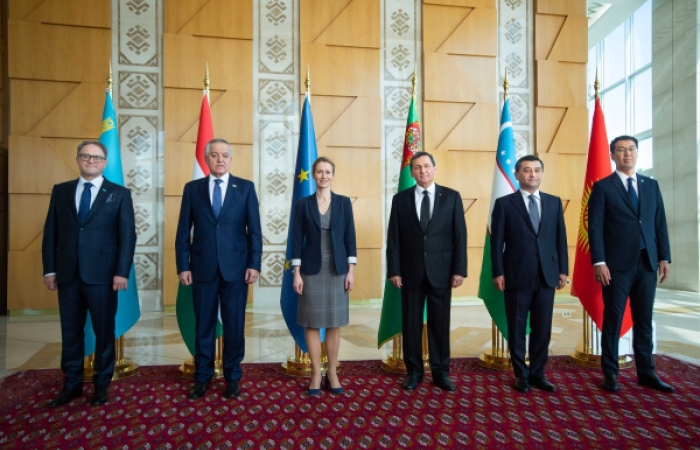
On 27 March 2025, the Foreign Ministers of the Republic of Tajikistan, Turkmenistan, the Republic of Uzbekistan, the Deputy Foreign Ministers of the Republic of Kazakhstan and the Kyrgyz Republic, as well as the European Union’s High Representative for Foreign Affairs and Security Policy Kaja Kallas held their 20th European Union-Central Asia Ministerial meeting in Ashgabat in Turkmenistan. The ministers discussed the preparations for the organisation of the first EU-Central Asia Summit on 4 April 2025 in Samarkand in Uzbekistan, which will demonstrate their commitment to deepening ties with the EU, at the highest level, materialising closer strategic cooperation, and marking an important step in the intensification of EU-Central Asia relations.
Editor's choice
News
President Macron gathers leaders to discuss aid to Ukraine and a European Armed Force

President Macron gathers leaders to discuss aid to Ukraine and a European Armed Force

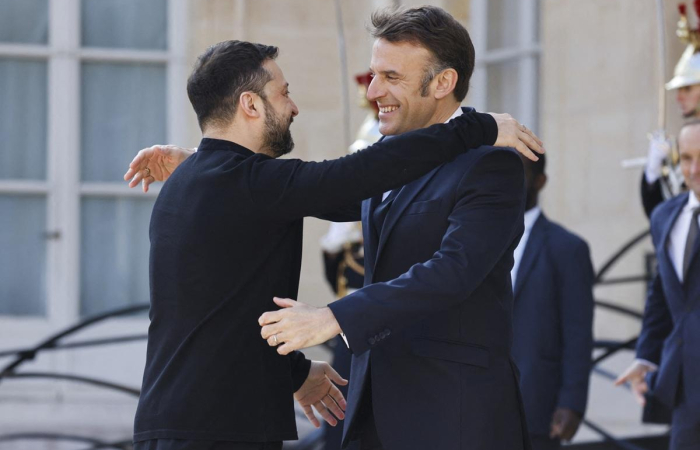
Ukraine’s allies from across Europe gathered for talks in Paris on Thursday to discuss how to strengthen Kyiv’s hand and its military as it pushes for a ceasefire with Russia, and to consider proposals to deploy European troops in the country in tandem with any peace deal. French President Emmanuel Macron is hosting the leaders of nearly 30 countries plus NATO and European Union chiefs. The summit comes at a crucial juncture in the war, with intensifying diplomatic efforts to broker ceasefires, driven by pressure from US President Donald Trump  to end the fighting.
Editor's choice
News
US brokers agreement to end Russia - Ukraine military action in the Black Sea

US brokers agreement to end Russia - Ukraine military action in the Black Sea

Russia and Ukraine agreed Tuesday to halt military strikes in the Black Sea and on energy sites during talks brokered by the United States, which offered as a first concrete incentive to Moscow to ease pressure on agricultural exports. With President Donald Trump pushing for a rapid end to the war that has killed tens of thousands of people, US negotiators shuttled separately over three days in the Saudi capital Riyadh between delegations from Ukraine and Russia.
Editor's choice
News
White House mistakenly shares Yemen war plans with a journalist at The Atlantic

White House mistakenly shares Yemen war plans with a journalist at The Atlantic

A US journalist was inadvertently included in a group chat in which Defense Secretary Pete Hegseth, Vice President JD Vance and other top officials discussed upcoming strikes against Yemen's Huthi rebels, the White House confirmed Monday. President Donald Trump announced the strikes on March 15, but in a shocking security breach, The Atlantic magazine's editor-in-chief Jeffrey Goldberg wrote that he had hours of advance notice via the group chat on Signal.