US brokers agreement to end Russia - Ukraine military action in the Black Sea

Russia and Ukraine agreed Tuesday to halt military strikes in the Black Sea and on energy sites during talks brokered by the United States, which offered as a first concrete incentive to Moscow to ease pressure on agricultural exports. With President Donald Trump pushing for a rapid end to the war that has killed tens of thousands of people, US negotiators shuttled separately over three days in the Saudi capital Riyadh between delegations from Ukraine and Russia.

In parallel statements, the White House said that each country "agreed to ensure safe navigation, eliminate the use of force and prevent the use of commercial vessels for military purposes in the Black Sea." The United States said it would also look for ways to enforce a ban on strikes on energy infrastructure in the two countries.

The Kremlin meanwhile said the agreement to halt strikes on the Black Sea could only come into force after the lifting of restrictions on its agriculture sector. Ukrainian President Volodymyr Zelensky, who has turned to diplomacy after heavy pressure from Trump including a brief ban on US aid and intelligence sharing, said it was too early to tell if the agreements will work but that they were "the right steps."

"No one can accuse Ukraine of not moving towards sustainable peace after this," Zelensky told a news conference in Kyiv. Zelensky said that the talks also discussed bringing in third parties to oversee a future truce. He said that Turkey, which has maintained ties with both sides, could monitor the situation on the Black Sea and that a Middle Eastern nation could look at the energy agreement.

Trump after taking office spoke directly to Russian President Vladimir Putin, ending the ostracization of him by the West since he ordered the invasion of Ukraine in 2022. In the first concrete step by the United States toward Russia in return for the engagement, the White House said it would "help restore access to the world market" for Russian agricultural and fertilizer exports. The United States never directly put sanctions on Russian agriculture but had restricted access to payment systems used for international transactions. 

The issue became a major talking point for Russia, which told countries in the developing world that US policies -- not the war itself -- were contributing to higher prices. Moscow said the deal would "come into force" after the "lifting of sanctions restrictions" on the Russian Agricultural Bank and other "financial institutions involved in international trade of food," and only after they are reconnected to the SWIFT international payment system.

Zelensky, while saying he did not know full details of the US decision, voiced alarm. "We believe that this is a weakening of the position and a weakening of sanctions," he said. Ukrainian Defense Minister Rustem Umerov, who took part in the talks, said that details on the Black Sea agreement were still being worked out. He also warned that if Russian warships moved from the eastern part of the Black Sea then "Ukraine will have full right to exercise right to self-defense." Ukraine earlier this month agreed to a US-proposed unconditional ceasefire, but Russia turned it down, with Kyiv accusing it of wanting to gain more battlefield advantage first. 

Russian Foreign Minister Sergei Lavrov gave no sign that Moscow was closer to agreeing to a wider ceasefire and put a priority on shipping through the Black Sea. A previous UN-brokered deal that allowed millions of tonnes of grain and other food exports to be shipped safely from Ukraine's ports, but Russia had complained that it was not beneficial for its trade.

Before the US announcement on agricultural exports, Lavrov accused Western countries of trying to "contain" Russia like "Napoleon and Hitler." The Saudi talks came as both Russia and Ukraine escalate their attacks on the ground, with Kyiv saying its air defense units had downed 78 out of 139 drones launched by Russia Tuesday.  

In Ukraine's northeastern city of Sumy, officials said the toll from a Russian strike in a residential area a day earlier climbed to 101 wounded, including 23 children, with one adult and one child in serious condition. Russia has advanced in some areas of the front for months and on Tuesday claimed to have captured two more villages in southern and eastern Ukraine. 
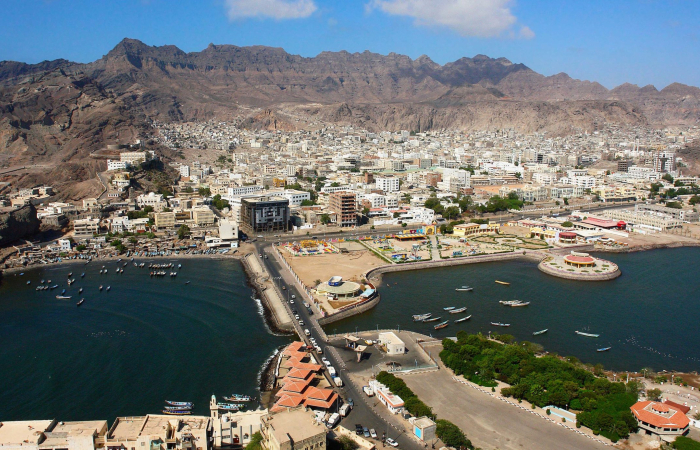
Source: commonspace.eu with agencies. Photo: AFP - Ukraine's President Volodymyr Zelensky during a meeting with officers of the Ukrainian Armed Forces at an undisclosed location in the Donetsk region.

Related articles

Editor's choice
News
Borrell tells the European Parliament that the situation in Afghanistan was critical, but the EU will remain engaged

Borrell tells the European Parliament that the situation in Afghanistan was critical, but the EU will remain engaged

Borrell underlined that the European Union will make every effort to support the peace process and to remain a committed partner to the Afghan people. "Of course, we will have to take into account the evolving situation, but disengagement is not an option.  We are clear on that: there is no alternative to a negotiated political settlement, through inclusive peace talks.
Editor's choice
News
NATO Chief says war is on Europe's doorstep, and warns against complacency

NATO Chief says war is on Europe's doorstep, and warns against complacency

Russia could attack a Nato country within the next five years, the Secretary General of NATO, Mark Rutte, said in a stark new warning. "Nato's own defences can hold for now," Rutte warned in Berlin, but conflict was "next door" to Europe and he feared "too many are quietly complacent, and too many don't feel the urgency, too many believe that time is on our side. "Russia is already escalating its covert campaign against our societies," Rutte said in a speech in Germany. "We must be prepared for the scale of war our grandparents or great-grandparents endured." Earlier this month, Russia's President Vladimir Putin said his country was not planning to go to war with Europe, but it was ready "right now" if Europe wanted to - or started a war. But similar reassurances were given by Moscow in 2022, just before 200,000 Russian troops crossed the border and invaded Ukraine. Putin has accused European countries of hindering US efforts to bring peace in Ukraine - a reference to the role Ukraine's European allies have recently played in trying to change a US peace plan to end the war, whose initial draft was seen as favouring Russia. But Putin was not sincere, Nato's secretary-general said in the German capital, Berlin. Supporting Ukraine, he added, was a guarantee for European security. "Just imagine if Putin got his way; Ukraine under the boot of Russian occupation, his forces pressing against a longer border with Nato, and the significantly increased risk of an armed attack against us." Russia's economy has been on a war footing for more than three years now - its factories churn out ever more supplies of drones, missiles and artillery shells. According to a recent report by the Kiel Institute for the World Economy, Russia has been producing each month around 150 tanks, 550 infantry fighting vehicles, 120 Lancet drones and more than 50 artillery pieces. The UK, and most of its Western allies, are simply not anywhere near this point. Analysts say it would take years for Western Europe's factories to come close to matching Russia's mass-production of weapons. "Allied defence spending and production must rise rapidly, our armed forces must have what they need to keep us safe," the Nato chief said.

Popular

Editor's choice
News
NATO Chief says war is on Europe's doorstep, and warns against complacency

NATO Chief says war is on Europe's doorstep, and warns against complacency

Russia could attack a Nato country within the next five years, the Secretary General of NATO, Mark Rutte, said in a stark new warning. "Nato's own defences can hold for now," Rutte warned in Berlin, but conflict was "next door" to Europe and he feared "too many are quietly complacent, and too many don't feel the urgency, too many believe that time is on our side. "Russia is already escalating its covert campaign against our societies," Rutte said in a speech in Germany. "We must be prepared for the scale of war our grandparents or great-grandparents endured." Earlier this month, Russia's President Vladimir Putin said his country was not planning to go to war with Europe, but it was ready "right now" if Europe wanted to - or started a war. But similar reassurances were given by Moscow in 2022, just before 200,000 Russian troops crossed the border and invaded Ukraine. Putin has accused European countries of hindering US efforts to bring peace in Ukraine - a reference to the role Ukraine's European allies have recently played in trying to change a US peace plan to end the war, whose initial draft was seen as favouring Russia. But Putin was not sincere, Nato's secretary-general said in the German capital, Berlin. Supporting Ukraine, he added, was a guarantee for European security. "Just imagine if Putin got his way; Ukraine under the boot of Russian occupation, his forces pressing against a longer border with Nato, and the significantly increased risk of an armed attack against us." Russia's economy has been on a war footing for more than three years now - its factories churn out ever more supplies of drones, missiles and artillery shells. According to a recent report by the Kiel Institute for the World Economy, Russia has been producing each month around 150 tanks, 550 infantry fighting vehicles, 120 Lancet drones and more than 50 artillery pieces. The UK, and most of its Western allies, are simply not anywhere near this point. Analysts say it would take years for Western Europe's factories to come close to matching Russia's mass-production of weapons. "Allied defence spending and production must rise rapidly, our armed forces must have what they need to keep us safe," the Nato chief said.