Theme

Conflict and Peace

Stories related to violent conflicts, diplomatic tensions, and conflict prevention, mediation and resolution.

Editor's choice
News
NATO Chief says war is on Europe's doorstep, and warns against complacency

NATO Chief says war is on Europe's doorstep, and warns against complacency

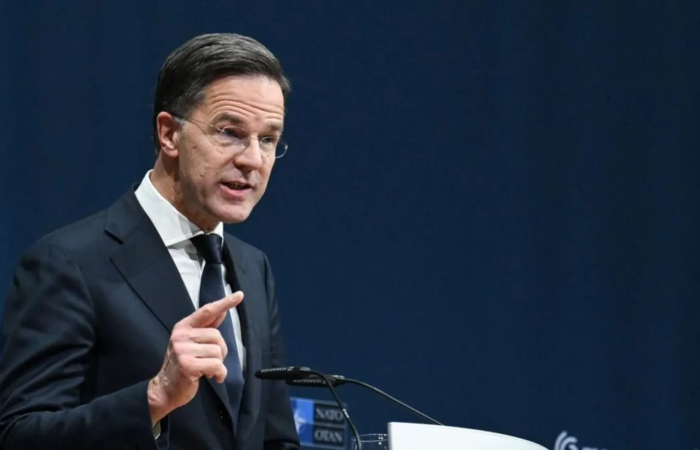
Russia could attack a NATO country within the next five years, the Secretary General of NATO, Mark Rutte, said in a stark new warning. "NATO's own defences can hold for now," Rutte warned in Berlin, but conflict was "next door" to Europe, and he feared "too many are quietly complacent, and too many don't feel the urgency, too many believe that time is on our side. "Russia is already escalating its covert campaign against our societies," Rutte said in a speech in Germany. "We must be prepared for the scale of war our grandparents or great-grandparents endured." Earlier this month, Russia's President Vladimir Putin said his country was not planning to go to war with Europe, but it was ready "right now" if Europe wanted to - or started a war. But similar reassurances were given by Moscow in 2022, just before 200,000 Russian troops crossed the border and invaded Ukraine. Putin has accused European countries of hindering US efforts to bring peace in Ukraine - a reference to the role Ukraine's European allies have recently played in trying to change a US peace plan to end the war, whose initial draft was seen as favouring Russia. But Putin was not sincere, Nato's secretary-general said in the German capital, Berlin. Supporting Ukraine, he added, was a guarantee for European security. "Just imagine if Putin got his way; Ukraine under the boot of Russian occupation, his forces pressing against a longer border with Nato, and the significantly increased risk of an armed attack against us." Russia's economy has been on a war footing for more than three years now - its factories churn out ever more supplies of drones, missiles and artillery shells. According to a recent report by the Kiel Institute for the World Economy, Russia has been producing each month around 150 tanks, 550 infantry fighting vehicles, 120 Lancet drones and more than 50 artillery pieces. The UK, and most of its Western allies, are simply not anywhere near this point. Analysts say it would take years for Western Europe's factories to come close to matching Russia's mass-production of weapons. "Allied defence spending and production must rise rapidly, our armed forces must have what they need to keep us safe," the Nato chief said.
Editor's choice
News
Thai-Cambodia border clashes enter fourth day

Thai-Cambodia border clashes enter fourth day

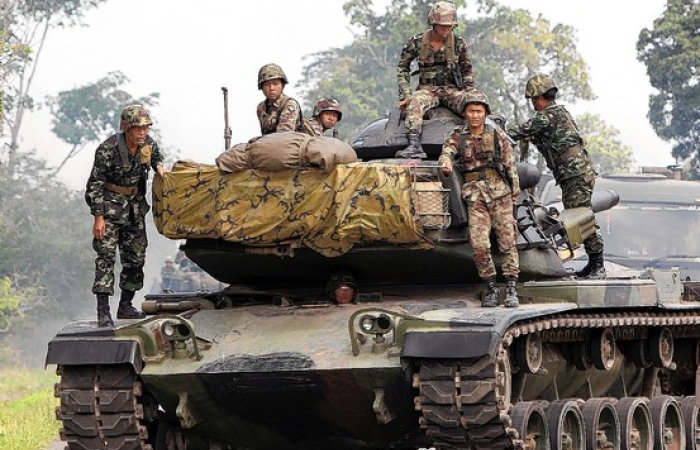
Renewed fighting between Thailand and Cambodia has entered its fourth day, with both sides accusing one another of violating international law, as they await a promised phone call from United States President Donald Trump. Cambodia’s Ministry of Defence accused Thailand’s military of carrying out numerous attacks within the country in the early hours of Thursday morning, including deploying tanks and artillery to strike targets in the country’s Pursat, Banteay Meanchey, and Oddar Meanchey provinces. In one such attack, Cambodia accused Thai soldiers of violating international humanitarian law by firing on civilians in Prey Chan village in Banteay Meanchey province. In another, it accused Thai forces of shelling “into Khnar Temple area”, and said Thai forces had also “fired artillery and support fire into the O’Smach area”. “Cambodia urges that Thailand immediately stop all hostile activities and withdraw its forces from Cambodia’s territorial integrity, and avoid acts of aggression that threaten peace and stability in the region,” the Defence Ministry said. Clashes took place on Wednesday at more than a dozen locations along the contested colonial-era demarcated 817-kilometre (508-mile) Thai-Cambodian border, with some of the most intense fighting being reported since a five-day battle in July, which saw dozens killed on both sides. Cambodia’s Ministry of the Interior said homes, schools, roads, Buddhist pagodas and ancient temples had been damaged by “Thailand’s intensified shelling and F-16 air strikes targeting villages and civilian population centres up to 30km [18.6 miles] inside Cambodian territory”. (click the image to read the full story).

Filter archive

Publication date
Editor's choice
News
US votes with Russia in United Nations resolutions on Ukraine

US votes with Russia in United Nations resolutions on Ukraine

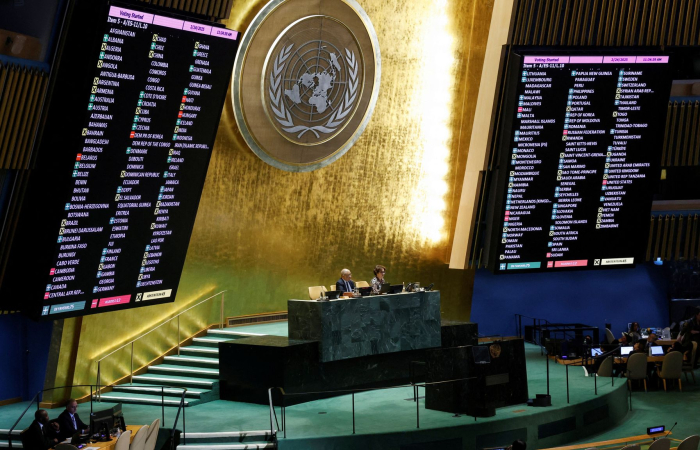
The US has twice sided with Russia in votes at the United Nations to mark the third anniversary of the Russian invasion of Ukraine, highlighting the Trump administration's change of stance on the war. First the US opposed a European-drafted resolution condemning Moscow's actions and supporting Ukraine's territorial integrity, voting the same way as Russia and countries including North Korea and Belarus at the UN General Assembly (UNGA) in New York. Then the US drafted and voted for a resolution at the UN Security Council which called for an end to the conflict but contained no criticism of Russia. The Security Council passed the resolution but two key US allies, the UK and France, abstained after their attempts to amend the wording were vetoed.
Editor's choice
Opinion
From Activist to Prime Minister, From Historical to Real Armenia: Pashinyan’s Bold New Gamble

From Activist to Prime Minister, From Historical to Real Armenia: Pashinyan’s Bold New Gamble

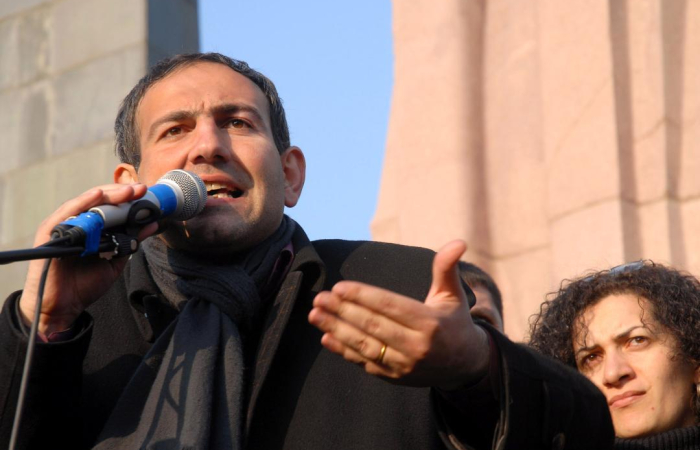
When Nikol Pashinyan embarked on a march from Gyumri to Yerevan at the end of March 2018 to prevent then President Serzh Sargsyan from clinging onto power, few believed he would succeed. Pashinyan was joined by a small group of allies as they made their way to the Armenian capital. Against all odds, Pashinyan’s gambit worked and is the country's premier today. For those that have followed his career to date, that shouldn't have come as a surprise.
Editor's choice
News
Italian Senate adopts resolution supporting Armenia-Azerbaijan peace process

Italian Senate adopts resolution supporting Armenia-Azerbaijan peace process

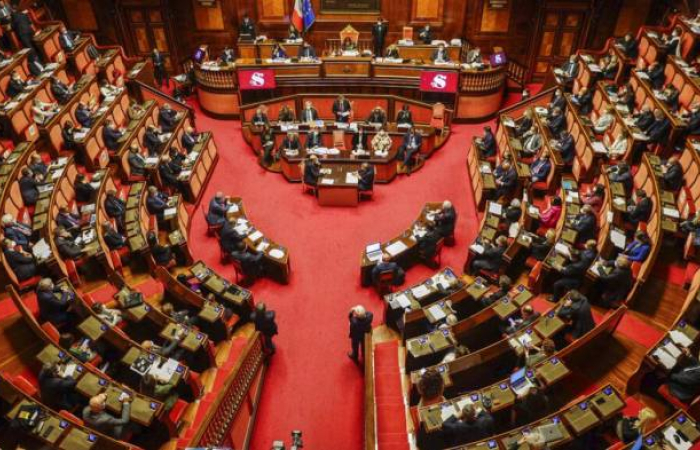
The Italian Senate has adopted a resolution supporting the Armenia-Azerbaijan peace process, calling on the government of Italy to strengthen its commitment for both countries to abandon the use of force in the future and maintain peaceful, constructive and open dialogue. The resolution titled ‘On Initiatives to Support the Peace Process Between Armenia and Azerbaijan’ was adopted unanimously on the 19th of February.
Editor's choice
Opinion
Opinion: The World Must Know More about the Khojaly Genocide

Opinion: The World Must Know More about the Khojaly Genocide

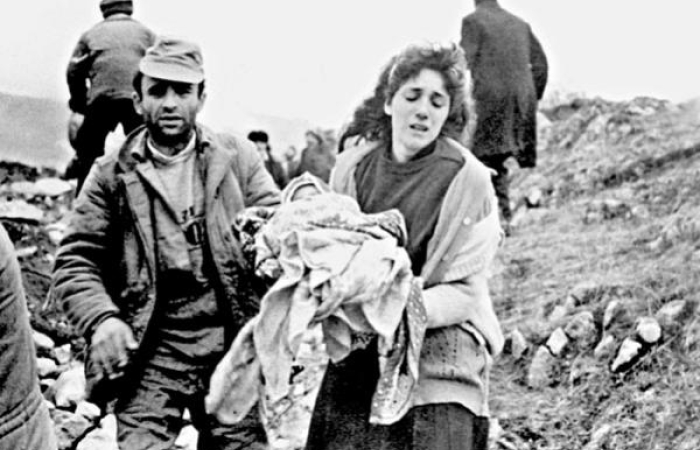
The occupation and ethnic cleansing of Azerbaijan’s Karabakh region and seven surrounding districts in the early 1990s by the armed forces of Armenia involved immeasurable atrocities and extreme violence. Realizing that more than 700,000 people in the region would not easily flee their homes, Armenian leaders resorted to force. The ethnic cleansing carried out by the Armenian armed forces resulted in numerous humanitarian tragedies over the years, but the most devastating was the massacre of civilians in Khojaly, a town in Azerbaijan’s Karabakh region, in the bitterly cold morning of February 26, 1992.
Editor's choice
News
Russia and US agree without Ukraine to press ahead on path to peace

Russia and US agree without Ukraine to press ahead on path to peace

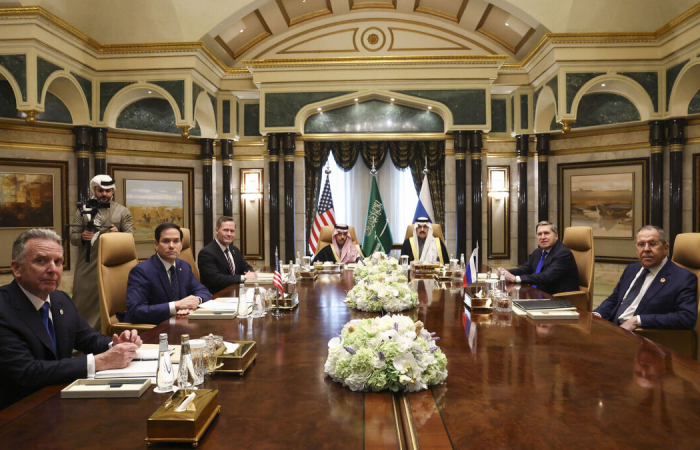
The United States and Russia agreed in Riyadh on Tuesday to press ahead with efforts to end the war in Ukraine, a US official said, as Kyiv and its European allies watched anxiously from the sidelines and Moscow raised a major new demand. US State Department spokesperson Tammy Bruce said the two sides agreed to appoint "respective high-level teams to begin working on a path to ending the conflict in Ukraine as soon as possible in a way that is enduring, sustainable, and acceptable to all sides".
Editor's choice
Opinion
Opinion: Research and Public-Private Partnerships Necessary For Any Future Armenia-Azerbaijan Border Markets

Opinion: Research and Public-Private Partnerships Necessary For Any Future Armenia-Azerbaijan Border Markets

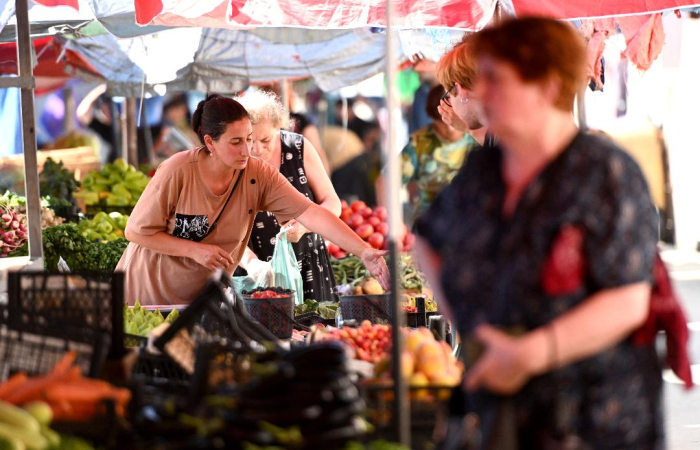
Armenian passport control at the Bagratashen border checkpoint was confused and chaotic, quite unlike the experience on the other side at Sadakhlo in Georgia. Instead of the few minutes it should have taken, it took over twenty. It never had in the past. Perhaps preparations for a visit by the European Union delegation taking place just a few days later to develop a much anticipated Visa Liberalisation Action Plan (VLAP) had preoccupied them.
Editor's choice
News
Presidential election in Abkhazia goes to second round

Presidential election in Abkhazia goes to second round

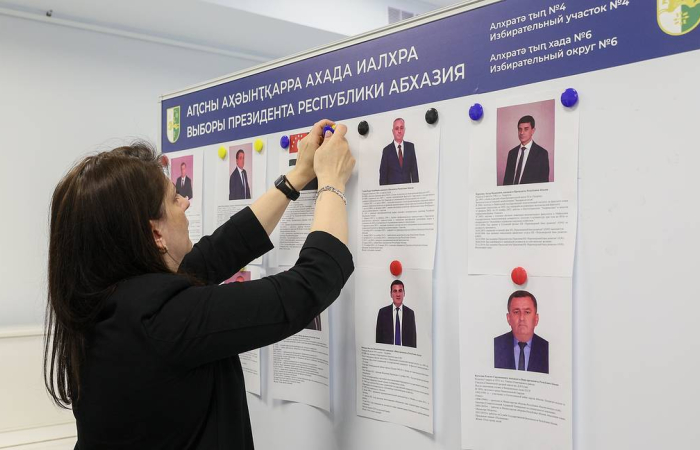
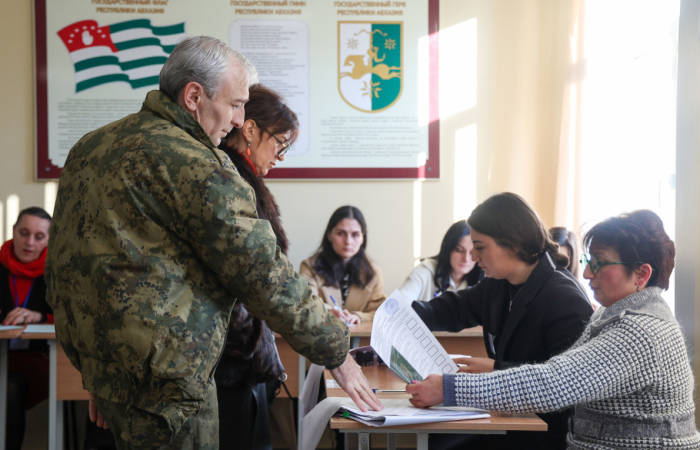
A presidential election held this weekend in the breakaway Georgian region of Abkhazia produced no clear winner, setting up a second round between the top two candidates. According to Abkhazia's electoral commission acting President Badra Gunba took 46per cent of the vote, while opposition leader Adgur Ardzinba received almost 37 per cent. The Election Commission confirmed  that Gunba, Moscow’s favourite candidate, failed to cross the threshold of 50 percent. The decisive second round featuring Gunba and Ardzinba is expected to be held by March 1. The EU reiterated its support for Georgia's territorial integrity and sovereignty in a statement saying it does not recognise the constitutional and legal framework in which the "so-called presidential elections in Abkhazia" took place.
Editor's choice
News
Ukrainian President Volodymyr Zelensky calls for European army

Ukrainian President Volodymyr Zelensky calls for European army

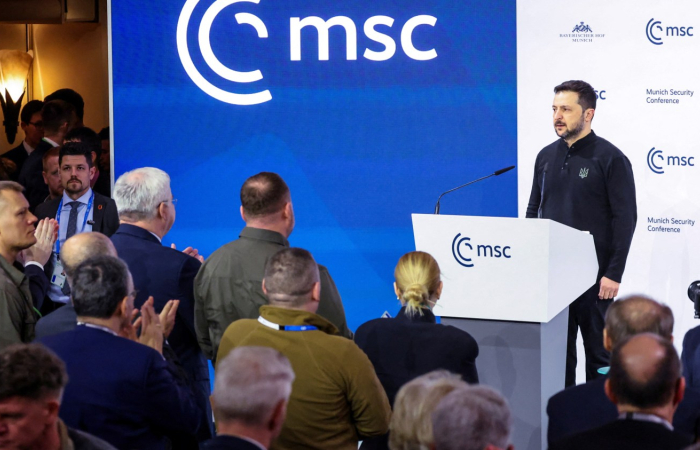
Ukraine's President Volodymyr Zelensky has called for the creation of an "army of Europe" to guard against Russia as he suggested the US may no longer come to the continent's aid. Speaking at the Munich Security Conference on Saturday, he also said that Ukraine would "never accept deals made behind our backs without our involvement" after US President Donald Trump and Russian President Vladimir Putin agreed to start peace talks.
Editor's choice
News
Abkhazia holds early presidential elections that may prove decisive

Abkhazia holds early presidential elections that may prove decisive

Abkhazia, a territory that broke away from Georgia in 1993, is holding early presidential elections today following the ousting of the previous president, Aslan Bzhania, at the end of November 2024. The outcome of the elections could determine the future trajectory of the region’s foreign policy and its relationship to Moscow. Bzhamia was forced to resign after thousands of supporters of opposition leader Adgur Ardzinba forcibly occupied the presidential palace and parliament building. Ardzinba is contesting these elections with his main rival being former Vice President Badra Gunba who is supported by Moscow. According to pre-election polls, Gunba is projected to receive 42.3 percent of the vote, while Ardzinba is projected to receive just 27.3 percent of the vote. The other three candidates are Shamil Ardzinba, Oleg Bartsits, and Adgur Khurkhumal.