Region

South Caucasus

The South Caucasus – a region encompassing Armenia, Azerbaijan and Georgia - is one of strategic importance, not only for adjacent countries, such as Turkiye, Russia, Iran and the Central Asian states, but also for neighbours such as the European Union and the GCC states, and globally for the United States, India, China, Pakistan and Japan.

commonspace.eu team brings decades of experience of working in the South Caucasus and we are pleased to share our insights with our loyal readers through the website, and the sister newsletter, Caucasus Concise.

Editor's choice
Opinion
Opinion: A sustainable peace requires consistent long-term European involvement

Opinion: A sustainable peace requires consistent long-term European involvement

There is no denying that the EU, especially key member states acting in support, helped bring Baku and Yerevan closer to the Washington Declaration of August 8, 2025. But a declaration is not a treaty. Turning principles into a peace deal and eventually to a sustainable peace requires consistent long-term European involvement, writes Yalchin Mammadov in this-op-ed for commonspace.eu Before facilitating trust between Armenia and Azerbaijan, the EU is first expected to address its own credibility gap with Baku. A more balanced approach—such as including Azerbaijan, alongside Armenia, in the European Peace Facility—could be a useful first step. Diplomats can negotiate peace; societies must build peace. In this context, the EU can do what it does the best: long-term societal engagement. By expanding youth and academic exchange programmes, investing in cross-border civil society initiatives, and fostering people-to-people cooperation, Brussels can help shape a new generation equipped to sustain peace beyond political cycles. Such tools are slow and unglamorous, but if ignored, even the strongest treaty risks collapse. And obviously, these aspects require two-way engagement and genuine willingness by both governments to facilitate contact. If Brussels wants to remain influential, it needs to replace outdated one-size-fits-all policies with ambitious, interest-driven and differentiated approaches. Without a clear regional strategy, which appears to be the current situation, the South Caucasus will continue to sit at the margins of Europe’s security architecture—leaving space for other powers to take the lead. (You can read the op-ed in full by clicking the image.)
Editor's choice
Event
LFSC25: Yerevan meeting focuses on issues of landmines and remnants of war in Armenia and the South Caucasus

LFSC25: Yerevan meeting focuses on issues of landmines and remnants of war in Armenia and the South Caucasus

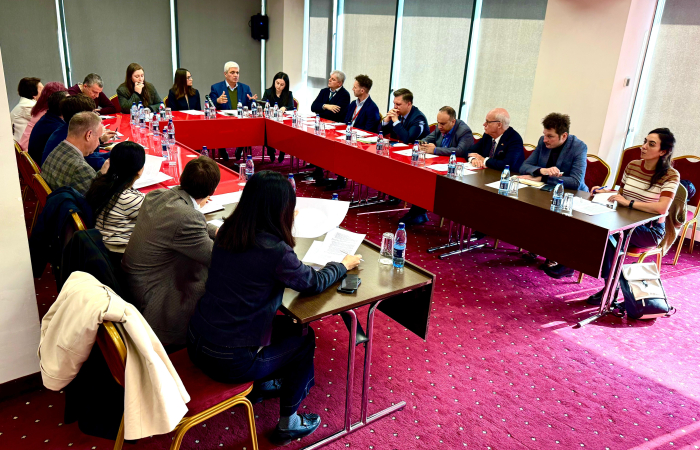
The meeting titled “The residue of conflict: Landmines and other remnants of war in the South Caucasus, and its victims” was held in Yerevan, Armenia, on Monday, 24 November 2025, in the framework of the 2025 regional campaign "Landmine Free South Caucasus" (LFSC25). Addressing the meeting, Mr Stepan Grigoryan, Chairman of the Armenian Analytical Center on Globalisation and Regional Cooperation, emphasized that the problem of landmines is mutual, and it exists in both Armenia and Azerbaijan. He argued that it is important in the peace process to address the humanitarian issues caused by landmines. In addition, he also stressed that it is important for experts to have conversations on the topic of demining, as often it is experts who begin the process that can then be taken further by governments. Stepan Grigoryan said he was happy to be collaborating with LINKS Europe on this important issue, and was glad to associate himself with the LFSC 25 appeal. Anahit Poghosyan, Adviser to the Secretary of the RA Security Council also spoke at the event. Ms Anahit Poghosyan said that the problem of landmines exists in Armenia, and that already around 800 people have been injured or killed due to landmine contamination. The border regions are highly affected, and around 200000 people live in proximity of contaminated areas. She stressed that landmine contamination is an important issue to solve. In addition, she added that Armenia remains committed to humanitarian principles and that experts have been involved in checking the contamination maps to ensure reliability. She ended on an important note that landmines undermine peace and development and pose a grave humanitarian situation in the region. (read more by clicking the image)

Filter archive

Publication date
Editor's choice
Opinion
Opinion: Armenia and Turkey again try to normalise relations, and this time it may work

Opinion: Armenia and Turkey again try to normalise relations, and this time it may work

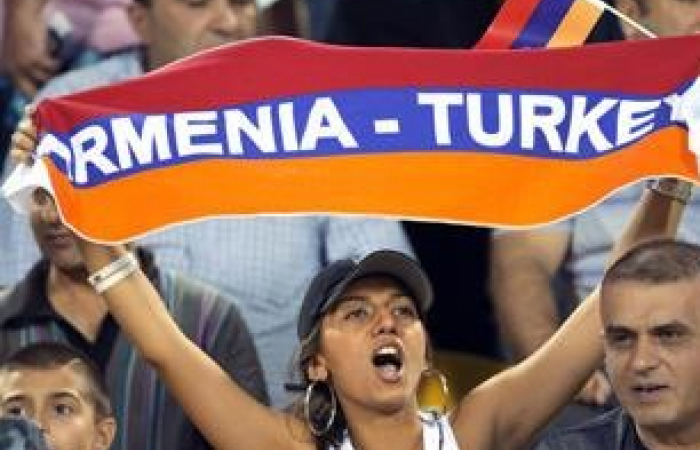
"It is likely that Armenia and Turkey are close to making an official announcement about the launch of a new normalisation process. It may result in establishing diplomatic relations, and in Turkey deciding to open its border with Armenia", says Benyamin Poghosyan in this op-ed.
Editor's choice
Opinion
Opinion: An alternative view of Georgia’s European identity and past history

Opinion: An alternative view of Georgia’s European identity and past history

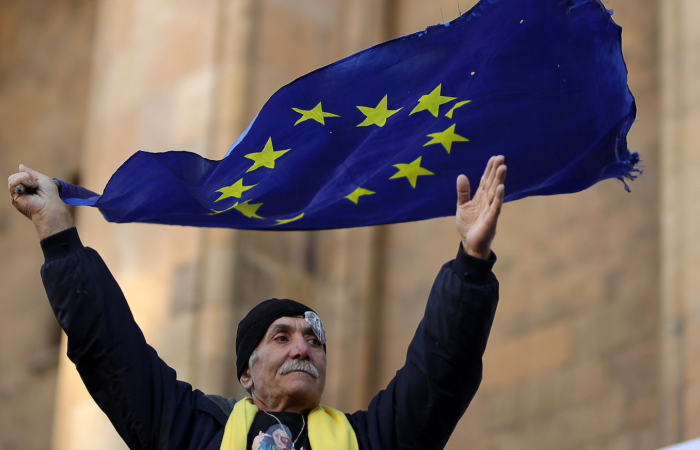
Georgia intends to submit an application for membership of the European Union in 2024. Whilst most Georgians assert the country’s European identity, alternative views are emerging. In this op-ed, GIPA doctoral student Archil Sikharulidze challenges the concept of Georgian “Europeaness”, and those who promote it.
Editor's choice
News
Friends in need: praise for Georgia and Azerbaijan for their role in the evacuation of Kabul

Friends in need: praise for Georgia and Azerbaijan for their role in the evacuation of Kabul

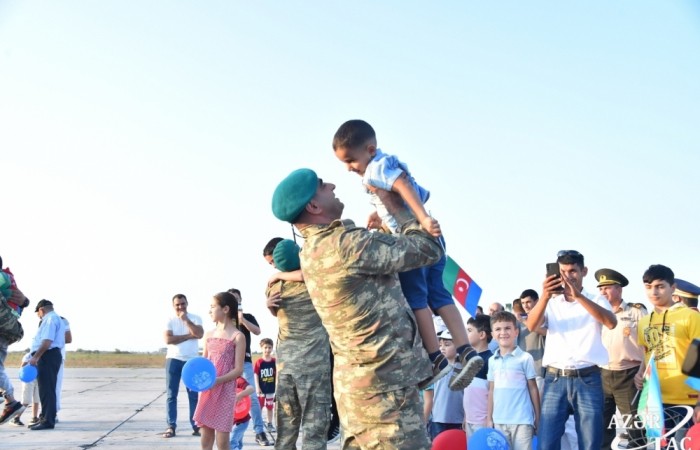
Both Georgia and Azerbaijan have been providing essential transit support for the evacuation from Kabul airport. 120 Azerbaijani soldiers returned back from Afghanistan on Friday (27 August) having been part of the defence of Kabul airport until the end. A larger Georgian contingent returned from the north of the country recently.
Editor's choice
Opinion
Opinion: Under President Raisi, Iran remains very interested in the South Caucasus, and in remaining a player in the region

Opinion: Under President Raisi, Iran remains very interested in the South Caucasus, and in remaining a player in the region

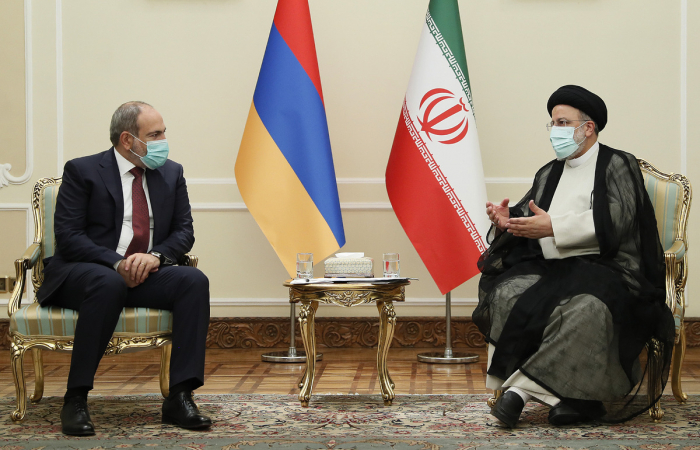
The presence in Tehran of the Armenian prime minister, Nikol Pashinyan, for the inauguration of incoming-president Ebrahim Raisi underscored the significance of relations with Iran for Armenia in the post-2020 Karabakh war context, writes Benyamin Poghosyan in this op-ed where he also discusses Iran's deep interest in the South Caucasus region.
Editor's choice
Opinion
Opinion: Azerbaijan expects the EU to be more balanced in its policies toward the South Caucasus

Opinion: Azerbaijan expects the EU to be more balanced in its policies toward the South Caucasus

Whilst the EU is seen as a valuable partner for Azerbaijan and the South Caucasus, Baku has several concerns over perceived inconsistencies. In this op-ed for commonspace.eu, Vasif Huseynov says Azerbaijan welcomes Brussels playing a more active role in the region but argues that it must maintain balance in its relations with each of the countries.
Editor's choice
News
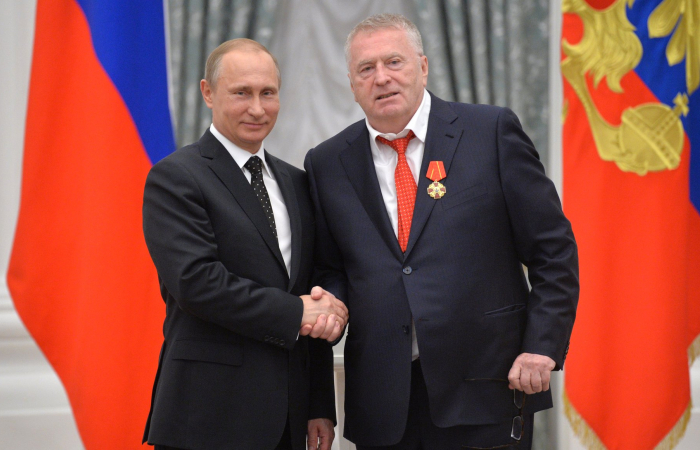
It's that Vladimir again

It's that Vladimir again

Azerbaijan has issued a diplomatic demarche to Russia following an outburst of criticism by Russian maverick politician, Vladimir Zhirinovski. The Russian Charge' d'affairs in Baku was summoned to the foreign ministry on Sunday morning and handed a protest note following comments made on air by Zhirinovski during an interview on July 30 on Komsomolskaya Pravda radio station.
Editor's choice
Commentary
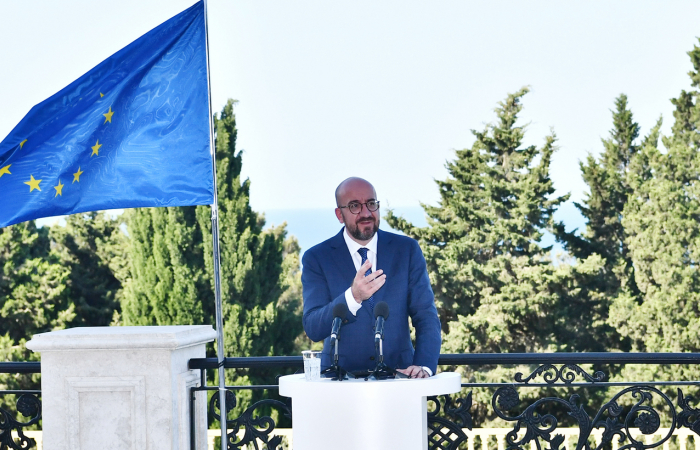
Commentary: The EU reinforces its position in the South Caucasus before the upcoming EaP Summit

Commentary: The EU reinforces its position in the South Caucasus before the upcoming EaP Summit

In preparation for its Eastern Partnership Summit (EaP) in December, and after drastic regional shifts, the EU is trying hard to improve its position in the South Caucasus. In this commentary for commonspace.eu, Mahammad Mammadov unpacks the EU's strategy in Georgia, Azerbaijan and Armenia, looking at what can be gleaned from its recent high-profile visits to the region and billions in newly declared financial assistance.
Editor's choice
News
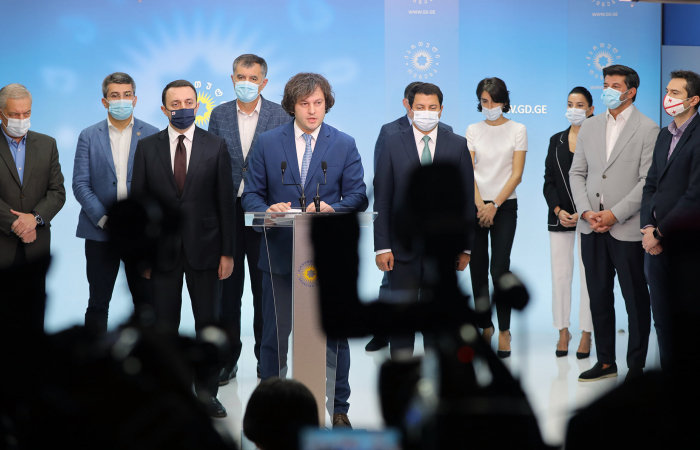
Georgian opposition outraged as ruling party tears up EU brokered deal

Georgian opposition outraged as ruling party tears up EU brokered deal

It always looked wobbly, and with little chance that it would succeed in resolving Georgia's deep political crisis. But on Wednesday (28 July), the ruling Georgian Dream (GD) party finally sunk the so called "Michel Agreement" signed with much fanfare on 19 April. The Georgian opposition is outraged, and things are back to square one, if not worse.
Editor's choice
News
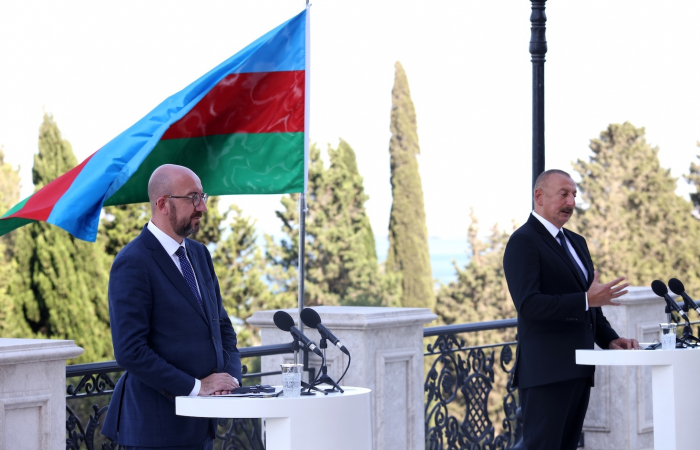
Aliyev in Moscow amidst intensified clashes on the Armenia-Azerbaijan border

Aliyev in Moscow amidst intensified clashes on the Armenia-Azerbaijan border

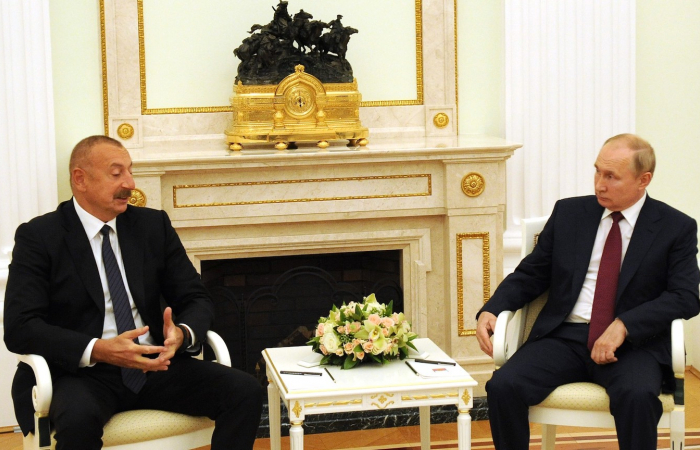
The president of Azerbaijan, Ilham Aliyev, arrived in Moscow today (20 July) on the invitation of the Russian president, Vladimir Putin. This is Aliyev’s second working visit to Russia this year – the first, on 11 January with the Armenian prime minister – and comes amidst clashes on the Armenian-Azerbaijani border.