Region

South Caucasus

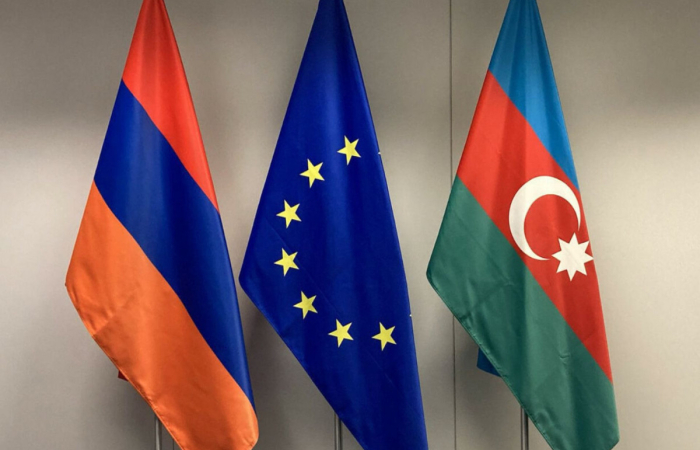
The South Caucasus – a region encompassing Armenia, Azerbaijan and Georgia - is one of strategic importance, not only for adjacent countries, such as Turkiye, Russia, Iran and the Central Asian states, but also for neighbours such as the European Union and the GCC states, and globally for the United States, India, China, Pakistan and Japan.

commonspace.eu team brings decades of experience of working in the South Caucasus and we are pleased to share our insights with our loyal readers through the website, and the sister newsletter, Caucasus Concise.

Editor's choice
Opinion
Opinion: A sustainable peace requires consistent long-term European involvement

Opinion: A sustainable peace requires consistent long-term European involvement

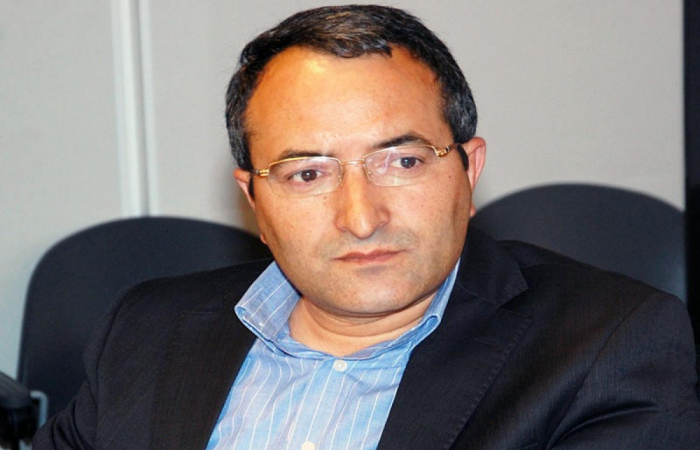
There is no denying that the EU, especially key member states acting in support, helped bring Baku and Yerevan closer to the Washington Declaration of August 8, 2025. But a declaration is not a treaty. Turning principles into a peace deal and eventually to a sustainable peace requires consistent long-term European involvement, writes Yalchin Mammadov in this-op-ed for commonspace.eu Before facilitating trust between Armenia and Azerbaijan, the EU is first expected to address its own credibility gap with Baku. A more balanced approach—such as including Azerbaijan, alongside Armenia, in the European Peace Facility—could be a useful first step. Diplomats can negotiate peace; societies must build peace. In this context, the EU can do what it does the best: long-term societal engagement. By expanding youth and academic exchange programmes, investing in cross-border civil society initiatives, and fostering people-to-people cooperation, Brussels can help shape a new generation equipped to sustain peace beyond political cycles. Such tools are slow and unglamorous, but if ignored, even the strongest treaty risks collapse. And obviously, these aspects require two-way engagement and genuine willingness by both governments to facilitate contact. If Brussels wants to remain influential, it needs to replace outdated one-size-fits-all policies with ambitious, interest-driven and differentiated approaches. Without a clear regional strategy, which appears to be the current situation, the South Caucasus will continue to sit at the margins of Europe’s security architecture—leaving space for other powers to take the lead. (You can read the op-ed in full by clicking the image.)
Editor's choice
Event
LFSC25: Yerevan meeting focuses on issues of landmines and remnants of war in Armenia and the South Caucasus

LFSC25: Yerevan meeting focuses on issues of landmines and remnants of war in Armenia and the South Caucasus

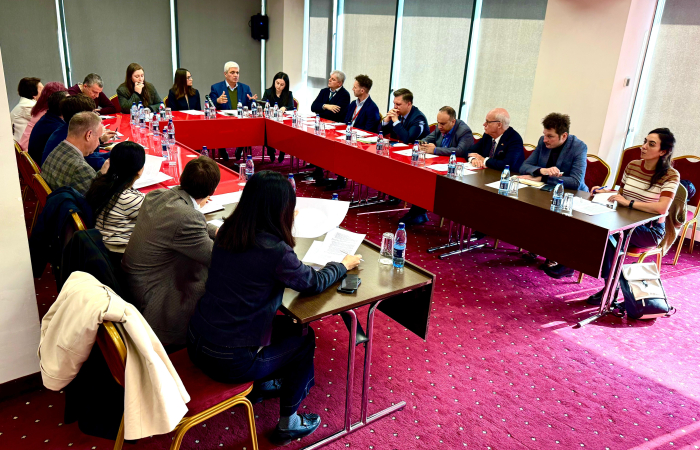
The meeting titled “The residue of conflict: Landmines and other remnants of war in the South Caucasus, and its victims” was held in Yerevan, Armenia, on Monday, 24 November 2025, in the framework of the 2025 regional campaign "Landmine Free South Caucasus" (LFSC25). Addressing the meeting, Mr Stepan Grigoryan, Chairman of the Armenian Analytical Center on Globalisation and Regional Cooperation, emphasized that the problem of landmines is mutual, and it exists in both Armenia and Azerbaijan. He argued that it is important in the peace process to address the humanitarian issues caused by landmines. In addition, he also stressed that it is important for experts to have conversations on the topic of demining, as often it is experts who begin the process that can then be taken further by governments. Stepan Grigoryan said he was happy to be collaborating with LINKS Europe on this important issue, and was glad to associate himself with the LFSC 25 appeal. Anahit Poghosyan, Adviser to the Secretary of the RA Security Council also spoke at the event. Ms Anahit Poghosyan said that the problem of landmines exists in Armenia, and that already around 800 people have been injured or killed due to landmine contamination. The border regions are highly affected, and around 200000 people live in proximity of contaminated areas. She stressed that landmine contamination is an important issue to solve. In addition, she added that Armenia remains committed to humanitarian principles and that experts have been involved in checking the contamination maps to ensure reliability. She ended on an important note that landmines undermine peace and development and pose a grave humanitarian situation in the region. (read more by clicking the image)

Filter archive

Publication date
Editor's choice
News
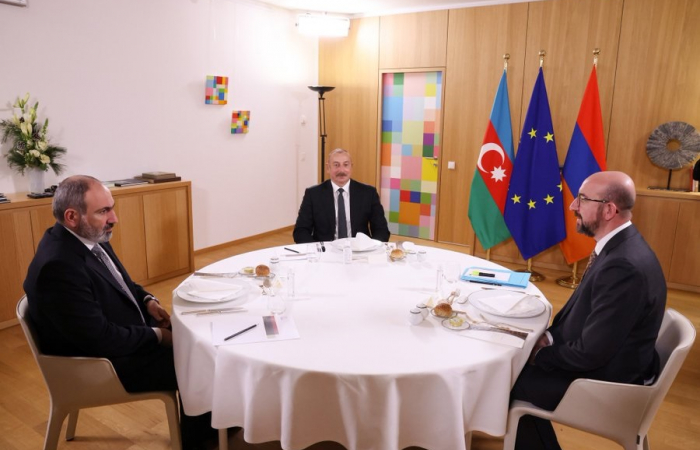
Michel hosts Pashinyan and Aliyev for talks on the evolving situation in the South Caucasus

Michel hosts Pashinyan and Aliyev for talks on the evolving situation in the South Caucasus

A statement posted late on Tuesday on the website of the European Council stated that "President Michel assured both leaders of the EU’s commitment to work closely with Armenia and Azerbaijan in overcoming conflict, creating cooperation and an atmosphere of trust, with a view to sustainable peace in the region ultimately underpinned by a comprehensive peace agreement".
Editor's choice
Analysis
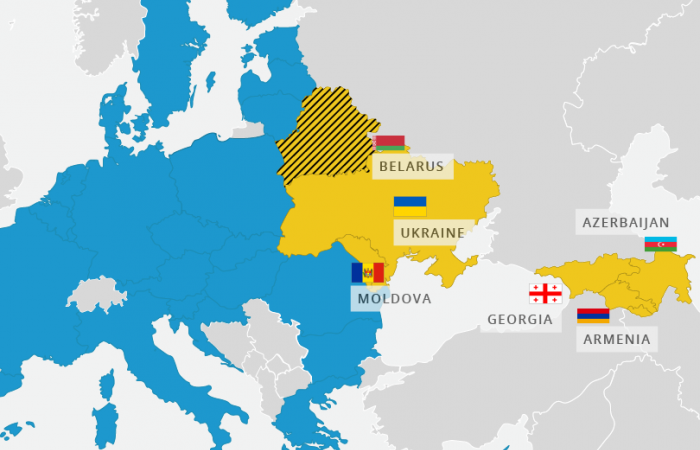
The 6th Eastern Partnership summit is a defining moment in the relationship between the EU and its Eastern Neighbours

The 6th Eastern Partnership summit is a defining moment in the relationship between the EU and its Eastern Neighbours

The summit of the leaders of the European Union and of the countries of the Eastern Partnership takes place in Brussels tomorrow (Wednesday, 15 December). It promises to be a defining moment in the relationship between the EU and its neighbours to the east: Armenia, Azerbaijan, Georgia, Moldova and Ukraine. In this analysis, the research team of commonspace.eu explore the issues under discussion and explore why for the first time an EaP summit has attracted considerable public attention.
Editor's choice
Editorial
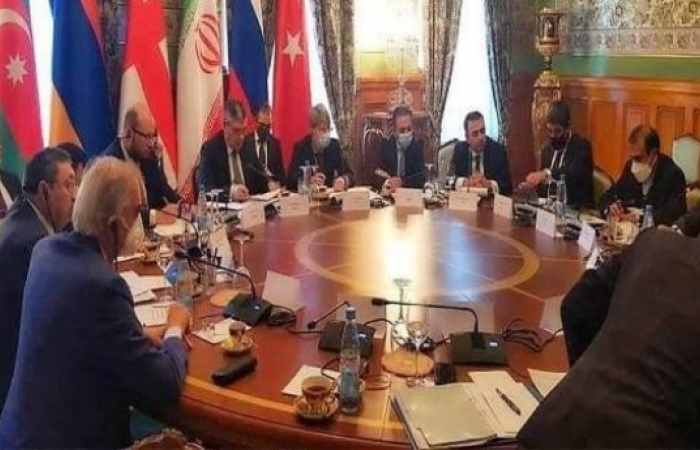
Editorial: It seems that in Moscow they forgot how to count from 1 to 3

Editorial: It seems that in Moscow they forgot how to count from 1 to 3

The Russians persisted in presenting a gathering in Moscow on Friday as a meeting of " 3 + 3 ", when in fact only five countries were present, and it was more the case of 2 + 3. Diplomatic deceit is not the basis on which South Caucasus regional co-operation should be built.
Editor's choice
News
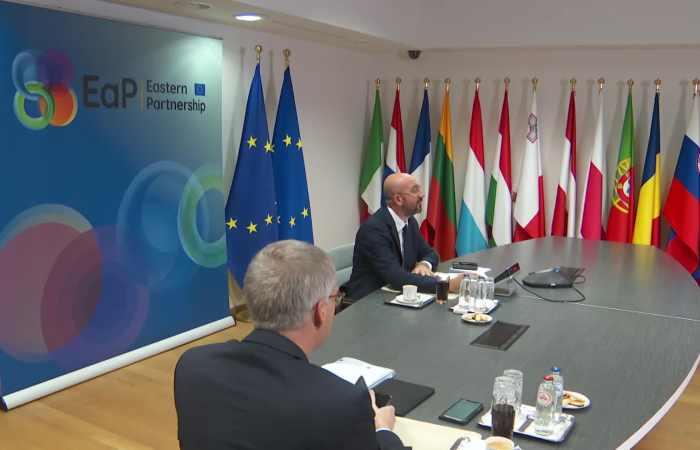
 Armenian and Azerbaijani experts send joint recommendations on process of confidence-building in the South Caucasus to Eastern Partnership summit

Armenian and Azerbaijani experts send joint recommendations on process of confidence-building in the South Caucasus to Eastern Partnership summit

In their letter to European Council President, Charles Michel, the experts say that the EU Eastern Partnership Summit on 15 December offers an opportunity for a qualitative step forward in the process of peace in the South Caucasus.
Editor's choice
News
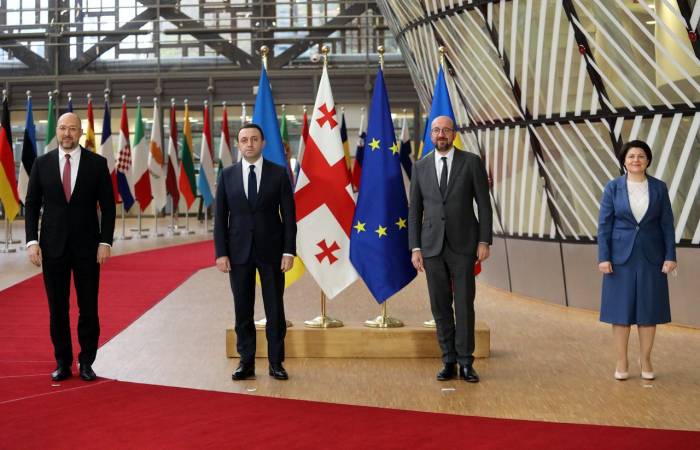
"Trio countries" push for closer relations with EU

"Trio countries" push for closer relations with EU

At a meeting with EU Council president, Charles Michel, the prime ministers of Georgia, Moldova and Ukraine reaffirmed their common position that the forthcoming Eastern Partnership summit should offer the partner states new opportunities on the path toward further EU integration based on the differentiation and more for more principles. The parties also discussed the priorities and directions important in terms of deeper cooperation between the three countries and the EU.
Editor's choice
Opinion
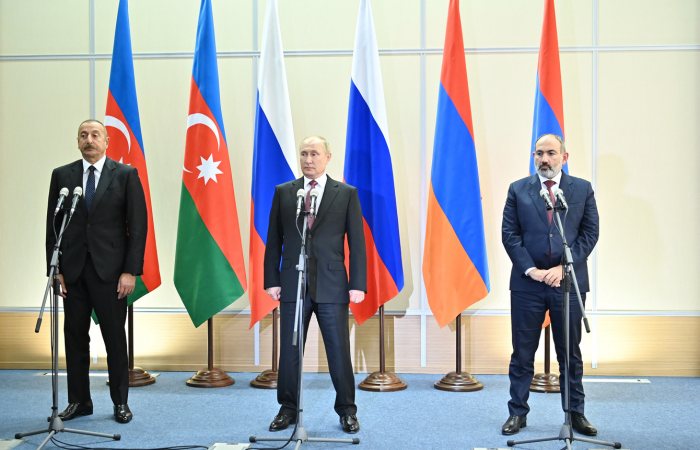
Opinion: After the Sochi summit, a qualitatively different stage in  Armenia-Azerbaijan negotiations

Opinion: After the Sochi summit, a qualitatively different stage in Armenia-Azerbaijan negotiations

The trilateral meeting between the leaders of Armenia, Azerbaijan and Russia, held in Sochi on 26 November, "was a constructive stage in the post-war peace process in the region and has opened up new prospects for peace and reconciliation between Armenia and Azerbaijan", says Vasif Huseynov in this op-ed.
Editor's choice
Opinion
Opinion: Brussels should develop a customised platform to take forward a trialogue with Armenia and Azerbaijan.

Opinion: Brussels should develop a customised platform to take forward a trialogue with Armenia and Azerbaijan.

"In their active search of new approaches and strategies, European officials should keep in mind that antagonizing Russia would result in unexpected developments in the region. Instead, stabilization of the situation requires cooperation with Moscow", writes Alexander Petrosyan in this op-ed
Editor's choice
News
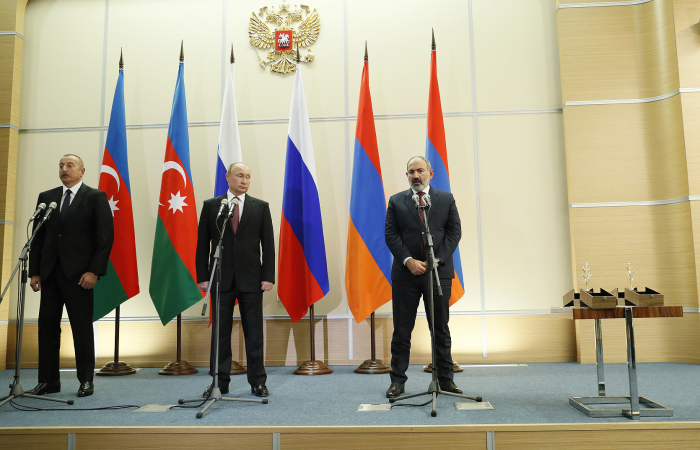
Joint statement by the leaders of Armenia, Azerbaijan and Russia hails the start of a new era of good-neighbourly relations in the South Caucasus

Joint statement by the leaders of Armenia, Azerbaijan and Russia hails the start of a new era of good-neighbourly relations in the South Caucasus

The long awaited meeting of the three leaders came after more than one year since the end of the 44 day Karabakh war, during which the process to bring peace and stability to the South Caucasus appeared to be faltering. The Sochi meeting has been hailed by the three countries participating in it as a success, and as a start of a new chapter in relations.