Region

South Caucasus

The South Caucasus – a region encompassing Armenia, Azerbaijan and Georgia - is one of strategic importance, not only for adjacent countries, such as Turkiye, Russia, Iran and the Central Asian states, but also for neighbours such as the European Union and the GCC states, and globally for the United States, India, China, Pakistan and Japan.

commonspace.eu team brings decades of experience of working in the South Caucasus and we are pleased to share our insights with our loyal readers through the website, and the sister newsletter, Caucasus Concise.

Editor's choice
Monday Commentary
Monday Commentary: 2025 was a momentous year for the South Caucasus

Monday Commentary: 2025 was a momentous year for the South Caucasus

The year 2025 has ended up being a momentous year for the South Caucasus, writes Dennis Sammut in his Monday Commentary. Armenia-Azerbaijan relations have been redefined, with consequences for the whole region and beyond. That huge development overshadowed key moments in the domestic trajectory of the two countries, which however have deep consequences for the two countries, and even beyond. It has also been a tumultuous year for Georgia too. The country has been gripped in a political crisis throughout 2025, with no obvious end in sight. Whatever the domestic arguments, on the international stage Georgia is today a shadow of what it used to be until recently. It not only has lost the chance of joining the European Union any time soon, but it has also lost its position as the leading South Caucasus country. Today, in the new reality of the region, it lags as a tired third. Important as 2025 was, it ended with a lot of unfinished business. So 2026 will also be crucial for the three countries. Since regaining its statehood in 1991 after the dissolution of the Soviet Union, Armenia-Azerbaijan relations have been defined by war. The two fought open wars, wars of attrition, and propaganda wars, incessantly. Tens of thousands of people lost their lives, and hundreds of thousands were displaced. Many had lost hope that the two could try the alternative – i.e. peaceful co-existence. Yet in 2025 they were proven wrong.
Editor's choice
Opinion
Opinion: A sustainable peace requires consistent long-term European involvement

Opinion: A sustainable peace requires consistent long-term European involvement

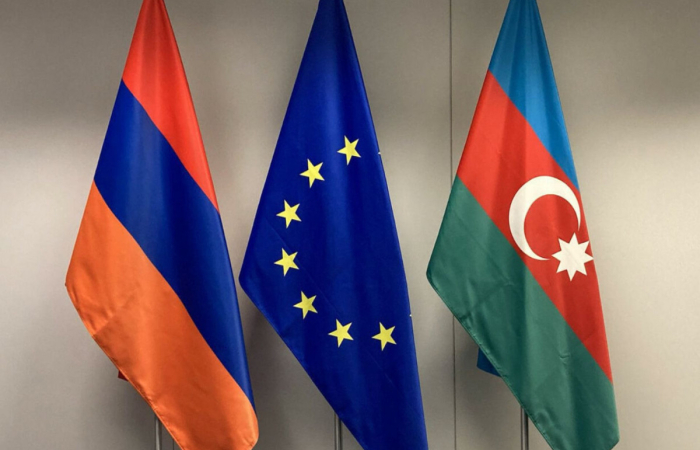
There is no denying that the EU, especially key member states acting in support, helped bring Baku and Yerevan closer to the Washington Declaration of August 8, 2025. But a declaration is not a treaty. Turning principles into a peace deal and eventually to a sustainable peace requires consistent long-term European involvement, writes Yalchin Mammadov in this-op-ed for commonspace.eu Before facilitating trust between Armenia and Azerbaijan, the EU is first expected to address its own credibility gap with Baku. A more balanced approach—such as including Azerbaijan, alongside Armenia, in the European Peace Facility—could be a useful first step. Diplomats can negotiate peace; societies must build peace. In this context, the EU can do what it does the best: long-term societal engagement. By expanding youth and academic exchange programmes, investing in cross-border civil society initiatives, and fostering people-to-people cooperation, Brussels can help shape a new generation equipped to sustain peace beyond political cycles. Such tools are slow and unglamorous, but if ignored, even the strongest treaty risks collapse. And obviously, these aspects require two-way engagement and genuine willingness by both governments to facilitate contact. If Brussels wants to remain influential, it needs to replace outdated one-size-fits-all policies with ambitious, interest-driven and differentiated approaches. Without a clear regional strategy, which appears to be the current situation, the South Caucasus will continue to sit at the margins of Europe’s security architecture—leaving space for other powers to take the lead. (You can read the op-ed in full by clicking the image.)

Filter archive

Publication date
Editor's choice
News
EU monitors will arrive on the Armenia-Azerbaijan border within two weeks

EU monitors will arrive on the Armenia-Azerbaijan border within two weeks

It is expected that European Union monitors will arrive on the Armenian side of the Armenia-Azerbaijan border before the end of this month. An EU technical assessment mission arrived in Yerevan on Friday (14 October), and EU foreign ministers are expected to discuss the matter and endorse a mandate and a budget for the mission on Monday (17 October). A statement from the European External Action Service on Friday evening stated: Following the request by Armenia, an EU technical assessment mission has today arrived in Yerevan. The task of this mission is to prepare for the deployment of EU monitors to the Armenian side of the Armenia-Azerbaijan border later this month, in line with the agreement reached on the 6 October at the quadrilateral meeting between President Aliyev, Prime Minister Pashinyan, President Macron and President Michel. EU Member States will further discuss at the Foreign Affairs Council on Monday 17 October the proposal of High Representative Josep Borrell to deploy a monitoring mission, which will have as its primary aims contributing to stability and building confidence as well as supporting the work of the border commissions to improve security along the bilateral border.
Editor's choice
Opinion
Opinion: Russia fears it is being elbowed out of the South Caucasus, and prepares to react

Opinion: Russia fears it is being elbowed out of the South Caucasus, and prepares to react

Russia is worried that the success of European diplomacy in approximating the positions of Armenia and Azerbaijan, and the prospect of a peace agreement before the end of the year, would see it elbowed out of the South Caucasus. Russia may use its presence in Karabakh to throw spokes in the wheel, writes Vasif Huseynov in this op-ed for commonspace.eu. "This situation seriously threatens peace and stability in the South Caucasus. The region would  descend into a catastrophic escalations if the present peace efforts fail, and the Armenia-Azerbaijan conflict becomes another theater of the Russia-West confrontation. Baku and Yerevan, having declared their willingness to recognize each other’s territorial integrity and sovereignty, would suffer the most from such a situation. Hence, both should make efforts to reach a deal with a delicate geopolitical balance", he writes.
Editor's choice
Monday Commentary
Monday Commentary: Success in Prague

Monday Commentary: Success in Prague

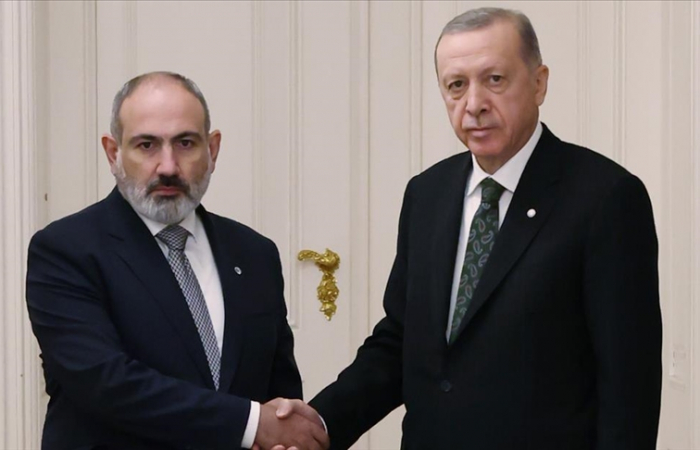
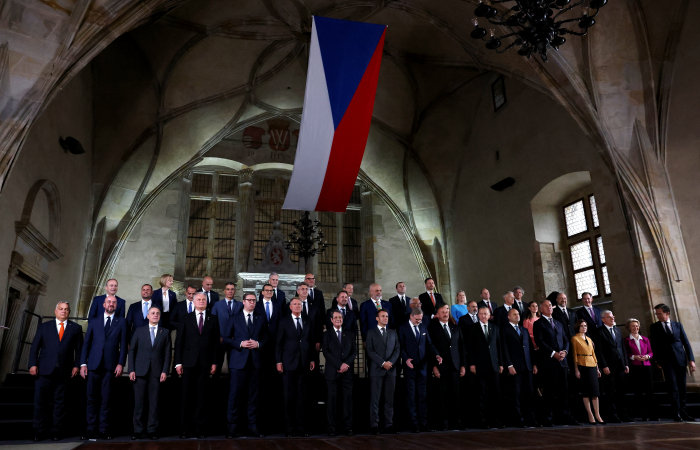
On 6 October in Prague, the leaders of 44 European countries gathered in the historic settings of Prague Castle for the first meeting of the European Political Community (EPC). Such an initiative was needed. The war in Ukraine, Russia’s bellicose postures, and the threat of an energy crisis caused by the disruption of Russian energy supplies have helped focus the minds of European leaders. Prague offered an opportunity to discuss and analyse and approximate positions. Important discussions on the margins of the main event, such as the quadripartite meeting with Armenia and Azerbaijan and the Turkey-Armenia leaders meeting, contributed to the process of resolving some of the more intractable problems of the last decades. The work of the European Political Community needs now to be taken forward. In future, the biggest task of the EPC will be to engage Russia. But not yet. For the moment the Community has done what is needed, which is to contribute to build a united front against Russian aggression in Ukraine. It must continue to do so until Russian aggression ends.
Editor's choice
News
Armenia and Azerbaijan recognise each other's territorial integrity and sovereignty

Armenia and Azerbaijan recognise each other's territorial integrity and sovereignty

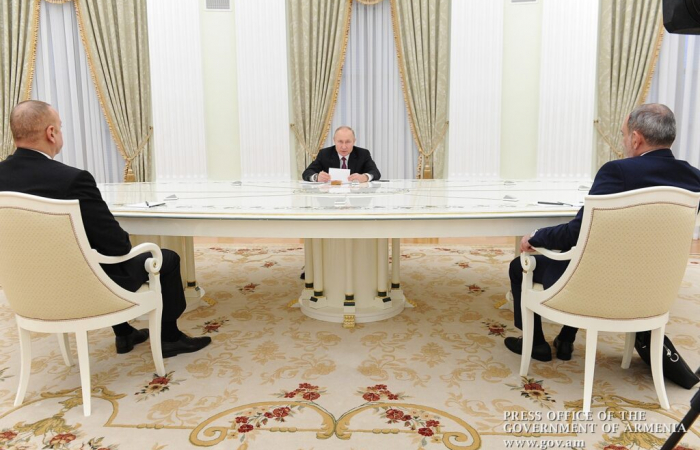
After hours of negotiations, with the mediation of European Council president Charles Michel, and French president Emanuel Macron, the leaders of Armenia and Azerbaijan , Nikol Pashinyan and Ilham Aliyev, have taken a historic step towards lasting peace. Both countries have recognised each other's territorial integrity and sovereignty, and committed to tangible steps to establish peace and stability in the region. President Macron tweeted early this morning "Tonight, Armenia and Azerbaijan confirmed their commitment to the Charter of the United Nations and the Alma Ata 1991 Declaration through which both recognize each other's territorial integrity and sovereignty." The four leaders held two long sessions of negotiations on the margins of the summit of the European Political Community which was launched at Prague Castle on Thursday afternoon (6 October). It is also understood that a number of other decisions were taken. It was agreed that the EU will deploy on the Armenian side of the Armenia-Azerbaijan border a civilian monitoring mission, for a period of two months starting from October.