Region

South Caucasus

The South Caucasus – a region encompassing Armenia, Azerbaijan and Georgia - is one of strategic importance, not only for adjacent countries, such as Turkiye, Russia, Iran and the Central Asian states, but also for neighbours such as the European Union and the GCC states, and globally for the United States, India, China, Pakistan and Japan.

commonspace.eu team brings decades of experience of working in the South Caucasus and we are pleased to share our insights with our loyal readers through the website, and the sister newsletter, Caucasus Concise.

Editor's choice
Opinion
Opinion: A sustainable peace requires consistent long-term European involvement

Opinion: A sustainable peace requires consistent long-term European involvement

There is no denying that the EU, especially key member states acting in support, helped bring Baku and Yerevan closer to the Washington Declaration of August 8, 2025. But a declaration is not a treaty. Turning principles into a peace deal and eventually to a sustainable peace requires consistent long-term European involvement, writes Yalchin Mammadov in this-op-ed for commonspace.eu Before facilitating trust between Armenia and Azerbaijan, the EU is first expected to address its own credibility gap with Baku. A more balanced approach—such as including Azerbaijan, alongside Armenia, in the European Peace Facility—could be a useful first step. Diplomats can negotiate peace; societies must build peace. In this context, the EU can do what it does the best: long-term societal engagement. By expanding youth and academic exchange programmes, investing in cross-border civil society initiatives, and fostering people-to-people cooperation, Brussels can help shape a new generation equipped to sustain peace beyond political cycles. Such tools are slow and unglamorous, but if ignored, even the strongest treaty risks collapse. And obviously, these aspects require two-way engagement and genuine willingness by both governments to facilitate contact. If Brussels wants to remain influential, it needs to replace outdated one-size-fits-all policies with ambitious, interest-driven and differentiated approaches. Without a clear regional strategy, which appears to be the current situation, the South Caucasus will continue to sit at the margins of Europe’s security architecture—leaving space for other powers to take the lead. (You can read the op-ed in full by clicking the image.)
Editor's choice
Event
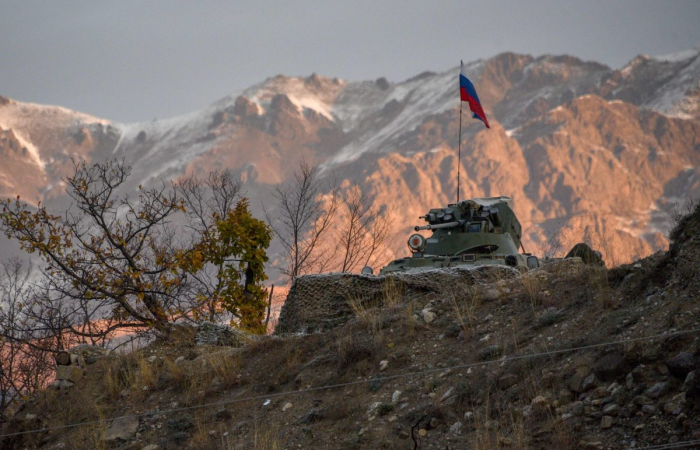
LFSC25: Yerevan meeting focuses on issues of landmines and remnants of war in Armenia and the South Caucasus

LFSC25: Yerevan meeting focuses on issues of landmines and remnants of war in Armenia and the South Caucasus

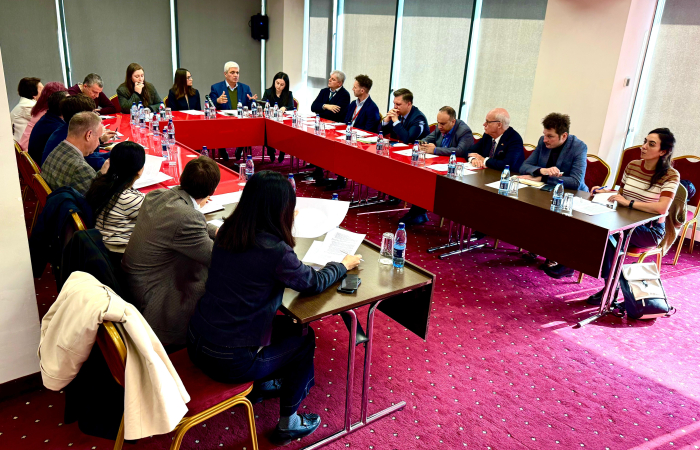
The meeting titled “The residue of conflict: Landmines and other remnants of war in the South Caucasus, and its victims” was held in Yerevan, Armenia, on Monday, 24 November 2025, in the framework of the 2025 regional campaign "Landmine Free South Caucasus" (LFSC25). Addressing the meeting, Mr Stepan Grigoryan, Chairman of the Armenian Analytical Center on Globalisation and Regional Cooperation, emphasized that the problem of landmines is mutual, and it exists in both Armenia and Azerbaijan. He argued that it is important in the peace process to address the humanitarian issues caused by landmines. In addition, he also stressed that it is important for experts to have conversations on the topic of demining, as often it is experts who begin the process that can then be taken further by governments. Stepan Grigoryan said he was happy to be collaborating with LINKS Europe on this important issue, and was glad to associate himself with the LFSC 25 appeal. Anahit Poghosyan, Adviser to the Secretary of the RA Security Council also spoke at the event. Ms Anahit Poghosyan said that the problem of landmines exists in Armenia, and that already around 800 people have been injured or killed due to landmine contamination. The border regions are highly affected, and around 200000 people live in proximity of contaminated areas. She stressed that landmine contamination is an important issue to solve. In addition, she added that Armenia remains committed to humanitarian principles and that experts have been involved in checking the contamination maps to ensure reliability. She ended on an important note that landmines undermine peace and development and pose a grave humanitarian situation in the region. (read more by clicking the image)

Filter archive

Publication date
Editor's choice
News
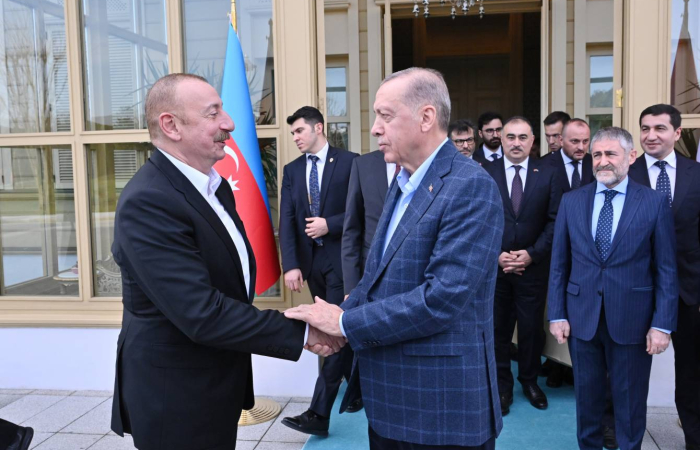
Intense diplomatic activity as Armenia-Azerbaijan negotiations set to resume

Intense diplomatic activity as Armenia-Azerbaijan negotiations set to resume

There is intense diplomatic activity in the South Caucasus ahead of a likely resumption in direct negotiations between Armenia and Azerbaijan in an effort to normalise relations between them after decades of war. commonspace.eu political editor said in a comment that synchronising the various elements that are part of the Armenia-Azerbaijan settlement process is always difficult, and the international context also continues to complicate matters. But there is a new sense of expectation in the air that the next days and weeks can bring about the long expected breakthrough.
Editor's choice
Editorial
The European Union Mission in Armenia is a bold step that is necessary despite the risks

The European Union Mission in Armenia is a bold step that is necessary despite the risks

This week the European Union deployed its unarmed monitoring mission in Armenia with a mandate for two years.  EUMA -  EU Mission in Armenia - was formally established by a Council Decision on 23 January 2023. According to the EU, “through its deployment on the Armenian side of the Armenia-Azerbaijan border, it aims to contribute to stability in the border areas of Armenia, build confidence and human security in conflict affected areas, and ensure an environment conducive to the normalisation efforts between Armenia and Azerbaijan supported by the EU.” The decision to deploy a longer term mission is a bold step on the part of the EU. It is necessary and underpins the EU commitment to long term peace in the region. But it would be wrong not to mention that the mission is fraught with risks, which need to be managed.
Editor's choice
News
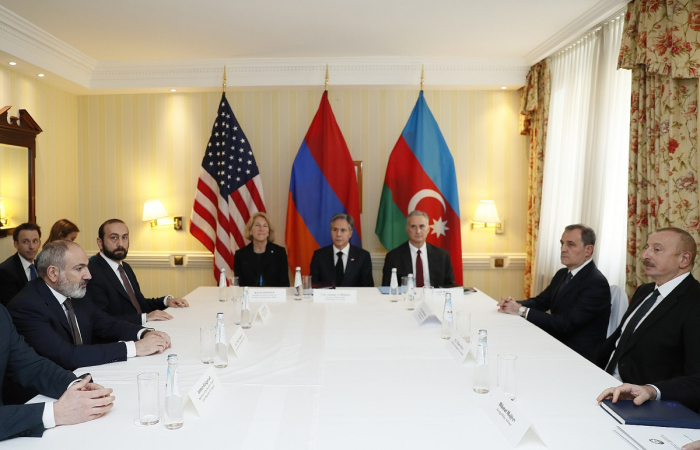
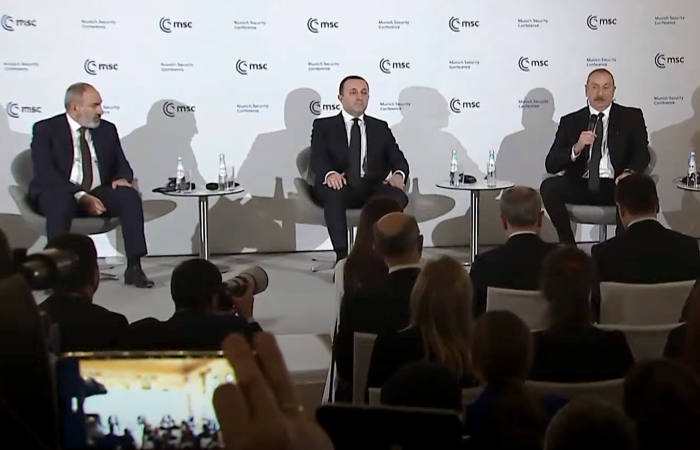
South Caucasus leaders share Munich platform to outline vision for the region

South Caucasus leaders share Munich platform to outline vision for the region

The leaders of the three South Caucasus countries made a rare joint appearance at the Munich Security Conference this weekend, to outline their vision for the future of the region. There was a certain awkwardness in the air as Ilham Aliyev of Azerbaijan, Nikol Pashinyan of Armenia and Irakli Garibashvili of Georgia answered questions put by the moderator, Christoph Heusgen, during a panel entitled "Moving mountains, building security in the South Caucasus". The moderator further complicated things when he described the event as a historic first meeting of the leaders of the three South Caucasus countries. An appearance at the same event can hardly be called a meeting. Despite this however, the appearance of the the leaders together is a rare event, and augurs well for future regional co-operation which up to now has been largely non-existent. On the margins of the Munich conference, president Aliyev and prime minister Pashinyan also had a face to face meeting in a gathering hosted by the US Secretary of State Antony Blinken. After a hiatus of several months it now seems that the peace process between the two countries is starting to gather pace again.
Editor's choice
Commentary
It took an earthquake to jolt Armenia-Turkey relations out of decades of animosity

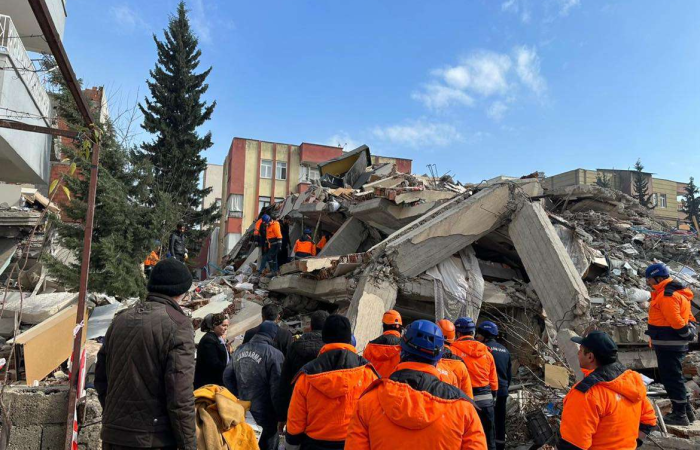
It took an earthquake to jolt Armenia-Turkey relations out of decades of animosity

The earthquake that hit Turkey and parts of Syria on 6 February was a massive tragedy. As of Thursday (16 February) it has left nearly fifty thousand people dead, many tens of thousands injured and millions affected directly or indirectly. The world rallied around the beleaguered communities, putting aside political differences and diplomatic obstacles. The impact of the earthquake on Turkey was enormous. Ten out of eighty one Turkish provinces were affected, and some Turkish towns were wiped away almost completely. Humanitarian aid started pouring into Turkey from every part of the world. The contribution of one small neighbouring country was particularly significant, not only as part of the humanitarian effort, but also for its political and diplomatic symbolism. Armenia and Turkey have had a difficult relationship for decades. The two neighbouring countries do not have diplomatic relations. Their borders are closed. Recent attempts to normalise relations appeared to be moving at very slow speed – both sides having to manoeuvre around many sensitive issues, and a heavy baggage of history. It took an earthquake to jolt relations out of decades of animosity.
Editor's choice
News
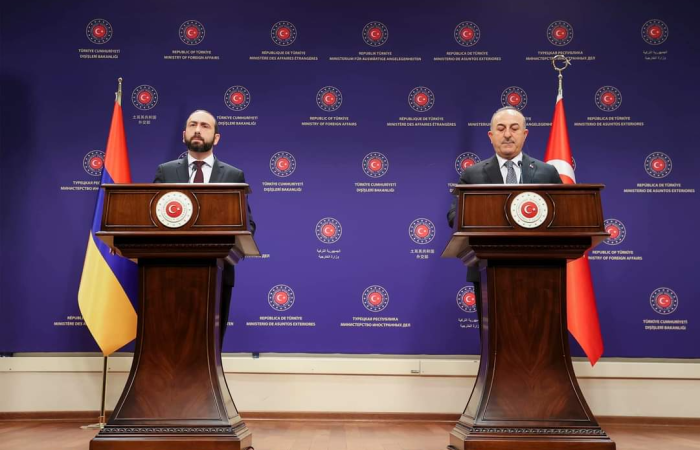
Turkish and Armenian foreign ministers meet in Ankara, agree to expedite work to open border

Turkish and Armenian foreign ministers meet in Ankara, agree to expedite work to open border

The Turkish and Armenian foreign ministers Mevlut Cavusoglu and Ararat Mirzoyan have met in the Turkish capital of Ankara on Wednesday (15 February). The meeting followed an announcement from Armenian officials that a second Armenian aid convoy crossed the land border into Turkey late on Tuesday after the devastating 6 February earthquake which has killed over 40,000 people across Turkey and Syria. The meeting is being seen as a major development in the normalisation of ties between the two countries who do not enjoy any formal diplomatic relations and who remain divided over a number of issues. Mirzoyan expressed his "condolences to the families of the many thousands of victims of the devastating earthquake, the people and government of Turkey, and I wish swift recovery to all those injured." Recalling the 1988 Spitak earthquake in Armenia that killed over 20,000 people, Mirzoyan said, "I believe that the international community must not remain indifferent towards any humanitarian crisis happening anywhere around the globe. And it was by this very principle that immediately after the devastating earthquake the government of Armenia made a decision to send rescuers and humanitarian aid to Turkey."