Region

Global

Stories in this section cover various issues and stories from all around the world.

Editor's choice
News
NATO Chief says war is on Europe's doorstep, and warns against complacency

NATO Chief says war is on Europe's doorstep, and warns against complacency

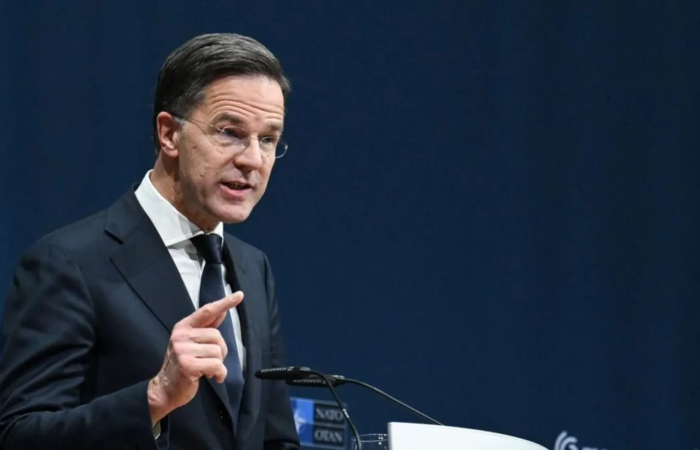
Russia could attack a NATO country within the next five years, the Secretary General of NATO, Mark Rutte, said in a stark new warning. "NATO's own defences can hold for now," Rutte warned in Berlin, but conflict was "next door" to Europe, and he feared "too many are quietly complacent, and too many don't feel the urgency, too many believe that time is on our side. "Russia is already escalating its covert campaign against our societies," Rutte said in a speech in Germany. "We must be prepared for the scale of war our grandparents or great-grandparents endured." Earlier this month, Russia's President Vladimir Putin said his country was not planning to go to war with Europe, but it was ready "right now" if Europe wanted to - or started a war. But similar reassurances were given by Moscow in 2022, just before 200,000 Russian troops crossed the border and invaded Ukraine. Putin has accused European countries of hindering US efforts to bring peace in Ukraine - a reference to the role Ukraine's European allies have recently played in trying to change a US peace plan to end the war, whose initial draft was seen as favouring Russia. But Putin was not sincere, Nato's secretary-general said in the German capital, Berlin. Supporting Ukraine, he added, was a guarantee for European security. "Just imagine if Putin got his way; Ukraine under the boot of Russian occupation, his forces pressing against a longer border with Nato, and the significantly increased risk of an armed attack against us." Russia's economy has been on a war footing for more than three years now - its factories churn out ever more supplies of drones, missiles and artillery shells. According to a recent report by the Kiel Institute for the World Economy, Russia has been producing each month around 150 tanks, 550 infantry fighting vehicles, 120 Lancet drones and more than 50 artillery pieces. The UK, and most of its Western allies, are simply not anywhere near this point. Analysts say it would take years for Western Europe's factories to come close to matching Russia's mass-production of weapons. "Allied defence spending and production must rise rapidly, our armed forces must have what they need to keep us safe," the Nato chief said.
Editor's choice
News
Thai-Cambodia border clashes enter fourth day

Thai-Cambodia border clashes enter fourth day

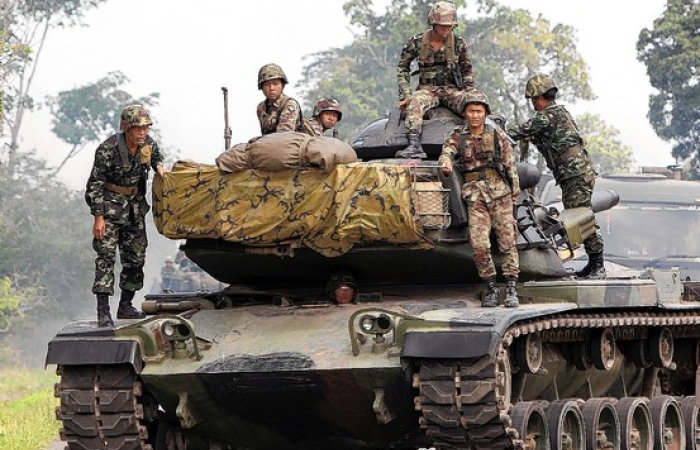
Renewed fighting between Thailand and Cambodia has entered its fourth day, with both sides accusing one another of violating international law, as they await a promised phone call from United States President Donald Trump. Cambodia’s Ministry of Defence accused Thailand’s military of carrying out numerous attacks within the country in the early hours of Thursday morning, including deploying tanks and artillery to strike targets in the country’s Pursat, Banteay Meanchey, and Oddar Meanchey provinces. In one such attack, Cambodia accused Thai soldiers of violating international humanitarian law by firing on civilians in Prey Chan village in Banteay Meanchey province. In another, it accused Thai forces of shelling “into Khnar Temple area”, and said Thai forces had also “fired artillery and support fire into the O’Smach area”. “Cambodia urges that Thailand immediately stop all hostile activities and withdraw its forces from Cambodia’s territorial integrity, and avoid acts of aggression that threaten peace and stability in the region,” the Defence Ministry said. Clashes took place on Wednesday at more than a dozen locations along the contested colonial-era demarcated 817-kilometre (508-mile) Thai-Cambodian border, with some of the most intense fighting being reported since a five-day battle in July, which saw dozens killed on both sides. Cambodia’s Ministry of the Interior said homes, schools, roads, Buddhist pagodas and ancient temples had been damaged by “Thailand’s intensified shelling and F-16 air strikes targeting villages and civilian population centres up to 30km [18.6 miles] inside Cambodian territory”. (click the image to read the full story).

Filter archive

Publication date
Editor's choice
News
Biden's visit to Saudi Arabia opens a new era in relations

Biden's visit to Saudi Arabia opens a new era in relations

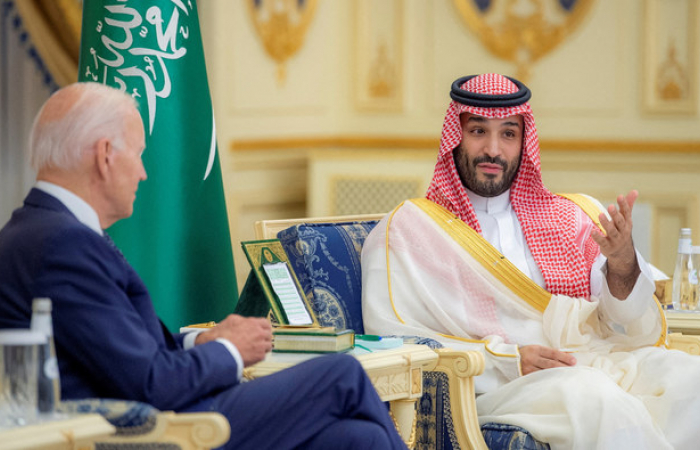
It is not a coincidence that on his first trip to the Middle East since becoming US president, Joe Biden is visiting Saudi Arabia. Together with relations with Israel, relations with the Kingdom have been the cornerstone of US policy in the region. Over the last two years these relations were tested with trust between the two sides falling to its lowest level for decades. The visit appears to have succeeded in bringing relations back to a qualitatively high level. On Friday (15 July) Biden met King Salman and Crown Prince Mohammed bin Salman. On Saturday he is due to meet with other Arab leaders at a summit that will bring together the leaders of the sic GCC countries, together with Egypt, Jordan and Iraq. A joint communique published by the Saudi Press Agency early on Saturday emphasised that the “US-Saudi partnership has been a cornerstone of regional security over decades, and affirmed that the two countries share a vision of a more secure, stable, and prosperous region, interconnected with the world,”  The document highlighted various areas of cooperation from energy security to space exploration. In the area of defense, Biden reaffirmed the US’ commitment to Saudi Arabia’s security and territorial defense, and “facilitating the Kingdom’s ability to obtain necessary capabilities to defend its people and territory against external threats” The statement said that US troops will depart from Tiran Island paving the way for it to be developed. Additionally, overflights of the Kingdom’s airspace was expanded on Friday, which the US welcomed.
Editor's choice
Opinion
Biden's visit to Saudi Arabia will open a new era in relations with the Middle East

Biden's visit to Saudi Arabia will open a new era in relations with the Middle East

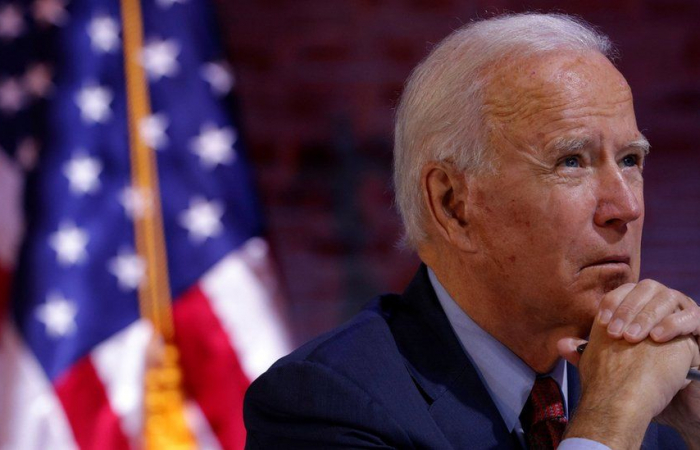
The president of the United States, Joe Biden, will this week visit the Middle East for what promises to be the launch of a new era in US relations with the region. Commonspace.eu will be following the visit and reporting on its importance. Late on Saturday, President Biden published an article on the Washington Post, outlining the reasons for his visit, and why it is so important. We reproduce it here in full. In the article, Biden argues that a more secure and integrated Middle East benefits Americans in many ways. "Its waterways are essential to global trade and the supply chains we rely on. Its energy resources are vital for mitigating the impact on global supplies of Russia’s war in Ukraine." The president states "We have to counter Russia’s aggression, put ourselves in the best possible position to outcompete China, and work for greater stability in a consequential region of the world. To do these things, we have to engage directly with countries that can impact those outcomes. Saudi Arabia is one of them, and when I meet with Saudi leaders on Friday, my aim will be to strengthen a strategic partnership going forward that’s based on mutual interests and responsibilities, while also holding true to fundamental American values."
Editor's choice
News
NATO countries sign the accession documents for Finalnd and Sweden to join the alliance

NATO countries sign the accession documents for Finalnd and Sweden to join the alliance

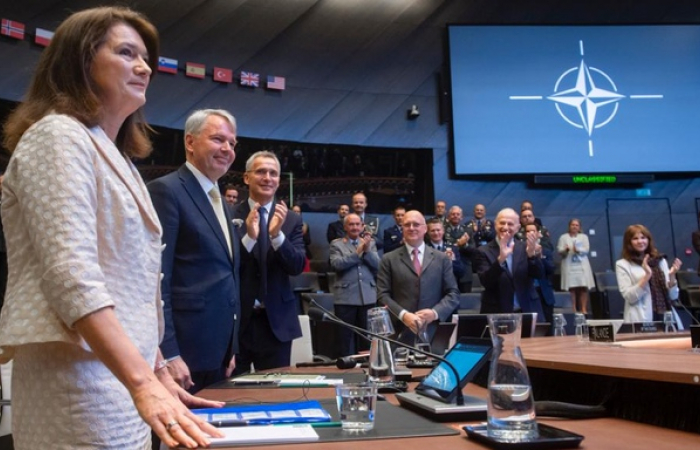
NATO Ambassadors signed the Accession Protocols for Finland and Sweden at NATO Headquarters on Tuesday (5 July 2022), in the presence of Finnish Foreign Minister Pekka Haavisto and Swedish Foreign Minister Ann Linde. The protocols now need to be approved by the countries of all thirty member states, and this procedure will take a while. But for many practical purposes Sweden and Finland are now members of the alliance, breaking with decades of neutrality as Europe continues to face Russian aggression against Ukraine. NATO Secretary General, Jens Stoltenberg said that NATO’s door remains open to European democracies who are ready and willing to contribute to our shared security: “With 32 nations around the table, we will be even stronger and our people will be even safer, as we face the biggest security crisis in decades.”
Editor's choice
News
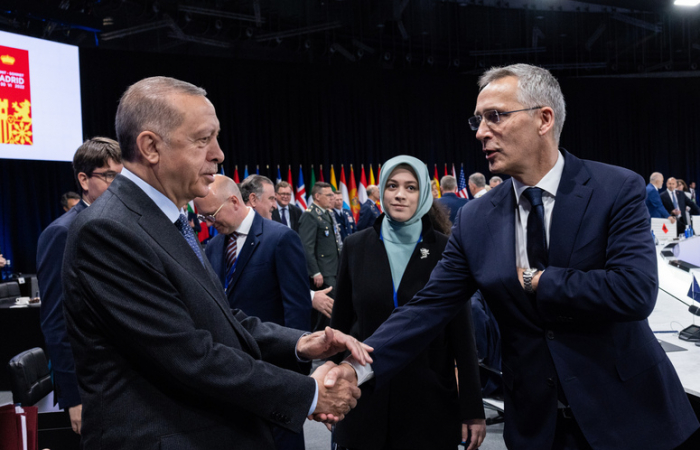
NATO summit marks a new beginning for the organisation

NATO summit marks a new beginning for the organisation

The NATO Summit in Madrid drew to a close on Thursday (30 June 2022) with decisions to transform and strengthen the Alliance. Secretary General Jens Stoltenberg said: “The decisions we have taken in Madrid will ensure that our Alliance continues to preserve peace, prevent conflict, and protect our people and our values. Europe and North America, standing together in NATO.” NATO leaders agreed on a fundamental shift in NATO’s deterrence and defence, with strengthened forward defences, enhanced battlegroups in the eastern part of the Alliance, and an increase in the number of high readiness forces to well over 300,000. Leaders also agreed to invest more in NATO and to increase common funding. During the Summit, NATO’s closest partners Finland and Sweden were invited to join the Alliance, a significant boost to Euro-Atlantic security. Allies further agreed on long-term support for Ukraine through a strengthened Comprehensive Assistance Package.
Editor's choice
News
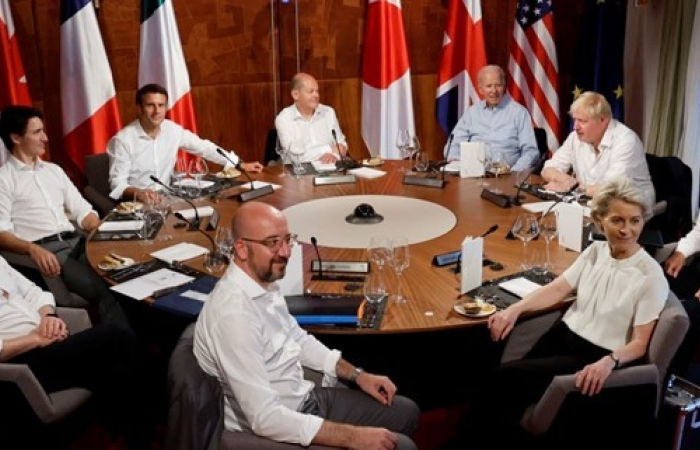
A busy week for western leaders as they prepare the next steps in response to Russian aggression in Ukraine

A busy week for western leaders as they prepare the next steps in response to Russian aggression in Ukraine

It is a busy week for Western leaders, as they prepare the next steps in response to Russian aggression in Ukraine. The leaders of the G7 - Canada, France, Germany, Italy, Japan, the United States and the Untied Kingdom, together with the European Union - started a summit meeting in Germany on Sunday. Later this week they will travel to Madrid for a summit meeting of NATO countries. The G7 meeting is taking place at a Castle in Germany’s Bavarian Alps were leaders went out of their way on Sunday (26 June), to show that they are united against Russian President Vladimir Putin’s invasion of Ukraine while discussing ways to minimize the war’s effect on rising global food and energy costs. U.S. President Joe Biden and German Chancellor Olaf Scholz met ahead of formal talks that also included the leaders of Britain, France, Canada, Italy, Japan and the European Union. Scholz said, "Germany and the U.S. will always act together when it comes to questions of Ukraine's security, and we made that clear once more." In a pre-summit show of force, Russia launched new missile attacks Sunday on Ukraine’s two biggest cities, the capital of Kyiv and Kharkiv, even as the G-7 leaders held talks to determine new ways to isolate Moscow. Biden announced the G-7 nations would ban new imports of Russian gold, the latest in an array of sanctions Western nations have imposed on Russia in an attempt punish it for Putin’s invasion of Ukraine, now in its fifth month.
Editor's choice
Commentary
US-Saudi Relations remain the bedrock for Gulf Security

US-Saudi Relations remain the bedrock for Gulf Security

US President Joe Biden will visit Saudi Arabia on July 15 and 16 upon the invitation of King Salman. The US president will meet with the king and his Crown Prince Mohammed bin Salman “to discuss areas of bilateral cooperation as well as joint efforts to address regional and global challenges.” A statement from the White House said that Biden will also attend a Summit of the Gulf Cooperation Council plus Egypt, Iraq and Jordan while in the Kingdom. “The President appreciates King Salman’s leadership and his invitation. He looks forward to this important visit to Saudi Arabia, which has been a strategic partner of the United States for nearly eight decades,” the statement read. In this commentary the state of relations between the United States and Saudi Arabia is discussed in the light of tensions between the two sides over the last years.  “Now, it appears that the two sides are ready to make up. Biden will travel to Riyadh next month, and US officials have been in and out of the Saudi capital in recent weeks, softening the ground and preparing for the visit. Biden is right in working towards a reset. US-Saudi relations remain the bedrock for Gulf security.” It adds that “when Joe Biden visits Riyadh next month he has his work cut out for him. It will be a hugely important visit to a country where personalities still count. Both sides appear ready to put the difficult last few years in their relationship behind them. This is good for both, as well as for the rest of the world.”
Editor's choice
Opinion
Opinion: Safe passage for Ukrainian grain exports through the Black Sea is a humanitarian necessity

Opinion: Safe passage for Ukrainian grain exports through the Black Sea is a humanitarian necessity

Disruption of Ukrainian grain exports is causing a global humanitarian food crisis. Measures need to be taken to create a humanitarian task force to ensure safe passage for export of Ukrainian grain to the rest of the world through the Black Sea and the Turkish Straits, argues Maximiliaan van Lange in this op-ed for commonspace.eu. Russia's blackmailing of the world with global hunger and food shortages among the world's poorest people must also be severely condemned by the international community. The current circumstances, in many ways, resemble the Holodomor, the Stalin-created famine in Ukraine in 1932-1933, that killed millions. The fact that Moscow is using grain as a weapon again in the twenty-first century is despicable and abhorrent. Global cooperation is therefore necessary to resolve this crisis, beginning with an internationally agreed humanitarian escort mission in the Black Sea, otherwise the consequences will be unforeseen.