Region

Global

Stories in this section cover various issues and stories from all around the world.

Editor's choice
News
NATO Chief says war is on Europe's doorstep, and warns against complacency

NATO Chief says war is on Europe's doorstep, and warns against complacency

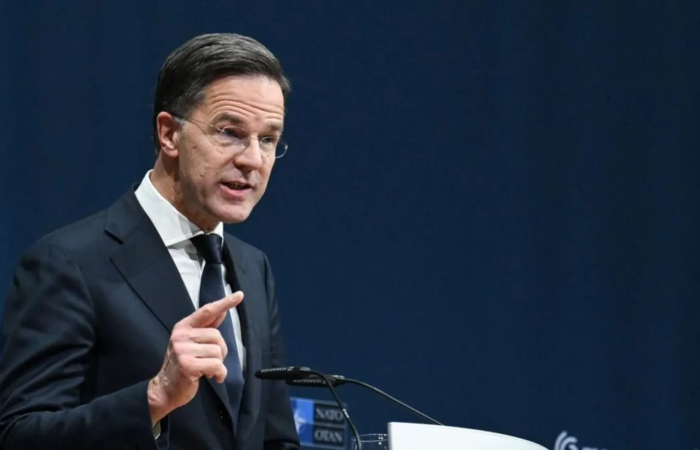
Russia could attack a NATO country within the next five years, the Secretary General of NATO, Mark Rutte, said in a stark new warning. "NATO's own defences can hold for now," Rutte warned in Berlin, but conflict was "next door" to Europe, and he feared "too many are quietly complacent, and too many don't feel the urgency, too many believe that time is on our side. "Russia is already escalating its covert campaign against our societies," Rutte said in a speech in Germany. "We must be prepared for the scale of war our grandparents or great-grandparents endured." Earlier this month, Russia's President Vladimir Putin said his country was not planning to go to war with Europe, but it was ready "right now" if Europe wanted to - or started a war. But similar reassurances were given by Moscow in 2022, just before 200,000 Russian troops crossed the border and invaded Ukraine. Putin has accused European countries of hindering US efforts to bring peace in Ukraine - a reference to the role Ukraine's European allies have recently played in trying to change a US peace plan to end the war, whose initial draft was seen as favouring Russia. But Putin was not sincere, Nato's secretary-general said in the German capital, Berlin. Supporting Ukraine, he added, was a guarantee for European security. "Just imagine if Putin got his way; Ukraine under the boot of Russian occupation, his forces pressing against a longer border with Nato, and the significantly increased risk of an armed attack against us." Russia's economy has been on a war footing for more than three years now - its factories churn out ever more supplies of drones, missiles and artillery shells. According to a recent report by the Kiel Institute for the World Economy, Russia has been producing each month around 150 tanks, 550 infantry fighting vehicles, 120 Lancet drones and more than 50 artillery pieces. The UK, and most of its Western allies, are simply not anywhere near this point. Analysts say it would take years for Western Europe's factories to come close to matching Russia's mass-production of weapons. "Allied defence spending and production must rise rapidly, our armed forces must have what they need to keep us safe," the Nato chief said.
Editor's choice
News
Thai-Cambodia border clashes enter fourth day

Thai-Cambodia border clashes enter fourth day

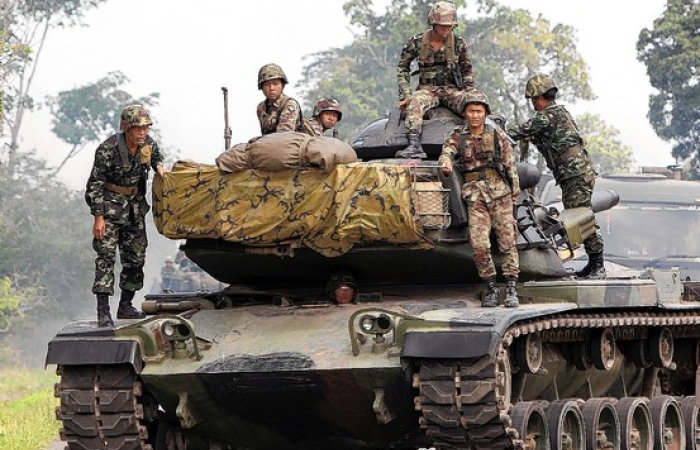
Renewed fighting between Thailand and Cambodia has entered its fourth day, with both sides accusing one another of violating international law, as they await a promised phone call from United States President Donald Trump. Cambodia’s Ministry of Defence accused Thailand’s military of carrying out numerous attacks within the country in the early hours of Thursday morning, including deploying tanks and artillery to strike targets in the country’s Pursat, Banteay Meanchey, and Oddar Meanchey provinces. In one such attack, Cambodia accused Thai soldiers of violating international humanitarian law by firing on civilians in Prey Chan village in Banteay Meanchey province. In another, it accused Thai forces of shelling “into Khnar Temple area”, and said Thai forces had also “fired artillery and support fire into the O’Smach area”. “Cambodia urges that Thailand immediately stop all hostile activities and withdraw its forces from Cambodia’s territorial integrity, and avoid acts of aggression that threaten peace and stability in the region,” the Defence Ministry said. Clashes took place on Wednesday at more than a dozen locations along the contested colonial-era demarcated 817-kilometre (508-mile) Thai-Cambodian border, with some of the most intense fighting being reported since a five-day battle in July, which saw dozens killed on both sides. Cambodia’s Ministry of the Interior said homes, schools, roads, Buddhist pagodas and ancient temples had been damaged by “Thailand’s intensified shelling and F-16 air strikes targeting villages and civilian population centres up to 30km [18.6 miles] inside Cambodian territory”. (click the image to read the full story).

Filter archive

Publication date
Editor's choice
News
Pope urges Putin to stop "spiral of violence and death"

Pope urges Putin to stop "spiral of violence and death"

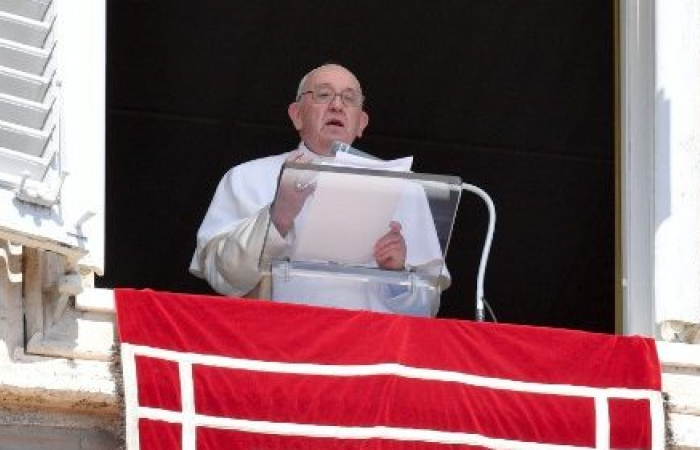
Pope Francis on Sunday (2 October) expressed concern over the nuclear threat and military escalation in the war in Ukraine, dedicating his entire Angelus address to the situation and issuing a powerful appeal for an immediate ceasefire. He deplored the annexation of Ukrainian territory by Russia, called for respect for the territorial integrity of every country and the rights of minorities. He expressed his saddness for the thousands of victims, especially children. "How much blood must still flow for us to realize that war is never a solution, only destruction? In the name of God and in the name of the sense of humanity that dwells in every heart, I renew my call for an immediate ceasefire. Let there be a halt to arms, and let us seek the conditions for negotiations that will lead to solutions that are not imposed by force, but consensual, just and stable. And they will be so if they are based on respect for the sacrosanct value of human life, as well as the sovereignty and territorial integrity of each country, and the rights of minorities and legitimate concerns", the Pope said. Pope Francis appealed to Russian President Vladimir Putin, imploring him to “stop this spiral of violence and death” in Ukraine and denounced the “absurd” risk to humanity of catastrophic nuclear war as tensions escalate.
Editor's choice
Monday Commentary
Opinion: Preparing for the worst, whilst working to avoid it

Opinion: Preparing for the worst, whilst working to avoid it

Putin’s annexation of parts of Ukraine takes the world to the verge of War, but a stronger and more united global condemnation of Russian aggression can still make Putin step back. Monday Commentary is back. Every Monday, commonspace.eu Managing Editor, Dennis Sammut discusses a hot topic on the European and international agenda. This week he weighs the implications of Russia’s annexation of parts of Ukraine, and the dilemma it poses to the rest of the world. He argues that it takes the world to the verge of a world war involving nuclear-armed states. But this can still be avoided if there is more global unity in condemnation of the Russian aggression.
Editor's choice
News
CICA set to become an international organisation at this month's Astana summit

CICA set to become an international organisation at this month's Astana summit

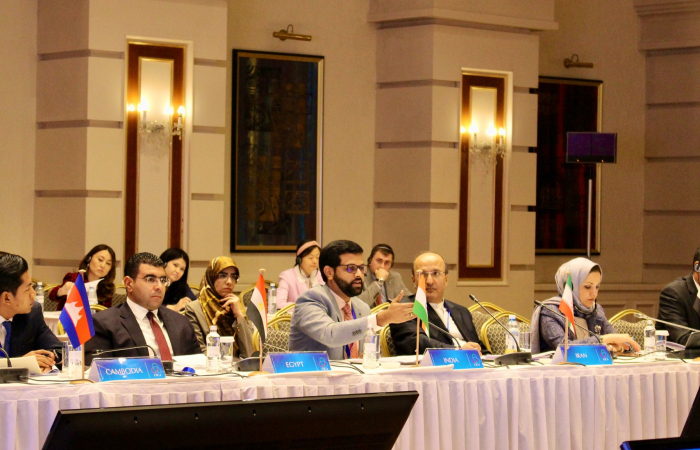
The Conference on Interaction and Confidence Building Measures in Asia (CICA) is set to become a fully fledged international organisation during a summit of leaders of its members to be held in Astana, Kazakhstan on 12-13 October. A Special Working Group (SWG) meeting held on 28-29 September, has made a major advance in preparing draft documents to be adopted at the upcoming sixth CICA Summit. The main document includes a draft Astana Statement on CICA Transformation, which is designed to transform CICA into a full-fledged international organization. Other draft documents include a draft of the CICA Leaders’ Statement on Cooperation in the Field of Security and in the Use of Information and Communications Technologies and draft the CICA Plan of Action on the Implementation of the United Nations (UN) Global Counter-Terrorism Strategy.
Editor's choice
Editorial
Editorial: A dark day in the history of Europe

Editorial: A dark day in the history of Europe

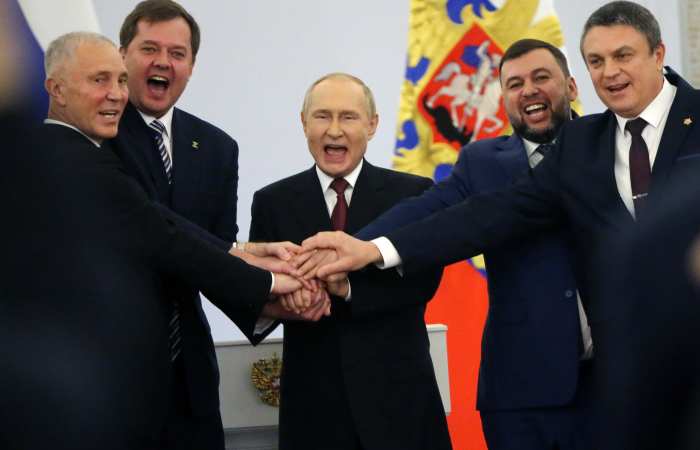
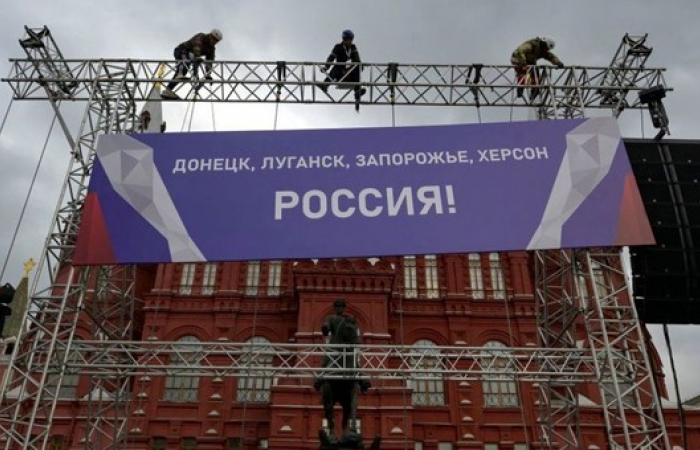
Friday, 30 September 2022 will for a long time be remembered as a sad and dark day for Europe. This afternoon, at 15:00 (12:00 GMT) in the St George Hall of the Grand Kremlin Palace president Vladimir Putin will hold a signing ceremony annexing four more regions of Ukraine into the Russian Federation. The events in Europe in the 1930 are repeating themselves with an eerie familiarity: a big country invades a smaller neighbouring country, organises a sham referendum in parts or all of that country, after which it claims the moral authority to annex that territory or country.  In an act of cynicism late on Thursday, the Russian president signed two decrees recognising Zaporizhzhia and Kherson as independent territories. Their so called independence will last for only a few hours, before they are absorbed into Russia. The documents, shared on Russian state media, say the independence of the two regions is being recognised in accordance with international law and "enshrined in the Charter of the United Nations". However, UN Secretary General António Guterres has said any annexation of a country's territory based on the use of force violates the UN Charter and international law. Europeans thought that those times were over, and that the lessons had been learnt. Apparently not. Russia's invasion of Ukraine last February set the stage for what will take place in the Kremlin today. After votes in Luhansk and Donetsk in the east of Ukraine, and in Zaporizhzhia and Kherson in the south, Russia will annexe them, in defiance of the wish of the Ukrainian people and their legitimate government, and of most of the international community. It has already acted in this way once, when in 2014, in similar circumstances it occupiued and annexed Crimea. Today's events are being hailed as a victiory by the Kremlin. A stage has already been set up in Moscow's Red Square, with billboards proclaiming the four regions as part of Russia and a concert planned for the evening in celebration. Some Russians may decide to follow the misguided steps of their leaders, but for the rest of Europe today is a sad and dark day.
Editor's choice
News
Guterres warns the world: "Winter is coming"

Guterres warns the world: "Winter is coming"

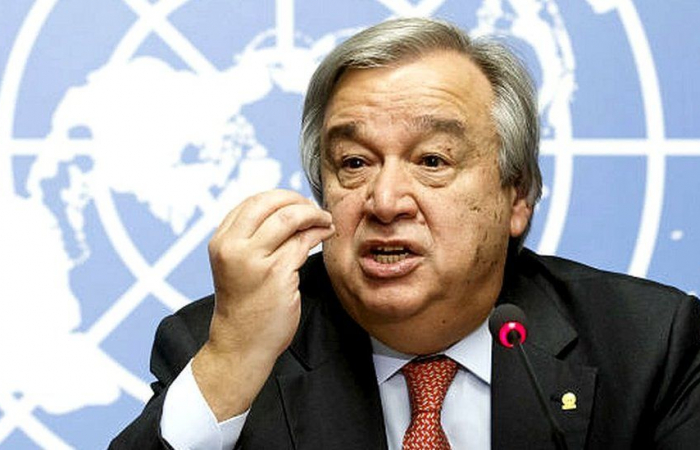
UN Secretary General, Antonio Gutteres has warned  global leaders that the world is in ‘great peril’ and facing a winter of discontent. Guterres said leaders meeting in person for the first time in three years must tackle conflicts and climate catastrophes, increasing poverty and inequality — and address divisions among major powers that have gotten worse since Russia invaded Ukraine. In speeches and remarks leading up to the start of the leaders’ meeting Tuesday, Secretary-General Antonio Guterres cited the “immense” task not only of saving the planet, “which is literally on fire,” but of dealing with the persisting COVID-19 pandemic. He also pointed to “a lack of access to finance for developing countries to recover — a crisis not seen in a generation” that has seen ground lost for education, health and women’s rights. Guterres delivered his “state of the world” speech at Tuesday’s opening of the annual high-level global gathering. UN spokesman Stephane Dujarric said it contained “a sober, substantive and solutions-focused report card” for a world “where geopolitical divides are putting all of us at risk.” In an alarming assessment, Guterres told world leaders that nations are “gridlocked in colossal global dysfunction” and aren’t ready or willing to tackle the major challenges that threaten the future of humanity and the fate of the planet.
Editor's choice
News
Erdogan says there is no problem between Turkey and the US that the two strategic partners cannot solve

Erdogan says there is no problem between Turkey and the US that the two strategic partners cannot solve

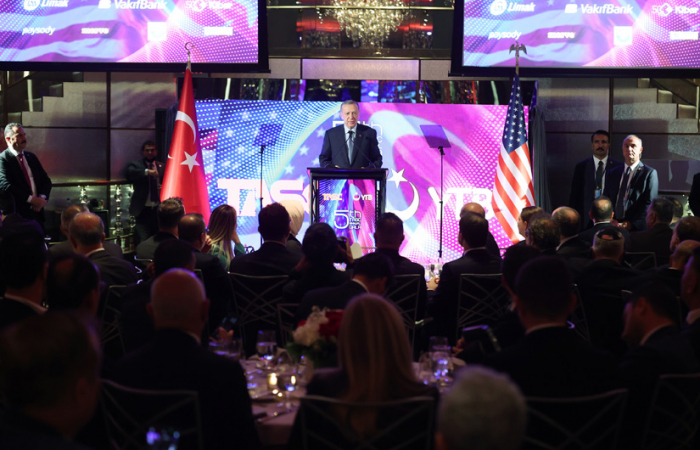
Turkish President Recep Tayyip Erdogan has said Turkey and the United States are be able to resolve bilateral problems and develop cooperation based on common interests. Erdogan is in New York to address this year's UN General Assembly. “There is no problem between Turkey and the U.S. that they, as two strategic partners and 70-year-long allies, cannot resolve. Although we have some differences of opinion over the issues concerning our national security, we share similar attitudes in many regional and global matters,” Erdogan said on Sunday (18 September) at a dinner event organized by the Turkish American National Steering Committee (TASC). Stating that Turkey is one of the countries most affected by terrorism and at the forefront of the fight against terrorism, Erdogan said they would continue to resolutely fight against all terrorist organizations, including PKK-YPG, ISIL and FETO, without making any distinction. “We will definitely remove the bloody and dark shadow of terrorism from our region,” he said.