


Iran-Israel tension rises as the two sides trade accusation

Prime Minister Naftali Bennett of Israel said on Sunday that Iran would have to face consequences for its proxy attacks on his country. Tensions between the two countries have escalated into a fatal match of geopolitical tennis after Israel’s alleged killing of a senior member of Iran’s Revolutionary Guard last Sunday.

In an address to his Ministers, Bennett accused Iran of repeatedly attacking Israeli interests. “For decades, the Iranian regime has practiced terrorism against Israel and the region by means of proxies, emissaries, but the head of the octopus, Iran itself, has enjoyed immunity”, he said.

The announcement came as the head of Iran’s Revolutionary Guard Corps (IRGC), Major General Hossein Salami, accused the “Zionists” of the killing of Colonel Sayyad Khodai, adding that “[they] will avenge his death”. Whilst the IRGC’s head did not use the common phrase “Zionist regime” to refer to Israel, the attack followed a pattern of similar attacks conducted by Israel targeting Iranian officials.

Last week’s killing of Khodai constituted the most significant assassination on Iranian soil since the death of Iran’s chief nuclear scientist Mohsen Fakhrizadeh. Whilst not commenting on the allegation of his government’s responsibility, Prime Minister Bennett alerted his country’s embassies and consulates globally out of fear of a retaliatory attack.

Israel’s National Security Council, in response to the recent escalations, additionally issued a travel warning for its citizens travelling to Turkey and other countries bordering Iran following “real threats to Israelis”. Similarly, the Israeli air-defence system “Iron Dome” has been placed on “high alert and their deployments adjusted to the threats” according to the Times of Israel.

Tensions between the US-Israeli coalition and Iran have been rising as the prospect of a return to the Iran Nuclear Deal of 2015 is looking increasingly unlikely. Robert Malley, US special envoy for Iran, told legislators last week that the possibility of returning to the previous deal remained “tenuous at best”.

The deal, formally known as the Joint Comprehensive Plan of Action (JCPOA), relieves Iran of harsh economic sanctions placed on its economy following the suspicion it was developing nuclear weapons in 2006. The Trump administration unilaterally withdrew from the deal in May of 2018 and re-entry negotiations stalled earlier this year.  

Following the departure of the Trump administration from the JCPOA, the E3 which consists of France, Germany, and the UK published a shared statement indicating their intention to abide by the deal’s obligations. However, Iran has since become wary of the US’ involvement in such a deal, viewing it as an unreliable partner. Beyond the sanctions imposed on Iran’s economy, its government, headed by President Ebrahim Raisi, has pushed the US to remove the IRGC from its terrorist blacklist. Last week President Biden frustrated any such hope when he reaffirmed his administration’s terrorist designation of the military group.
Sources: Al Jazeera, Reuters, Times of Israel, Hareetz, Al-Arabiya News
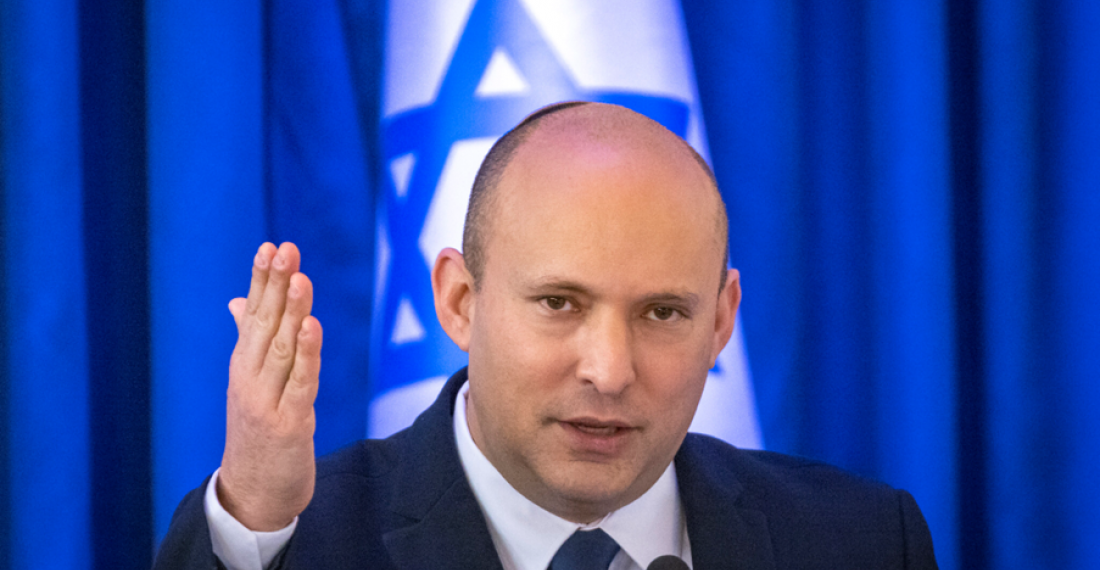
Photo: Israeli Prime Minister Naftali Bennett speaking at a cabinet meeting in September of 2021; Source: Flash90

Related articles

Editor's choice
News
Washington to invest in Armenia’s nuclear energy sector

Washington to invest in Armenia’s nuclear energy sector

US Vice President JD Vance announced a $9 billion U.S. investment in Armenia’s nuclear energy sector during a visit to Yerevan, saying the two countries had completed negotiations on a civil nuclear cooperation framework that will enable joint projects, including the use of US small modular reactor technology. Vance said the initiative aims to strengthen Armenia’s energy security while creating jobs in the United States. At a joint briefing with Prime Minister Nikol Pashinyan, Vance also confirmed that Washington had approved the sale of V-BAT drones to Armenia in a deal worth $11 million. The US vice president voiced support for Pashinyan ahead of Armenia’s parliamentary elections, scheduled for June 7, describing him as a partner capable of building long-term cooperation with Washington. Vance also commented on the implementation of the "Trump Route for International Peace and Prosperity" project, which, in his opinion, will radically change the entire South Caucasus, open "a new world for international trade, transit and energy flows, and provide unprecedented connectivity between Armenia and neighboring countries." US Vice President Vance visited Armenia on Monday (9 February)>, where he held talks with prime minister Nikol Pashinyan. On Tuesday he is expected to go to Baku to meet President Ilham Aliyev.

Popular

Editor's choice
Interview
Thursday Interview: Murad Muradov

Thursday Interview: Murad Muradov

Today, commonspace.eu starts a new regular weekly series. THURSDAY INTERVIEW, conducted by Lauri Nikulainen, will host  persons who are thinkers, opinion shapers, and implementors in their countries and spheres. We start the series with an interview with Murad Muradov, a leading person in Azerbaijan's think tank community. He is also the first co-chair of the Action Committee for a new Armenian-Azerbaijani Dialogue. Last September he made history by being the first Azerbaijani civil society activist to visit Armenia after the 44 day war, and the start of the peace process. Speaking about this visit Murad Muradov said: "My experience was largely positive. My negative expectations luckily didn’t play out. The discussions were respectful, the panel format bringing together experts from Armenia, Azerbaijan, and Turkey was particularly valuable during the NATO Rose-Roth Seminar in Yerevan, and media coverage, while varied in tone, remained largely constructive. Some media outlets though attempted to represent me as more of a government mouthpiece than an independent expert, which was totally misleading.  Overall, I see these initiatives as important steps in rebuilding trust and normalising professional engagement. The fact that soon a larger Azerbaijani civil society visits to Armenia followed, reinforces the sense that this process is moving in the right direction." (click the image to read the interview in full)

