Region

Global

Stories in this section cover various issues and stories from all around the world.

Editor's choice
News
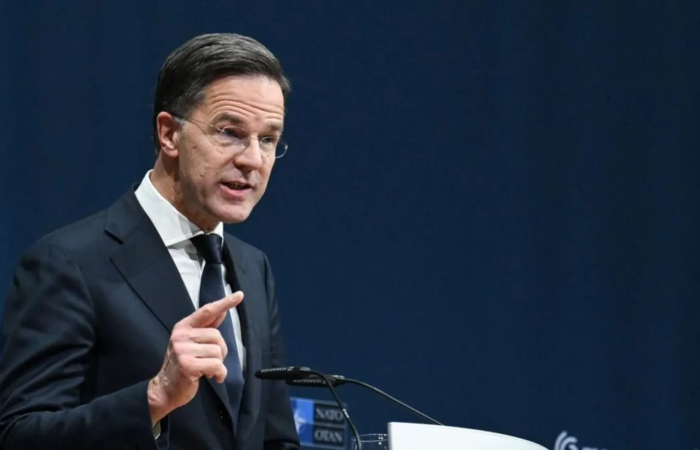
NATO Chief says war is on Europe's doorstep, and warns against complacency

NATO Chief says war is on Europe's doorstep, and warns against complacency

Russia could attack a NATO country within the next five years, the Secretary General of NATO, Mark Rutte, said in a stark new warning. "NATO's own defences can hold for now," Rutte warned in Berlin, but conflict was "next door" to Europe, and he feared "too many are quietly complacent, and too many don't feel the urgency, too many believe that time is on our side. "Russia is already escalating its covert campaign against our societies," Rutte said in a speech in Germany. "We must be prepared for the scale of war our grandparents or great-grandparents endured." Earlier this month, Russia's President Vladimir Putin said his country was not planning to go to war with Europe, but it was ready "right now" if Europe wanted to - or started a war. But similar reassurances were given by Moscow in 2022, just before 200,000 Russian troops crossed the border and invaded Ukraine. Putin has accused European countries of hindering US efforts to bring peace in Ukraine - a reference to the role Ukraine's European allies have recently played in trying to change a US peace plan to end the war, whose initial draft was seen as favouring Russia. But Putin was not sincere, Nato's secretary-general said in the German capital, Berlin. Supporting Ukraine, he added, was a guarantee for European security. "Just imagine if Putin got his way; Ukraine under the boot of Russian occupation, his forces pressing against a longer border with Nato, and the significantly increased risk of an armed attack against us." Russia's economy has been on a war footing for more than three years now - its factories churn out ever more supplies of drones, missiles and artillery shells. According to a recent report by the Kiel Institute for the World Economy, Russia has been producing each month around 150 tanks, 550 infantry fighting vehicles, 120 Lancet drones and more than 50 artillery pieces. The UK, and most of its Western allies, are simply not anywhere near this point. Analysts say it would take years for Western Europe's factories to come close to matching Russia's mass-production of weapons. "Allied defence spending and production must rise rapidly, our armed forces must have what they need to keep us safe," the Nato chief said.
Editor's choice
News
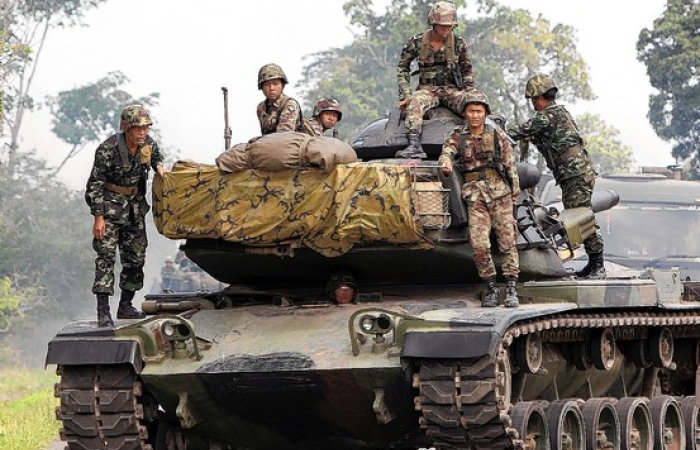
Thai-Cambodia border clashes enter fourth day

Thai-Cambodia border clashes enter fourth day

Renewed fighting between Thailand and Cambodia has entered its fourth day, with both sides accusing one another of violating international law, as they await a promised phone call from United States President Donald Trump. Cambodia’s Ministry of Defence accused Thailand’s military of carrying out numerous attacks within the country in the early hours of Thursday morning, including deploying tanks and artillery to strike targets in the country’s Pursat, Banteay Meanchey, and Oddar Meanchey provinces. In one such attack, Cambodia accused Thai soldiers of violating international humanitarian law by firing on civilians in Prey Chan village in Banteay Meanchey province. In another, it accused Thai forces of shelling “into Khnar Temple area”, and said Thai forces had also “fired artillery and support fire into the O’Smach area”. “Cambodia urges that Thailand immediately stop all hostile activities and withdraw its forces from Cambodia’s territorial integrity, and avoid acts of aggression that threaten peace and stability in the region,” the Defence Ministry said. Clashes took place on Wednesday at more than a dozen locations along the contested colonial-era demarcated 817-kilometre (508-mile) Thai-Cambodian border, with some of the most intense fighting being reported since a five-day battle in July, which saw dozens killed on both sides. Cambodia’s Ministry of the Interior said homes, schools, roads, Buddhist pagodas and ancient temples had been damaged by “Thailand’s intensified shelling and F-16 air strikes targeting villages and civilian population centres up to 30km [18.6 miles] inside Cambodian territory”. (click the image to read the full story).

Filter archive

Publication date
Editor's choice
News
Russian fighter jet and US drone collide over the Black Sea

Russian fighter jet and US drone collide over the Black Sea

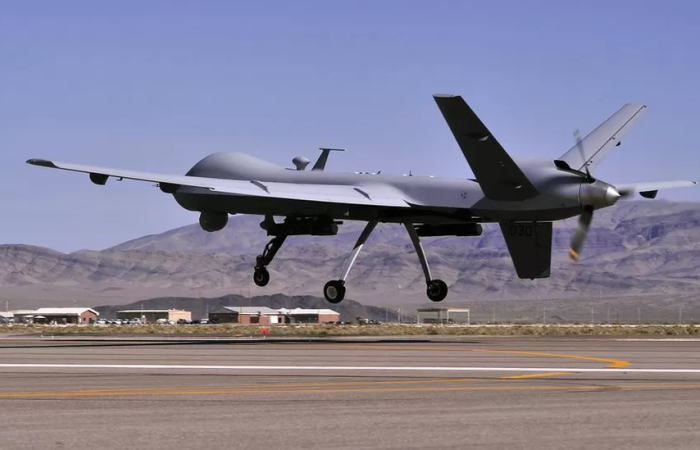
A Russian Su-27 fighter jet has collided with an American MQ-9 Reaper drone over the Black Sea. The collision rendered the drone "unflyable" according to the Pentagon, forcing the U.S. to crash the drone into the sea. Before the collision, Russian jets are said to have dumped fuel into the path of the drone which the US says was in international airspace. The confrontation between the drone and the fighter jet is said to have lasted between 30-40 minutes, with the collision happening at 07.03 CET. The collision occurred approximately 200km south of Ukraine's southern port city of Odesa. Russia has denied its two Su-27 fighter jets made any contact. In a statement, U.S. Air Force General James Hecker, commander of U.S. Air Forces Europe and Air Forces Africa, said "Our MQ-9 aircraft was conducting routine operations in international airspace when it was intercepted and hit by a Russian aircraft, resulting in a crash and complete loss of the MQ-9." "In fact, this unsafe and unprofessional act by the Russians nearly caused both aircraft to crash," Hecker said.
Editor's choice
Commentary
Saudi-Iran agreement: Welcome to the age of pragmatism

Saudi-Iran agreement: Welcome to the age of pragmatism

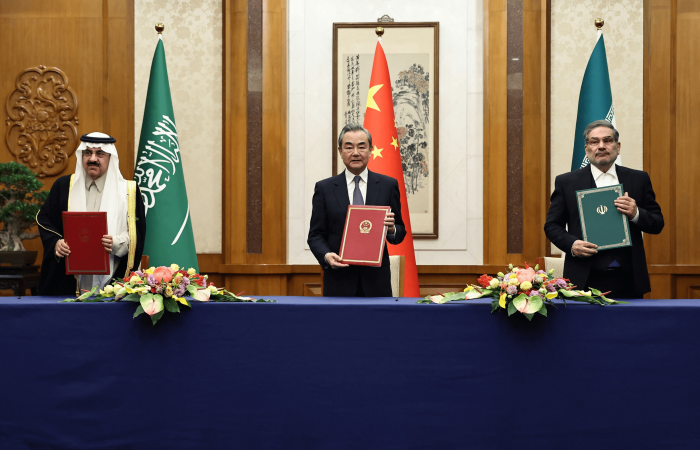
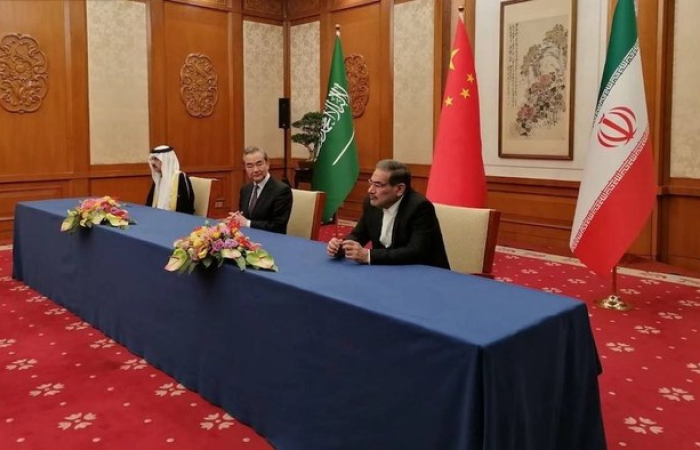
On Friday (10 March), it was announced in Beijing that with the mediation of China, Iran and Saudi Arabia had agreed to end decades of hostility, re-establish diplomatic relations that had been broken in 2016, re-open embassies in their respective capitals within two months, and work towards resolving all disputes between them through dialogue. The diplomatic world appeared taken by surprise, both by the Iranian-Saudi reconciliation, as well as by China’s involvement. The sight of a Sunni Kingdom, a Shia revolutionary republic, and a Communist state cosying together was somewhat unsettling for some. Many rushed to welcome the deal, others, especially among the chattering classes in Washington, rushed to criticise it. Diplomatic contacts have been ongoing between Tehran and Riyadh for some time, held mainly in Baghdad and Muscat with Iraqi and Omani facilitation. After the UAE normalised relations with Iran some months ago, it was assumed that sooner or later Saudi Arabia will follow. But the timing and context of the deal announced in Beijing last week remains a very significant development, with wide-ranging consequences. It also appears to herald a new age of pragmatism in international relations, with considerable implications.
Editor's choice
News
Saudi Arabia and Iran reach agreement to renew diplomatic relations

Saudi Arabia and Iran reach agreement to renew diplomatic relations

Following a meeting in Beijing, on Friday (10 March), Saudi Arabia and Iran have agreed to reestablish diplomatic relations and reopen their embassies within two months following years of tensions between the two countries. A joint statement released by the Saudi state news agency SPA read: “In response to the noble initiative of His Excellency President Xi Jinping, President of the People’s Republic of China, of China’s support for developing good neighborly relations between the Kingdom of Saudi Arabia and the Islamic Republic of Iran...the three countries announce that an agreement has been reached between the Kingdom of Saudi Arabia and the Islamic Republic of Iran." "That includes an agreement to resume diplomatic relations between them and re-open their embassies and missions within a period not exceeding two months, and the agreement includes their affirmation of the respect for the sovereignty of states and the non-interference in internal affairs of states,” the statement said.
Editor's choice
News
International Women's Day: defiant and steadfast for full equality in the digital world

International Women's Day: defiant and steadfast for full equality in the digital world

8 March marks International Women's Day, a global day celebrating the social, economic, cultural, and political achievements of women. Marking the day, the Sima Bahous, UN Under-Secretary-General and Executive Director of UN Women, has released the following statement: "Women and girls have just as much right to access the digital world and prosper in it as men and boys. Their creativity, knowledge and perspectives can shape a future where technology contributes to transforming social norms, amplifying women’s voices, pushing forward against online harassment, preventing the perpetuation of algorithmic biases, and distributing the benefits of digitalization as the great equalizer to achieve the Sustainable Development Goals. All over the world, women’s and girls’ movements are defiant and steadfast in the face of regressive gender norms and pushback against their rights. Activists are raising their powerful voices for inclusion, and an end to violence and to discrimination in education, the workplace and in legislation. On International Women’s Day we honour and celebrate them, adding our committed support to their energy and drive..."
Editor's choice
News
Blinken and Lavrov meet in India for first time since full-scale Ukraine invasion

Blinken and Lavrov meet in India for first time since full-scale Ukraine invasion

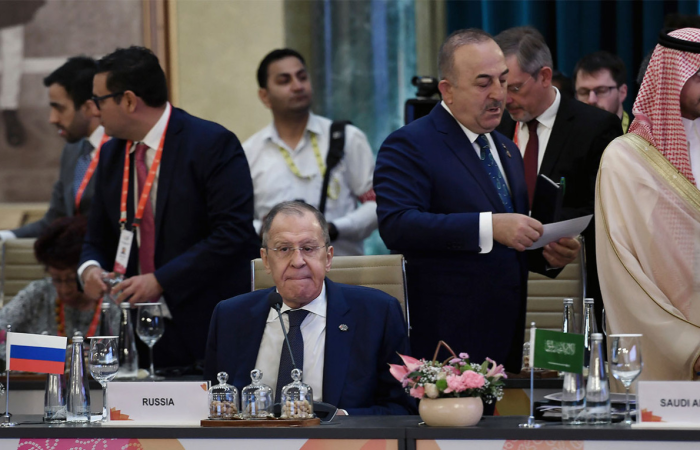
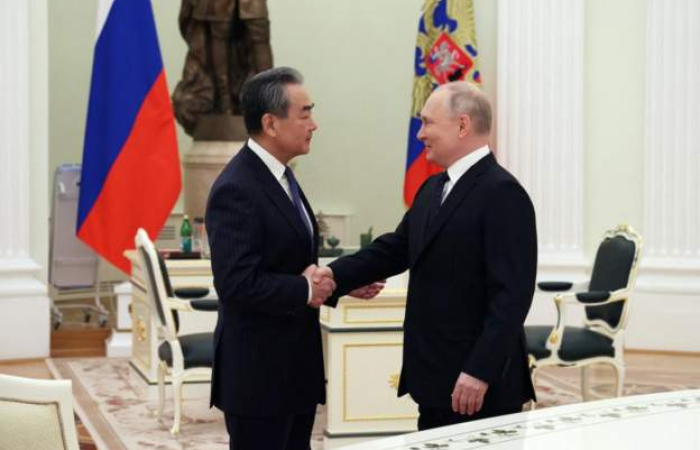
Yesterday, on Thursday (2 March) the US Secretary of State Antony Blinken met Russian Foreign Minister Sergei Lavrov for the first time since the beginning of Russia’s full-scale invasion of Ukraine, over one year ago. Taking place in the Indian capital New Delhi, sources report that the two spoke "on the move" for only ten minutes, and apparently not much resulted from it. Blinken reiterated US support for Ukraine, and pressed the Kremlin to reverse their decision to pull out of the 2010 START treaty on nuclear proliferation. In remarks released after his address at the closed-door meeting of foreign ministers, Antony Blinken said, "we must continue to call on Russia to end its war of aggression and withdraw from Ukraine for the sake of international peace and economic stability". According to reports from the American side, Blinken also brought up the case of the former American soldier Paul Whelan, who in 2020 was sentenced to 16 years hard labour after being convicted of spying by Russian authorities.
Editor's choice
News
Blinken heads to Central Asia on charm offensive amid increasing international interest in the region

Blinken heads to Central Asia on charm offensive amid increasing international interest in the region

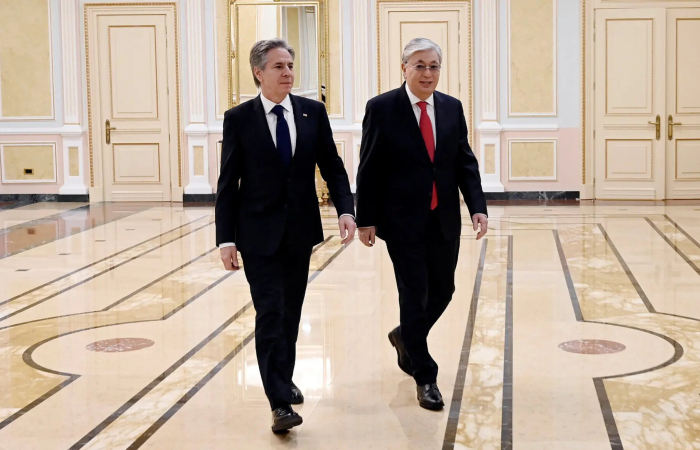
The US Secretary of State Antony Blinken has headed to Kazakhstan and Uzbekistan on his first official visit to the region as President Biden’s top diplomat. Announcing his departure from US soil overnight on 26-27 February, Secretary of State Blinken said that he was looking forward to “advancing our Central Asian partnerships”. After visiting the Kazakh and Uzbek capitals, he would then head to India for the coming G20 summit. The timing of the visit is notable, coming only days after the first anniversary of Russia’s disastrous full-scale invasion of Ukraine, which as one of its consequences has seen Central Asia reassert itself regionally and rapidly explore ties with other neighbouring power blocs including the EU, the Middle East, and China. On 28 February, Blinken had a joint meeting in Astana with the foreign ministers of all five Central Asian nations: Mukhtar Tileuberdi of Kazakhstan; Jeenbek Kulubaev of Kyrgyzstan; Rasit Meredov of Turkmenistan; Sirojiddin Muhriddin of Tajikistan; and Bakhtiyor Saidov of Uzbekistan. He also met with each FM in person in Astana, with the exception of the latter, whom he met later in Tashkent.
Editor's choice
News
US President Joe Biden visits Kyiv

US President Joe Biden visits Kyiv

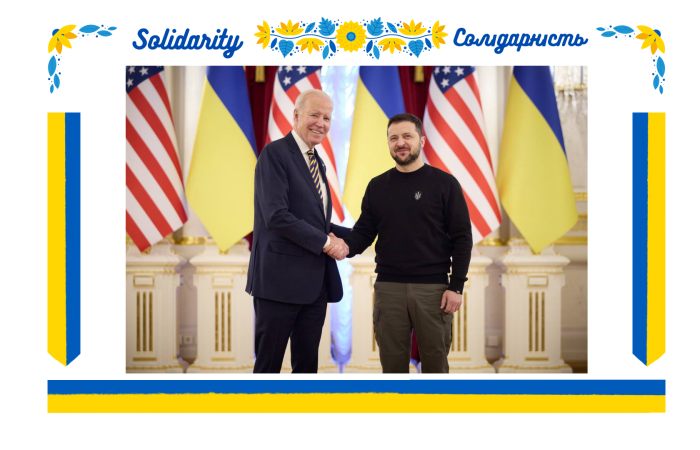
The President of the United States Joe Biden has made a surprise visit to Kyiv ahead of the first anniversary of Russia's full-scale invasion of Ukraine on 24 February last year. On Monday morning (20 February), there were reports of blocked roads and major traffic jams in the Ukrainian capital as speculation built over the potential arrival of an "important guest", according to Ukrainian officials.  The Ministry of Foreign Affairs and St Michael’s Cathedral has been blocked off with a police and military presence. Just before midday, pictures emerged on social media showing the Ukrainian President Volodymyr Zelensky walking alongside the US President Joe Biden in central Kyiv. As Joe Biden was seen walking beside Volodymyr Zelensky outside St Michael's Cathedral, heading towards a memorial wall honouring Ukrainian soldiers fallen in Russia's war against Ukraine since 2014, air raid sirens rang out over the Ukrainian capital. It was already known that Biden would be visiting Poland to mark one year of Russia's full-scale invasion, but his visit to Kyiv has come as a complete surprise.