Region

Central Asia

Stories under this heading cover Central Asia – a region of Asia, stretching from the Caspian Sea in the west to Mongolia in the east, from Afghanistan in the south to Russia in the north.

Editor's choice
Opinion
Opinion: The European Union must recognise that the C5 have now become the C6

Opinion: The European Union must recognise that the C5 have now become the C6

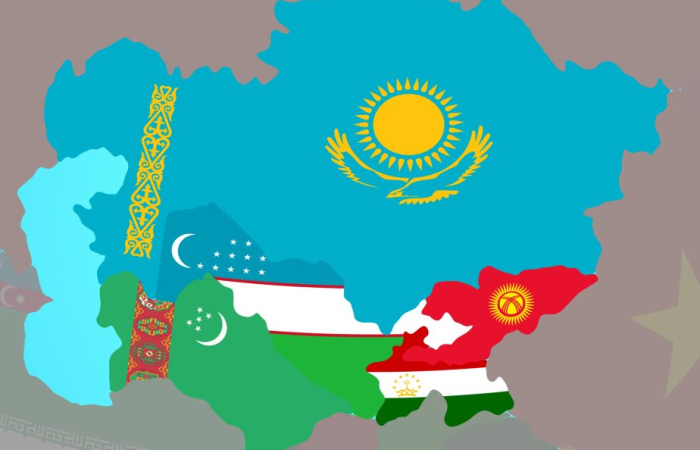
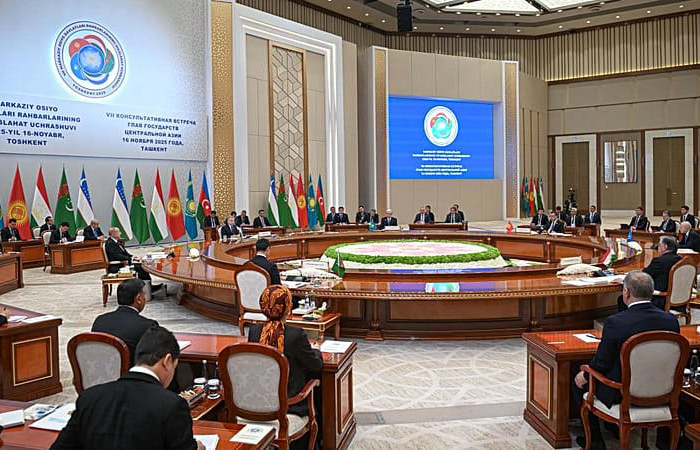
In recent years, Eurasia has undergone a structural transformation in how regions connect, trade, and cooperate. The combination of geopolitical shocks, disrupted supply chains, and the search for secure east–west routes has elevated the importance of the Trans-Caspian space. The states of Central Asia, once constrained by geography, have taken unprecedented steps to strengthen regional coordination, modernize infrastructure, and integrate more closely with Europe. Meanwhile, Azerbaijan has rapidly emerged as an indispensable connector linking Central Asia with the South Caucasus, Türkiye, and European markets. This new reality was formally acknowledged in November 2025 when Azerbaijan was unanimously welcomed as a full participant in the Consultative Meeting of Central Asian Heads of State in Tashkent. What had long been a C5 grouping transformed into a C6, marking a historic moment: the Caspian was no longer a frontier separating two regions but the center of a unified geopolitical and geo-economic space. President Ilham Aliyev described this alignment as the emergence of “a single geopolitical and geo-economic region,” while President Shavkat Mirziyoyev called Azerbaijan’s inclusion “historic” and proposed transforming the consultative platform into a structured regional institution capable of shaping security, economic, environmental, and digital policy. The Caspian is no longer a boundary; it is the heart of an integrated region. The transformation of the EU and U.S. C5+1 formats into C6+1 is the logical next step to ensure that both sides of the Caspian advance together – coherently, strategically, and with shared purpose. (click the image to read the full op-ed).
Editor's choice
News
Central Asian leaders meet in Tashkent this weekend for their 7th Consultative  Meeting. Azerbaijan participates for the third year as guest

Central Asian leaders meet in Tashkent this weekend for their 7th Consultative Meeting. Azerbaijan participates for the third year as guest

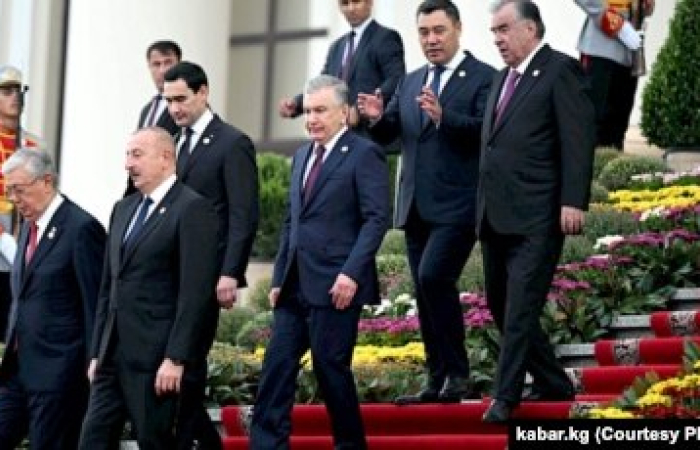
Central Asian leaders will gather in Tashkent this weekend for the Seventh Consultative Meeting of Heads of State, with plans to adopt a package of multilateral agreements to deepen regional cooperation. The summit brings together the leaders of Uzbekistan, Kazakhstan, Kyrgyzstan, Tajikistan and Turkmenistan, with Azerbaijan participating as a guest of honour for the third consecutive year. The leaders will discuss ways to advance joint projects in priority sectors and exchange views on key regional and international issues, as outlined in the agenda. The consultative meeting format originated from Mirziyoyev's initiative announced at the UN General Assembly in 2017, proposing regular high-level consultations among Central Asian states. The inaugural meeting took place in Astana in 2018. Azerbaijan's President Ilham Aliyev told the Uzbekistan press agency the meeting will be "a significant stage in fostering the centuries-old friendship between our brotherly peoples and expanding multi-level cooperation in the political, economic, transport, investment, energy, cultural and humanitarian spheres, and in the field of digital transformation." He noted that over the past three years, Central Asian heads of state have made nearly 30 visits to Azerbaijan, while he has visited the countries 13 times. Azerbaijan's engagement strengthens regional connectivity, particularly through the Middle Corridor linking Central Asia with Europe.

Filter archive

Publication date
Editor's choice
News
Landmark EU - Central Asia summit held in Samarkand

Landmark EU - Central Asia summit held in Samarkand

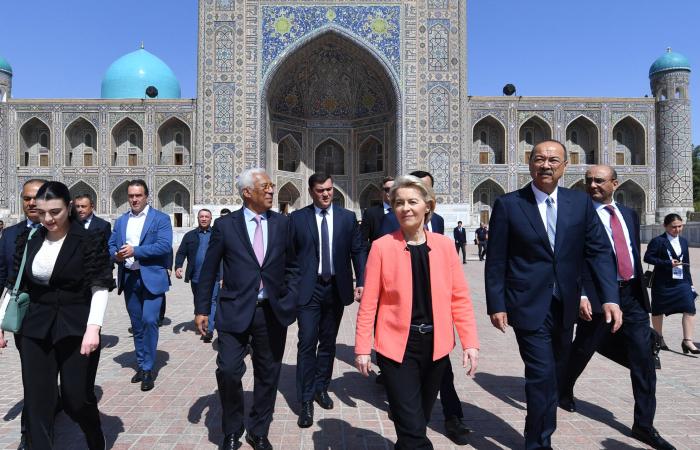
European Commission President Ursula von der Leyen and European Council President António Costa travelled to Uzbekistan to participate in a landmark EU–Central Asia summit. Held on 3–4 April, the event brings together EU leaders with the heads of state and government of the five Central Asian republics. Alongsidei the host, Uzbek President Shavkat Mirziyoyev, the summit was also attended by Kazakh President Kassym-Jomart Tokayev, Kyrgyz President Sadyr Japarov, Tajik President Emomali Rahmon, and Turkmen President Serdar Berdimuhamedov.
Editor's choice
News
Ministers meet in Ashgabat ahead of next week’s EU-Central Asia Summit

Ministers meet in Ashgabat ahead of next week’s EU-Central Asia Summit

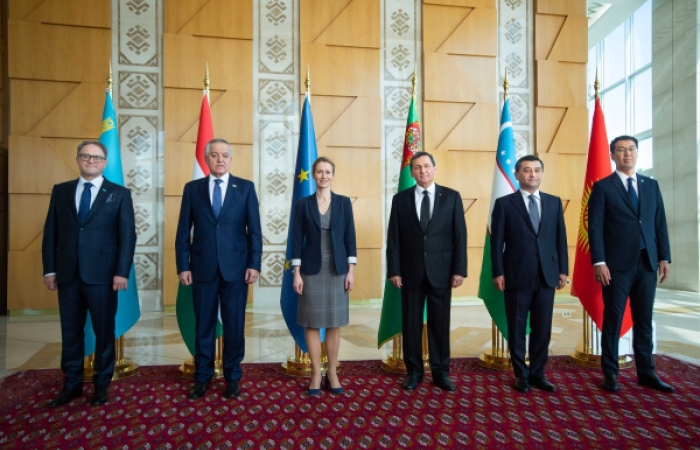
On 27 March 2025, the Foreign Ministers of the Republic of Tajikistan, Turkmenistan, the Republic of Uzbekistan, the Deputy Foreign Ministers of the Republic of Kazakhstan and the Kyrgyz Republic, as well as the European Union’s High Representative for Foreign Affairs and Security Policy Kaja Kallas held their 20th European Union-Central Asia Ministerial meeting in Ashgabat in Turkmenistan. The ministers discussed the preparations for the organisation of the first EU-Central Asia Summit on 4 April 2025 in Samarkand in Uzbekistan, which will demonstrate their commitment to deepening ties with the EU, at the highest level, materialising closer strategic cooperation, and marking an important step in the intensification of EU-Central Asia relations.
Editor's choice
News
First EU-Central Asia summit to take place in Uzbekistan on 3-4 April

First EU-Central Asia summit to take place in Uzbekistan on 3-4 April

The President of the European Council, António Costa, along with the President of the European Commission Ursula von der Leyen, will be travelling to Uzbekistan for the first EU-Central Asia summit on 3-4 April. The summit will be hosted by Uzbekistan’s President Shavkat Mirziyoyev in Samarkand, with the participation of the leaders of Kazakhstan, Kyrgyzstan, Tajikistan, and Turkmenistan. The summit will present a key opportunity for the EU to demonstrate its geopolitical interest in intensifying bilateral engagement and enhance regional cooperation with Central Asia.
Editor's choice
News
EU Commissioner Síkela visits Central Asia to promote development projects in the region

EU Commissioner Síkela visits Central Asia to promote development projects in the region

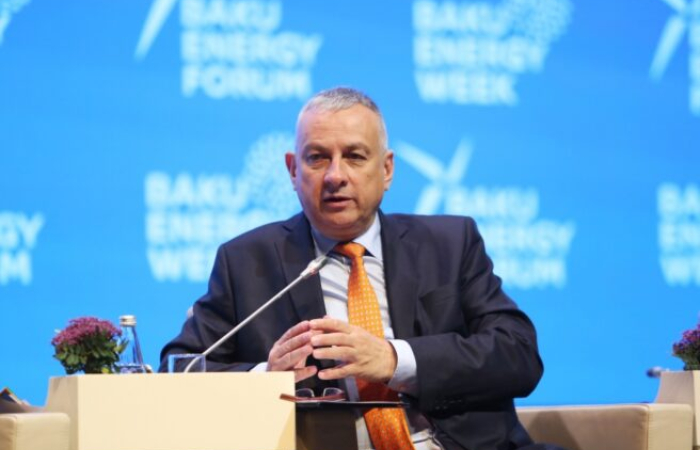
Between 12 and 18 March, European Commissioner for International Partnerships Jozef Síkela will visit the five Central Asian countries to strengthen the EU-Central Asia partnership ahead of the EU-Central Asia Summit and scale up Global Gateway, the EU’s investment strategy to boost jobs and sustainable economic growth. 
Editor's choice
Opinion
Opinion: A Milestone of Neutrality: Turkmenistan in the International Year of Peace and Trust

Opinion: A Milestone of Neutrality: Turkmenistan in the International Year of Peace and Trust

The year 2025 marks a pivotal moment for Turkmenistan as it commemorates three decades of its established status as a neutral state, coinciding with the International Year of Peace and Trust – a worldwide initiative championed by Turkmenistan itself. This dual celebration underscores the nation’s enduring influence in fostering international peace, development, and diplomatic harmony.
Editor's choice
News
Armenia and Kazakhstan strengthen bilateral ties

Armenia and Kazakhstan strengthen bilateral ties

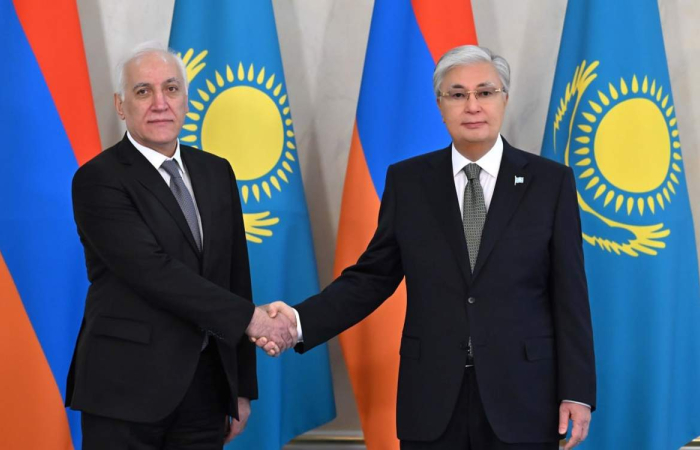
The President of Armenia will make an official visit to Kazakhstan on Tuesday (15 October) to discuss further strengthening of Kazakh-Armenian cooperation with Kazakh President Kassym-Jomart Tokayev. The two leaders will discuss cooperation in various political and economic areas, such as trade and migration, as well as enhancing cultural and humanitarian exchanges. 
Editor's choice
Opinion
Opinion: Middle Corridor gains momentum while Zangezur Corridor remains stalled

Opinion: Middle Corridor gains momentum while Zangezur Corridor remains stalled

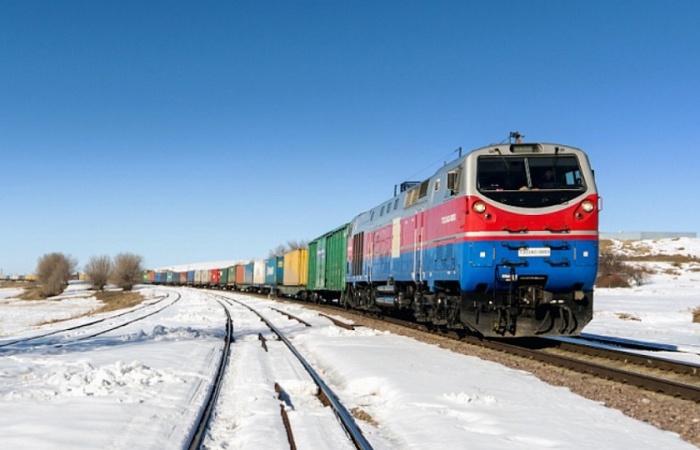
In September, it was announced that China has joined Kazakhstan, Azerbaijan, and Georgia as a partner in the Middle Corridor Initiative, with the China Railway Container Transport Corporation (CRTC) participating in the project. The decision followed extended talks over several months and was confirmed during the 8th International Silk Road Expo, held in Xi’an from September 19-20, 2024. This announcement comes amid the growing significance of the Middle Corridor, also known as the Trans-Caspian International Transport Route (TITR), as a crucial trade link between China and Europe, passing through several Central Asian and South Caucasian countries. The Middle Corridor Multimodal joint venture, established in 2023, offers a “one-stop-shop” service for cargo delivery along this route, aiming to enhance transport coordination, provide transparent tariffs, and ensure consistent delivery times.
Editor's choice
Editorial
Tajikistan tense amid arrests of senior personalities and former officials and rumours of a failed coup

Tajikistan tense amid arrests of senior personalities and former officials and rumours of a failed coup

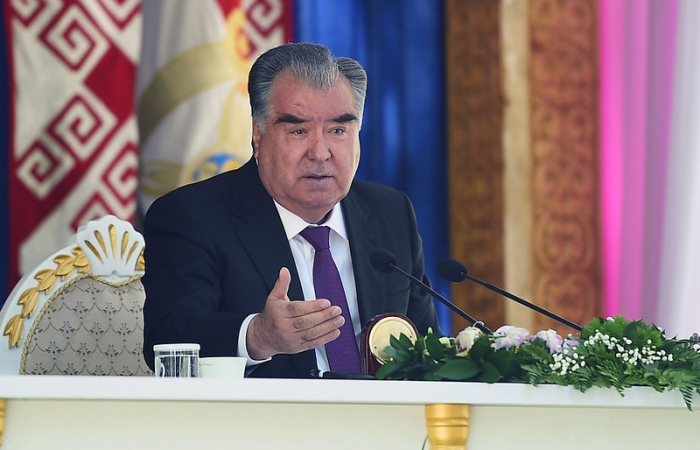
Tadjik President Emomamli Rahmon has run Tajikistan with an iron hand since taking power in 1992. There are now reports that he is preparing to hand power to his son. So, news of dissent in the Central Asian Republic is rare. News of a coup and the arrests of many prominent former officials have therefore triggered a lot of speculation. Saidjafar Usmonzoda, a prominent member of the Tajik parliament, was detained on June 14 for allegedly “plotting to overthrow the government.” Prosecutor-General Yusuf Rahmon accused Usmonzoda of collaborating with the foreign-based opposition group National Pact of Tajikistan and of speaking with its leader, the self-exiled Sharofiddin Gadoev. Parliament quickly stripped Usmonzoda of his immunity 
Editor's choice
News
Kassym-Jomart Tokayev ratifies treaty on allied relations with Uzbekistan

Kassym-Jomart Tokayev ratifies treaty on allied relations with Uzbekistan

Kazakhstan's President, Kassym-Jomart Tokayev, officially ratified on Monday (20 May) a significant treaty on allied relations with Uzbekistan, to elevate the bilateral relationship to a new strategic level. This pivotal agreement, initially signed in Tashkent on 22 December 2022, underscores a commitment to mutual independence, sovereignty, and territorial integrity, along with fostering sustainable economic growth between the two nations.