Opinion: A Milestone of Neutrality: Turkmenistan in the International Year of Peace and Trust

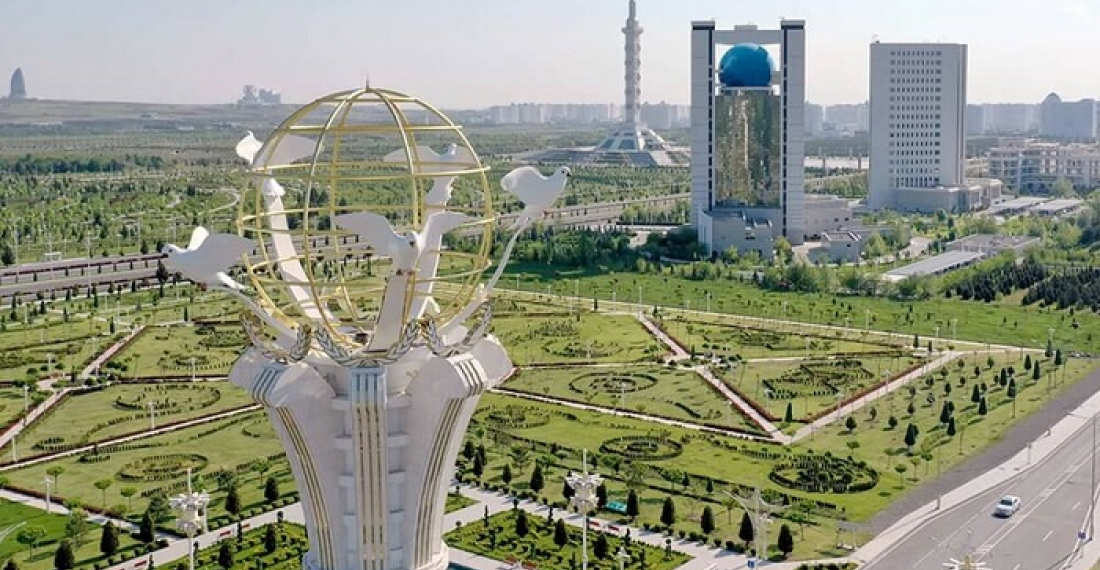
The year 2025 marks a pivotal moment for Turkmenistan as it commemorates three decades of its established status as a neutral state, coinciding with the International Year of Peace and Trust – a worldwide initiative championed by Turkmenistan itself. This dual celebration underscores the nation’s enduring influence in fostering international peace, development, and diplomatic harmony.

Turkmenistan’s neutrality was officially acknowledged on December 12, 1995, when the United Nations General Assembly unanimously adopted a resolution affirming its neutral status. This milestone saw support from all 185 UN member states at the time. Since then, neutrality has become a guiding principle of Turkmenistan’s foreign policy, positioning it as a trustworthy advocate for peace and an essential partner on the global stage. This commitment is celebrated annually as the Day of Neutrality on December 12. Further solidifying its global importance, Turkmenistan’s proposal led to the UN’s declaration of December 12 as the International Day of Neutrality in 2017, highlighting neutrality’s vital role in promoting peace and security worldwide.

Through its neutral stance, Turkmenistan has cultivated balanced relations with major powers and neighbouring countries. By upholding principles such as respect for sovereignty, non-interference, and prioritizing diplomatic engagement, the country has embraced a philosophy of "friendship with all, hostility towards none."

Economically, neutrality has been instrumental in shaping Turkmenistan as a secure and appealing hub for international investment. The nation’s collaborations with global partners have driven economic modernization and development, exemplified by landmark projects like the Turkmenistan–China gas pipeline, infrastructure developments with Afghanistan, and the ongoing Turkmenistan–Afghanistan–Pakistan–India (TAPI) pipeline. These efforts underscore Turkmenistan’s strategic role in global energy security.

In matters of security, Turkmenistan’s neutral status extends to its defence policies. Its military doctrine is exclusively defensive, designed to protect national sovereignty. By avoiding military alliances and blocs, Turkmenistan has steered clear of regional conflicts, instead focusing on strengthening its defensive capabilities independently. This approach has bolstered the nation’s reputation as a bastion of stability in a geopolitically sensitive region.

Turkmenistan’s neutrality is also deeply woven into its cultural fabric, promoting values of tolerance and peaceful coexistence. This philosophy has guided the country’s proactive participation in regional peace-building efforts. Notable examples include its mediation during the Tajik civil war (1995–1996) and support for UN-led resolutions addressing the Afghan crisis (1999–2000). Since 2007, the UN Regional Center for Preventive Diplomacy for Central Asia, based in Ashgabat, has furthered these objectives. In 2024, Turkmenistan’s diplomatic initiatives culminated in a UN resolution designating Central Asia as a zone of peace, trust, and cooperation.

The International Year of Peace and Trust in 2025, initiated by Turkmenistan and supported by 86 co-sponsoring states, aims to invigorate global efforts towards dialogue and preventive diplomacy. This initiative reinforces Turkmenistan’s reputation as a leader in fostering international collaboration.

Celebrations in 2025 will feature major events, including the International Forum of Peace and Trust in December. These events will showcase Turkmenistan’s accomplishments over 30 years while addressing key global challenges such as sustainable development, regional stability, and conflict resolution. Discussions will emphasize strategies for enhancing regional cooperation and building a resilient future.

Turkmenistan’s contributions to global energy diplomacy are particularly significant. Advocacy for stable energy transit and connectivity has resulted in the adoption of multiple UN resolutions (2008, 2013, and 2023). The TAPI pipeline stands as a symbol of Turkmenistan’s commitment to fostering regional connectivity and mutual prosperity.

Infrastructure projects like the North-South and East-West transport corridors further illustrate Turkmenistan’s pivotal role in linking Central Asia to global markets. These initiatives drive economic progress and stability across the region.

The simultaneous celebration of 30 years of neutrality and the International Year of Peace and Trust reflects Turkmenistan’s unwavering dedication to the principles of peaceful coexistence and global cooperation. As the nation honours its past achievements, it remains steadfast in its vision for a harmonious and prosperous world, reaffirming its position as a champion of peace and international solidarity.
Source: Maral Rahymova is Second Secretary of the Embassy of Turkmenistan in Belgium, Mission of Turkmenistan to the EU

The views expressed in opinion pieces and commentaries do not necessarily reflect the position of commonspace.eu or its partners

Related articles

Editor's choice
News
Borrell tells the European Parliament that the situation in Afghanistan was critical, but the EU will remain engaged

Borrell tells the European Parliament that the situation in Afghanistan was critical, but the EU will remain engaged

Borrell underlined that the European Union will make every effort to support the peace process and to remain a committed partner to the Afghan people. "Of course, we will have to take into account the evolving situation, but disengagement is not an option.  We are clear on that: there is no alternative to a negotiated political settlement, through inclusive peace talks.
Editor's choice
News
NATO Chief says war is on Europe's doorstep, and warns against complacency

NATO Chief says war is on Europe's doorstep, and warns against complacency

Russia could attack a Nato country within the next five years, the Secretary General of NATO, Mark Rutte, said in a stark new warning. "Nato's own defences can hold for now," Rutte warned in Berlin, but conflict was "next door" to Europe and he feared "too many are quietly complacent, and too many don't feel the urgency, too many believe that time is on our side. "Russia is already escalating its covert campaign against our societies," Rutte said in a speech in Germany. "We must be prepared for the scale of war our grandparents or great-grandparents endured." Earlier this month, Russia's President Vladimir Putin said his country was not planning to go to war with Europe, but it was ready "right now" if Europe wanted to - or started a war. But similar reassurances were given by Moscow in 2022, just before 200,000 Russian troops crossed the border and invaded Ukraine. Putin has accused European countries of hindering US efforts to bring peace in Ukraine - a reference to the role Ukraine's European allies have recently played in trying to change a US peace plan to end the war, whose initial draft was seen as favouring Russia. But Putin was not sincere, Nato's secretary-general said in the German capital, Berlin. Supporting Ukraine, he added, was a guarantee for European security. "Just imagine if Putin got his way; Ukraine under the boot of Russian occupation, his forces pressing against a longer border with Nato, and the significantly increased risk of an armed attack against us." Russia's economy has been on a war footing for more than three years now - its factories churn out ever more supplies of drones, missiles and artillery shells. According to a recent report by the Kiel Institute for the World Economy, Russia has been producing each month around 150 tanks, 550 infantry fighting vehicles, 120 Lancet drones and more than 50 artillery pieces. The UK, and most of its Western allies, are simply not anywhere near this point. Analysts say it would take years for Western Europe's factories to come close to matching Russia's mass-production of weapons. "Allied defence spending and production must rise rapidly, our armed forces must have what they need to keep us safe," the Nato chief said.

Popular

Editor's choice
News
NATO Chief says war is on Europe's doorstep, and warns against complacency

NATO Chief says war is on Europe's doorstep, and warns against complacency

Russia could attack a Nato country within the next five years, the Secretary General of NATO, Mark Rutte, said in a stark new warning. "Nato's own defences can hold for now," Rutte warned in Berlin, but conflict was "next door" to Europe and he feared "too many are quietly complacent, and too many don't feel the urgency, too many believe that time is on our side. "Russia is already escalating its covert campaign against our societies," Rutte said in a speech in Germany. "We must be prepared for the scale of war our grandparents or great-grandparents endured." Earlier this month, Russia's President Vladimir Putin said his country was not planning to go to war with Europe, but it was ready "right now" if Europe wanted to - or started a war. But similar reassurances were given by Moscow in 2022, just before 200,000 Russian troops crossed the border and invaded Ukraine. Putin has accused European countries of hindering US efforts to bring peace in Ukraine - a reference to the role Ukraine's European allies have recently played in trying to change a US peace plan to end the war, whose initial draft was seen as favouring Russia. But Putin was not sincere, Nato's secretary-general said in the German capital, Berlin. Supporting Ukraine, he added, was a guarantee for European security. "Just imagine if Putin got his way; Ukraine under the boot of Russian occupation, his forces pressing against a longer border with Nato, and the significantly increased risk of an armed attack against us." Russia's economy has been on a war footing for more than three years now - its factories churn out ever more supplies of drones, missiles and artillery shells. According to a recent report by the Kiel Institute for the World Economy, Russia has been producing each month around 150 tanks, 550 infantry fighting vehicles, 120 Lancet drones and more than 50 artillery pieces. The UK, and most of its Western allies, are simply not anywhere near this point. Analysts say it would take years for Western Europe's factories to come close to matching Russia's mass-production of weapons. "Allied defence spending and production must rise rapidly, our armed forces must have what they need to keep us safe," the Nato chief said.