


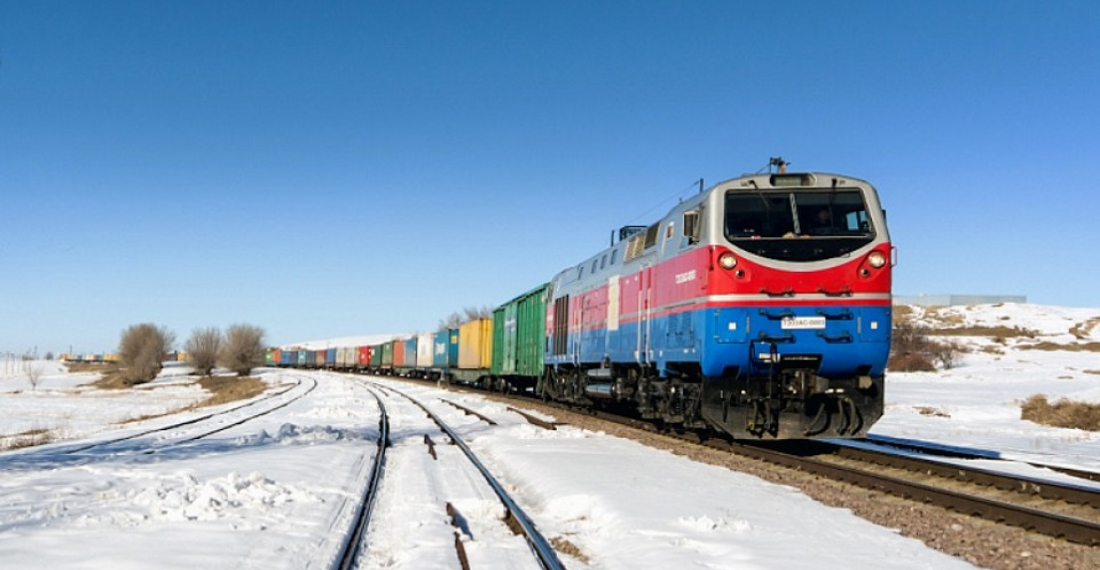
Opinion: Middle Corridor gains momentum while Zangezur Corridor remains stalled

In September, it was announced that China has joined Kazakhstan, Azerbaijan, and Georgia as a partner in the Middle Corridor Initiative, with the China Railway Container Transport Corporation (CRTC) participating in the project. The decision followed extended talks over several months and was confirmed during the 8th International Silk Road Expo, held in Xi’an from 19-20 September 2024. This announcement comes amid the growing significance of the Middle Corridor, also known as the Trans-Caspian International Transport Route (TITR), as a crucial trade link between China and Europe, passing through several Central Asian and South Caucasian countries. The Middle Corridor Multimodal joint venture, established in 2023, offers a “one-stop-shop” service for cargo delivery along this route, aiming to enhance transport coordination, provide transparent tariffs, and ensure consistent delivery times.

The momentum of the Middle Corridor has continued to grow since disruptions occurred along the trans-Russia Northern Route between China and Europe following Russia’s invasion of Ukraine. Reportedly, Kazakhstan and China plan to increase the volume of cargo transportation along the Middle Corridor to 600 container trains per year in 2025 and 2026. According to the plan, the number will reach 2,000 by 2029. This growth has been positively impacted by a 65 per cent increase in the volume of transit transportation between China and Europe through Kazakhstan, which amounted to 2.76 million tons last year, compared to 1.7 million tons in 2022.

Georgia, Azerbaijan, and Kazakhstan are actively working to optimise this transportation route to attract more European and Chinese companies. Kazakhstan is currently focused on increasing the transit capacity of the Aktau and Kuryk seaports. A container hub will be constructed in the port of Aktau, aiming to increase transportation volume to 300,000 TEU (twenty-foot equivalent units) per year. Additionally, a grain terminal is set to launch in Kuryk’s port later this year.

In the meantime, Azerbaijan and Georgia have completed the expansion of the BTK line’s capacity from 1 million to 5 million tons per year with an investment of $140 million from Azerbaijan. Similar expansion work is underway at the Baku Trade Port, where capacity is being increased from the current 15 million tons to 25 million tons.

The European Union (EU) is also supporting these efforts. In one of its latest moves toward this goal, the EU launched the Coordination Platform of the Trans-Caspian Transport Corridor on October 3, during an event that brought together representatives from the EU, countries along the Trans-Caspian Transport Corridor in Central Asia and the Southern Caucasus, Türkiye, and international financing institutions. The press release from the European External Action Service (EEAS) stated that “the corridor will serve as a critical artery linking Europe and Central Asia, boosting trade, enhancing connectivity, facilitating exchanges, and driving prosperity across regions, while also ensuring improved cooperation and economic integration among Central Asian countries.” The EU plans to launch a regional transport program in 2025 to support infrastructure projects along the corridor.

Thus, while all the mentioned projects along the Middle Corridor are being successfully implemented, there is a missing link in the South Caucasus that would critically enhance regional connections and integrate Armenia into this network. This link is the Zangezur corridor, which was agreed upon by Armenia and Azerbaijan through the Russia-mediated ceasefire statement in November 2020. Azerbaijan is nearing the completion of its part of the corridor, which will connect mainland Azerbaijan with the Nakhchivan exclave through the southern part of Armenia. The opening of the Zangezur Corridor would provide a shorter connection along the Middle Corridor and transform Armenia from its current isolated situation into a transportation hub.

This project has, however, been stalled due to the geopolitical complexities it faces. As recently as early October, Iran reiterated its strong objection to the opening of this corridor while expressing support for another initiative put forward by the Armenian government, namely the Crossroads for Peace initiative. While both the Zangezur corridor and the Crossroads for Peace initiative envision the opening of regional transportation routes, there are some critical differences between the two. Most importantly, while the former envisions the deployment of Russia’s border guards to the trans-Armenian corridor, the latter rejects this clause, which is enshrined in the aforementioned trilateral statement of November 10, 2020.

Another key difference is related to the fact that the Zangezur corridor envisages the reopening of the Soviet-era railway and highway connections between the western part of mainland Azerbaijan and the Nakhchivan Autonomous Republic through the Syunik province of Armenia. While the Crossroads for Peace includes a railway link along this passage, it favours alternative routes for the motorway connection. Azerbaijan, having almost completed the construction of the highway in its section of the Zangezur corridor, rejects the proposal of Armenia to open highway links in other areas without opening it along the Zangezur route as well.

Due to these difficulties, neither the Zangezur corridor nor the Crossroads for Peace initiative has garnered the full support of all concerned parties. While Azerbaijan, Russia, and Türkiye favour the former, the Armenian government insists on its own initiative, supported by the United States and Iran in this endeavour. Under these circumstances, while the Middle Corridor is booming, the Zangezur Corridor faces persistent uncertainty. This situation prevents the countries of the South Caucasus from fully enjoying the benefits offered by their geostrategic position, particularly leaving Armenia in limbo isolated from the trans-regional international transportation routes. The opening of the Zangezur corridor is therefore of larger geoeconomic importance.


source: Dr Vasif Huseynov, is a Senior Advisor at the Center of Analysis of International Relations (AIR Center) and Adjunct Lecturer at Khazar University in Baku, Azerbaijan.


The views expressed in opinion pieces and commentaries do not necessarily reflect the position of commonspace.eu or its partners

Related articles

Editor's choice
News
Council of Europe launches new International Claims Commission for Ukraine

Council of Europe launches new International Claims Commission for Ukraine

Thirty-four countries and the European Union have signed a new convention establishing an International Claims Commission for Ukraine at a diplomatic conference co-hosted by the 46-nation Council of Europe and the Netherlands in the Hague. The diplomatic conference was attended by leaders and high-level representatives from over 50 states, including the President of Ukraine, Volodymyr Zelenskyy, the President of the Republic of Moldova, Maia Sandu, and the Prime Minister of the Netherlands, Dick Schoof.  “Today marks a major step forward in ensuring accountability for Ukraine. The International Claims Commission represents justice and hope for tens of thousands of victims—our determination that those who have suffered will not be forgotten. I call for quick ratifications so we can get the commission rapidly up and running for the people of Ukraine,” said Council of Europe Secretary General Alain Berset. Ukrainian President Volodymyr Zelenskyy said: “We expect that every mechanism for compensation from the Register of Damage and Claims Commission to the actual payments – will start working and receive strong and sufficient international support, so that people can truly feel that any kind of damage caused by the war can be compensated. This war, and Russia’s responsibility for it, MUST become a clear example – so that others learn not to choose aggression.” “Accountability is about creating the conditions for peace that endures. And therefore, accountability is a condition of security – today and for the future. But accountability is not only about Ukraine. And it is not only about one aggressor and one victim. Accountability is about Europe. About every country in Europe. It is about whether Europe, as a whole, is willing to defend its peace,” said Maia Sandu, President of the Republic of Moldova, which currently holds the Presidency of the Council of Europe’s Committee of Ministers. The Prime Minister of the Netherlands, Dick Schoof, said: “Every day Russia is deliberately bombarding homes, destroying businesses and damaging infrastructure in Ukraine. Russia must compensate Ukraine for the damage caused. That is why we have launched the International Claims Commission for Ukraine and we are honoured to host it.” The International Claims Commission will be the second part of a comprehensive compensation mechanism related to Russia’s war of aggression, building on the existing Register of Damage for Ukraine. The claims commission will be established within the framework of the Council of Europe and will also be open to other countries. The Register of Damage for Ukraine, created in 2023, collects and records compensation claims submitted by individuals, organisations and public bodies in Ukraine. Forty-four states and the European Union have so far joined the Register, which has already received 86,000 claims. The International Claims Commission will review, assess and decide upon claims submitted to the Register of Damage for Ukraine and determine the amount of compensation, if any, which is due in each case. The convention establishing the commission will enter into force once it has been ratified by 25 signatories, as long as sufficient funds have been secured to support its initial work.

Popular

Editor's choice
News
Council of Europe launches new International Claims Commission for Ukraine

Council of Europe launches new International Claims Commission for Ukraine

Thirty-four countries and the European Union have signed a new convention establishing an International Claims Commission for Ukraine at a diplomatic conference co-hosted by the 46-nation Council of Europe and the Netherlands in the Hague. The diplomatic conference was attended by leaders and high-level representatives from over 50 states, including the President of Ukraine, Volodymyr Zelenskyy, the President of the Republic of Moldova, Maia Sandu, and the Prime Minister of the Netherlands, Dick Schoof.  “Today marks a major step forward in ensuring accountability for Ukraine. The International Claims Commission represents justice and hope for tens of thousands of victims—our determination that those who have suffered will not be forgotten. I call for quick ratifications so we can get the commission rapidly up and running for the people of Ukraine,” said Council of Europe Secretary General Alain Berset. Ukrainian President Volodymyr Zelenskyy said: “We expect that every mechanism for compensation from the Register of Damage and Claims Commission to the actual payments – will start working and receive strong and sufficient international support, so that people can truly feel that any kind of damage caused by the war can be compensated. This war, and Russia’s responsibility for it, MUST become a clear example – so that others learn not to choose aggression.” “Accountability is about creating the conditions for peace that endures. And therefore, accountability is a condition of security – today and for the future. But accountability is not only about Ukraine. And it is not only about one aggressor and one victim. Accountability is about Europe. About every country in Europe. It is about whether Europe, as a whole, is willing to defend its peace,” said Maia Sandu, President of the Republic of Moldova, which currently holds the Presidency of the Council of Europe’s Committee of Ministers. The Prime Minister of the Netherlands, Dick Schoof, said: “Every day Russia is deliberately bombarding homes, destroying businesses and damaging infrastructure in Ukraine. Russia must compensate Ukraine for the damage caused. That is why we have launched the International Claims Commission for Ukraine and we are honoured to host it.” The International Claims Commission will be the second part of a comprehensive compensation mechanism related to Russia’s war of aggression, building on the existing Register of Damage for Ukraine. The claims commission will be established within the framework of the Council of Europe and will also be open to other countries. The Register of Damage for Ukraine, created in 2023, collects and records compensation claims submitted by individuals, organisations and public bodies in Ukraine. Forty-four states and the European Union have so far joined the Register, which has already received 86,000 claims. The International Claims Commission will review, assess and decide upon claims submitted to the Register of Damage for Ukraine and determine the amount of compensation, if any, which is due in each case. The convention establishing the commission will enter into force once it has been ratified by 25 signatories, as long as sufficient funds have been secured to support its initial work.

