On 5 December, the Azerbaijani Press Agency (APA) in reference to “diplomatic sources” reported that Azerbaijan’s Foreign Minister rejected a United States-initiated meeting with his Armenian counterpart on the sidelines of the 31st meeting of the OSCE Council of Foreign Ministers in Malta. According to the agency, the reason behind Azerbaijan’s refusal was related to the “insistence” of the United States Secretary Antony Blinken to mediate between the two South Caucasian ministers. Citing the overall “unjust and biased policy” of the Biden administration towards Azerbaijan, the diplomatic source of the agency stated that “for this reason, Azerbaijan does not want the U.S. to participate in the peace agenda at all and does not consider it appropriate”.
This has been the first such instance that Azerbaijan rejected the mediation effort of the United States in the country’s peace process with Armenia. Previously, Azerbaijan took part in the US-mediated meetings, which were beneficial to the peace process. This raises questions about the reasons behind Azerbaijan’s disappointment with the Biden administration and whether the upcoming Trump presidency would be good news for United States - Azerbaijan relations.
Azerbaijan complained about the transactional character of U.S. foreign policy
The relations between Baku and Washington have been negatively affected by a number of developments over the past year. However, the re-imposition of the sanctions under the 907 amendment of the Freedom Support Act of 1992 by the Biden administration was perhaps the most significant blow to the bilateral relations between the two sides. This amendment, adopted on 24 October 1992, bars the United States from assisting Azerbaijan unless Baku takes “demonstrable steps to cease all blockades and other offensive uses of force against Armenia and Nagorno-Karabakh”. As a reminder, this legislative move was adopted at the time when the territory of Azerbaijan was under attack from Armenia, and subsequently occupied, yet, American lawmakers, under the influence of the Armenian lobby, punished the victim of the aggression. The United States has granted annual waivers for this amendment since 2002. That year, Baku permitted Washington to use its territory to supply U.S. troops in Afghanistan.
In November last year, U.S. Assistant Secretary of State James O’Brien announced that the United States cancelled this waiver as part of the measures taken by the United States against Azerbaijan in response to the lack of progress in the peace talks. He said that “we don’t anticipate submitting a waiver until such time as we see a real improvement in the situation”.
This happened exactly a year after the ending of the U.S. operation in Afghanistan which manifested that the United States no longer needed Azerbaijan’s assistance. The Azerbaijani Foreign Ministry responded that “it turns out that the U.S. side has always considered the support of Azerbaijan as occasional, while it should be remembered that history has always repeated itself.”
Against this backdrop, there was no “progress” in the Armenia-Azerbaijan peace process in a way that would have met what O’Brien portrayed as a condition to reintroduce the 907 waivers. Baku unequivocally declared that Azerbaijan will not sign a peace agreement with Armenia until Yerevan removed the territorial claims against Azerbaijan from its constitution. In parallel, the calls for more sanctions and pressure against Azerbaijan were heard from multiple sources largely driven by pro-Armenian political groups.
In July of this year, Azerbaijan’s President Ilham Aliyev voiced his frustration with the challenges in United States - Azerbaijan relations, criticizing the Biden administration for making what he described as “unrealistic demands” from Azerbaijan. His remarks followed a statement from James O’Brien, who stated that the U.S. wanted the Zangezur corridor to be opened without Russian involvement, aiming to reduce Central Asia’s reliance on Russia and China. Azerbaijan, traditionally focused on maintaining a balanced relationship with major powers and pursuing multilateralism, is hesitant to engage in such risky ventures. It is clear that the opposite would dangerously place Azerbaijan in direct confrontation with Russia and China, threatening the country's security.
The expectation regarding the upcoming Trump presidency
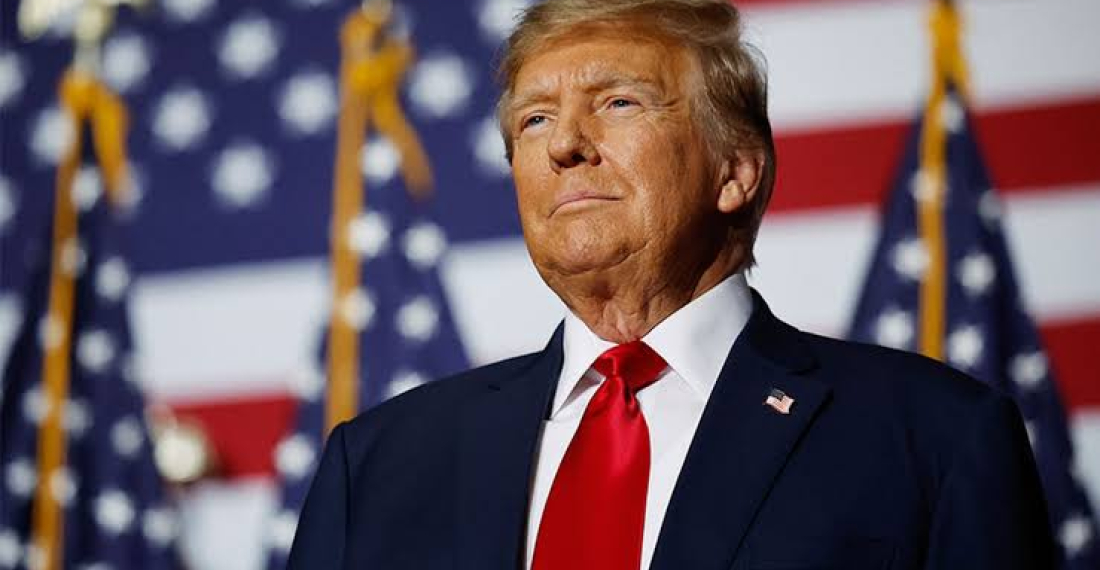
Many observers around the world are contemplating how Donald Trump's second presidential term will impact critical global issues. The Russia-Ukraine war, the instability in the Middle East, the intensifying confrontation with China, etc. are some of the issues where the decisions of the new administration may introduce new dynamics. President-elect Trump has consistently criticized the Biden administration for his failures in foreign policy. The country’s relations with Azerbaijan and its overall role in the South Caucasus are amongst the areas in which the Biden administration was not so successful.
President Aliyev, during his aforementioned July speech when he criticized the transactional character of U.S. foreign policy, said his government could get along better with the Republican presidents. “Of course, if you look at the development of our relationship, particularly the visible aspects, of course, with the Republican administration, our relations have always been much more productive, fruitful, and result-oriented”, he stated.
Hence, there is optimism in Baku that the United States - Azerbaijan relationship will return to a more constructive and cooperative path under Trump’s presidency. However, this optimism must be tempered by the understanding that the global landscape, especially in the South Caucasus, is highly volatile, and even a change in the U.S. leadership may not guarantee an immediate improvement. Nonetheless, it is a fact that close cooperation between Baku and Washington has always been mutually beneficial and aligned with the best interests of both sides. Therefore, in any case, both Azerbaijan and the United States must seize the opportunity presented by the leadership transition in the latter to rebuild their partnership, grounded in mutual interests and pragmatic diplomacy.
Source: Dr Vasif Huseynov, is a Senior Advisor at the Center of Analysis of International Relations (AIR Center) and Adjunct Lecturer at Khazar University in Baku, Azerbaijan.
The views expressed in opinion pieces and commentaries do not necessarily reflect the position of commonspace.eu or its partners