Opinion: There is still a chance Russia will be a spoiler in the Armenia-Turkey normalisation process

As long as Turkey maintains a fairly neutral stance on the Ukraine issue, Russia will not interfere in the current efforts to normalise Armenian-Turkish relations, says Benyamin Poghosyan in this op-ed. "However, if Turkey changes its policy towards Russia, and joins the anti-Russian sanctions the situation may change. In such case, this may break the Russian – Turkish understanding for the post-2020 South Caucasus. Russia may assume the role of spoiler in the Armenia – Turkey normalization process, significantly slowing down the movement towards establishing diplomatic relations and opening up borders."      

Since February 24, 2022, the world's attention has been focused on the war in Ukraine and the rupture of the Russia – West relations. Politicians, experts, and ordinary citizens seek to understand the implications of this crisis and assess the endgame of Russia, Ukraine, and the West. Meanwhile, despite the war in Ukraine, the regional geopolitics of the South Caucasus continues to evolve. The 2020 Karabakh war has significantly impacted the balance of power in the region, making Russia and Turkey the ultimate decision-makers of the future of the South Caucasus. Ankara and Moscow are well aware that they are and will remain competitors in the region, but they decided to compete in a more stable environment. One of the ways to stabilize the post-2020 South Caucasus is through normalizing Armenia – Turkey relations.

Turkey recognized Armenian independence almost immediately after the collapse of the Soviet Union, but did not establish diplomatic relations with Armenia due to the conflict in Karabakh and the Armenian decision to pursue the international recognition of the Armenian Genocide. In April 1993, Turkey closed its border with Armenia, hoping that economic hardships would force Armenia to make concessions. Armenia and Turkey attempted to normalize relations in 2008-2009, but the process failed mainly due to the strong opposition of Azerbaijan.

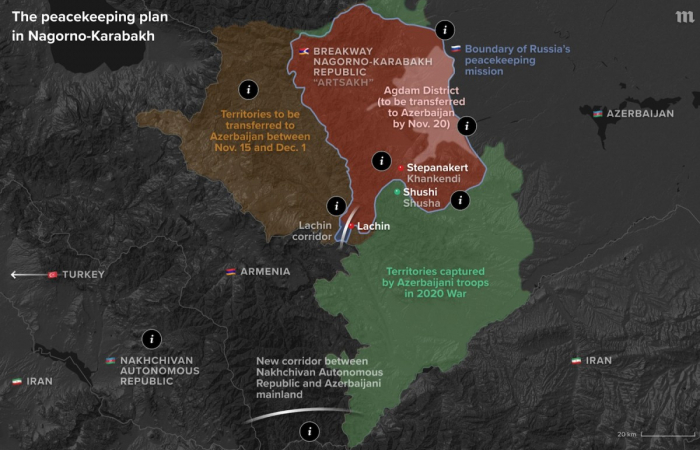
The 2020 Karabakh war removed one of the main obstacles in the way of Armenia – Turkey normalization. Azerbaijan took adjacent regions around Nagorno Karabakh and 30 percent of territories of NK itself, while the remaining 70 percent was transformed into a Russia-controlled area with the deployment of the Russian peacekeepers. Armenia continues to pay salaries and pensions to Armenians living in the Russia-controlled areas, but Yerevan essentially gave up its role as a security guarantor of Karabakh. Meanwhile, after the 100th anniversary of the Armenian Genocide, the issue of Genocide international recognition has lost its previous significance for Turkey. Thus, from a Turkish perspective, two stumbling blocks, Nagorno-Karabakh and international recognition of the Armenian Genocide, have lost their relevance in the context of its long-term relations with Armenia. As for the Armenian government, the ruling party participated in the June 2021 early parliamentary elections with the slogan of ushering an era of peace in the South Caucasus, and normalization of relations with Turkey is a significant part of that agenda. The other external players in the region, the US and EU, supported the Armenia – Turkey normalization since the early 1990s, hoping to stabilize the region and decrease Armenian overdependence on Russia. Thus, all players – Armenia, Turkey, Russia, the US, and the EU, support the normalization process.

Not surprisingly, the process has been accelerated after the June 2021 elections in Armenia. Armenia and Turkey appointed special representatives, who met in Moscow in January 2022 for the first time. The second meeting between Armenian and Turkish representatives occurred in Vienna on February 24, 2022, on the day Russia launched its Ukrainian "special military operation."  News of the second meeting was buried under the reports of the war in Ukraine. Still, the meeting was pretty useful as it cleared the way for the Armenian foreign minister's participation in the Antalya diplomatic forum in March 2022. The Armenian foreign minister met with his Turkish counterpart in Antalya, the first high-level Armenia – Turkey meeting in years. The two sides confirmed their readiness to continue the normalization process without preconditions leading up to establishing diplomatic relations and opening borders.

The Armenian foreign minister confirmed these agreements during his speech at the Armenian Parliament standing committee on foreign relations on March 21, 2022. He stated that the Armenian and Turkish sides emphasized the significance of the process of normalization and confirmed that the final result should be the establishment of diplomatic relations and the opening of borders.

However, despite this optimism, many wonder if the war in Ukraine may slow or even derail the Armenia – Turkey normalization process. The critical factor here is the relations between Russia and Turkey. As of now, Turkey pursues a policy of positive neutrality towards Russia rejecting demands to join anti-Russia sanctions and portraying itself as an honest broker between Russia and Ukraine. Turkey successfully organized a meeting between Russian and Ukrainian foreign ministers in Antalya on March 10, 2022, and now makes efforts to organize a potential Putin – Zelensky meeting. Russia is satisfied by this Turkish policy. As far as Turkey continues this path, most probably Russia - Turkey understanding on the post – 2020 future of the South Caucasus will remain in place, including, support to the Armenia – Turkey normalization process. The war in Ukraine has not changed the US and EU's position on this issue. The Euro-Atlantic community continues to push for a Yerevan – Ankara normalization of relations.

However, if Turkey changes its policy towards Russia, and joins the anti-Russian sanctions the situation may change. In such case, this may break the Russian – Turkish understanding for the post-2020 South Caucasus. Russia may assume the role of spoiler in the Armenia – Turkey normalization process, significantly slowing down the movement towards establishing diplomatic relations and opening up borders.       

source: Benyamin Poghosyan is the Founder and Chairman of the Center for Political and Economic Strategic Studies in Yerevan.
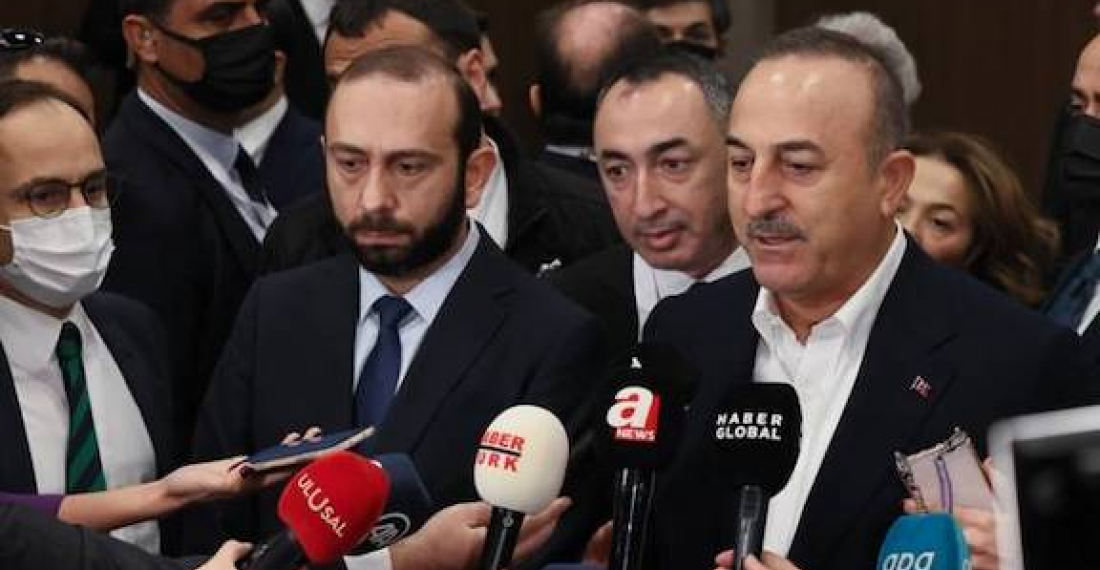
photo:   The meeting between the foreign ministers of Armenia and Turkey in Antalya this month was the highest diplomatic contact between the two countries for years.
The views expressed in opinion pieces and commentaries do not necessarily reflect the position of commonspace.eu or its partners
  

Related articles

Editor's choice
News
Council of Europe launches new International Claims Commission for Ukraine

Council of Europe launches new International Claims Commission for Ukraine

Thirty-four countries and the European Union have signed a new convention establishing an International Claims Commission for Ukraine at a diplomatic conference co-hosted by the 46-nation Council of Europe and the Netherlands in the Hague. The diplomatic conference was attended by leaders and high-level representatives from over 50 states, including the President of Ukraine, Volodymyr Zelenskyy, the President of the Republic of Moldova, Maia Sandu, and the Prime Minister of the Netherlands, Dick Schoof.  “Today marks a major step forward in ensuring accountability for Ukraine. The International Claims Commission represents justice and hope for tens of thousands of victims—our determination that those who have suffered will not be forgotten. I call for quick ratifications so we can get the commission rapidly up and running for the people of Ukraine,” said Council of Europe Secretary General Alain Berset. Ukrainian President Volodymyr Zelenskyy said: “We expect that every mechanism for compensation from the Register of Damage and Claims Commission to the actual payments – will start working and receive strong and sufficient international support, so that people can truly feel that any kind of damage caused by the war can be compensated. This war, and Russia’s responsibility for it, MUST become a clear example – so that others learn not to choose aggression.” “Accountability is about creating the conditions for peace that endures. And therefore, accountability is a condition of security – today and for the future. But accountability is not only about Ukraine. And it is not only about one aggressor and one victim. Accountability is about Europe. About every country in Europe. It is about whether Europe, as a whole, is willing to defend its peace,” said Maia Sandu, President of the Republic of Moldova, which currently holds the Presidency of the Council of Europe’s Committee of Ministers. The Prime Minister of the Netherlands, Dick Schoof, said: “Every day Russia is deliberately bombarding homes, destroying businesses and damaging infrastructure in Ukraine. Russia must compensate Ukraine for the damage caused. That is why we have launched the International Claims Commission for Ukraine and we are honoured to host it.” The International Claims Commission will be the second part of a comprehensive compensation mechanism related to Russia’s war of aggression, building on the existing Register of Damage for Ukraine. The claims commission will be established within the framework of the Council of Europe and will also be open to other countries. The Register of Damage for Ukraine, created in 2023, collects and records compensation claims submitted by individuals, organisations and public bodies in Ukraine. Forty-four states and the European Union have so far joined the Register, which has already received 86,000 claims. The International Claims Commission will review, assess and decide upon claims submitted to the Register of Damage for Ukraine and determine the amount of compensation, if any, which is due in each case. The convention establishing the commission will enter into force once it has been ratified by 25 signatories, as long as sufficient funds have been secured to support its initial work.

Popular

Editor's choice
News
Council of Europe launches new International Claims Commission for Ukraine

Council of Europe launches new International Claims Commission for Ukraine

Thirty-four countries and the European Union have signed a new convention establishing an International Claims Commission for Ukraine at a diplomatic conference co-hosted by the 46-nation Council of Europe and the Netherlands in the Hague. The diplomatic conference was attended by leaders and high-level representatives from over 50 states, including the President of Ukraine, Volodymyr Zelenskyy, the President of the Republic of Moldova, Maia Sandu, and the Prime Minister of the Netherlands, Dick Schoof.  “Today marks a major step forward in ensuring accountability for Ukraine. The International Claims Commission represents justice and hope for tens of thousands of victims—our determination that those who have suffered will not be forgotten. I call for quick ratifications so we can get the commission rapidly up and running for the people of Ukraine,” said Council of Europe Secretary General Alain Berset. Ukrainian President Volodymyr Zelenskyy said: “We expect that every mechanism for compensation from the Register of Damage and Claims Commission to the actual payments – will start working and receive strong and sufficient international support, so that people can truly feel that any kind of damage caused by the war can be compensated. This war, and Russia’s responsibility for it, MUST become a clear example – so that others learn not to choose aggression.” “Accountability is about creating the conditions for peace that endures. And therefore, accountability is a condition of security – today and for the future. But accountability is not only about Ukraine. And it is not only about one aggressor and one victim. Accountability is about Europe. About every country in Europe. It is about whether Europe, as a whole, is willing to defend its peace,” said Maia Sandu, President of the Republic of Moldova, which currently holds the Presidency of the Council of Europe’s Committee of Ministers. The Prime Minister of the Netherlands, Dick Schoof, said: “Every day Russia is deliberately bombarding homes, destroying businesses and damaging infrastructure in Ukraine. Russia must compensate Ukraine for the damage caused. That is why we have launched the International Claims Commission for Ukraine and we are honoured to host it.” The International Claims Commission will be the second part of a comprehensive compensation mechanism related to Russia’s war of aggression, building on the existing Register of Damage for Ukraine. The claims commission will be established within the framework of the Council of Europe and will also be open to other countries. The Register of Damage for Ukraine, created in 2023, collects and records compensation claims submitted by individuals, organisations and public bodies in Ukraine. Forty-four states and the European Union have so far joined the Register, which has already received 86,000 claims. The International Claims Commission will review, assess and decide upon claims submitted to the Register of Damage for Ukraine and determine the amount of compensation, if any, which is due in each case. The convention establishing the commission will enter into force once it has been ratified by 25 signatories, as long as sufficient funds have been secured to support its initial work.