Opinion: "Member states are pulling the CSTO in different directions"

Opinion: In this article for commonspace.eu, Sos Avetisyan assess the results of the summit of the Collective Security Treaty Organisation (CSTO), held earlier this month in Yerevan.

Please note this article contains links to external sources

A summit of the Collective Security Treaty Organisation (CSTO) concluded in Armenia on Friday October 14th, without any significant breakthrough, or a strong media reaction in Armenia. For those familiar with classical alliance theory, the CSTO perhaps can be best understood as a "star-type alliance" , where alliance is maintained by the ambition and efforts of single hegemonic state, in this case Russia. Although the C stands for collective, CSTO members do not perceive it this way. While Russia has separate military-political links with each participating state, there is no real cooperation between other members.

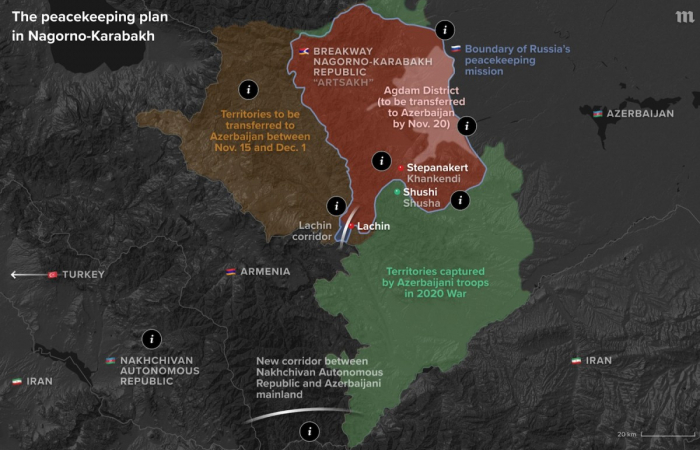
The illusive perception of a single unified 'post-Soviet' space has turned out to be a chimera, and a front for Russian-led integration projects. The summit in Armenia proved this point once again. There were two main items on the agenda, the appointment of a new general secretary to replace Russian Nikolay Bordyuzha, and a joint statement on the Nagorno-Karabakh conflict.

The appointment of the general secretary was delayed until the December summit in Moscow, it was expected that Armenia's ex-defense minister Seryan Ohanyan would assume this position, although he recently denied this possibility.  The joint resolution on the Nagorno-Karabakh conflict was rejected.  The only agreement reached at the summit concerned the ten-year development strategy of the organization.

Armenia left empty-handed: the imitation games

Armenia's frustration with the Yerevan summit did not go unnoticed. Kommersant, a publication close to the Kremlin, reported that Serzh Sargsyan was left alone at the table, accompanied only by current general secretary Nikolay Bordyuzha, throughout the summit. Joshua Kucera (Eurasia.net reporter) believes that "Armenia is the most loyal member of the CSTO, and is most to gain in case there is a war between Armenia and Azerbaijan, where in theory the other allied members would come to help". At the same time it is clear to experts that in case there is full-blown war between Armenia and Azerbaijan, Russia will face the unpleasant dilemma of either supporting Armenia and losing Azerbaijan, or by not doing so, tarnishing the reputation of CSTO even further.  

The 'April War' confirmed that Armenia cannot rely on Russia, let alone the other CSTO member states. Furthermore, Belarus and Kazakhstan were supporting Azerbaijan during the conflict , angering Yerevan. It is clear that the CSTO merely serves as camouflage, covering the cracks in the Russian-Armenian partnership.

Russia's "double game" with Turkey and Azerbaijan

What is really worrying for Armenia is the rapprochements between Russia and Turkey, and Russia and Azerbaijan. The irony is that Armenia was the only CSTO member country to condemn the downing of a Russian jet by Turkey in November last year, which caused a lengthy standoff. But problems, such as Erdogan's 'stab in back' claim and Turkey's role in Islamic State's oil operations, were willfully forgotten when the chasm between the West and Russia became unmanageable. Since the July coup attempt against Erdogan, the division between Turkey and the West became leverage for Russians to exploit.  Most recently, the Turkish stream pipeline was revived, which would allow Russian gas to reach Europe without passing through Ukraine.  

Against this background, Russian Foreign Minister Sergey Lavrov's statement "Turkey can play positive role in Nagorno-Karabakh conflict resolution" after the CSTO summit came as no surprise. The Armenian authorities warned Russia, that it has continuously supported Armenian-Turkish normalization process based on the principle of "no preconditions" and sidestepping from such approach will not be fruitful.

Armenia is even more sensitive to the warming of Russian-Azerbaijani relations. At the CSTO summit in Yerevan the joint resolution on Karabakh was not accepted, primarily because of a possible Azerbaijani negative reaction. Furthermore, during the April war most Armenian casualties were caused by Russian artillery and rocket launching systems purchased from Russia by Azerbaijan. This worrisome situation was somewhat soothed by a display of Iskander E ballistic missile hardware, also purchased from Russia, at a military parade in Armenia. Moreover, a deal is in place for Russia to supply more armaments to Armenia, according to Yerevan based security analyst Sergey  Minasyan. This package might include Solnsepyok( TOS1) systems of the kind that were widely used by Azerbaijan during "April War". Concurrently, Russia is attempting a balancing and leveraging strategy, hence it has agreed to establish join production of anti-air systems with Azerbaijan.

 Conclusion

The CSTO very much resembles Ivan Krylov's fable of "The swan, the pike and the crawfish" where all three are pulling the cart in different direction. While this article has mainly focused on Armenia's role in the CSTO, the problems mentioned are relevant to other member states. Belarus president Lukashenka lamented during the summit that the CSTO is not taken seriously around the world, but the real obstacles are internal, not external.  

With the West and Russia at loggerheads over Syria, the future of CSTO remains unclear. It seems impossible for Vladimir Putin to forge a lasting alliance with member states' interests harmonized. One should recall that when the CSTO treaty came to force in 1994 it was signed by nine states, but now there are only six left (Uzbekistan suspended its membership in 2012). Threat perceptions and misperceptions are essential for any cooperation like the CSTO. Put simply, for Armenia the key question is guaranteeing the security of Nagorno-Karabakh. For Russia and Belarus the US missile defense system in Europe is critical. For Kazakhstan and Kyrgyzstan the threat of Islamic radicalization matters most. But as of now, there is no interest among CSTO members to provide genuine support to each other in these matters. 

source: Sos Avetisyan is an Armenian political commentator and observer. He recently graduated with an M.Phil in Russian studies from the University of Oxford. He contributed this op-ed for commonspace.eu

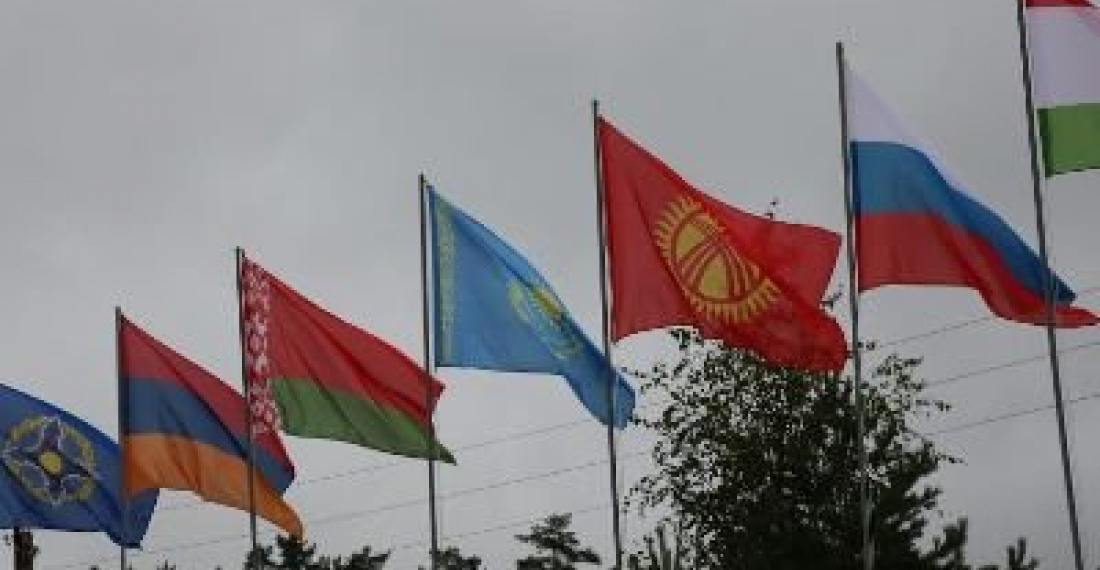
photo: Flags of the CSTO member states fly at Yerevan airport during the summit of the organisation on 14 October 2016 (archive picture)
 

Related articles

Editor's choice
News
STC announces two year transitional period and referendum ahead of self-determination for South Yemen

STC announces two year transitional period and referendum ahead of self-determination for South Yemen

Tensions remain high in South Yemen, one week after an unprecedented rift between Saudi Arabia and UAE, as a result of which UAE withdrew its forces from Yemen. On Friday (2 January), the UAE backed Southern Transitional Council (STC), an umbrella group of groups in the South, announced a two-year transition period leading to a popular referendum and self-determination for the South. The announcement came after political tensions spiraled into clashes on the ground as Hadhramaut's governor, backed by the Presidential Leadership Council (PLC) chief, launched a military operation to retake STC-held positions. The STC said the transitional period would be used to agree “a clear path and mechanisms that guarantee the right of the southern people within a defined time frame”. Its statement added that the process would include a referendum regulating the exercise of the southern people’s right to self-determination, through peaceful and transparent mechanisms consistent with recognised international rules and practices, and with the participation of international observers,” the STC said. It said the move was based on a popular mandate and growing risks facing the political partnership in Yemen, warning that failure to address southern demands could lead to further instability. The STC also called on the international community to play a direct role in overseeing dialogue between the parties “south and north” to ensure the process remains peaceful and time-bound. STC Vice President Ahmed bin Breik responded by called for a “general mobilisation of the southern people” to confront what he described as a “coming invasion”. Hours later, a spokesman for forces within the STC said “brave fighters of southern armed forces succeeded in repelling a large-scale attack”. It was not immediately clear where the attack took place or whether it resulted in casualties. The Hadhramaut governor, who has been out overall in charge of coalition forces in the region, later said that forces took control of the camp of the 37th Brigade, the largest in the province. It is also understood that Saudi Naval Forces have been active in the Arabian Sea. The STC, which seeks the restoration of an independent South Yemen, took control of Hadhramaut and Mahra from other pro-government forces, effectively consolidating its grip over all southern governorates. It said the developments followed the failure of other pro-government factions to launch a serious campaign against the Houthis in their northern strongholds, including the capital, Sanaa. Saudi Arabia, which hosts senior Yemeni government and PLC figures, condemned the STC’s takeover. The kingdom has led the anti-Houthi alliance since 2015, with the UAE playing a key role in the south Tensions took an unprecedented turn this week, marked by a Saudi strike on Emirati armoured vehicles in the southern port of Mukalla. Saudi Arabia’s foreign ministry has invited factions in south Yemen to hold a dialogue in Riyadh to “discuss just solutions to the southern cause.” The ministry statement said the conference in the Saudi capital had been requested by Rashad Al-Alimi, President of the Yemeni Presidential Leadership Council, and the Kingdom urged all factions to participate “to develop a comprehensive vision” that would fulfill the aspirations of the southern people.  

Popular

Editor's choice
News
STC announces two year transitional period and referendum ahead of self-determination for South Yemen

STC announces two year transitional period and referendum ahead of self-determination for South Yemen

Tensions remain high in South Yemen, one week after an unprecedented rift between Saudi Arabia and UAE, as a result of which UAE withdrew its forces from Yemen. On Friday (2 January), the UAE backed Southern Transitional Council (STC), an umbrella group of groups in the South, announced a two-year transition period leading to a popular referendum and self-determination for the South. The announcement came after political tensions spiraled into clashes on the ground as Hadhramaut's governor, backed by the Presidential Leadership Council (PLC) chief, launched a military operation to retake STC-held positions. The STC said the transitional period would be used to agree “a clear path and mechanisms that guarantee the right of the southern people within a defined time frame”. Its statement added that the process would include a referendum regulating the exercise of the southern people’s right to self-determination, through peaceful and transparent mechanisms consistent with recognised international rules and practices, and with the participation of international observers,” the STC said. It said the move was based on a popular mandate and growing risks facing the political partnership in Yemen, warning that failure to address southern demands could lead to further instability. The STC also called on the international community to play a direct role in overseeing dialogue between the parties “south and north” to ensure the process remains peaceful and time-bound. STC Vice President Ahmed bin Breik responded by called for a “general mobilisation of the southern people” to confront what he described as a “coming invasion”. Hours later, a spokesman for forces within the STC said “brave fighters of southern armed forces succeeded in repelling a large-scale attack”. It was not immediately clear where the attack took place or whether it resulted in casualties. The Hadhramaut governor, who has been out overall in charge of coalition forces in the region, later said that forces took control of the camp of the 37th Brigade, the largest in the province. It is also understood that Saudi Naval Forces have been active in the Arabian Sea. The STC, which seeks the restoration of an independent South Yemen, took control of Hadhramaut and Mahra from other pro-government forces, effectively consolidating its grip over all southern governorates. It said the developments followed the failure of other pro-government factions to launch a serious campaign against the Houthis in their northern strongholds, including the capital, Sanaa. Saudi Arabia, which hosts senior Yemeni government and PLC figures, condemned the STC’s takeover. The kingdom has led the anti-Houthi alliance since 2015, with the UAE playing a key role in the south Tensions took an unprecedented turn this week, marked by a Saudi strike on Emirati armoured vehicles in the southern port of Mukalla. Saudi Arabia’s foreign ministry has invited factions in south Yemen to hold a dialogue in Riyadh to “discuss just solutions to the southern cause.” The ministry statement said the conference in the Saudi capital had been requested by Rashad Al-Alimi, President of the Yemeni Presidential Leadership Council, and the Kingdom urged all factions to participate “to develop a comprehensive vision” that would fulfill the aspirations of the southern people.