EU leaders call on Trump to include Ukraine in summit with Putin

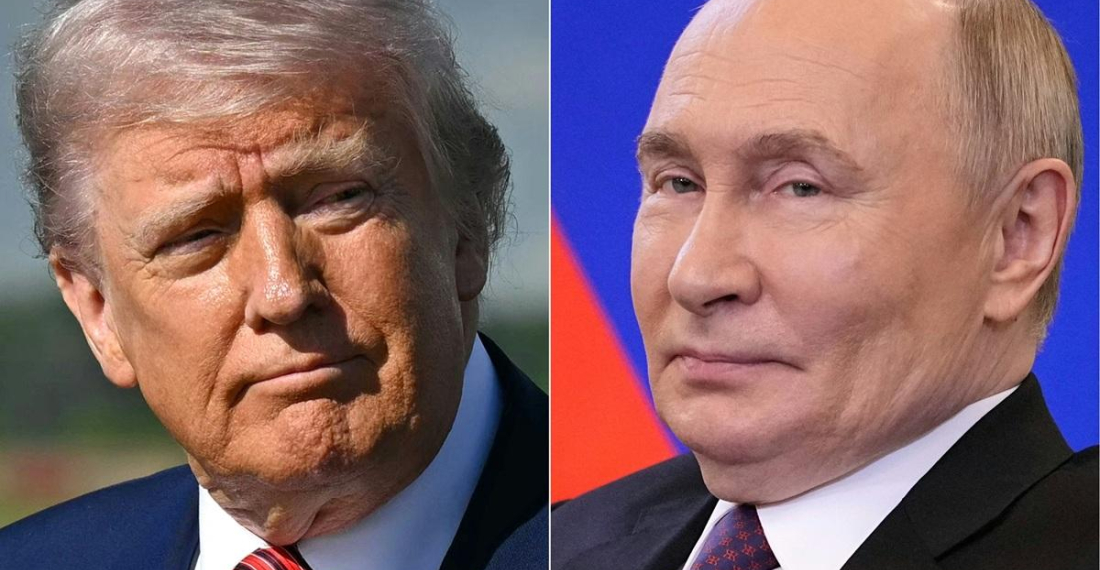
European Union leaders have appealed to U.S. President Donald Trump to defend their security interests at a summit with his Russian counterpart Vladimir Putin on Friday 15 August over the war in Ukraine. EU leaders are doing their best to exert some influence over the summit that they have been sidelined from. It remains unclear whether even Ukraine will take part but EU leaders underlined that “the path to peace in Ukraine cannot be decided without Ukraine.” According to AP, Trump has said that he wants to see whether Putin is serious about ending the war now in its fourth year. In a statement on Tuesday 12 August, EU leaders said that they “welcome the efforts of President Trump towards ending Russia’s war of aggression against Ukraine.” The European Union will make a fresh attempt to rally Trump to Ukraine’s cause on Wednesday at virtual meetings convened by German Chancellor Friedrich Merz. Trump did not confirm whether he would take part, but he stated: “I’m going to get everybody’s ideas” before meeting with Putin.

Trump has disappointed U.S. allies in Europe by saying that Ukraine will have to give up some Russian-held territory. He also said that Russia must accept land swaps, although it remains unclear what Putin might be expected to surrender.

The Europeans and Ukraine are wary that Putin, who has waged the biggest land war in Europe since 1945 and used Russia’s energy might to try to cow the EU, might secure favorable concessions and set the outlines of a peace deal without them. The overarching fear for European countries is that Putin will set his sights on one of them next if he wins in Ukraine, AP reports.

In their statement, EU leaders also said: “A just and lasting peace that brings stability and security must respect international law, including the principles of independence, sovereignty, territorial integrity and that international borders must not be changed by force,”  EU leaders said in their statement.

Ukrainian President Volodymyr Zelenskyy has rejected the idea that Ukraine must commit to give up land to secure a ceasefire. Russia holds shaky control over four of the country’s regions, two in the country’s east and two in the south.

In Ukraine, according to AP, a Russian missile attack on a Ukrainian military training facility left one soldier dead and 11 others wounded, the Ukrainian Ground Forces posted on Telegram. Soldiers rushing to shelters were hit with cluster munitions, according to the Ukrainian Ground Forces. 

Meanwhile, Russia appeared to be on the verge of taking an important city in the Donetsk region, as its forces were reported to be rapidly infiltrating positions north of Pokrovsk.

Military analysts using open source information to monitor the battles say the next 24-48 hours could be critical. Losing Pokrovsk would hand Russia an important battlefield victory ahead of the summit. According to an AP report, it would also complicate Ukrainian supply lines to the Donetsk region, where the Kremlin has focused the bulk of its military efforts.

“A lot will depend on availability, quantity and quality of Ukrainian reserves,” Pasi Paroinen, an analyst with the Finland-based Black Bird Group, wrote in a post on X late Monday.

On Monday, Trump repeated that “there’ll be some land swapping going on.” He said that this would involve “some bad stuff for both” Ukraine and Russia. His public rehabilitation of Putin has unnerved Ukraine’s backers.

Trump was also critical of Zelenskyy, noting that Ukraine’s leader had been in power for the duration of the war and said “nothing happened” during that time. He contrasted that with Putin, who has wielded power unchallenged in Russia for decades.

It’s unclear whether the Europeans were unsettled by Trump’s assertion that he would be traveling to Russia on Friday to meet Putin. The summit is taking place in the U.S. state of Alaska, which was colonised by Russia in the 18th century until Czar Alexander II sold it to the U.S. in a land deal in 1867.

Tuesday’s statement was also meant to be a demonstration of European unity. But Hungarian Prime Minister Viktor Orbán, who is Putin’s closest ally in Europe and has tried to block EU support for Ukraine, did not endorse it. He was the only one of the bloc’s 27 leaders who refused to do so.

Source: commonspace.eu with AP and agencies. Photo: AFP

 

Related articles

Editor's choice
News
Borrell tells the European Parliament that the situation in Afghanistan was critical, but the EU will remain engaged

Borrell tells the European Parliament that the situation in Afghanistan was critical, but the EU will remain engaged

Borrell underlined that the European Union will make every effort to support the peace process and to remain a committed partner to the Afghan people. "Of course, we will have to take into account the evolving situation, but disengagement is not an option.  We are clear on that: there is no alternative to a negotiated political settlement, through inclusive peace talks.
Editor's choice
News
NATO Chief says war is on Europe's doorstep, and warns against complacency

NATO Chief says war is on Europe's doorstep, and warns against complacency

Russia could attack a Nato country within the next five years, the Secretary General of NATO, Mark Rutte, said in a stark new warning. "Nato's own defences can hold for now," Rutte warned in Berlin, but conflict was "next door" to Europe and he feared "too many are quietly complacent, and too many don't feel the urgency, too many believe that time is on our side. "Russia is already escalating its covert campaign against our societies," Rutte said in a speech in Germany. "We must be prepared for the scale of war our grandparents or great-grandparents endured." Earlier this month, Russia's President Vladimir Putin said his country was not planning to go to war with Europe, but it was ready "right now" if Europe wanted to - or started a war. But similar reassurances were given by Moscow in 2022, just before 200,000 Russian troops crossed the border and invaded Ukraine. Putin has accused European countries of hindering US efforts to bring peace in Ukraine - a reference to the role Ukraine's European allies have recently played in trying to change a US peace plan to end the war, whose initial draft was seen as favouring Russia. But Putin was not sincere, Nato's secretary-general said in the German capital, Berlin. Supporting Ukraine, he added, was a guarantee for European security. "Just imagine if Putin got his way; Ukraine under the boot of Russian occupation, his forces pressing against a longer border with Nato, and the significantly increased risk of an armed attack against us." Russia's economy has been on a war footing for more than three years now - its factories churn out ever more supplies of drones, missiles and artillery shells. According to a recent report by the Kiel Institute for the World Economy, Russia has been producing each month around 150 tanks, 550 infantry fighting vehicles, 120 Lancet drones and more than 50 artillery pieces. The UK, and most of its Western allies, are simply not anywhere near this point. Analysts say it would take years for Western Europe's factories to come close to matching Russia's mass-production of weapons. "Allied defence spending and production must rise rapidly, our armed forces must have what they need to keep us safe," the Nato chief said.

Popular

Editor's choice
News
NATO Chief says war is on Europe's doorstep, and warns against complacency

NATO Chief says war is on Europe's doorstep, and warns against complacency

Russia could attack a Nato country within the next five years, the Secretary General of NATO, Mark Rutte, said in a stark new warning. "Nato's own defences can hold for now," Rutte warned in Berlin, but conflict was "next door" to Europe and he feared "too many are quietly complacent, and too many don't feel the urgency, too many believe that time is on our side. "Russia is already escalating its covert campaign against our societies," Rutte said in a speech in Germany. "We must be prepared for the scale of war our grandparents or great-grandparents endured." Earlier this month, Russia's President Vladimir Putin said his country was not planning to go to war with Europe, but it was ready "right now" if Europe wanted to - or started a war. But similar reassurances were given by Moscow in 2022, just before 200,000 Russian troops crossed the border and invaded Ukraine. Putin has accused European countries of hindering US efforts to bring peace in Ukraine - a reference to the role Ukraine's European allies have recently played in trying to change a US peace plan to end the war, whose initial draft was seen as favouring Russia. But Putin was not sincere, Nato's secretary-general said in the German capital, Berlin. Supporting Ukraine, he added, was a guarantee for European security. "Just imagine if Putin got his way; Ukraine under the boot of Russian occupation, his forces pressing against a longer border with Nato, and the significantly increased risk of an armed attack against us." Russia's economy has been on a war footing for more than three years now - its factories churn out ever more supplies of drones, missiles and artillery shells. According to a recent report by the Kiel Institute for the World Economy, Russia has been producing each month around 150 tanks, 550 infantry fighting vehicles, 120 Lancet drones and more than 50 artillery pieces. The UK, and most of its Western allies, are simply not anywhere near this point. Analysts say it would take years for Western Europe's factories to come close to matching Russia's mass-production of weapons. "Allied defence spending and production must rise rapidly, our armed forces must have what they need to keep us safe," the Nato chief said.