A managed process of co-operation and competition continues to characterise Turkish-Russian relations, and in the future this may also extend to the South Caucasus, writes Benyamin Poghosyan in this op-ed.
Russia-Turkey relations have experienced significant ups and downs in recent years: The warming of relations at the beginning of the 2010s; the crisis after the November 2015 shooting of a Russian military jet; the new phase of partnership from late 2016 to 2019; the new crisis as a result of direct military clashes in Syrian Idlib in January-February 2020 and Turkish support of the Government of National Accord in Libya; and another phase of normalisation after the March 5 agreement on Idlib was reached by the two presidents.
The two countries have competing interests in Syria, Libya, the Black Sea region and the South Caucasus. In all four regions they are not partners but seek to find some kind of Modus Vivendi to manage their competition. In Syria this task was successfully completed through the establishment of the 'Astana format'; in Libya there are bilateral channels of consultation; and recently, following the July 12-16 escalation along the Armenia-Azerbaijan international border, phone calls between Russian and Turkish presidents and foreign ministers may result in the creation of the 'Astana 2' format in the South Caucasus. In the Black Sea region Turkey opposes Romanian efforts to increase NATO and US involvement, hinting to Russia about its willingness to solve all key regional issues in a bilateral format and to transform the region into a de facto 'Russia-Turkey sea'. Simultaneously, Turkey seeks to deepen its cooperation with Ukraine, to use Kiev as leverage in its negotiations with the Kremlin. Turkey and Ukraine have recently fostered their defence cooperation and Ukraine has discussed the possibility of joining 'The Cooperation Council of the Turkic Speaking States' as an observer, hoping to use this format to put additional pressure on Russia over the issue of the Crimean Tatars.
Turkey needs manageable relations with Russia for the implementation of its grand strategy - to become a strong regional power that is able to defend its interests and act unilaterally when it deems necessary, without requiring consent from the US or any other major power. Russia needs dialogue with Turkey to secure its interests in the Black Sea region, the Middle East and the South Caucasus. But most importantly, a partnership with Turkey serves Russian interests to weaken the cohesion of NATO from within the alliance and to drive a wedge in US-Turkey relations.
The geopolitics of the countries' relations is intertwined with geo-economics. Until the outbreak of COVID-19, Russia was the number one source of tourism for Turkey. Energy is another pillar of bilateral economic relations. Russia is constructing the first Turkish Nuclear Power Plant, and until recently was the number one supplier of natural gas to Turkey, seeking to use its territory also as a transit for gas exports to Europe. The Blue Stream and TurkStream pipelines, with an annual capacity of 47.5 billion cubic meters, should foment Russian economic influence in Turkey. Meanwhile, a decline of Russian gas exports to Turkey has recently been registered from a record 30 billion cubic meters in 2017 to only 4.7 billion cubic meters in the first half of the 2020.
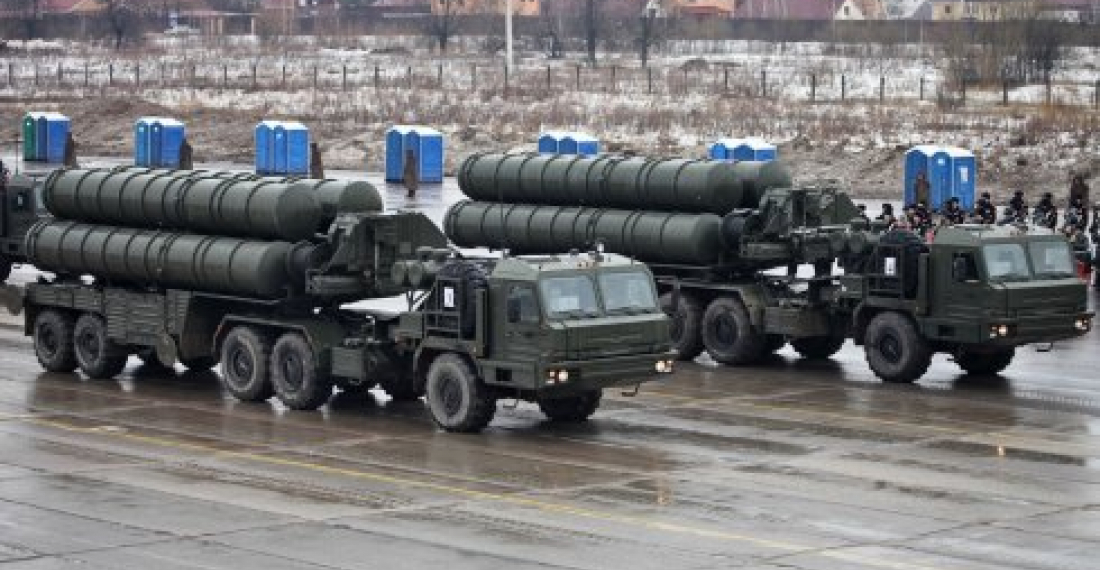
However, perhaps the most controversial aspect of bilateral relations is defence cooperation. When Russia and Turkey started negotiations over the purchase of Russian S-400 air defence systems, many considered it a ploy by Turkey to get concessions from the US on issues ranging from US assistance to the Syrian Kurds, to more favourable conditions for buying American Patriot defence systems. However, the two sides proceeded to sign the agreement and in July 2019, Russia started to deliver the system. This was an obvious violation of the 'Countering America's Adversaries through Sanctions Act' (CAATSA). The Chinese decision to buy Russian S-400 missile systems in 2018 immediately resulted in tough Americans sanctions on all companies and individuals involved in the deal. Likewise, the US has put significant pressure on India to cancel their agreement to purchase S-400s from Russia, signed in 2018.
As a response to the Russia-Turkey deal, the US suspended Turkey's participation in the F-35 joint strike fighter program, going back on its decision to sell F-35 aircrafts to Turkey. However, as of today, no sanctions within CAATSA have been deployed against Turkey. The US explained its decision by the fact that Turkey has deployed but not activated the system. Activation was scheduled in late April 2020 but was postponed due to the outbreak of COVID-19. Many have viewed the Turkish decision to postpone the activation of the S-400 system as an attempt to stall for time, at least until the November 2020 US Presidential elections, and then seek to find a solution with either a renewed Trump administration or with President Biden. Given the continued deterioration of the Turkish economy - the Lira has been in free fall for several months - new American sanctions may significantly hurt Turkish businesses and create a new headache for President Erdogan.
In these circumstances, the August 2020 agreement to provide Turkey with a second batch of S-400 systems caught many by surprise. This will put additional pressure on the Trump administration to sanction Turkey under the CAATSA, which will significantly deteriorate bilateral relations. In 2018-2019, some experts were seeking to explain Erdogan's decision to buy S-400s with his desire to protect the presidential palace from a potential attack by the Turkish Air Force, given the active involvement of Air Force pilots in the July 2016 military coup attempt. However, it's very difficult to explain the decision to buy the second batch of the system with President Erdogan's personal fears. The only reasonable explanation could be Turkey's desire to significantly boost its defence industry as the delivery of the second batch will come in parallel with a technology transfer. In this context, it's worth mentioning that in his August 23 speech delivered at the Tuzla Desan shipyard in Istanbul, President Erdogan stated that as Turkey met its national defence and security needs, technological independence became more critical than ever to create a deterrence in international relations.
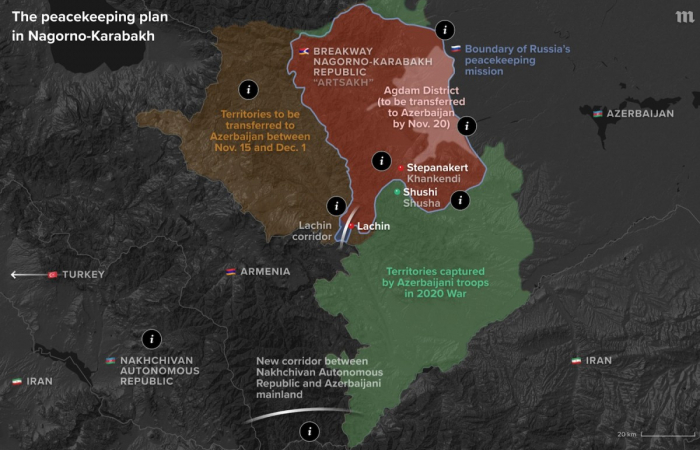
Regardless of the true reasons behind Turkey's decision to buy a second batch of S-400 systems, it makes it obvious that Russia and Turkey will continue their managed cooperation/competition. The two sides will make efforts to come to terms in Syria, Libya, the Black sea region and the South Caucasus. In the latter case, this may imply some joint Russia-Turkey initiatives to de-escalate tensions along Armenia-Azerbaijan international border and Azerbaijan-Nagorno Karabakh line of contact. These initiatives may be pursued in parallel with the activities of the OSCE Minsk group and all sides of the conflict should be prepared for such developments.
Source: Benyamin Poghosyan is the Founder and Chairman of the Center for Political and Economic Strategic Studies in Yerevan
Photo: The S-400 weapons system on parade (archive picture)
The views expressed in opinion pieces and commentaries do not necessarily reflect the position of commonspace.eu or its partners