"The South Caucasus is facing an infrastructure development boom. However, Armenia is in stark isolation, with no major project passing through the country.", writes Benyamin Poghosyan in this op-ed
The launch of new transit routes and transport infrastructure are key topics widely discussed within the context of the geopolitics of the South Caucasus. Since the late 1990s several new pipelines, highways and railroads have been constructed traversing the region. Given the re-emergence of Russia as a key player in the post-Soviet space, since President Putin's ascendance to power in 2000, new transport corridors and large infrastructure projects have become factors in the wider competition between Russia and western countries.
Azerbaijan and Georgia are key players on the South Caucasus infrastructure chessboard. Baku Tbilisi - Jeyhan oil, and Baku - Tbilisi - Erzurum gas pipelines were the harbingers of upcoming changes in the regional infrastructure landscape. In recent years three main infrastructure projects associated with the region emerged: TANAP and TAP gas pipelines which will bring 10 bcm of Azerbaijani gas to Southern Europe starting 2020; Baku - Tbilisi - Kars railroad (BTK), officially launched in October 2017; and the Azerbaijan - Iran railroad which will be fully operational in March 2018. The latter project is part of the much-discussed North - South transportation corridor put forward by India to connect Delhi with Northern Europe via Iran, Azerbaijan and Russia. Just recently the first Russian train entered Iran via the Azerbaijan - Iran railroad.
The Chinese "One belt - One Road" initiative (OBOR) brought additional impetus to infrastructure projects in the South Caucasus. Regional players view China as a potential source of funding, as well as a source for additional cargo which may increase the commercial attractiveness of the projects. Azerbaijan and Georgia are actively promoting the BTK as an additional route to bring Chinese goods to Europe via a China - Kazakhstan - Caspian Sea, Azerbaijan - Georgia - Turkey - Europe connection. The OBOR connected Asian Infrastructure and Investment Bank has already provided Azerbaijan a 600 million USD loan for the construction of TANAP
The South Caucasus is facing an infrastructure development boom. However, Armenia is in stark isolation, with no major project passing through the country. The obvious reason is the "no war no peace" situation with Azerbaijan due to the Nagorno Karabakh conflict, and the economic blockade imposed by Turkey. As no breakthrough in the Karabakh peace process seems possible over the next 3-5 years the only way Armenia may be included in transit projects is through the development of the Iran - Armenia - Georgia route which has the strategic goal of connecting Iran, or even China, with Europe through the Georgian Black Sea Ports. Currently, steps are being taken to launch trilateral cooperation in the energy sphere. Armenia is exporting electricity to Iran through "electricity for gas" scheme (1 kwh electricity for 3 cbm gas). The third Armenia - Iran high voltage electricity transmission line will be launched later in 2018, which will allow to significantly increase the export of electricity form Armenia to Iran. The new high voltage electricity transmission line is constructed to connect Armenia and Georgia which will make possible electricity swaps between Armenia, Iran and Georgia.
The situation is less optimistic in developing new "Iran - Armenia - Georgia" transportation routes. The existing Armenia - Iran railroad is passing through Nakhijevan (Azerbaijan) and is closed. The Armenia - Iran highway is passing through mountainous Syunik region and is not reliable especially in winter. In 2008 Armenia officially put forward two giant infrastructure projects with potential to seriously alter the geopolitics of the region; Armenia - Iran railroad and North - South highway to connect Armenia - Georgia and Armenia - Iran border. Armenia was hopeful to finish both projects within a decade to enter the 2018 with significantly increased transit capabilities.
The timeframe of launching these projects was significant - Azerbaijan had just started BTK construction with no clear timetable, and there were no concrete steps to connect Azerbaijan - Iran railway and no talks on OBOR. Thus, Armenia positioned itself as a potential player in the infrastructure map of the region. In 2009 Armenia signed an agreement with the Asian Development Bank to get funding and start the construction of the North - South highway. The construction was launched only 3 years later. In 2012-2017 the Southern section moved only some 20 km reaching Artashat and currently construction works are underway in the north - to connect Yerevan with Gyumri in 2019. There are preliminary agreements with donor organizations to get funding also for Gyumri - Bavra (Armenian Georgian border) section with some assessments to finish the Yerevan - Bavra part somewhen in 2021. The southern part of the road which will connect Artashat to Meghri (on the Armenian-Iranian border) has a vague timetable and funding opportunities to be implemented. Given the cost of already finished parts of the highway, Armenia will need up to 1 billion USD to finish the North - South highway.
The perspectives of the Armenia-Iran railroad project are even less favorable. The Armenian government tasked a UAE based company to implement the preliminary feasibility study according to which the project costs are now estimated somewhere between 3-3.5 billion USD. Till now Armenia has not managed to find appropriate investments to start the construction. The negative view of Russia also played role here. In February 2008 the Armenian Government signed an agreement with "Russian Railways", a state company, about conceding the Armenian Railway System to the "Russian Railways" for a 30 years period. In June 2015, Vladimir Yakunin, Chairman of Russian Railways dismissed the idea of an Armenia - Iran railway, saying it has no perspective.
Currently Armenia is involved in the 'Persian Gulf - Black Sea" multimodal transport corridor project alongside with Iran, Georgia, Greece and Bulgaria. The intergovernmental agreement will be signed before the end of 2018, and will facilitate the transportation of cargo from Iran to Europe via Armenia and Georgia. However, the current Iran - Armenia highway has limited capacities and will restrict Armenia's capacity as a transit country.
Meanwhile, the already launched infrastructure projects in the region, such as BTK, and the connection of the Azerbaijan - Iran railway, render potential transit routes passing through Armenia less attractive for potential users. Thus, Armenia has lost precious time, and failed to launch new infrastructure projects by 2017-2018 in time to compete with Azerbaijan and Georgia. Yerevan has already spent a lot of resources on the North - South highway project, in the process getting hundreds of millions of USD loans which should be paid back, but even the full launch of its northern portion stretching from Yerevan to the Armenian - Georgian border, will not create the necessary conditions for securing economic benefits.
Armenia has put itself in a peculiar transit trap - it needs up to one billion USD in additional financing to finish the North - South highway. However, with no clear timetable of how it can do this, and with the alternative routes already launched, this project may not be commercially viable. The other option is to finish only northern part of the highway, but this in itself will add little value for the Armenian economy.
source: Dr. Benyamin Poghosyan is the Executive Director of the Political Science Association of Armenia. He contributed this op-ed to commonspace.eu
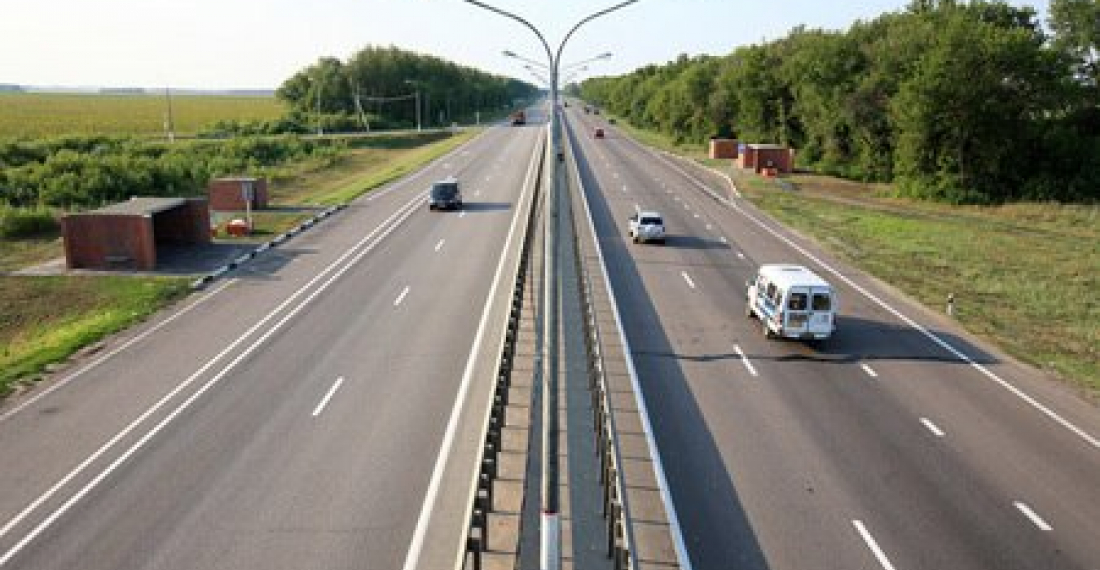
photo: The North - South Highway in Armenia