


OPINION: Does anybody care about the Turkish-Armenian rapproachment these days?

There had been much honest anticipation in Yerevan and beyond that once parliamentary elections in Turkey are successfully won by the AK Party, the Armenian-Turkish rapprochement would be back on track. However, the high hopes still remain as such, while new misunderstandings emerge on both sides.

Of course, one may argue that the domestic agenda in Turkey, i.e. the bleeding Kurdish issue and housing Syrian refugees, make a troubled climate in post-election Turkey. Adding to this, emerging blurred authority of Turkey in the wider region after quarrelling with Israel over the flotilla incident, evident breakup with Syria, internationally visible benign neglect of Turkey’s “willingness to help” with Libya and, finally, stalemate with Armenian opening – have effectively damaged the “zero problems with neighbours” policy.. Sometimes I even mistype it as “zero sum” policy recently, to be honest.

While other major issues are of political nature, the standoff with the Armenians has a difficult history, which has come to a new phase after Armenia reestablished the Third Republic 20 years ago. Turkey was indeed very prompt to recognize Armenia’s independence in 1991, but failed to establish diplomatic relations despite behind-the-scene high-level talks. This phase of “opportunity” waved away after Turkey fully sealed the border in April 1993 in an apparent move to support its stepbrother - Azerbaijan. When Armenian President Serzh Sargsyan publicised the rapprochement process and shook hands with Turkish President Abdullah Gul, it was sincerely backed by many world leaders, who commended their vision, even stood behind the table when signing the historical Zurich protocols in October 2009. Though being supported by President Gul, the whole process was perceived totally differently  by Prime Minister Erdogan, who went on the record in Chatham House early April 2009 almost rejecting any deal with Armenia and making  preconditions which he knew were undoable. Some critics even argued then that Mr Erdogan was not on the same page with President Gul and didn’t share the positive vision about the “Armenian opening”, favoring Azerbaijan more.

When US State Secretary Hillary Clinton paid a visit to Turkey recently  to attend the  Libyan Contact Group meeting, her additional  agenda included items on Caucasus politics – both Nagorno-Karabakh issue and the future of “publicly frozen” rapprochement process with Armenia, which she invested much capital in. This was a good opportunityto show this peace process hasn’t been swept out from international agenda.

Right after, surprisingly, some prominent Armenian NGO chiefs were received by Foreign Minister Ahmet Davudoglu in Ankara, which gave an impression Turkey may consider getting back on track soon.

However, what has been evolving recently in the public domain brings to an objective conclusion that the standstill in the rapprochement process should be blamed on the lack of empathy on both sides, as well as on some high-level politicians who have been vehemently hostile to this rapprochement since the outset.

The words of President Sargsyan in the Armenian holiday resort of Tsakhkadzor created a real hurricane in Turkey. Given how the Foreign Ministry, AK Party, some other top politicians, andof course, Mr Erdogan in Baku, crashed on Armenia harshly. I doubt if the Turkish authorities ever thought to employ media monitoring groups and translators to report the transcript of the event from Armenia.

In reality, of course if those misguided gentlemen frankly care about the reality, President Sargsyan answered the schoolkid that the future of the homeland depends on coming generations (as for any other nation), and elaborated: “…if your peers would put best effort and energy… we will have one of the best countries in the world. Believe me, in most cases not the size of the territory determines the weight of the country”. President Sargsyan said that each generation had to meet its own duties and challenges and while his mates were forced to save the people of Karabakh, the others would meet their responsibilities with dignity in the future. He argued that a successful state should be “modern, secure and prospering” to enable matching with other developed nations. This was his ultimate call to the new generation in the room, and nothing more or less.

I will be surprised if the newly reelected leaders in Turkey would not sign up such a statement for their own country, if they are true leaders and not only elected politicians. However, this time again they mostly acted like politicians…


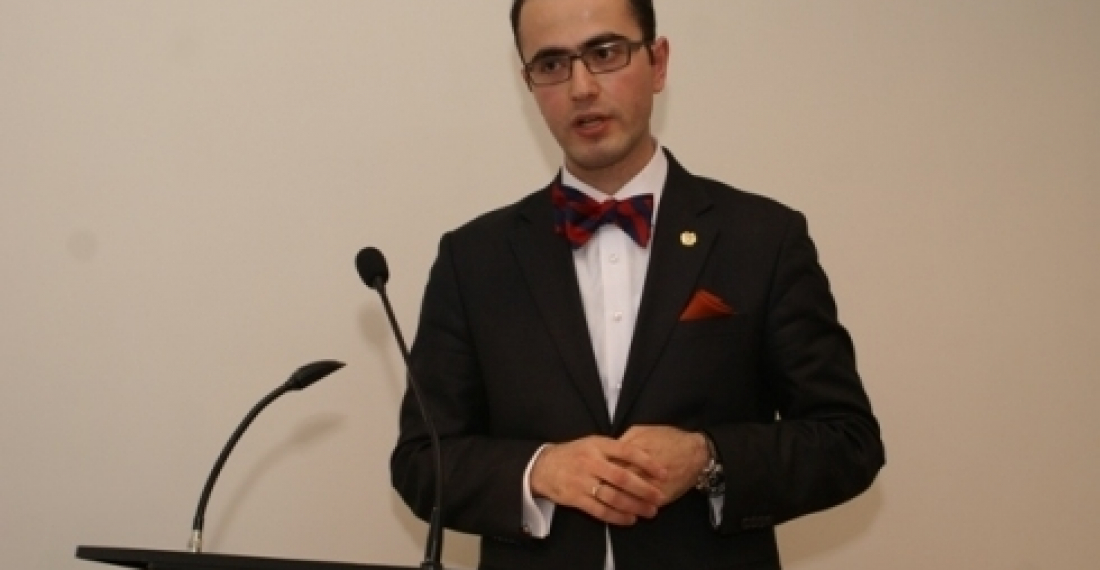
Hovhannes Nikoghosyan is a researcher  from Yerevan, Armenia. He may be contacted at hnikoghosyan@rau.am

Related articles

Editor's choice
News
Germany accuses Russia of cyberattacks and disinformation campaign

Germany accuses Russia of cyberattacks and disinformation campaign

The German government holds Russia responsible for a cyberattack on German air traffic control, and for targeted disinformation campaigns before the last federal election. According to the German Foreign Office in Berlin, the incidents could be clearly attributed to the Russian military intelligence service, the GRU. In response, the Russian ambassador to Berlin was summoned to the Foreign Ministry. "We have been observing a massive increase in threatening hybrid activities by Russia for some time now," a spokesperson for the Foreign Ministry stated. These range from disinformation campaigns and espionage to cyberattacks and sabotage attempts. The aim is to divide society, sow distrust, and undermine confidence in democratic institutions. The spokesperson added that with these actions, Russia is "very concretely threatening our security, not only through its war of aggression against Ukraine, but also here in Germany."  The Foreign Ministry spokesperson explained that the cyberattack on air traffic control in August 2024 was clearly attributed to the hacker collective "APT28," known as "Fancy Bear," and to the responsibility of the Russian military intelligence service, the GRU. Furthermore, it could now be "conclusively stated" that Russia had attempted "to influence and destabilize both the last Federal election and the ongoing internal affairs of the Federal Republic of Germany." There was "absolutely irrefutable evidence" for this". The so-called "Storm 1516" campaign, which has been running since 2024, is allegedly backed by "reliable information" that the Moscow-based think tank "Center for Geopolitical Expertise" is behind it. The Center is also said to be supported by Russian military intelligence. Its primary aim is to influence democratic elections in the West. (Click the image to read more).
Editor's choice
News
NATO Chief says war is on Europe's doorstep, and warns against complacency

NATO Chief says war is on Europe's doorstep, and warns against complacency

Russia could attack a NATO country within the next five years, the Secretary General of NATO, Mark Rutte, said in a stark new warning. "NATO's own defences can hold for now," Rutte warned in Berlin, but conflict was "next door" to Europe, and he feared "too many are quietly complacent, and too many don't feel the urgency, too many believe that time is on our side. "Russia is already escalating its covert campaign against our societies," Rutte said in a speech in Germany. "We must be prepared for the scale of war our grandparents or great-grandparents endured." Earlier this month, Russia's President Vladimir Putin said his country was not planning to go to war with Europe, but it was ready "right now" if Europe wanted to - or started a war. But similar reassurances were given by Moscow in 2022, just before 200,000 Russian troops crossed the border and invaded Ukraine. Putin has accused European countries of hindering US efforts to bring peace in Ukraine - a reference to the role Ukraine's European allies have recently played in trying to change a US peace plan to end the war, whose initial draft was seen as favouring Russia. But Putin was not sincere, Nato's secretary-general said in the German capital, Berlin. Supporting Ukraine, he added, was a guarantee for European security. "Just imagine if Putin got his way; Ukraine under the boot of Russian occupation, his forces pressing against a longer border with Nato, and the significantly increased risk of an armed attack against us." Russia's economy has been on a war footing for more than three years now - its factories churn out ever more supplies of drones, missiles and artillery shells. According to a recent report by the Kiel Institute for the World Economy, Russia has been producing each month around 150 tanks, 550 infantry fighting vehicles, 120 Lancet drones and more than 50 artillery pieces. The UK, and most of its Western allies, are simply not anywhere near this point. Analysts say it would take years for Western Europe's factories to come close to matching Russia's mass-production of weapons. "Allied defence spending and production must rise rapidly, our armed forces must have what they need to keep us safe," the Nato chief said.

Popular

Editor's choice
News
Germany accuses Russia of cyberattacks and disinformation campaign

Germany accuses Russia of cyberattacks and disinformation campaign

The German government holds Russia responsible for a cyberattack on German air traffic control, and for targeted disinformation campaigns before the last federal election. According to the German Foreign Office in Berlin, the incidents could be clearly attributed to the Russian military intelligence service, the GRU. In response, the Russian ambassador to Berlin was summoned to the Foreign Ministry. "We have been observing a massive increase in threatening hybrid activities by Russia for some time now," a spokesperson for the Foreign Ministry stated. These range from disinformation campaigns and espionage to cyberattacks and sabotage attempts. The aim is to divide society, sow distrust, and undermine confidence in democratic institutions. The spokesperson added that with these actions, Russia is "very concretely threatening our security, not only through its war of aggression against Ukraine, but also here in Germany."  The Foreign Ministry spokesperson explained that the cyberattack on air traffic control in August 2024 was clearly attributed to the hacker collective "APT28," known as "Fancy Bear," and to the responsibility of the Russian military intelligence service, the GRU. Furthermore, it could now be "conclusively stated" that Russia had attempted "to influence and destabilize both the last Federal election and the ongoing internal affairs of the Federal Republic of Germany." There was "absolutely irrefutable evidence" for this". The so-called "Storm 1516" campaign, which has been running since 2024, is allegedly backed by "reliable information" that the Moscow-based think tank "Center for Geopolitical Expertise" is behind it. The Center is also said to be supported by Russian military intelligence. Its primary aim is to influence democratic elections in the West. (Click the image to read more).


