


Wagner Group accused of ploy to discredit French Army in Mali

The French army says it has filmed Russian mercenaries from the paramilitary group Wagner burying bodies near a Malian military base, in an attempt to falsely accuse France’s departing troops of leaving behind mass graves.

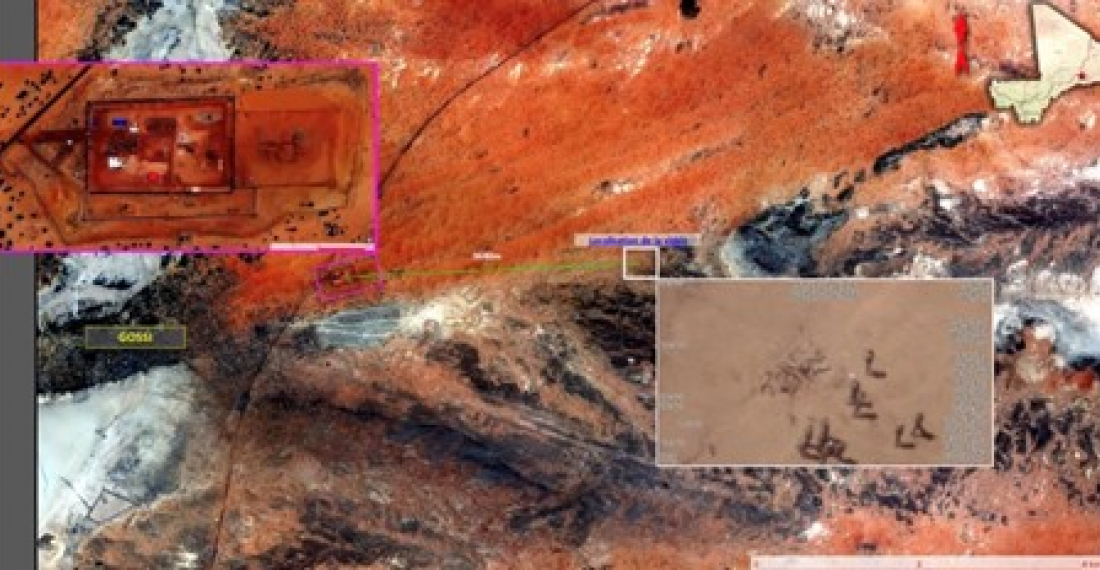
The video shot from a French drone, which shows the behind-the-scenes making of an infox, features white men near the Gossi military base in northern Mali. This military base was returned to the Malian military on Tuesday 19th April.

In a move to discredit the French army and its anti-terrorist operations on the ground, a tweet wrote, "this is what the French left behind when they left the base in Gossi… We cannot keep silent!" accompanied by pixelated images of corpses buried in sand, was published on Thursday 21st April by a certain Dia Diarra. According to the French general staff, this Twitter account is a fake created by Wagner, as it can also be found on a Russian platform.

Unfortunately for the mercenaries of the Wagner group, the French army had positioned a drone in the last 24 hours overlooking the Gossi camp.

In this video, which was made available to the international media, a dozen  soldiers with Caucasian features are seen shovelling sand over the bodies, which are in the same position as the ones in the tweet. Dongfeng vehicles used by Wagner and two men filming the mass grave are also visible. According to the French army, comparing the photos published on Twitter and those taken by the drone allows us to grasp the construction of the infox created by Wagner.

If the presence of the drone washes the discredit off the French army this time, the upcoming accusations will certainly reinforce an anti-French sentiment that has been growing in West Africa since 2013.

Even though France responded to Mali's call for help in 2013 by launching Operation Serval, which was initially militarily successful in pushing jihadist forces out of the north of the country, popular support did not last.

A persistent feeling of insecurity and a public opinion hostile to the presence of the French army for so many years on its territory provided the Malian junta with an ideal scapegoat, and Bamako clearly expressed its wish to see the French troops leave.

Furthermore, the successive appearance of new heads of state due to the recent coups in Mali, Chad, and Burkina Faso, have weakened French alliances throughout West Africa. This lack of cooperation and of trust has allowed the jihadists to conquer several swathes of territory and has opened the door to Russia in the region, through the paramilitary Wagner group.

The Malian transitional authorities have denied the accusations and said that the Russians in the country were military instructors.

The French general army staff warned about information warfare following the pullout from the base, which hosted 300 French soldiers.


Sources: CommonSpace.eu with the Guardian (London), RFI (Paris) and other media outlets
Picture: Aerial view of Gossi and Caucasian individuals observed burying bodies 3.5 kilometres from the military base; Twitter: @EyeonMali

Related articles

Editor's choice
News
Borrell tells the European Parliament that the situation in Afghanistan was critical, but the EU will remain engaged

Borrell tells the European Parliament that the situation in Afghanistan was critical, but the EU will remain engaged

Borrell underlined that the European Union will make every effort to support the peace process and to remain a committed partner to the Afghan people. "Of course, we will have to take into account the evolving situation, but disengagement is not an option.  We are clear on that: there is no alternative to a negotiated political settlement, through inclusive peace talks.
Editor's choice
News
Germany accuses Russia of cyberattacks and disinformation campaign

Germany accuses Russia of cyberattacks and disinformation campaign

The German government holds Russia responsible for a cyberattack on German air traffic control, and for targeted disinformation campaigns before the last federal election. According to the German Foreign Office in Berlin, the incidents could be clearly attributed to the Russian military intelligence service, the GRU. In response, the Russian ambassador to Berlin was summoned to the Foreign Ministry. "We have been observing a massive increase in threatening hybrid activities by Russia for some time now," a spokesperson for the Foreign Ministry stated. These range from disinformation campaigns and espionage to cyberattacks and sabotage attempts. The aim is to divide society, sow distrust, and undermine confidence in democratic institutions. The spokesperson added that with these actions, Russia is "very concretely threatening our security, not only through its war of aggression against Ukraine, but also here in Germany."  The Foreign Ministry spokesperson explained that the cyberattack on air traffic control in August 2024 was clearly attributed to the hacker collective "APT28," known as "Fancy Bear," and to the responsibility of the Russian military intelligence service, the GRU. Furthermore, it could now be "conclusively stated" that Russia had attempted "to influence and destabilize both the last Federal election and the ongoing internal affairs of the Federal Republic of Germany." There was "absolutely irrefutable evidence" for this". The so-called "Storm 1516" campaign, which has been running since 2024, is allegedly backed by "reliable information" that the Moscow-based think tank "Center for Geopolitical Expertise" is behind it. The Center is also said to be supported by Russian military intelligence. Its primary aim is to influence democratic elections in the West. (Click the image to read more).

Popular

Editor's choice
News
Germany accuses Russia of cyberattacks and disinformation campaign

Germany accuses Russia of cyberattacks and disinformation campaign

The German government holds Russia responsible for a cyberattack on German air traffic control, and for targeted disinformation campaigns before the last federal election. According to the German Foreign Office in Berlin, the incidents could be clearly attributed to the Russian military intelligence service, the GRU. In response, the Russian ambassador to Berlin was summoned to the Foreign Ministry. "We have been observing a massive increase in threatening hybrid activities by Russia for some time now," a spokesperson for the Foreign Ministry stated. These range from disinformation campaigns and espionage to cyberattacks and sabotage attempts. The aim is to divide society, sow distrust, and undermine confidence in democratic institutions. The spokesperson added that with these actions, Russia is "very concretely threatening our security, not only through its war of aggression against Ukraine, but also here in Germany."  The Foreign Ministry spokesperson explained that the cyberattack on air traffic control in August 2024 was clearly attributed to the hacker collective "APT28," known as "Fancy Bear," and to the responsibility of the Russian military intelligence service, the GRU. Furthermore, it could now be "conclusively stated" that Russia had attempted "to influence and destabilize both the last Federal election and the ongoing internal affairs of the Federal Republic of Germany." There was "absolutely irrefutable evidence" for this". The so-called "Storm 1516" campaign, which has been running since 2024, is allegedly backed by "reliable information" that the Moscow-based think tank "Center for Geopolitical Expertise" is behind it. The Center is also said to be supported by Russian military intelligence. Its primary aim is to influence democratic elections in the West. (Click the image to read more).

